What Is a Downstream Oxygen Sensor
What Is a Downstream Oxygen Sensor
In the landscape of industrial process control and environmental monitoring, understanding the specific role of various analytical instruments is critical for operational efficiency. One common question among plant engineers and system integrators is: what is a downstream oxygen sensor? While frequently discussed in the context of automotive emissions, the downstream oxygen sensor—also known as the post-catalyst or secondary O2 sensor—plays a vital role in any system utilizing catalytic conversion or multi-stage combustion to manage exhaust gases.
This article provides a technical overview of downstream oxygen sensors, their underlying measurement principles, and their importance in broader industrial monitoring frameworks. For professionals looking to integrate these sensors with comprehensive fluid management systems, including radar or ultrasonic level measurement, you can Review product options and application support on our Main Page.
Measurement Principles of Oxygen Sensors
Before identifying the specific placement of a "downstream" sensor, it is essential to understand how these devices detect oxygen levels. Most industrial and automotive oxygen sensors rely on the Nernst principle, utilizing a solid-state electrolyte typically made of zirconium dioxide (ZrO2) stabilized with yttria.
The Zirconia Element
The sensor element consists of a ceramic bulb coated on both sides with a thin layer of platinum. One side is exposed to the exhaust gas (the process side), while the other side is exposed to a reference gas, usually ambient air. At high temperatures—typically above 300°C (572°F)—the zirconia ceramic becomes conductive to oxygen ions.
The Nernst Voltage
When there is a difference in oxygen concentration between the reference air and the exhaust gas, oxygen ions migrate through the ceramic element. This movement generates a voltage across the platinum electrodes. The magnitude of this voltage is determined by the Nernst equation. In a stoichiometric environment (where the air-fuel ratio is ideal), the sensor produces a sharp voltage swing, typically between 0.1V (lean mixture, high oxygen) and 0.9V (rich mixture, low oxygen).
Wideband vs. Narrowband
While standard downstream sensors are often "narrowband" (switching sensors), some advanced industrial applications utilize wideband sensors. Wideband sensors use an ion pump to maintain a specific oxygen concentration within a sensing chamber, allowing for a linear output that measures oxygen concentration across a much broader spectrum.
The Role of the Downstream Oxygen Sensor
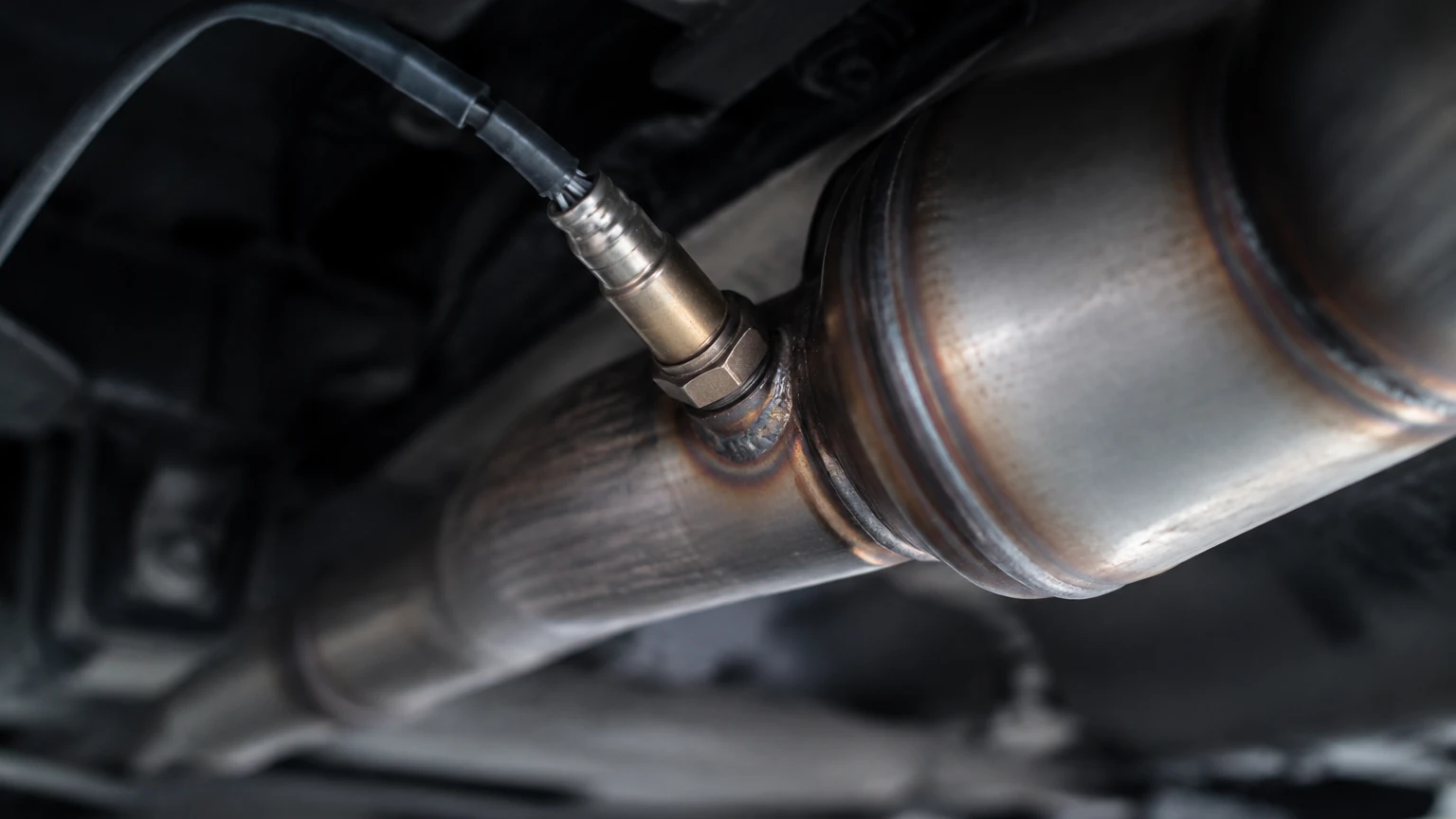
To answer what is a downstream oxygen sensor in a functional sense, one must look at its position relative to the catalytic converter or the primary reaction chamber. In a standard two-sensor configuration, the "upstream" sensor is located before the catalyst and is responsible for the primary feedback loop to the engine or burner control unit. The downstream sensor is located after the catalyst.
Catalyst Efficiency Monitoring
The primary function of the downstream sensor is to monitor the efficiency of the catalytic converter. In a healthy system, the catalyst should consume oxygen as it oxidizes carbon monoxide (CO) and hydrocarbons (HC). Consequently, the oxygen levels detected by the downstream sensor should be relatively stable and significantly different from the fluctuating readings of the upstream sensor.
Secondary Fuel Trim
While the upstream sensor handles the bulk of the air-fuel ratio adjustments, the downstream sensor provides a secondary "trim." It ensures that the overall system remains within environmental compliance limits. If the downstream sensor detects oxygen levels that mirror the upstream sensor's fluctuations, it indicates that the catalyst is no longer effectively processing the exhaust, often triggering a system fault or an industrial alarm.
Industrial Applications and Level Measurement Integration
In industrial B2B environments, the concept of downstream monitoring extends beyond simple combustion. In chemical processing, wastewater treatment, and power generation, gas analysis is often paired with liquid level measurement to ensure safe and efficient operations.
For example, in a wet scrubbing system used to remove pollutants from flue gas, engineers must monitor both the chemical concentration (via oxygen or pH sensors) and the reagent levels in the storage tanks. Reliable level measurement instruments, such as those found on the Main Page, provide the necessary data to ensure that the scrubbing process has sufficient liquid media to react with the gases being monitored by the downstream oxygen sensor.
Synergistic Monitoring Systems
1. Wastewater Aeration: Downstream dissolved oxygen sensors monitor the output of aeration tanks, while hydrostatic level transmitters ensure the tanks do not overflow.
2. Chemical Synthesis: Oxygen sensors monitor headspace safety (preventing explosive atmospheres), while radar level meters provide non-contact measurement of volatile substances.
3. Boiler Control: Flue gas oxygen sensors manage combustion efficiency, while magnetic level gauges provide visual and electronic monitoring of boiler feed water.
Selection Criteria for Oxygen Sensors
Choosing the right sensor requires evaluating several technical parameters. The following table compares common sensor types used in industrial downstream applications:
| Feature | Zirconia (Narrowband) | Wideband (UEGO) | Electrochemical |
| :— | :— | :— | :— |
| Measurement Range | 0% to 1% O2 (near stoichiometric) | 0% to 21% O2 | 0% to 100% O2 |
| Operating Temp. | 300°C to 850°C | 600°C to 900°C | -20°C to 50°C |
| Response Time | < 100 ms | < 150 ms | 10 to 30 seconds |
| Typical Use Case | Post-catalyst monitoring | Precision combustion control | Ambient safety / Portable |
| Durability | High (in high heat) | High | Low (consumable) |
Installation Considerations for Industrial Sensors
Proper installation is paramount to ensuring the longevity and accuracy of a downstream oxygen sensor. Unlike level meters, which may be mounted at the top or bottom of a vessel, oxygen sensors are highly sensitive to their immediate flow environment.
Orientation and Placement
* Angle: Sensors should be installed at an angle of at least 10 degrees above the horizontal. This prevents moisture or condensate from collecting inside the sensor housing, which can crack the ceramic element when it heats up.
* Distance: The downstream sensor must be placed far enough behind the catalytic converter to allow for a uniform gas mixture, yet close enough to maintain the necessary operating temperature (unless a heated sensor is used).
* Thread Specification: Most industrial oxygen sensors use a standard M18 x 1.5mm thread. Ensuring a gas-tight seal with appropriate high-temperature anti-seize compound is critical.
Wiring and Signal Integration
Modern industrial oxygen sensors are typically "4-wire" or "5-wire" devices. Two wires are dedicated to the internal heater element (required to reach operating temperature quickly), while the remaining wires carry the low-voltage signal to the PLC (Programmable Logic Controller) or DCS (Distributed Control System). In many B2B applications, this signal is converted to a 4-20mA loop for long-distance transmission, similar to the signal processing used in Welk's hydrostatic level transmitters.
Limitations and Maintenance
While robust, downstream oxygen sensors are subject to several failure modes that engineers must account for in their maintenance schedules.
1. Contamination (Poisoning): Exposure to lead, silicone (often from gaskets), or excessive phosphorus can coat the platinum electrodes, rendered the sensor "lazy" or completely non-responsive.
2. Soot Accumulation: In heavy oil or coal combustion, particulate matter can clog the protective shroud of the sensor, slowing down response times.
3. Thermal Shock: If water droplets hit the hot ceramic element, it can shatter. This is why proper orientation and upstream moisture removal are essential.
4. Aging: Over time, the electrolyte's ability to conduct ions diminishes. In continuous industrial use, a lifespan of 12 to 24 months is typical before replacement is required.
Frequently Asked Questions (FAQs)
What is the difference between an upstream and downstream oxygen sensor?
The upstream sensor is located before the catalyst and controls the air-fuel mixture. The downstream sensor is located after the catalyst and primarily monitors the catalyst's performance and system health.
Can a faulty downstream oxygen sensor affect process efficiency?
Yes. While it is not the primary control sensor, a faulty downstream sensor can cause the control system to default to a "safe" or "limp" mode, which often results in higher fuel consumption and increased emissions.
How do I know if my downstream sensor is failing?
Common signs include a steady voltage signal that mirrors the upstream sensor (indicating a failed catalyst), a signal that stays stuck at 0.45V (indicating an open circuit), or slow response times during process transitions.
Are downstream oxygen sensors used in water treatment?
In water treatment, "downstream" usually refers to the discharge point. While gas-phase zirconia sensors are not used in the water itself, dissolved oxygen (DO) sensors—which operate on different electrochemical or optical principles—are used to monitor the output of aeration basins.
Conclusion
Understanding what is a downstream oxygen sensor is a fundamental step in mastering industrial emissions and process monitoring. By verifying the efficiency of catalytic processes, these sensors ensure environmental compliance and operational safety. For a holistic approach to industrial automation, combining gas analysis with reliable level measurement is essential. To explore high-precision level sensors for your facility, visit the Main Page at https://www.level-meters.com/ to view our full range of radar, ultrasonic, and hydrostatic solutions.