Hygienic Flow Meter
Hygienic Flow Meter
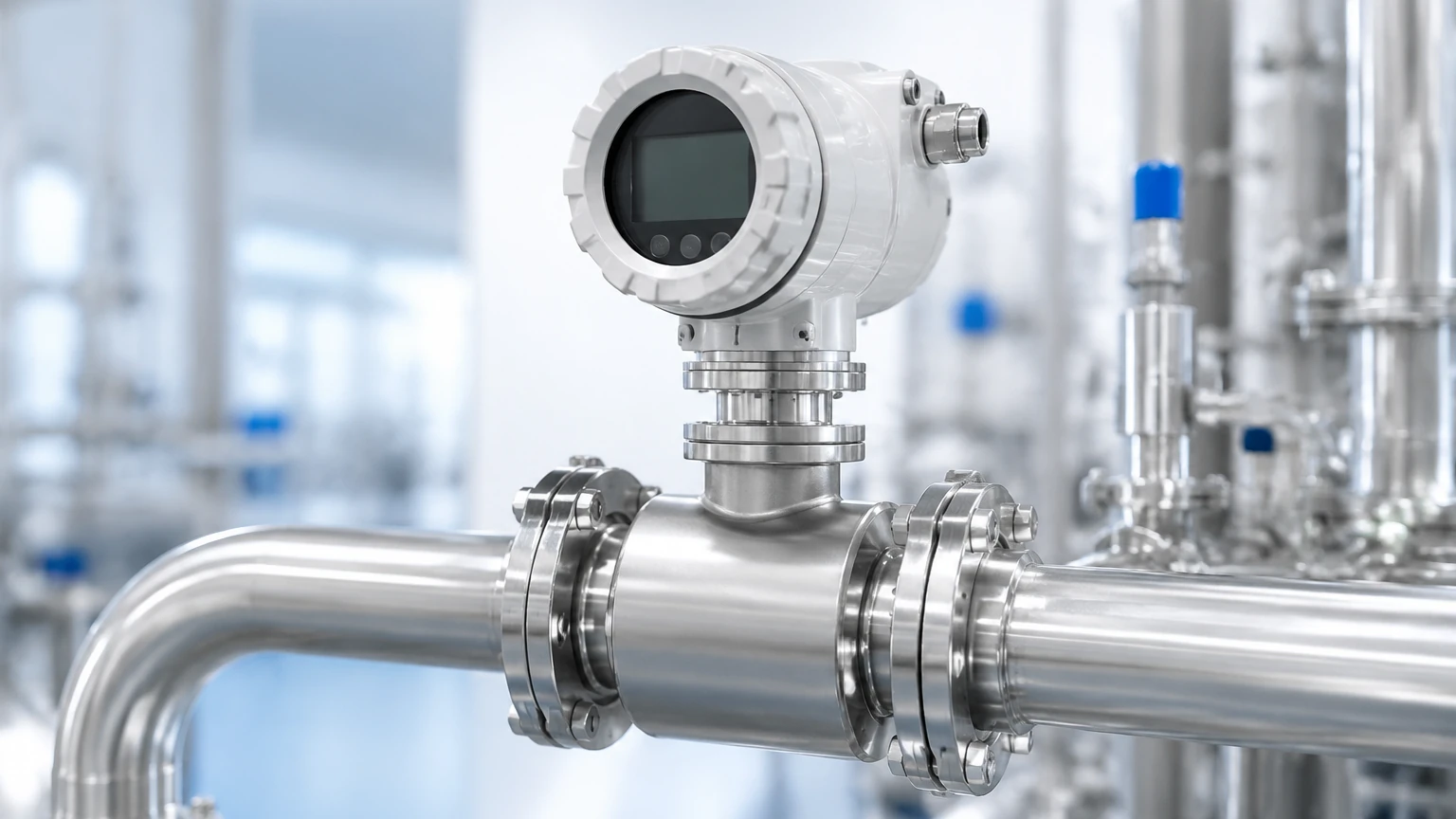
In the landscape of industrial process automation, the hygienic flow meter represents a specialized category of instrumentation designed to meet the rigorous demands of the food, beverage, pharmaceutical, and biotechnology industries. Unlike standard industrial flow meters, hygienic versions must prioritize cleanability, sterility, and the prevention of bacterial growth while maintaining high precision in measurement. For engineers and facility managers, selecting the correct flow technology is essential not only for process efficiency but also for regulatory compliance and consumer safety.
To ensure a robust measurement strategy, it is necessary to understand the underlying physics of various flow technologies and how they interact with sanitary environments. For those looking to integrate these systems with broader process monitoring, reviewing the Main Page of specialized instrumentation providers can offer insights into how flow and level data are synchronized in modern automation architectures.
Measurement Principles for Hygienic Applications
Before selecting a hygienic flow meter, it is critical to understand the operating principles that govern different technologies. Each method offers distinct advantages depending on the fluid properties and the required data outputs.
Electromagnetic Flow Meters (Magmeters)
Electromagnetic flow meters operate based on Faraday’s Law of Induction. This principle states that a conductor (the fluid) moving through a magnetic field generates an electrical voltage proportional to its velocity. In a hygienic context, these meters are ideal because they offer a completely unobstructed flow path. There are no moving parts or internal protrusions that could trap media or harbor bacteria.
* Requirement: The fluid must have a minimum electrical conductivity, typically >5 μS/cm.
* Advantages: Negligible pressure drop, high accuracy (±0.5% or better), and suitability for slurries or fluids with suspended solids (e.g., fruit pulp).
Coriolis Mass Flow Meters
Coriolis meters measure mass flow directly by monitoring the inertia of the fluid as it passes through vibrating tubes. As the fluid flows, it causes a phase shift in the vibration of the tubes, which is directly proportional to the mass flow rate. These meters also provide simultaneous measurements of density and temperature.
* Requirement: High-precision applications where mass, rather than volume, is the primary metric.
* Advantages: Extremely high accuracy (±0.1%), ability to measure non-conductive fluids (like oils or deionized water), and no requirement for straight pipe runs before or after the meter.
Ultrasonic Flow Meters (Transit-Time)
Ultrasonic meters use sound waves to determine flow velocity. In a hygienic setup, these are often "clamp-on" or inline designs with a smooth bore. Transit-time meters measure the time difference between ultrasonic pulses traveling with and against the flow.
* Requirement: Clean, homogeneous liquids without significant air bubbles or solids that could scatter the signal.
* Advantages: Non-invasive measurement, no pressure drop, and easy maintenance.
Turbine Flow Meters (Hygienic Design)
Turbine meters utilize a rotor suspended in the flow stream. The rotation speed is proportional to the fluid velocity. While these contain moving parts, hygienic versions are designed with specialized bearings and polished surfaces to allow for complete cleaning during CIP (Clean-in-Place) cycles.
* Requirement: Low-viscosity fluids.
* Advantages: Excellent repeatability and fast response times.
Material and Design Standards for Sanitary Environments
A hygienic flow meter is defined by its construction materials and mechanical design. In B2B procurement, verifying compliance with international standards is the first step in technical evaluation.
Surface Roughness and Electropolishing
The internal surfaces of a hygienic meter must be exceptionally smooth to prevent biofilm attachment. The standard metric is Ra (Roughness Average). For most sanitary applications, an internal finish of Ra < 0.8 μm (32 μin) is required. In high-purity pharmaceutical applications, this may be tightened to Ra < 0.4 μm (16 μin), often achieved through electropolishing.
Material Selection
Stainless steel 316L (1.4404 or 1.4435) is the industry standard due to its corrosion resistance and ability to withstand harsh cleaning chemicals. Seals and O-rings must be made from FDA-approved elastomers such as EPDM, FKM (Viton), or FFKM, which do not leach chemicals into the process stream.
Regulatory Compliance
* 3-A Sanitary Standards: Primarily used in the US dairy and food industry to ensure equipment can be cleaned mechanically or dismantled easily for manual cleaning.
* EHEDG (European Hygienic Engineering & Design Group): Provides guidelines for the design of equipment to ensure it is hygienically compatible with food production.
* FDA (Food and Drug Administration): Ensures that all materials in contact with the product are safe for human consumption.
Selection Criteria for Industrial Hygienic Flow Meters
Choosing the right hygienic flow meter requires a systematic evaluation of the process environment. Engineers should use the following table as a preliminary guide for technology selection:
| Feature | Electromagnetic | Coriolis | Ultrasonic | Turbine |
| :— | :— | :— | :— | :— |
| Accuracy | High (±0.5%) | Very High (±0.1%) | Medium/High (±1%) | High (±0.5%) |
| Fluid Conductivity | Required (>5 μS/cm) | Not Required | Not Required | Not Required |
| Moving Parts | None | None | None | Yes |
| Pressure Drop | Zero | Low to Moderate | Zero | Moderate |
| Viscosity Limit | High | Very High | Low to Medium | Low |
| Primary Output | Volume Flow | Mass Flow, Density | Volume Flow | Volume Flow |
Key Evaluation Factors:
1. Fluid Properties: Is the liquid conductive? Is it shear-sensitive (like cream)? Does it contain solids? For non-conductive fluids like vegetable oils, a Coriolis or Ultrasonic meter is mandatory.
2. Process Temperature and Pressure: Hygienic processes often involve thermal shocks during SIP (Steam-in-Place) cycles, where temperatures can reach 140°C (284°F) for sterilization. The meter must be rated for these excursions without losing calibration.
3. Installation Footprint: Coriolis meters can be bulky and heavy. If space is limited, an electromagnetic meter or a compact ultrasonic unit may be preferable.
4. Connectivity: Modern B2B applications require integration with PLC systems via 4-20mA, HART, Modbus, or IO-Link for real-time monitoring and diagnostics.
Installation Considerations and Cleaning Protocols
Even the best hygienic flow meter will fail to perform if installed incorrectly. Proper installation ensures both measurement accuracy and the maintenance of a sterile environment.
Avoiding Dead Legs
A "dead leg" is an area in the piping where fluid can stagnate and bacteria can grow. When installing a flow meter, the T-junctions or bypass lines must be kept as short as possible. The "2D" rule (where the length of the stagnation point is no more than twice the pipe diameter) is often cited, though modern hygienic design aims for zero dead legs.
Orientation and Self-Draining
To facilitate effective CIP, the meter must be installed in an orientation that allows it to drain completely. For electromagnetic meters, a vertical installation with upward flow is preferred to ensure the pipe remains full and to prevent air bubbles from gathering at the electrodes. If installed horizontally, the electrodes should be on a horizontal plane to avoid insulation by air or interference from sediment.
Grounding
For electromagnetic flow meters, proper grounding is essential to eliminate electrical noise that can interfere with the low-voltage signal generated by the flow. In hygienic piping systems, which often use stainless steel, grounding rings or functional grounding via the process connections is required.
CIP and SIP Compatibility
* CIP (Clean-in-Place): The meter must withstand high-velocity flow of caustic and acidic cleaning solutions (e.g., 2% NaOH at 80°C / 176°F).
* SIP (Steam-in-Place): The meter must withstand saturated steam at 121°C to 140°C (250°F to 284°F) for at least 30 minutes. Thermal expansion of internal components must be managed to prevent seal failure.
Common Risks and Operational Limitations
While hygienic flow meters are highly engineered, they are not immune to operational challenges. Awareness of these risks allows for better system design.
1. Entrained Air: Air bubbles in the liquid can cause significant errors in both electromagnetic and ultrasonic meters. In Coriolis meters, "two-phase flow" (liquid and gas) can cause the vibration to stall or produce erratic readings. Air eliminators should be installed upstream if air entrainment is likely.
2. Scaling and Coating: In the dairy industry, milk stone (calcium deposits) can build up on the internal walls of the meter. While magmeters are resistant to this, heavy coating can eventually insulate the electrodes. Regular CIP cycles are necessary to mitigate this.
3. Pressure Spikes: Rapidly closing valves can cause water hammer, which may damage the delicate tubes of a Coriolis meter or the internal liners of an electromagnetic meter.
4. Vibration: Coriolis meters are sensitive to external mechanical vibrations. They should be mounted on stable supports and isolated from pump vibrations using flexible couplings if necessary.
Frequently Asked Questions (FAQ)
Q: Can I use a standard industrial flow meter for food production if I clean it well?
A: No. Standard meters often have threaded connections, internal pits, or materials that are not FDA-compliant. These can harbor bacteria that survive standard cleaning, leading to batch contamination.
Q: How often should a hygienic flow meter be calibrated?
A: In regulated industries like pharmaceuticals, annual calibration is standard. In food and beverage, the frequency depends on the criticality of the measurement to the final product quality. Many modern meters offer "self-verification" diagnostics that can extend the time between full wet calibrations.
Q: What is the difference between a clamp-on and an inline hygienic ultrasonic meter?
A: A clamp-on meter attaches to the outside of the pipe, meaning there is zero contact with the fluid. An inline hygienic ultrasonic meter is a spool piece with integrated transducers designed to EHEDG standards. Inline versions generally offer higher accuracy but require breaking the pipe for installation.
Q: Do hygienic flow meters require straight pipe runs?
A: It depends on the technology. Electromagnetic and Ultrasonic meters typically require 5 to 10 diameters of straight pipe upstream to stabilize the flow profile. Coriolis meters are generally independent of the flow profile and require little to no straight runs.
Conclusion
Selecting a hygienic flow meter is a critical decision that impacts the safety, quality, and efficiency of sanitary processes. By understanding the physics of measurement—whether it be the electromagnetic induction of a magmeter or the mass inertia of a Coriolis meter—engineers can match the technology to the specific needs of their media. Adherence to 3-A and EHEDG standards, coupled with meticulous installation to ensure self-draining and CIP compatibility, forms the foundation of a reliable measurement system.
For B2B professionals seeking to optimize their entire process loop, integrating flow data with accurate level measurement is the next logical step. Exploring the technical resources and product options on the Main Page can provide the necessary context for building a comprehensive, hygienic, and automated production environment. Whether dealing with high-viscosity syrups or high-purity pharmaceutical water, the right instrumentation ensures that the process remains both productive and pristine.