Pvdf Flow Meter
Pvdf Flow Meter
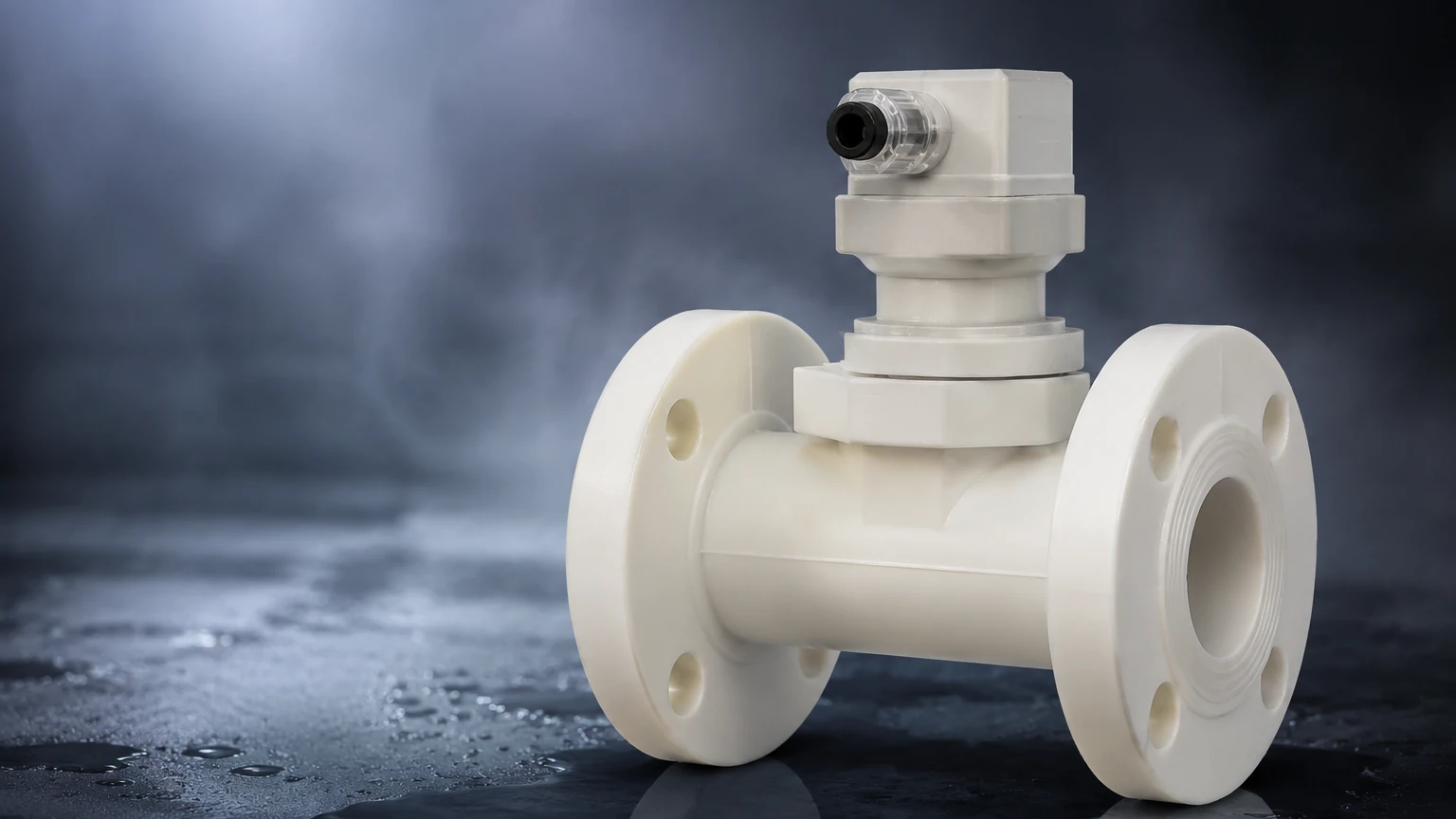
In the landscape of industrial fluid handling, the selection of material for instrumentation is as critical as the measurement technology itself. The PVDF flow meter represents a specialized solution designed to bridge the gap between standard plastic instruments and expensive exotic metal alloys. Polyvinylidene fluoride (PVDF), often known by trade names such as Kynar, is a high-performance fluoropolymer that offers a unique combination of chemical resistance, mechanical strength, and thermal stability.
For engineers and plant managers operating in aggressive chemical environments, semiconductor manufacturing, or high-purity water treatment, understanding the capabilities and limitations of a PVDF flow meter is essential for ensuring long-term system reliability and accuracy. This guide examines the technical principles, material properties, and practical application criteria for these instruments.
Measurement Principles in PVDF Flow Meters
PVDF is not a measurement technology in itself but rather the material used for the wetted components or the entire meter body. Several distinct measurement principles are commonly implemented using PVDF construction to suit different fluid types and process requirements.
Turbine and Paddlewheel Principles
Turbine and paddlewheel meters are among the most common types of PVDF flow meters. In these designs, the fluid flow causes a PVDF rotor or paddle to spin. The rotational speed is proportional to the velocity of the liquid.
* Turbine Meters: Utilize an axial rotor. As the liquid passes through the meter body, the rotor spins, and a sensor (typically Hall effect or inductive) detects the passage of magnets embedded in the rotor blades. The PVDF construction ensures that the rotor and housing can withstand corrosive fluids like sulfuric acid or bleach without degrading.
* Paddlewheel Meters: Feature a rotor perpendicular to the flow. These are often used in pipe sizes ranging from DN15 to DN100. They are valued for their simplicity and ease of maintenance in chemical dosing applications.
Ultrasonic (Transit-Time) Principle
PVDF is frequently used in the construction of ultrasonic flow meter bodies for high-purity applications. In the transit-time method, ultrasonic signals are sent upstream and downstream through the fluid. The difference in travel time is used to calculate the flow velocity. Because PVDF is chemically inert and does not leach contaminants into the process stream, it is the preferred material for deionized water and ultra-pure chemical distribution in the electronics industry.
Electromagnetic Principle (Magmeters)
While the external housing of an electromagnetic flow meter is often metal, PVDF is a primary choice for the internal liner. In these meters, Faraday’s Law of Induction is applied: a conductive liquid moving through a magnetic field generates a voltage proportional to its velocity. A PVDF liner provides the necessary electrical insulation and chemical protection for the meter's electrodes, allowing the device to measure highly corrosive conductive liquids that would destroy stainless steel liners.
Vortex Shedding Principle
Vortex flow meters utilize a bluff body (shedder bar) placed in the flow stream to create Karman vortices. The frequency of these vortices is proportional to the flow rate. PVDF vortex meters are used for chemicals and ultrapure fluids where no moving parts are desired, reducing the risk of mechanical failure and particle generation.
Material Advantages of PVDF
Choosing a PVDF flow meter over PVC, Polypropylene (PP), or PTFE involves evaluating specific mechanical and chemical trade-offs. PVDF offers several distinct advantages in industrial B2B applications:
1. Chemical Inertness: PVDF is resistant to most inorganic acids, bases, aliphatic and aromatic hydrocarbons, and organic acids. It is particularly effective against halogens (chlorine, bromine) and strong oxidants.
2. Thermal Stability: Unlike PVC, which loses structural integrity above 60°C (140°F), PVDF can maintain its mechanical properties at temperatures up to 120°C (248°F), and in some specialized configurations, up to 140°C.
3. High Purity: PVDF is manufactured without the use of stabilizers, plasticizers, or flame retardants. This makes it ideal for "clean" industries where fluid contamination must be avoided.
4. UV and Radiation Resistance: PVDF is inherently resistant to ultraviolet radiation and gamma radiation, making it suitable for outdoor installations and sterilization processes.
5. Abrasion Resistance: Compared to softer fluoropolymers like PTFE (Teflon), PVDF is much harder and more resistant to abrasion from suspended solids in the fluid stream.
Selection Criteria and Technical Specifications
When specifying a PVDF flow meter, engineers must balance the process conditions with the meter's technical limits. The following table provides a general comparison of PVDF against other common thermoplastic materials used in flow instrumentation.
Material Comparison Table
| Property | PVC (Polyvinyl Chloride) | PP (Polypropylene) | PVDF (Polyvinylidene Fluoride) | PTFE (Polytetrafluoroethylene) |
| :— | :— | :— | :— | :— |
| Max Operating Temp | 60°C (140°F) | 80°C (176°F) | 120°C – 140°C | 200°C – 260°C |
| Chemical Resistance | Moderate | Good | Excellent | Superior |
| Mechanical Strength | High | Moderate | Very High | Low (Subject to creep) |
| Purity Level | Low | Moderate | High | Very High |
| Typical Application | General water | Mild chemicals | Strong acids/High purity | Highly aggressive solvents |
Key Evaluation Factors
* Fluid Compatibility: Confirm that the specific chemical concentration and temperature do not exceed the PVDF resistance limits. For example, while PVDF is excellent for acids, it can be attacked by some strong alkalis (caustics) at high temperatures.
* Pressure Rating: Thermoplastic strength decreases as temperature increases. A PVDF flow meter rated for 16 bar at 20°C may only be rated for 4 bar at 100°C. Always consult the pressure-temperature de-rating curves provided by the manufacturer.
* Flow Range (Turndown Ratio): Ensure the expected flow rates fall within the meter's linear range. Turbine meters typically offer a 10:1 turndown, while ultrasonic or magmeters can offer 50:1 or higher.
* Connection Type: PVDF meters are available with threaded (NPT/BSP), flanged (ANSI/DIN), or socket-fusion ends. For high-purity applications, IR (Infrared) butt-fusion is often preferred to minimize internal beads where bacteria could grow.
For more information on selecting the right instrumentation for your specific industrial process, you can review product options and application support on our Main Page.
Installation Considerations
Proper installation is critical to the accuracy of any flow meter. For PVDF instruments, additional care must be taken due to the nature of plastic piping systems.
Straight Pipe Requirements
Most PVDF flow meters require a specific length of straight pipe upstream and downstream to eliminate turbulence. A common standard is 10 diameters (10D) of straight pipe before the meter and 5 diameters (5D) after. If the system includes pumps or valves close to the meter, these requirements may increase to 20D or more.
Piping Stress
PVDF is a rigid plastic, but it is more susceptible to mechanical stress than metal. Ensure the piping is properly supported so that the weight of the pipe does not rest on the flow meter body. Avoid over-tightening threaded connections, which can lead to stress cracking over time. Use compatible thread sealants; some pipe dopes can chemically attack PVDF.
Orientation and Air Pockets
For liquid applications, the meter should ideally be installed in a vertical line with upward flow. This ensures the pipe is always full and prevents air bubbles from being trapped in the meter body. If horizontal installation is necessary, the meter should be placed at a low point in the piping system.
Grounding and Static
In plastic piping systems, static electricity can build up, especially when moving non-conductive fluids at high velocities. If using an electromagnetic PVDF flow meter, proper grounding rings (usually made of Hastelloy or Tantalum) must be installed to provide a reference signal and dissipate static charge.
Limitations and Common Risks
While highly versatile, the PVDF flow meter is not a universal solution. Engineers should be aware of the following limitations:
* Thermal Shock: Rapid changes in fluid temperature can cause localized expansion or contraction, potentially leading to leaks at seals or mechanical fatigue in the PVDF body.
* Solvent Sensitivity: While resistant to many chemicals, PVDF can be affected by polar solvents like acetone, ethyl acetate, and certain ketones (MEK).
* Opacity: PVDF is naturally translucent to opaque. Unlike clear PVC, you cannot visually inspect the fluid or internal components through the meter body unless a specific sight-glass section is integrated.
* Cost: PVDF is significantly more expensive than PVC or PP. It should be specified where its technical advantages—temperature, purity, or chemical resistance—are strictly required by the process.
Frequently Asked Questions (FAQs)
Q: Can a PVDF flow meter be used for gas measurement?
A: It depends on the measurement principle. PVDF vortex and certain ultrasonic meters can measure gas, but turbine and paddlewheel meters are generally designed for liquids. Additionally, the pressure-holding capability of plastic in gas service must be carefully evaluated for safety.
Q: How do I clean a PVDF flow meter?
A: PVDF is compatible with most CIP (Clean-In-Place) chemicals, including nitric acid and phosphoric acid solutions. It can also withstand low-pressure steam sterilization, though repeated high-temperature steam cycles may reduce the service life of the seals.
Q: Is PVDF compatible with food and beverage applications?
A: Yes, many PVDF grades are FDA-compliant and meet USP Class VI standards. However, the specific meter must be certified for sanitary use, ensuring there are no "dead legs" or crevices where bacteria can accumulate.
Q: What is the typical lifespan of a PVDF flow meter?
A: In a properly specified application (within temperature and pressure limits), a PVDF meter can last 10 to 15 years. The primary wear components are usually O-rings (typically FKM or EPDM) and moving parts like bearings in turbine models.
By adhering to these engineering guidelines and understanding the material properties of PVDF, B2B procurement and technical teams can implement flow measurement solutions that withstand the most demanding industrial environments. For further technical specifications and to explore our full range of level and flow instruments, visit our Main Page.