Thc Extraction Machine for Home Use
Thc Extraction Machine for Home Use
The rising interest in botanical processing has led to a significant increase in the availability of specialized equipment designed for small-scale operations. A thc extraction machine for home use is a sophisticated piece of laboratory-grade equipment that allows users to isolate specific compounds from plant material. While these machines are smaller than their industrial counterparts used in large-scale hemp processing, they rely on the same fundamental engineering principles: thermal control, pressure management, and precise fluid level monitoring.
For engineers and prosumers designing or operating these systems, understanding the technical requirements of fluid management is essential. Precise measurement ensures that solvent-to-biomass ratios are maintained, preventing equipment dry-run or overflow, which is critical when handling volatile organic compounds. To explore high-precision instrumentation for these applications, professionals often Review product options and application support to find the right balance between accuracy and cost-effectiveness.
Understanding Small-Scale Botanical Extraction Processes
Extraction is the process of using a solvent to remove active compounds from a solid matrix. In a thc extraction machine for home use, this typically involves one of three primary methods: ethanol extraction, CO2 extraction, or solventless mechanical separation. Each method presents unique challenges for level and process monitoring.
Solvent-Based Extraction (Ethanol)
Ethanol is a common solvent for home use due to its relatively high safety profile compared to hydrocarbons like butane. In this process, the plant material is soaked in chilled ethanol. The liquid level in the soaking vessel must be monitored to ensure complete submersion of the biomass. Furthermore, during the solvent recovery phase, where the ethanol is evaporated and reclaimed, monitoring the level in the collection flask prevents overfilling and potential vacuum pump damage.
Supercritical CO2 Extraction
While less common for home use due to the high pressures involved (often exceeding 70 bar), some high-end desktop units utilize CO2. These systems require high-pressure level transmitters to monitor the state of the CO2 as it transitions between liquid and gaseous phases. Accuracy here is vital for maintaining the "supercritical" state required for efficient extraction.
Hydrocarbon Extraction
Systems using butane or propane operate at lower pressures than CO2 but require strictly regulated, explosion-proof instrumentation. In these environments, any electronic level sensor must be intrinsically safe to prevent ignition of the solvent vapors.
Principles of Level Measurement in Extraction Vessels
In any thc extraction machine for home use, the ability to track how much fluid is in a tank at any given time is the foundation of automation. There are several measurement principles used in these small-scale reactors.
Ultrasonic Level Sensing
Ultrasonic sensors emit high-frequency sound waves that reflect off the surface of the liquid. By measuring the time-of-flight (the time it takes for the pulse to return), the sensor calculates the distance to the liquid.
- Pros: Non-contact, meaning the sensor does not touch the solvent.
- Cons: Can be affected by heavy vapors or foam on the surface of the liquid, which can scatter the sound waves.
Hydrostatic Pressure Measurement
This principle relies on the fact that the pressure at the bottom of a vessel is directly proportional to the height of the liquid column above it. A pressure transducer at the base of the extraction tank provides a continuous reading of the level.
- Pros: Highly reliable and unaffected by surface foam.
- Cons: Requires the sensor to be in contact with the fluid, and the reading must be calibrated based on the density of the solvent (e.g., ethanol has a different density than water).
Radar Level Measurement
Radar sensors work similarly to ultrasonic sensors but use electromagnetic waves instead of sound. Radar is particularly effective in a thc extraction machine for home use because it is unaffected by the vacuum or high-pressure environments often found in solvent recovery stages.
- Pros: Extremely accurate; ignores vapor and temperature fluctuations.
- Cons: Generally more expensive than ultrasonic or hydrostatic options.
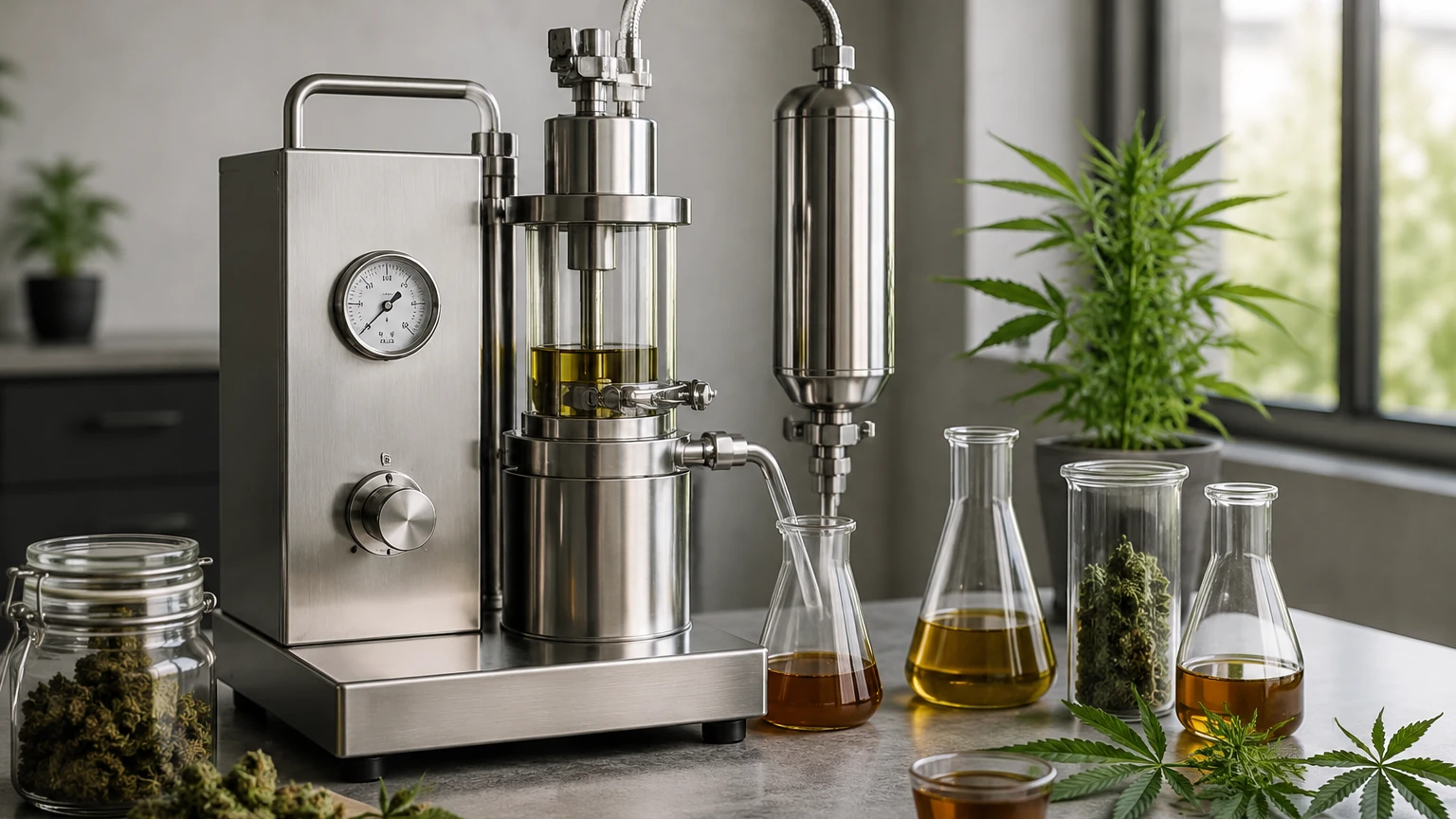
Key Components of a Thc Extraction Machine for Home Use
A complete extraction setup is more than just a vessel; it is a closed-loop system designed to maximize efficiency. The integration of level sensors into these components allows for a "set it and forget it" workflow.
1. The Extraction Vessel: Where the biomass and solvent meet. Level sensors here ensure the correct solvent-to-solute ratio.
2. The Filtration Assembly: Removes solid plant matter from the liquid extract. Monitoring the level here can indicate if a filter is clogged (indicated by a rise in liquid level above the filter).
3. The Evaporator/Recovery Unit: This is where the solvent is removed from the extract. Precise level control in the boiling flask prevents "bumping" (violent boiling) and ensures the heater doesn't run dry.
4. The Collection Reservoir: Stores the reclaimed solvent for future use. An overflow sensor is a critical safety component here.
Selection Criteria for Monitoring Instrumentation
When selecting or upgrading the sensors for a thc extraction machine for home use, several technical factors must be considered to ensure the longevity of the equipment and the purity of the final product.
Material Compatibility
Extraction solvents, especially ethanol and hydrocarbons, can degrade certain plastics and elastomers. Sensors should ideally be constructed from 316L stainless steel or PTFE (Teflon) to ensure they do not leach contaminants into the extract.
Accuracy and Repeatability
In small-batch processing, a variance of even 10mm in liquid level can represent a significant percentage of the total volume. High-resolution sensors (accuracy within ±2mm) are preferred for maintaining consistency across different batches.
Temperature and Pressure Ratings
Many extraction processes occur at sub-zero temperatures (cryogenic ethanol extraction) or under a vacuum. Ensure the chosen level meter is rated for the specific operating envelope of the machine. For instance, an ultrasonic sensor may fail if the vacuum is too deep, as sound requires a medium to travel through.
Technical Selection Table: Level Sensors for Extraction
| Sensor Type | Ideal Application | Measurement Range | Chemical Resistance | Vacuum Compatibility |
| :— | :— | :— | :— | :— |
| Ultrasonic | Atmospheric Ethanol Tanks | 0.1m – 2.0m | High (if PTFE faced) | Poor |
| Radar (80GHz) | Vacuum Evaporators | 0.05m – 5.0m | Excellent | Excellent |
| Hydrostatic | Deep Storage Reservoirs | 0.2m – 10m | Moderate (316L SS) | Good |
| Magnetic Float | High/Low Alarm Points | Point Level Only | High | Good |
Installation Considerations and Safety Protocols
Proper installation of instrumentation in a thc extraction machine for home use is vital for both accuracy and safety. For more information on the full range of industrial-grade components that can be adapted for these systems, users should refer to the Main Page of professional equipment providers.
Dead Zone Management
Every non-contact sensor has a "dead zone" or "blocking distance" directly beneath the sensor face where it cannot measure. When installing a sensor on a small home-use tank, ensure the sensor is mounted high enough (perhaps using a nozzle or stand-off) so that the maximum liquid level does not enter this dead zone.
Turbulence and Agitation
Many extraction machines use stirrers or agitators to speed up the process. This creates a turbulent surface that can confuse some sensors. Using a "stilling well" (a pipe that surrounds the sensor) can provide a calm surface for the sensor to measure, even while the rest of the tank is being agitated.
Grounding and Static Electricity
Moving solvents can generate static electricity. All metal components, including the level sensors and the tanks of the thc extraction machine for home use, must be properly bonded and grounded to prevent sparks in the presence of flammable vapors.
Limitations and Practical Boundaries
While home-use extraction machines have become highly advanced, they have inherent limitations compared to industrial systems.
- Throughput: Home units are generally limited to processing 0.5kg to 2kg of material per cycle.
- Automation Depth: While high-end units feature automated level and temperature control, many entry-level machines require manual monitoring.
- Safety Certifications: Many "home" machines are not UL-listed or C1D1 (Class 1, Division 1) rated. Users must exercise extreme caution and ensure adequate ventilation.
Frequently Asked Questions
Q: Can I use a standard water level sensor in my extraction machine?
No. Water level sensors are often made of materials that will dissolve or corrode when exposed to ethanol or hydrocarbons. Always use sensors rated for chemical compatibility.
Q: Why is my ultrasonic sensor giving false readings during evaporation?
During evaporation, the high concentration of solvent vapor changes the speed of sound in the tank. Since ultrasonic sensors rely on a constant speed of sound to calculate distance, the readings will become inaccurate. In these cases, a radar sensor or a hydrostatic pressure sensor is a better choice.
Q: How often should I calibrate the sensors in a thc extraction machine for home use?
For consistent results, sensors should be checked every 50-100 cycles. Hydrostatic sensors may need more frequent calibration if you switch between different types of solvents with different densities.
Q: Is it necessary to have continuous level monitoring, or is a simple switch enough?
A simple float switch is sufficient for overflow protection. However, continuous level monitoring (0-100%) is necessary if you want to automate the pump speeds and optimize the efficiency of the extraction cycle.
By focusing on the technical integration of high-quality level measurement and process control, operators of a thc extraction machine for home use can achieve professional-grade results with the safety and reliability required for botanical processing.