Water Quality Monitoring Services
Water Quality Monitoring Services
In the landscape of modern industrial automation, water quality monitoring services represent a critical framework for ensuring regulatory compliance, operational efficiency, and environmental safety. While "water quality" often refers to chemical and biological parameters, the physical management of water—specifically accurate level and volume measurement—is the foundational layer upon which these services are built. Without precise data regarding the quantity and flow of water within a system, qualitative analysis remains incomplete.
For engineers and facility managers, selecting the appropriate instrumentation is the first step in establishing a robust monitoring infrastructure. Companies like Welk provide the essential hardware, such as radar level meters and ultrasonic sensors, that feed data into broader Main Page systems, allowing for real-time oversight of water resources in sectors ranging from municipal water treatment to complex chemical processing.
Understanding the Role of Instrumentation in Water Quality Monitoring Services
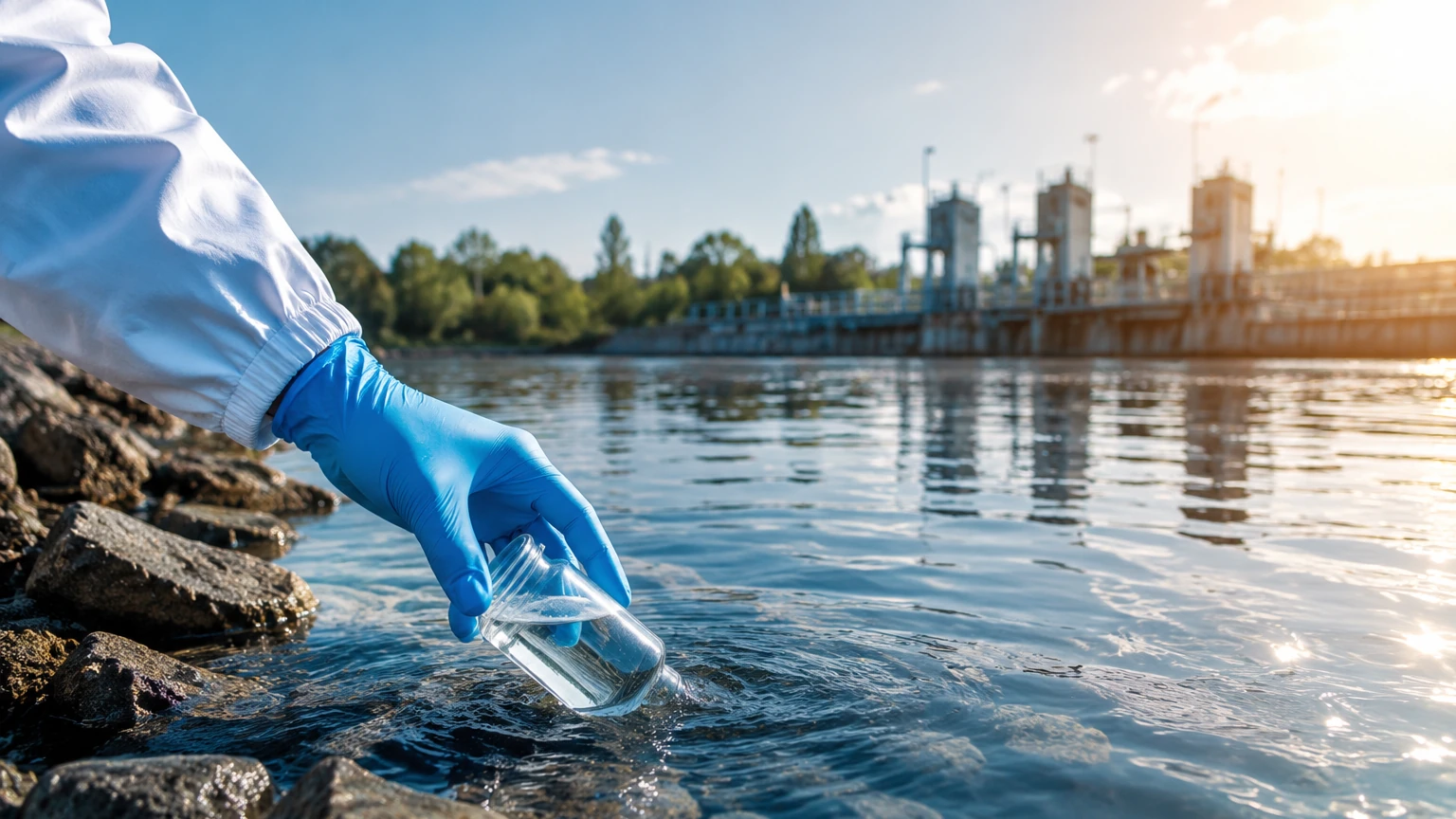
Water quality monitoring services encompass the continuous or periodic assessment of water bodies and industrial process streams. These services are vital for detecting contaminants, managing chemical dosing, and protecting downstream ecosystems. However, the efficacy of these services relies heavily on the integration of high-precision level measurement instruments.
In a typical wastewater treatment plant, for example, monitoring services must track the influent flow rate to determine the necessary concentration of treatment chemicals. If the level measurement is inaccurate, the dosing will be incorrect, leading to either insufficient treatment or wasteful chemical expenditure. Similarly, in cooling tower management, maintaining the correct water level is essential to prevent scaling and corrosion, which directly impacts the thermal efficiency and longevity of the equipment.
By utilizing advanced sensors—such as hydrostatic transmitters for deep well monitoring or non-contact radar for corrosive chemical tanks—industrial operators can provide the granular data required by water quality monitoring services to make informed decisions.
Core Measurement Principles for Industrial Water Monitoring
Before selecting a specific instrument for a water monitoring application, it is essential to understand the physical principles that govern different measurement technologies. Each method offers distinct advantages depending on the media properties and environmental conditions.
1. Radar Level Measurement (Time-of-Flight)
Radar level meters operate on the Time-of-Flight (ToF) principle. The sensor emits a high-frequency electromagnetic wave (typically in the 26GHz or 80GHz range) toward the water surface. The wave reflects off the surface and returns to the sensor. The distance is calculated based on the time interval between emission and reception.
* Advantages: Non-contact measurement, unaffected by temperature fluctuations, pressure, or vapor. High-frequency 80GHz radar offers a narrow beam angle, making it ideal for narrow tanks with internal obstructions.
* Metric Example: A radar sensor can measure a range of up to 30 meters (approx. 98 feet) with an accuracy of ±2 millimeters (±0.08 inches).
2. Ultrasonic Level Sensing
Ultrasonic sensors also use the ToF principle but utilize sound waves instead of electromagnetic waves. A transducer emits an ultrasonic pulse that travels through the air, hits the water surface, and bounces back.
* Advantages: Cost-effective for open-channel flow and standard atmospheric tanks.
* Limitations: Sound velocity is affected by air temperature, requiring built-in temperature compensation. It is also sensitive to heavy foam, dust, or steam, which can absorb the sound signal.
3. Hydrostatic Level Transmission
This contact-based method measures the pressure exerted by the liquid column above the sensor. According to Pascal's Law, the pressure at the bottom of a tank is directly proportional to the height of the liquid and its density ($P = \rho gh$).
* Advantages: Ideal for deep wells, boreholes, and vented tanks where non-contact sensors might struggle with signal path obstructions.
* Metric Example: A submersible hydrostatic transmitter can monitor levels in reservoirs up to 200 meters (656 feet) deep.
4. Magnetic Level Gauges
Magnetic level gauges utilize a float containing a permanent magnet that moves with the liquid level inside a bypass chamber. Outside the chamber, a series of magnetic flags or a transmitter responds to the float's position.
* Advantages: Provides a clear visual indication without requiring power. It is highly reliable for high-pressure and high-temperature water applications, such as boiler feed water.
Selecting the Right Level Measurement Technology
Choosing the correct instrument is a prerequisite for successful water quality monitoring services. The following table provides a comparison of common technologies used in industrial water management.
| Technology | Typical Accuracy | Operating Range | Media Suitability | Best Application |
| :— | :— | :— | :— | :— |
| 80GHz Radar | ±2 mm | 0.1 m – 120 m | Clean/Dirty Water, Chemicals | Narrow tanks, agitated surfaces |
| Ultrasonic | ±0.25% of range | 0.3 m – 15 m | Clean Water, Wastewater | Open channels, sumps, basins |
| Hydrostatic | ±0.1% to ±0.5% | 1 m – 500 m | Clean Water, Sludge | Deep wells, vented reservoirs |
| Magnetic Gauge | ±5 mm (visual) | 0.3 m – 6 m | High-temp/High-pressure water | Boilers, process bypass tanks |
| Level Switch | N/A (Point level) | Fixed point | Most liquids | Overfill protection, pump control |
When evaluating these options, engineers must consider the chemical composition of the water. For instance, in acidic water treatment, a radar sensor with a PTFE (Teflon) coated antenna is preferred to prevent corrosion. In contrast, for municipal drinking water reservoirs, a stainless steel submersible hydrostatic sensor may be more appropriate for long-term stability.
Installation and Integration Best Practices
Even the most advanced sensor will fail to provide accurate data if installed incorrectly. For water quality monitoring services to function effectively, the physical installation of level meters must adhere to engineering standards.
Avoiding Obstructions and Turbulence
For non-contact sensors (Radar and Ultrasonic), the signal beam must have a clear path to the water surface. Internal structures such as ladders, pipes, or agitators can cause "false echoes."
* Guideline: Install the sensor at a distance from the tank wall at least 1/6th of the tank diameter. If an agitator is present, the sensor should be positioned where the surface is most stable.
Managing Foam and Vapor
Foam is a common challenge in wastewater treatment. It can absorb ultrasonic signals and diffuse radar waves.
* Solution: In foaming applications, high-frequency radar (80GHz) is generally more effective than ultrasonic sensors because the shorter wavelength can penetrate light foam more easily. Alternatively, a stilling well can be used to provide a calm surface for measurement.
Integration with Data Systems
Modern water quality monitoring services rely on seamless data integration. Sensors should support standard industrial protocols such as 4-20mA HART, Modbus RTU, or Profibus. This allows the level data to be transmitted to a PLC (Programmable Logic Controller) or a cloud-based monitoring platform. For remote locations, solar-powered level transmitters with wireless connectivity (LoRaWAN or NB-IoT) are increasingly common.
Operational Limitations and Maintenance Requirements
While industrial-grade level meters are designed for durability, they are not immune to the harsh conditions found in water treatment environments. Understanding these limitations is key to maintaining the integrity of water quality monitoring services.
1. Build-up and Scaling: In water with high mineral content or biological activity, sensors can experience scaling or biofilm build-up. Hydrostatic sensors and magnetic floats are particularly susceptible to this. Regular cleaning intervals should be established based on the severity of the media.
2. Temperature Gradients: Ultrasonic sensors are sensitive to air temperature changes. While most have internal compensation, rapid shifts in ambient temperature (e.g., a tank exposed to direct sunlight) can still cause measurement drift.
3. Dielectric Constant: Radar measurement depends on the dielectric constant ($ε_r$) of the liquid. While water has a high dielectric constant (~80), which reflects radar waves very well, some chemical additives used in water treatment may have lower values, requiring careful calibration of the radar sensitivity.
Frequently Asked Questions
How does level measurement impact water quality monitoring services?
Level measurement provides the volume and flow data necessary to calculate chemical concentrations and residence times. Without accurate level data, qualitative metrics like pH or turbidity cannot be properly contextualized within the system's total volume.
Can I use an ultrasonic sensor for wastewater with heavy foam?
It is generally not recommended. Heavy foam absorbs sound waves, leading to signal loss. A high-frequency radar meter or a hydrostatic pressure transmitter is a more reliable choice for foaming liquids.
What is the advantage of 80GHz radar over 26GHz radar?
80GHz radar has a much narrower beam angle (typically 3° to 8° compared to 10° to 20° for 26GHz). This allows the sensor to avoid internal tank obstructions and measure more accurately in narrow or complex vessels.
How often should hydrostatic sensors be calibrated?
In clean water applications, annual calibration is usually sufficient. However, in wastewater or corrosive environments, sensors should be checked every 3 to 6 months to ensure that sediment build-up or diaphragm wear has not affected accuracy.
Are these sensors compatible with SCADA systems?
Yes. Most professional level meters from providers like Welk offer 4-20mA HART or RS485 Modbus outputs, which are standard for integration into SCADA (Supervisory Control and Data Acquisition) systems used in water quality monitoring services.
By selecting the right technology and following rigorous installation standards, industrial operators can ensure that their water quality monitoring services are supported by the most accurate and reliable level data available. For more detailed technical specifications and product selection, engineers are encouraged to consult the Main Page of specialized instrument manufacturers.