Raman Technology
Raman Technology
In the landscape of industrial process automation and chemical analysis, Raman technology has emerged as a cornerstone for non-destructive, real-time material identification. While traditional sensors focus on physical parameters such as pressure, temperature, or volume, Raman spectroscopy provides deep insight into the molecular composition of substances. For engineers and plant managers utilizing advanced instrumentation from providers like Welk, understanding how Raman technology complements physical measurement tools—such as radar or ultrasonic level meters—is essential for achieving comprehensive process control.
This guide explores the fundamental principles of Raman technology, its integration into industrial workflows, and the technical considerations necessary for successful implementation alongside standard level measurement solutions.
Understanding Raman Technology: The Principle of Inelastic Scattering
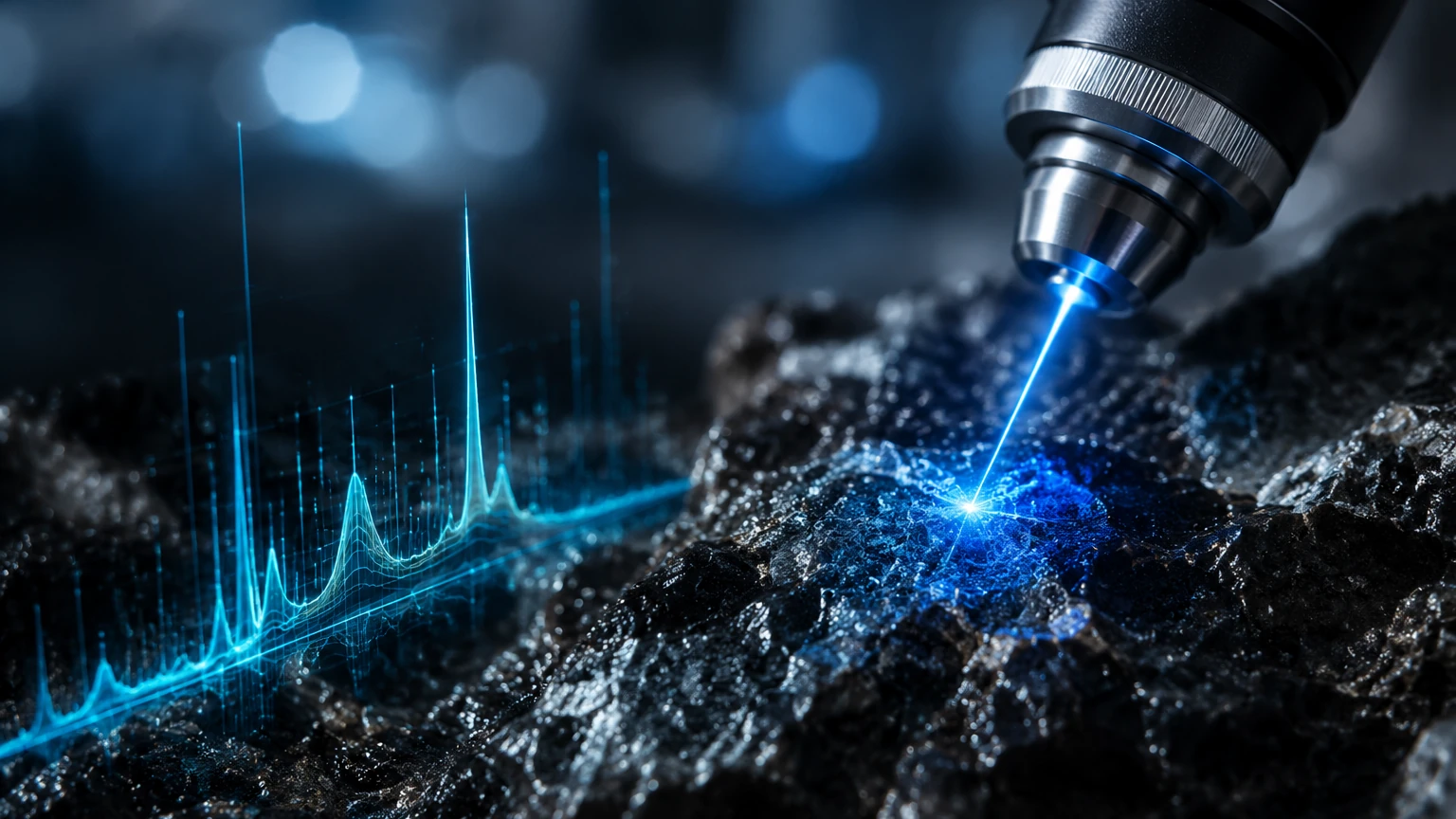
Raman technology is based on the Raman effect, a phenomenon first observed by C.V. Raman in 1928. At its core, the technology relies on the interaction of light with the chemical bonds of a substance. When a high-intensity light source, typically a laser, illuminates a sample, the photons interact with the molecules.
Most of these photons undergo Rayleigh scattering, where they are deflected with the same energy and wavelength as the incident light (elastic scattering). However, a very small fraction—approximately one in every million photons—undergoes Raman scattering (inelastic scattering). During this process, energy is exchanged between the photon and the molecule's vibrational or rotational states. This results in a shift in the photon's wavelength, known as the Raman shift.
The Raman Shift and Molecular Fingerprinting
Because every chemical bond (e.g., C-H, O-H, C=C) has a unique vibrational frequency, the resulting Raman shift acts as a "molecular fingerprint." By measuring the intensity and position of these shifts, Raman technology can identify specific compounds, determine concentrations in a mixture, and even monitor phase changes in real-time. This level of detail is invaluable in industries ranging from pharmaceutical manufacturing to petrochemical refining, where the purity of a liquid in a storage tank is as critical as its volume.
Instrumentation and Components of Raman Systems
Modern industrial Raman systems are designed for durability and precision. Unlike laboratory-grade spectrometers, process Raman analyzers must withstand the rigors of the plant floor. The primary components include:
1. The Laser Source: A monochromatic light source is required. Common wavelengths include 532 nm, 785 nm, and 1064 nm. The choice of wavelength is a balance between signal strength and the risk of fluorescence interference.
2. Fiber Optic Probes: These allow the analyzer to be located in a safe control room while the measurement probe is submerged directly into a process vessel or pipe. Probes are often constructed from stainless steel or Hastelloy with sapphire windows to resist corrosion.
3. The Spectrometer: This component disperses the scattered light into its constituent wavelengths using a diffraction grating.
4. The Detector: Highly sensitive Charge-Coupled Devices (CCDs) or Indium Gallium Arsenide (InGaAs) sensors convert the light into electrical signals for processing.
When combined with industrial automation platforms, these components provide a continuous stream of data that can be used to adjust process parameters dynamically.
Industrial Applications: Integrating Raman Technology with Level Measurement
In many B2B industrial environments, Raman technology is used in tandem with level measurement instruments to provide a holistic view of a process. For instance, in a chemical reactor, a Welk radar level meter might monitor the exact height of the liquid to prevent overfills, while a Raman probe monitors the reaction progress by tracking the disappearance of reactants and the appearance of products.
Water Treatment and Chemical Processing
In water treatment, Raman technology can detect trace contaminants or monitor the concentration of treatment chemicals. When paired with hydrostatic level transmitters, operators can ensure that chemical dosing is proportional to the volume of water being treated, optimizing chemical usage and reducing costs.
Oil and Gas
In the petrochemical sector, Raman is used for fuel blending and identifying interface layers in separation tanks. While a magnetic level gauge or a guided wave radar provides the physical location of the interface between oil and water, Raman technology can analyze the quality of the oil layer, detecting the presence of impurities or water-in-oil emulsions that might affect downstream processing.
To explore the full range of level measurement instruments that support these industrial applications, users should consult the Main Page for detailed product specifications.
Selection Criteria: Raman Spectroscopy vs. Traditional Level Sensors
Choosing the right combination of technologies requires an understanding of what each tool measures. The following table illustrates the differences between Raman technology and standard level measurement technologies like those offered by Welk.
| Feature | Raman Technology | Radar/Ultrasonic Level Meters |
| :— | :— | :— |
| Primary Measurement | Chemical composition / Concentration | Distance / Level / Volume |
| Measurement Principle | Inelastic light scattering | Time-of-Flight (Electromagnetic/Sound) |
| Contact Type | Typically contact (via probe) | Non-contact or contact options |
| Medium State | Best for liquids, solids, and gases | Liquids, slurries, and bulk solids |
| Complexity | High (requires spectral analysis) | Moderate (standard industrial calibration) |
| Main Advantage | Real-time molecular identification | Highly accurate volume/height tracking |
| Common Use Case | Reaction monitoring, purity checks | Tank inventory, pump control |
Installation Guidelines for In-line Raman Probes
Proper installation is critical for obtaining accurate Raman data. Because the measurement volume of a Raman probe is very small (often just a few millimeters in front of the sapphire window), the probe must be placed where it can access a representative sample of the process fluid.
Key Considerations:
* Flow Dynamics: In piping, probes should be installed in areas with turbulent flow to ensure the sample is well-mixed. Avoid stagnant zones or "dead legs."
* Bubble Mitigation: Air bubbles passing the probe window can cause signal noise. Probes should be installed at an angle or in a position where bubbles are unlikely to accumulate.
* Probe Fouling: In applications involving slurries or viscous liquids, the probe window may become coated. Automated cleaning systems or retractable probe housings are recommended to maintain signal integrity without halting the process.
* Fiber Optic Limits: While fiber optics allow for remote sensing, signal attenuation occurs over long distances. Most industrial Raman systems are limited to fiber runs of 100 to 500 meters, depending on the laser power and fiber quality.
Technical Limitations and Operational Challenges
Despite its power, Raman technology is not a universal solution. Engineers must be aware of its limitations to avoid misapplication.
1. Fluorescence Interference: Some materials fluoresce when hit by a laser, emitting a broad background signal that can drown out the much weaker Raman peaks. This is common in organic materials and can often be mitigated by using a longer-wavelength laser (e.g., 1064 nm).
2. Sample Transparency: Raman scattering is most effective in transparent or translucent media. Highly opaque or dark-colored liquids may absorb the laser energy, leading to weak signals or localized heating of the sample.
3. Sensitivity Limits: While Raman is excellent for monitoring major components (concentrations >0.1%), it is generally not suitable for trace analysis in the parts-per-billion (ppb) range without specialized techniques like Surface-Enhanced Raman Spectroscopy (SERS).
4. Cost: Raman systems represent a significant capital investment compared to standard level switches or hydrostatic transmitters. The ROI is typically found in reduced laboratory sampling costs and improved yield through tighter process control.
Frequently Asked Questions (FAQs)
Can Raman technology replace a level meter?
No. Raman technology measures chemical properties, not physical height. While it can detect the presence of a liquid at a specific point (acting as a point level switch), it cannot provide continuous level measurement across a 10-meter tank. It is a complementary technology used alongside radar or ultrasonic sensors.
Is Raman technology safe for explosive environments?
Yes, provided the system is designed correctly. Because the analyzer can be located in a safe zone and only the "passive" fiber optic probe enters the hazardous area, Raman is often easier to certify for ATEX or Class I Div 1 environments than electronic sensors. However, the laser power must be managed to prevent it from acting as an ignition source if the fiber breaks.
How often does a Raman system need calibration?
Unlike a hydrostatic level transmitter that might need annual calibration, Raman systems require frequent automated "validation" using an internal standard (like a neon lamp or a silicon wafer) to account for laser drift or detector sensitivity changes. Full chemical recalibration is only necessary if the process chemistry changes significantly.
Does temperature affect Raman measurements?
Yes. Temperature can cause shifts in peak positions and changes in peak widths. Most industrial Raman software includes temperature compensation algorithms, or the system can be integrated with a temperature sensor to adjust the model in real-time.
For engineers seeking to optimize their process vessels, the integration of molecular analysis via Raman technology and precise physical tracking via Welk level measurement instruments provides the data density required for modern Industry 4.0 operations. By understanding the principles and limitations of these tools, facilities can ensure safer, more efficient, and more profitable production cycles.