Flowatcher
Flowatcher
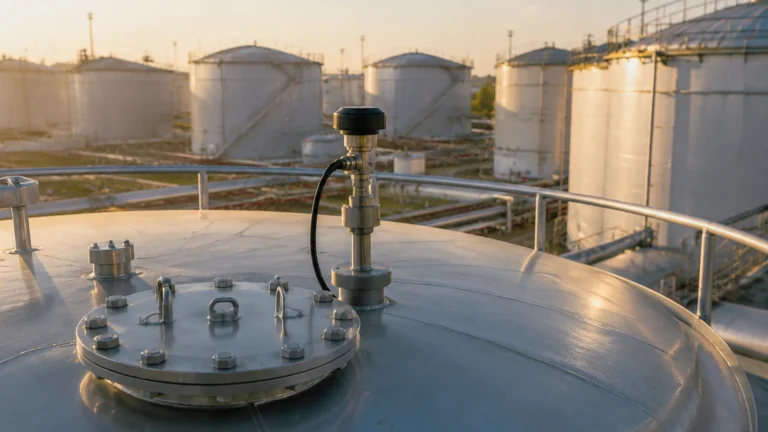
In industrial process control, the term "flowatcher" represents the critical intersection of level measurement and flow monitoring. For engineers and facility managers, ensuring that liquids or solids move through a system at the correct rate while maintaining safe tank levels is a fundamental requirement. Whether managing a municipal water treatment plant, a chemical processing facility, or an oil and gas terminal, the ability to accurately "watch" the flow and level of media is essential for operational efficiency, safety, and regulatory compliance.
Industrial level measurement instruments, such as those provided by professional manufacturers like Welk, serve as the backbone for these monitoring systems. By integrating advanced sensors—including radar, ultrasonic, and hydrostatic transmitters—operators can achieve a comprehensive view of their process. This guide explores the technical principles, selection criteria, and installation best practices for implementing robust flow and level monitoring solutions in professional B2B environments.
Fundamental Measurement Principles
Before selecting a specific instrument for a flow or level monitoring application, it is vital to understand the physics behind the technology. Different media and environmental conditions dictate which principle will yield the most reliable data.
Radar Level Measurement (Non-Contact)
Radar level meters operate on the principle of Time of Flight (ToF) or Frequency Modulated Continuous Wave (FMCW). The sensor emits high-frequency electromagnetic waves (often in the 26GHz or 80GHz range) toward the surface of the medium. These waves reflect off the surface and return to the sensor.
* ToF: Measures the time it takes for a single pulse to travel to the surface and back.
* FMCW: Transmits a continuous signal with a constantly changing frequency. The difference in frequency between the transmitted and received signal is proportional to the distance.
Radar is highly valued because it is unaffected by temperature fluctuations, vacuum, or high pressure, making it ideal for volatile chemicals or high-temperature oil applications.
Ultrasonic Level Measurement
Ultrasonic sensors function similarly to radar but use sound waves instead of electromagnetic waves. The transducer emits an ultrasonic pulse that bounces off the target and returns. The distance is calculated based on the speed of sound.
Because the speed of sound varies with air temperature, high-quality ultrasonic sensors include integrated temperature compensation. These are cost-effective solutions for water and wastewater applications but are sensitive to heavy foam, dust, and significant vapor layers which can attenuate the sound signal.
Hydrostatic Level Measurement
Hydrostatic transmitters measure the pressure exerted by a liquid column at a specific point. The principle is based on the formula:
*P = ρ × g × h*
Where *P* is pressure, *ρ* (rho) is the density of the liquid, *g* is the gravitational constant, and *h* is the height of the liquid. This method is highly reliable for vented tanks and deep wells, provided the density of the liquid remains relatively constant.
Open Channel Flow Measurement
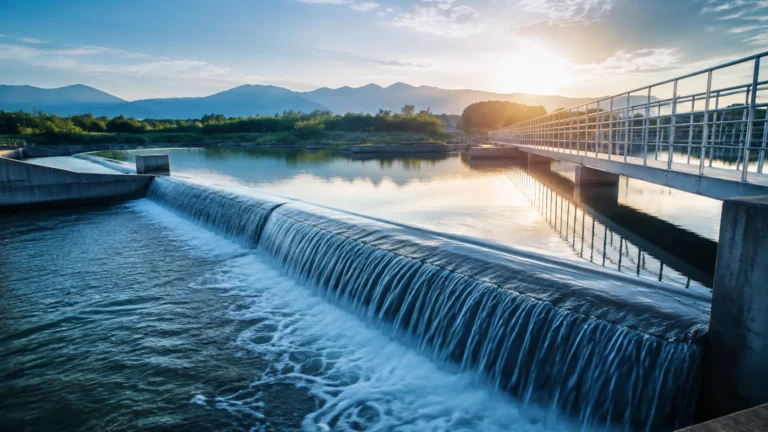
In many environmental and industrial discharge applications, flow is measured in open channels (flumes or weirs). Here, the "flowatcher" concept is applied by using a level sensor to measure the head (height) of the liquid. This level is then converted into a flow rate using standardized mathematical formulas specific to the geometry of the flume or weir. This is a primary application for ultrasonic and radar level instruments in the water treatment sector.
Key Evaluation Criteria for Industrial Monitoring
When evaluating instruments for a monitoring project, several technical factors must be prioritized to ensure long-term reliability and accuracy.
1. Media Characteristics: Is the liquid corrosive, viscous, or prone to foaming? Radar is generally preferred for corrosive chemicals, while magnetic level gauges or hydrostatic sensors might be used for clean liquids in pressurized vessels.
2. Process Environment: Consider the presence of agitators, internal tank structures, or heavy steam. Non-contact radar with narrow beam angles can often bypass internal obstructions that would interfere with ultrasonic signals.
3. Accuracy Requirements: For custody transfer or high-value chemical dosing, high-frequency radar (80GHz) offers millimeter-level precision. For general sump monitoring, lower-cost ultrasonic sensors may suffice.
4. Integration and Output: Modern B2B applications require seamless integration with PLC or SCADA systems. Look for instruments supporting 4-20mA HART, Modbus RS485, or Profibus protocols.
Selection Table: Level and Flow Technologies
The following table provides a comparison of common technologies used in industrial level and flow monitoring systems.
| Technology | Accuracy | Ideal Media | Temperature/Pressure Limits | Typical Application |
| :— | :— | :— | :— | :— |
| 80GHz Radar | ±1 mm | Liquids, Solids, Corrosives | Very High / High | Chemical tanks, high-precision silos |
| Ultrasonic | ±0.25% of range | Water, Wastewater, Slurries | Moderate / Atmospheric | Open channel flow, sumps, basins |
| Hydrostatic | ±0.1% to 0.5% | Clean liquids, Oils | Moderate / High | Deep wells, vented storage tanks |
| Magnetic Gauge | Visual + Switch | Clean to slightly dirty liquids | High / High | Boiler drums, fuel tanks |
| Level Switch | Point detection | Almost any | High / High | Overfill protection, pump control |
Installation Considerations and Best Practices
Even the most advanced sensor will fail to provide accurate data if installed incorrectly. Engineers should adhere to the following guidelines during the design and commissioning phase:
Blocking Distance (Dead Zone)
All non-contact sensors (radar and ultrasonic) have a "dead zone" directly beneath the transducer where measurement is impossible. Ensure the sensor is mounted high enough so that the maximum liquid level never enters this zone. For ultrasonic sensors, this is typically 0.25m to 0.6m depending on the range.
Mounting Position and Angle
* Avoid the Center: In cylindrical tanks, do not mount the sensor in the exact center, as this can create multiple reflections (parabolic effect) that confuse the signal processing.
* Perpendicularity: The sensor must be mounted perpendicular to the liquid surface. Even a few degrees of tilt can cause the signal to reflect away from the receiver, especially in low-dielectric media.
* Inflow Interference: Never mount a sensor directly above an inflow pipe. The turbulence and falling liquid will create false echoes and unstable readings.
Stilling Wells and Bypass Chambers
In tanks with heavy agitation, foam, or turbulence, a stilling well (a vertical pipe installed inside the tank) can be used to provide a calm surface for the sensor to measure. This is a common practice in the oil and gas industry to ensure stable readings during rapid filling or emptying cycles.

Limitations and Common Risks
While modern instrumentation is highly capable, certain physical limitations must be acknowledged:
* Heavy Foam: Ultrasonic waves are often absorbed by thick foam, leading to a "loss of echo." While radar can penetrate some foam, extremely dense or metallic foam can still pose challenges.
* Vapor and Condensation: In high-humidity environments, condensation can form on the transducer face. Many Welk sensors feature drip-off designs or PTFE-sealed antennas to mitigate this, but regular inspection is still recommended.
* Dielectric Constant (εr): Radar relies on a change in the dielectric constant at the air-medium interface. Liquids with very low dielectric constants (like some oils or liquefied gases) reflect less energy, requiring high-sensitivity radar or guided wave radar (GWR).
Frequently Asked Questions (FAQ)
Q: How do I choose between ultrasonic and radar for water level monitoring?
A: Ultrasonic is generally more cost-effective for simple water applications under 15 meters. However, if there are significant temperature swings, wind, or steam, radar is the more reliable choice as its signal is unaffected by air conditions.
Q: Can these sensors be used in hazardous areas?
A: Yes, industrial-grade level meters are typically available with ATEX, IECEx, or North American intrinsic safety (IS) and explosion-proof (XP) certifications. Always verify the specific zone requirement before purchase.
Q: What maintenance is required for a "flowatcher" system?
A: Non-contact sensors are largely maintenance-free because they do not touch the media. However, periodic calibration checks and cleaning of the transducer face (if buildup occurs) are recommended annually.
Q: How does the density of the liquid affect hydrostatic sensors?
A: Hydrostatic sensors measure weight. If the density of the liquid changes (e.g., due to temperature changes or mixing of different chemicals), the level reading will change even if the actual height remains the same. In such cases, a non-contact method like radar is preferred.
Conclusion and Technical Support
Effective monitoring of industrial processes requires a deep understanding of both the technology and the specific application environment. By selecting the right combination of radar, ultrasonic, and hydrostatic instruments, facilities can optimize their operations and prevent costly downtime. For those looking to implement or upgrade their monitoring systems, it is essential to consult with experts who can provide customized OEM/ODM services and technical guidance.
To explore specific product specifications and find the right solution for your industrial automation needs, you can Review product options and application support on the Welk Main Page. Accessing professional-grade instruments ensures that your "flowatcher" capabilities remain accurate, reliable, and cost-effective over the long term.