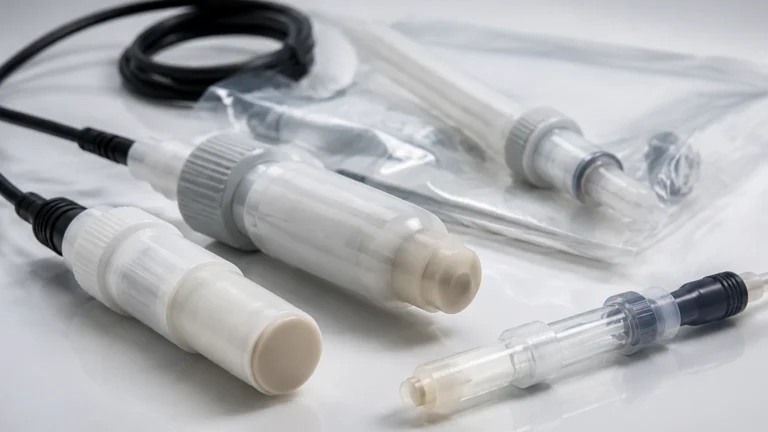
Dissolved Oxygen Monitor
Dissolved Oxygen Monitor
In industrial process control and environmental monitoring, the dissolved oxygen monitor is a critical instrument used to measure the amount of gaseous oxygen (O2) dissolved in a liquid medium. Dissolved oxygen (DO) levels are a primary indicator of water quality and process efficiency in applications ranging from wastewater treatment and aquaculture to chemical manufacturing and power generation. Maintaining precise DO levels is essential for supporting aerobic biological processes, preventing corrosion in high-pressure boilers, and ensuring the stability of chemical reactions.
While often categorized alongside pH and conductivity sensors, the dissolved oxygen monitor requires specific engineering considerations regarding sensor technology, calibration, and installation environment. This guide provides a technical overview of DO measurement principles, selection criteria, and practical application guidance for process engineers and plant managers.
Measurement Principles of Dissolved Oxygen Monitors
To select the appropriate dissolved oxygen monitor, it is first necessary to understand the two primary technologies used in modern industrial sensors: electrochemical and optical.
1. Electrochemical Sensors (Membrane-Based)
Electrochemical DO sensors operate by allowing oxygen to diffuse through a gas-permeable membrane into an internal electrolyte solution. This results in a chemical reaction that produces an electrical signal proportional to the partial pressure of oxygen. There are two main types:
* Polarographic Sensors: These require an external polarizing voltage (typically from the transmitter) to drive the reaction. They utilize a gold cathode and a silver anode. When the voltage is applied, oxygen is reduced at the cathode, creating a current flow. These sensors require a "warm-up" period to stabilize the polarization before measurements can be taken.
* Galvanic Sensors: These are self-polarizing and do not require an external voltage. They use dissimilar metals (such as a lead anode and a silver or gold cathode) that create a spontaneous redox reaction when oxygen is present. Galvanic sensors are ready for immediate use upon power-up but have a shorter shelf life because the anode is consumed during the reaction.
Both electrochemical types require a minimum flow of liquid across the membrane (typically 0.3 m/s) because the sensor consumes oxygen during the measurement process. Without sufficient flow, the sensor will deplete the oxygen in the immediate vicinity of the membrane, leading to artificially low readings.
2. Optical Sensors (Luminescence-Based)
Optical dissolved oxygen monitors utilize the principle of fluorescence quenching. The sensor cap contains a luminophore layer. When the sensor is exposed to a specific wavelength of blue light (emitted by an internal LED), the luminophore becomes excited and emits red light as it returns to its ground state. If oxygen molecules are present, they collide with the excited luminophore and "quench" the fluorescence, reducing the intensity and duration of the red light emission.
By measuring the phase shift or the decay time of the emitted light, the monitor calculates the oxygen concentration. Unlike electrochemical sensors, optical sensors do not consume oxygen and do not require a minimum flow rate. They are also less susceptible to interference from gases like hydrogen sulfide (H2S).
Technical Selection Criteria
Choosing the right dissolved oxygen monitor requires evaluating the specific demands of the process environment. The following table summarizes the key differences between the major technologies.
Comparison Table: DO Sensor Technologies
| Feature | Polarographic | Galvanic | Optical (LDO) |
| :— | :— | :— | :— |
| Measurement Principle | Amperometric (External Voltage) | Amperometric (Self-Polarizing) | Fluorescence Quenching |
| Oxygen Consumption | High | High | None |
| Minimum Flow Rate | Required (~0.3 m/s) | Required (~0.3 m/s) | Not Required |
| Maintenance Frequency | High (Membrane/Electrolyte) | High (Membrane/Electrolyte) | Low (Cap replacement) |
| Response Time (T90) | 30–60 seconds | 30–60 seconds | 30–90 seconds |
| Interference | H2S, CO2, Chlorine | H2S, CO2, Chlorine | Insensitive to H2S |
| Calibration Stability | Moderate | Moderate | High |
| Initial Cost | Lower | Lower | Higher |
Installation and Engineering Considerations
Proper installation is paramount to ensuring the longevity and accuracy of a dissolved oxygen monitor. Because DO levels can vary significantly within a single tank or pipe, placement must be representative of the bulk fluid.
1. Mounting Orientation
Sensors should ideally be installed at a 45-degree angle relative to the vertical plane. This orientation prevents air bubbles from becoming trapped against the sensor membrane or optical cap, which would cause erroneously high readings. In stagnant or low-flow applications, an immersion mounting with a built-in stirrer may be necessary for electrochemical sensors.
2. Depth and Pressure
Standard industrial DO sensors are typically rated for pressures up to 6 bar (approx. 600 kPa) or 10 bar. If the sensor is installed at the bottom of a deep tank, the hydrostatic pressure must be accounted for. For deep-water monitoring or high-pressure chemical reactors, specialized high-pressure housings are required. It is also important to ensure that the cable entry is sealed against moisture ingress, especially in submersion applications.
3. Flow and Turbulence
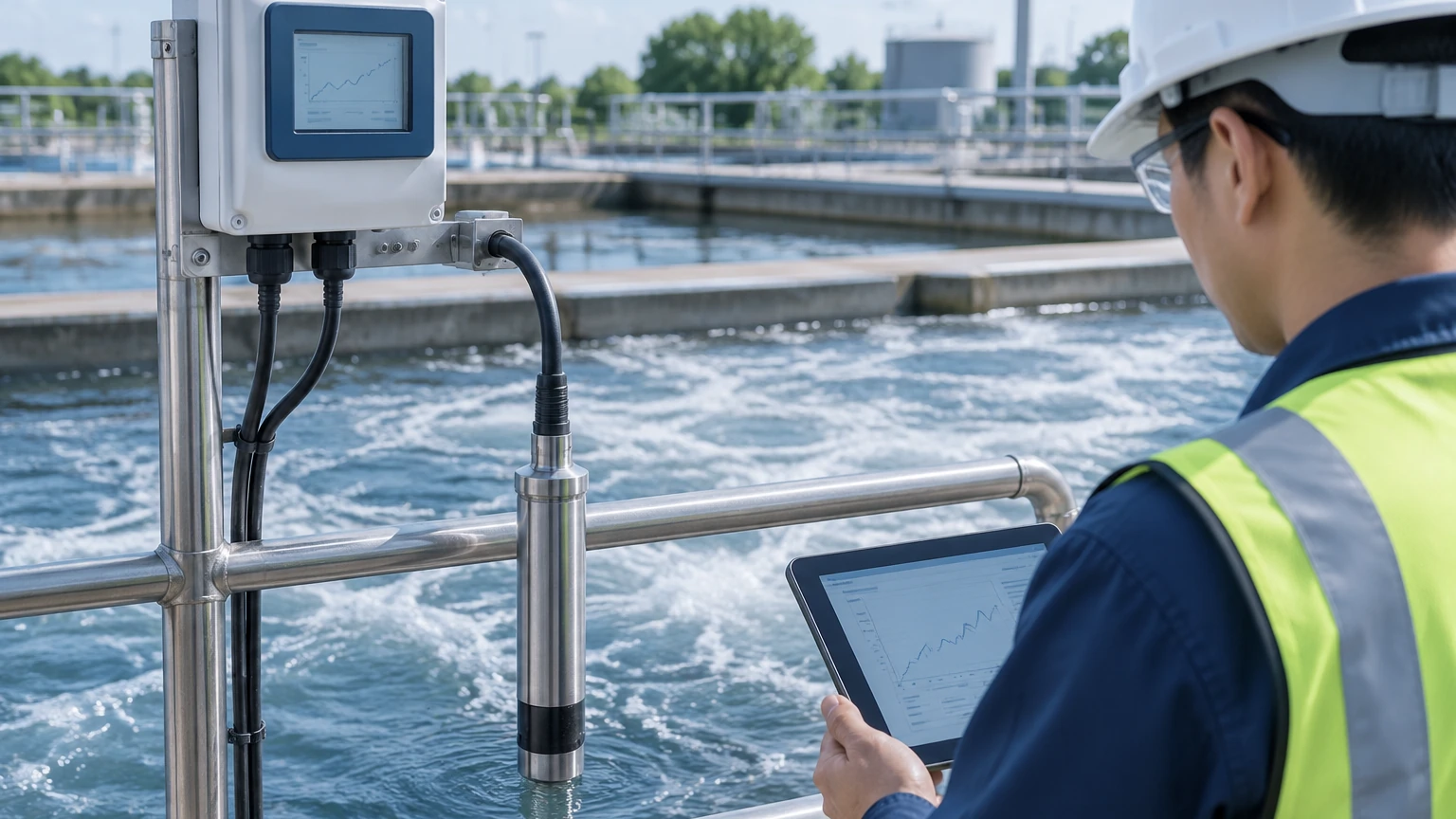
In wastewater aeration basins, the dissolved oxygen monitor should be placed in an area with sufficient turbulence to ensure the water is well-mixed, but away from direct air diffusers. Direct exposure to rising air bubbles will result in a reading of the air's oxygen content rather than the dissolved oxygen in the liquid. For pipe-based installations, a flow-through cell or a T-junction is often used to maintain a consistent velocity across the sensor face.
4. Integration with Level Systems
In many industrial setups, DO monitoring is part of a broader automated control loop. For instance, in a chemical storage tank or a bioreactor, liquid level measurement is often paired with DO sensing to manage aeration and filling cycles. For comprehensive process automation, engineers often consult the Main Page of specialized instrument providers like Welk to source compatible level transmitters and controllers that can integrate with DO monitoring systems via 4-20mA, Modbus RTU, or HART protocols.
Calibration and Maintenance Protocols
To maintain accuracy, dissolved oxygen monitors require periodic calibration. Most modern transmitters support two primary calibration methods:
* Air Calibration (Water-Saturated Air): This is the most common field method. The sensor is held in the air just above the water surface in a high-humidity environment. Since the percentage of oxygen in the atmosphere is constant (approx. 20.9%), the monitor can calibrate its 100% saturation point based on the current barometric pressure and temperature.
* Zero-Point Calibration: This involves placing the sensor in an oxygen-free environment, such as water containing dissolved sodium sulfite (Na2SO3) or high-purity nitrogen gas. This is particularly important for processes operating at very low DO levels (ppb range), such as boiler feedwater.
Maintenance Checklist:
1. Visual Inspection: Check for biofouling or scaling on the sensor head. In wastewater, sensors may need weekly cleaning with a soft cloth or specialized cleaning solution.
2. Membrane Replacement: For electrochemical sensors, membranes should be replaced every 3–6 months depending on the severity of the application.
3. Electrolyte Top-up: Ensure the electrolyte solution is clear and free of bubbles during membrane service.
4. Optical Cap Replacement: Optical sensor caps typically last 1–2 years. The transmitter will usually provide a diagnostic alert when the luminophore's signal strength weakens.
Common Risks and Limitations
While the dissolved oxygen monitor is a robust tool, several factors can compromise its performance:
* Temperature Fluctuations: Oxygen solubility is highly temperature-dependent. A rise in temperature decreases oxygen solubility. Industrial DO monitors must include an integrated temperature sensor (such as a Pt100 or Pt1000) to perform automatic temperature compensation.
* Salinity Interference: In saltwater applications (seawater or brine), the presence of dissolved salts reduces the solubility of oxygen (the "salting-out" effect). If the monitor does not have a salinity compensation feature, the reported DO concentration will be higher than the actual value.
* Chemical Coating: In oil-and-gas or oily wastewater applications, hydrocarbons can coat the sensor membrane, blocking the diffusion of oxygen. Optical sensors are generally more resistant to this, but still require periodic cleaning to maintain response times.
Frequently Asked Questions (FAQ)
Q: What is the difference between mg/L and % Saturation?
A: % Saturation measures the amount of oxygen in the water relative to the maximum amount the water can hold at that specific temperature and pressure. mg/L (or ppm) is the actual mass of oxygen per liter of water. Most B2B applications require mg/L for process control, while % Saturation is often used for environmental compliance.
Q: Can a dissolved oxygen monitor be used in explosive atmospheres?
A: Yes, but the instrument must be rated for hazardous areas (e.g., ATEX, IECEx, or Class I Div 1). These versions typically use intrinsically safe circuits or explosion-proof housings.
Q: Why is my DO reading drifting in a stagnant tank?
A: If you are using an electrochemical sensor, it is likely consuming the oxygen around the membrane. You must either provide agitation or switch to an optical sensor, which does not consume oxygen.
Q: How does altitude affect DO measurement?
A: Higher altitudes have lower atmospheric pressure, which reduces the partial pressure of oxygen. During calibration, the monitor must be programmed with the local barometric pressure to ensure the 100% saturation point is calculated correctly.
Conclusion
The implementation of a dissolved oxygen monitor is a strategic investment in process stability and environmental stewardship. By understanding the fundamental differences between optical and electrochemical sensing, and by adhering to rigorous installation and calibration standards, industrial facilities can achieve reliable, long-term DO measurement. For engineers designing complex fluid management systems, integrating DO monitors with high-quality level and pressure instrumentation ensures a holistic approach to industrial automation and efficiency.