High-precision Sensors Portfolio
High-precision Sensors Portfolio
In the landscape of modern industrial automation, the ability to monitor fluid and solid levels with surgical accuracy is no longer a luxury but a fundamental requirement for operational efficiency, safety, and regulatory compliance. A robust high-precision sensors portfolio serves as the backbone for industries ranging from chemical processing and water treatment to oil and gas and food production. Selecting the correct instrument requires a deep understanding of the physics behind the measurement, the environmental constraints of the application, and the specific technical capabilities of the hardware.
This guide explores the core technologies within a professional high-precision sensors portfolio, offering engineering insights into their principles, selection criteria, and practical implementation strategies.
Core Principles of Level Measurement Technology
Before evaluating specific models within a high-precision sensors portfolio, engineers must understand the physical principles that govern different measurement methods. Each technology interacts with the process media and the vessel environment differently.
Radar Level Measurement (FMCW and Pulsed)
Radar level meters represent the pinnacle of non-contact measurement. They operate by emitting electromagnetic waves toward the medium surface and measuring the time it takes for the signal to return.
* Pulsed Radar: Sends short microwave bursts and measures the transit time. While effective, it often lacks the resolution required for high-precision applications compared to newer methods.
* FMCW (Frequency Modulated Continuous Wave): This technology emits a continuous signal with a constantly changing frequency. The difference in frequency between the emitted and received signal is directly proportional to the distance. Modern 80GHz radar sensors utilize FMCW to achieve accuracies within ±1 mm, even in complex environments with narrow nozzles or internal obstructions.
Ultrasonic Level Measurement
Ultrasonic sensors utilize sound waves (mechanical energy) rather than electromagnetic waves. A piezoelectric transducer emits a pulse that reflects off the liquid or solid surface. The sensor calculates the distance based on the speed of sound.
Because the speed of sound is affected by air temperature, high-precision ultrasonic sensors must include integrated temperature compensation. These are ideal for open-channel flow and water tank monitoring where the dielectric constant of the medium might vary, which would otherwise affect radar performance.
Hydrostatic Pressure Measurement
Hydrostatic transmitters measure the pressure exerted by a liquid column at a specific point. The relationship is defined by the formula $P = \rho gh$, where $P$ is pressure, $\rho$ is the density of the fluid, $g$ is gravity, and $h$ is the height of the liquid.
In a high-precision sensors portfolio, hydrostatic sensors are often used in vented tanks or deep wells. Their precision depends heavily on the stability of the fluid's density. If the temperature fluctuates significantly, the density changes, and the sensor must be calibrated or compensated to maintain accuracy.
Magnetic Level Gauges and Switches
Magnetic level gauges provide a visual indication and can be paired with reed chain transmitters or magnetostrictive probes for high-precision electronic output. A float containing a permanent magnet moves with the liquid level, actuating external flags or a sensor probe. This technology is highly valued for high-pressure and high-temperature applications where direct contact with the medium is necessary but a clear physical barrier (the bypass chamber) is required for safety.
Components of a Comprehensive High-precision Sensors Portfolio
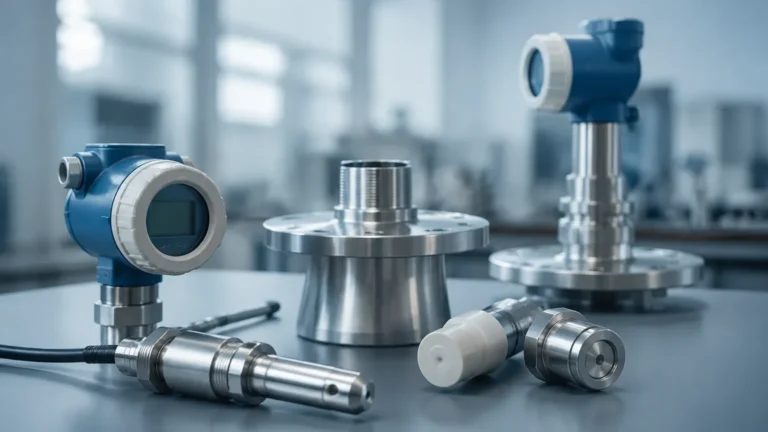
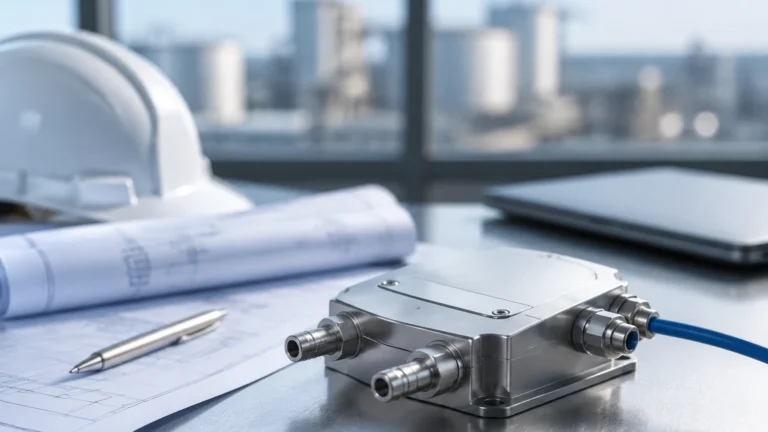
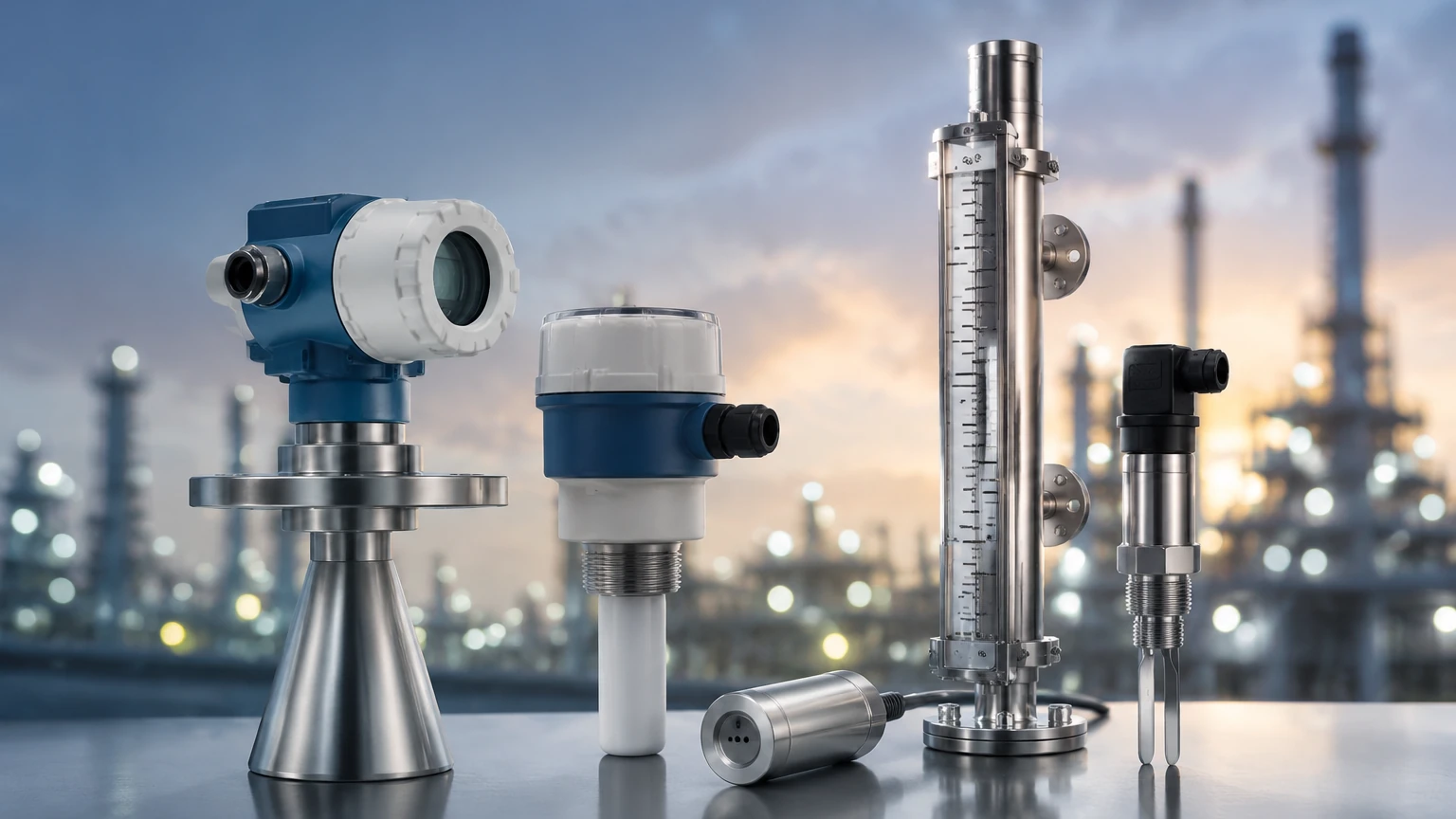
A versatile high-precision sensors portfolio, such as the one offered by Welk, includes several specialized instruments designed to address specific industrial challenges. When navigating the Main Page of a technical catalog, engineers should categorize instruments by their primary strengths.
| Technology | Typical Accuracy | Best Use Case | Limitations |
| :— | :— | :— | :— |
| 80GHz Radar | ±1 mm to ±2 mm | Small tanks, corrosive chemicals, high precision | High initial cost |
| 26GHz Radar | ±3 mm to ±5 mm | Large silos, bulk solids, standard liquids | Larger beam angle than 80GHz |
| Ultrasonic | ±0.25% of range | Water treatment, wastewater, sumps | Affected by foam, steam, and wind |
| Hydrostatic | ±0.1% to ±0.5% FS | Deep wells, vented fuel tanks, reservoirs | Requires constant fluid density |
| Magnetostrictive | ±1 mm | High-accuracy interface measurement | Restricted to clean, non-coating liquids |
Key Evaluation Criteria for Sensor Selection
When selecting from a high-precision sensors portfolio, the "highest accuracy" sensor is not always the "best" sensor. Engineers must weigh several factors to ensure long-term reliability.
1. Media Characteristics
The physical and chemical properties of the substance being measured are paramount.
* Dielectric Constant ($ε_r$): For radar sensors, a low dielectric constant (like oil or LPG) results in a weaker return signal. High-precision radar units must have high sensitivity to track these surfaces accurately.
* Viscosity and Coating: If a medium is prone to buildup (like bitumen or heavy sludge), non-contact sensors (radar/ultrasonic) are preferred over contact-based hydrostatic or magnetic sensors.
* Corrosivity: Sensors must be constructed from compatible materials such as 316L stainless steel, PTFE, or PVDF.
2. Process Conditions
* Temperature: Extreme heat can damage electronics or affect sound speed. High-precision sensors often feature cooling fins or remote electronics options.
* Pressure: Hydrostatic and magnetic gauges must be rated for the maximum vessel pressure, including potential surges.
* Turbulence and Foam: Surface agitation can scatter ultrasonic and radar signals. In these cases, 80GHz radar with advanced signal processing (echo filtering) is often the only way to maintain precision.
3. Vessel Geometry
The presence of agitators, heating coils, or narrow nozzles can create "false echoes." A high-precision sensors portfolio should offer instruments with narrow beam angles (e.g., 3° for 80GHz radar) to bypass these obstructions without requiring extensive software masking.
Installation Guidelines for Maintaining Precision
Even the most advanced instrument in a high-precision sensors portfolio will underperform if installed incorrectly. Follow these engineering best practices:
1. Nozzle Optimization: For radar and ultrasonic sensors, the nozzle should be as short as possible. If a long nozzle is required, ensure the sensor horn or antenna extends past the nozzle bottom to prevent internal reflections.
2. Avoid the Center: Do not install non-contact sensors in the exact center of a domed tank, as this can focus multiple reflections back to the sensor, causing signal interference.
3. Stilling Wells: In applications with heavy foam or extreme turbulence, installing a radar sensor inside a stilling well (a vertical pipe) can provide a calm surface for measurement, significantly increasing precision.
4. Submersible Positioning: Hydrostatic sensors should be mounted away from intake or discharge pipes where fluid velocity could create localized pressure changes (Bernoulli effect), leading to false readings.
5. Calibration: Perform a "wet calibration" or a multi-point field check after installation to account for the specific geometry and atmospheric conditions of the site.
Common Risks and Limitations
While a high-precision sensors portfolio provides the tools for accuracy, certain environmental factors present inherent risks:
* Signal Absorption: Heavy steam or dust can absorb ultrasonic energy, leading to signal loss. Radar is generally immune to dust but can be affected by extremely dense steam at high pressures.
* Vacuum Conditions: Ultrasonic sensors cannot operate in a vacuum because sound waves require a medium (air/gas) to travel. Radar is the standard choice for vacuum applications.
* Interface Complexity: Measuring the interface between two liquids (e.g., oil and water) requires specialized sensors. Magnetostrictive probes or guided wave radar (GWR) are typically necessary, as standard top-down radar may only see the top layer.
Frequently Asked Questions (FAQ)
Q: Why is 80GHz radar considered superior for high-precision portfolios?
A: The higher frequency allows for a much smaller antenna and a narrower beam angle. This concentrates the energy on the product surface and avoids interference from tank walls and internal structures, leading to a higher signal-to-noise ratio and better accuracy.
Q: Can I use a hydrostatic sensor for a pressurized tank?
A: Yes, but you must use a differential pressure (DP) approach. One sensor measures the bottom pressure and another measures the gas pressure at the top. The system subtracts the top pressure to find the true liquid head.
Q: How often do sensors in a high-precision portfolio need recalibration?
A: This depends on the technology and the environment. Radar sensors are highly stable and may only need checking every 2–3 years. Hydrostatic sensors in corrosive or scaling media may require annual inspection and cleaning of the diaphragm.
Q: What is the "blanking zone" in ultrasonic sensors?
A: It is the area immediately below the transducer where the sensor cannot receive a return signal because it is still vibrating from the emission. This must be factored into the tank design to prevent overfilling into the dead zone.
Conclusion and Next Steps
Building an effective measurement strategy requires more than just purchasing a device; it requires matching the physics of the sensor to the realities of the process. A comprehensive high-precision sensors portfolio provides the flexibility to handle diverse media, from aggressive acids to bulk solids, ensuring that every millimeter of level change is accounted for.
For engineers and procurement specialists looking to refine their instrumentation strategy, the next step is to evaluate specific technical data sheets and application notes. You can explore the full range of industrial measurement solutions by visiting the Main Page to compare model specifications and request customized OEM/ODM support for unique installation challenges. Confirming the dielectric constant of your media and the maximum process temperature/pressure before selection will ensure the longevity and accuracy of your investment.