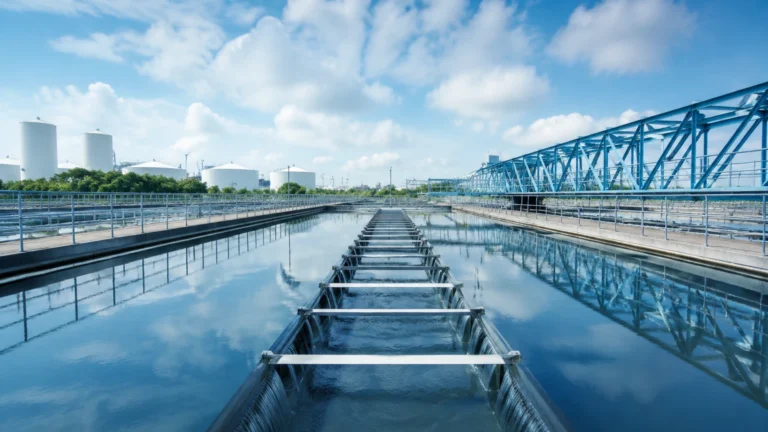
Settleometer
Settleometer
In the field of wastewater treatment and industrial process control, the ability to monitor and manage solids separation is critical for maintaining effluent quality and operational efficiency. The settleometer is a fundamental tool used by plant operators to evaluate the settling characteristics of activated sludge. While traditionally a manual laboratory instrument, the data derived from settleometer tests informs the calibration and deployment of advanced automated level measurement solutions.
Understanding the relationship between manual settleability testing and continuous sludge blanket level monitoring allows engineers to optimize clarifier performance and prevent solids carryover. This guide examines the principles of the settleometer, the interpretation of its data, and how these manual insights translate into industrial automation requirements.
Principles of Sludge Settleability
The settleometer test is designed to simulate the conditions within a secondary clarifier on a smaller, observable scale. The primary objective is to determine how quickly and effectively the biological solids (floc) separate from the liquid phase. This process is governed by several physical phases of settling, which are essential to understand before selecting monitoring equipment.
The Four Phases of Settling
1. Discrete Particle Settling: In very dilute suspensions, particles settle individually without significant interaction with neighboring particles. This is rarely the primary focus of a settleometer test in activated sludge but occurs in grit chambers.
2. Flocculent Settling: As particles collide, they coalesce into larger flocs. This increases their mass and settling velocity. The settleometer allows operators to observe the formation of these flocs in the first few minutes of the test.
3. Hindered (Zone) Settling: In the concentrated environment of activated sludge, particles are so close together that their velocity fields overlap. They settle as a single "blanket" or zone, creating a distinct interface between the clear supernatant and the sludge mass. This interface is what industrial level sensors are designed to track.
4. Compression Settling: At the bottom of the settleometer or clarifier, the weight of the sludge mass physically compresses the lower layers, squeezing out water. This phase is much slower and determines the final concentration of the Return Activated Sludge (RAS).
By observing these phases in a graduated settleometer, operators can calculate the Sludge Volume Index (SVI), a standardized metric that indicates whether the sludge is healthy, bulking, or pin-floccing.
The Settleometer Test Procedure
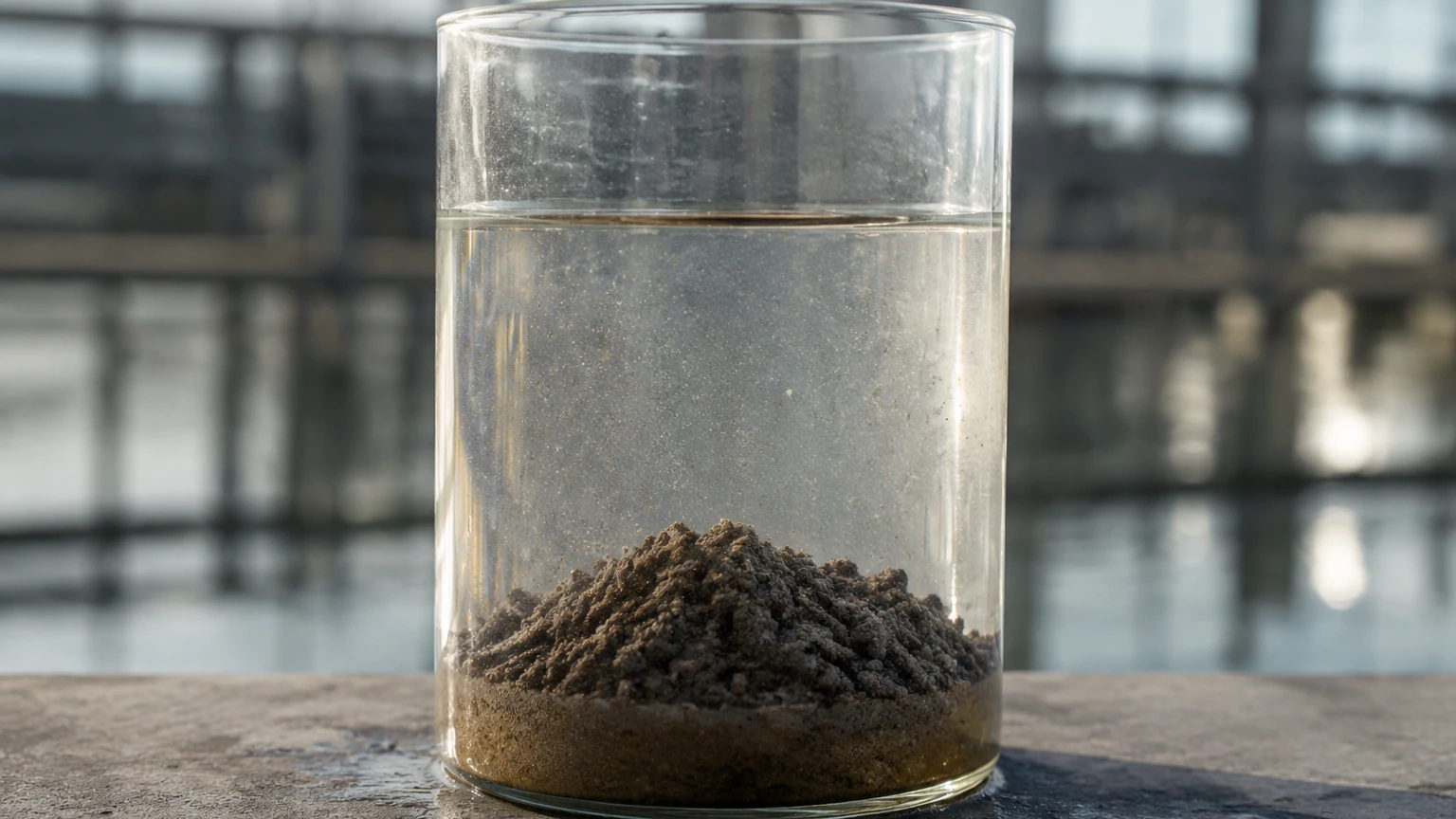
A standard settleometer is typically a wide-mouth transparent cylinder with a capacity of 1,000 ml or 2,000 ml. The wide-mouth design is critical to minimize "wall effects," where the friction of the container walls interferes with the natural settling rate of the sludge flocs.
Step-by-Step Methodology
1. Sampling: Collect a fresh sample of mixed liquor from the discharge end of the aeration tank, just before it enters the clarifier. It is vital to perform the test immediately to maintain the temperature and biological activity of the sample.
2. Filling: Gently pour the sample into the settleometer to the 1,000 ml or 2,000 ml mark. Avoid excessive turbulence that might break up the flocs, but ensure the sample is well-mixed initially.
3. Observation: Start a timer. The most common intervals for recording the sludge interface level are 5, 10, 15, 30, and 60 minutes.
4. Data Recording: Note the volume occupied by the settled sludge at each interval. For example, if after 30 minutes the interface is at the 250 ml mark in a 1,000 ml cylinder, the 30-minute Settled Sludge Volume (SSV30) is 250 ml/L.
Interpreting Results
* Fast Settling (SSV30 < 150 ml/L): May indicate "pin floc" or old sludge, which leaves a turbid supernatant.
* Slow Settling (SSV30 > 300 ml/L): Often indicates young sludge or filamentous bulking, which can lead to clarifier overloading.
* Ideal Settling: A clear interface that reaches a stable compression zone within 30 minutes, typically resulting in an SVI between 80 and 150 ml/g.
For engineers looking to transition these manual observations into a continuous control strategy, reviewing modern instrumentation is the next logical step. You can explore a variety of Main Page resources to see how ultrasonic and radar technologies provide the real-time data that manual settleometer tests cannot offer 24/7.
Transitioning to Automated Sludge Level Measurement
While the manual settleometer provides a snapshot of sludge health, industrial processes require continuous monitoring to respond to flow surges or process upsets. Automated sludge blanket level (SBL) meters function as an "electronic settleometer" inside the clarifier.
Ultrasonic Level Sensors
Ultrasonic sensors are the most common choice for sludge blanket monitoring. A transducer is submerged just below the water surface and emits an ultrasonic pulse downward. This pulse reflects off the sludge interface (the hindered settling zone). By measuring the time-of-flight, the instrument calculates the depth of the sludge blanket.
Optical/Turbidity Sensors
In applications where the sludge interface is not well-defined (e.g., during bulking events), optical sensors may be used. These measure the attenuation of light or infrared radiation to determine the suspended solids concentration at various depths, effectively mapping the settleometer's vertical profile in real-time.
Selection Criteria for Sludge Monitoring Systems
Choosing between manual settleometers and automated level measurement solutions depends on the scale of the facility and the required precision. The following table compares the two approaches for industrial B2B applications.
| Feature | Manual Settleometer | Automated Sludge Level Meter |
| :— | :— | :— |
| Data Frequency | Periodic (e.g., once per shift) | Continuous (Real-time) |
| Primary Metric | Sludge Volume Index (SVI) | Sludge Blanket Depth (meters) |
| Labor Intensity | High (Requires manual sampling) | Low (Automated) |
| Initial Cost | Very Low | Moderate to High |
| Accuracy | Subjective to operator observation | High (Digital signal processing) |
| Integration | None (Manual logbooks) | Full (4-20mA, Modbus, HART) |
| Maintenance | Cleaning after every use | Periodic sensor wiping/calibration |
Technical Considerations for Hardware Selection
When specifying an automated system to replace or augment settleometer testing, consider the following:
* Beam Angle: For narrow clarifiers, a narrow beam angle (e.g., 5° to 10°) is necessary to avoid reflections from walls or rake arms.
* Frequency: Higher frequencies (e.g., 600 kHz to 1 MHz) provide better resolution for light flocs, while lower frequencies penetrate thicker blankets.
* Self-Cleaning: In wastewater environments, sensors should be equipped with automatic wipers or air-flush systems to prevent biofilm buildup.
Installation and Practical Considerations
To ensure that an automated level meter provides data consistent with a manual settleometer, proper installation is paramount.
1. Location: The sensor should be installed in a zone of the clarifier where the sludge has had time to enter the hindered settling phase. Avoid areas near the center well (influent) where turbulence is high.
2. Obstructions: Ensure the sensor path is clear of skimmers, rake arms, and baffles. Many modern level meters allow for "false echo suppression" to ignore fixed internal structures.
3. Mounting: Use robust brackets that allow for easy removal for maintenance. The sensor should be submerged deep enough to avoid surface foam but high enough to capture the full range of the sludge blanket's movement.
4. Calibration: Periodically verify the automated reading against a manual "core sampler" or a settleometer test. If the settleometer shows the sludge is settling very slowly (bulking), the automated sensor's sensitivity may need adjustment to detect the diffuse interface.
Limitations and Challenges
Neither the manual settleometer nor the automated level meter is a universal solution. Engineers must be aware of specific limitations:
* Temperature Sensitivity: Settling rates are temperature-dependent. A settleometer test performed in a cold lab using a sample from a warm aeration tank will yield inaccurate results. Automated sensors submerged in the process are less prone to this error.
* Filamentous Bulking: When filamentous bacteria dominate, the sludge may not form a clear interface. In these cases, a settleometer will show very little settling, and an ultrasonic meter may struggle to find a distinct reflection point.
* Degassing: If sludge is left in a settleometer too long, denitrification can occur, producing nitrogen gas bubbles that cause the sludge to float (rising sludge). This can also happen in clarifiers if the RAS rate is too low.
Frequently Asked Questions (FAQs)
Q: How often should I perform a settleometer test?
In most municipal plants, once per shift is standard. However, in industrial plants with highly variable influent, more frequent testing or continuous automated monitoring is recommended.
Q: Can I use a standard 1,000 ml graduated cylinder instead of a settleometer?
While possible, standard cylinders are often too narrow. The narrow diameter increases the "wall effect," which slows down the settling rate and gives a false impression of the sludge's performance in a full-scale clarifier. A dedicated 2-liter settleometer is the professional standard.
Q: How does the settleometer relate to the Sludge Volume Index (SVI)?
SVI is calculated using the formula: `SVI (ml/g) = (Settled Sludge Volume at 30 min in ml/L * 1,000) / (Mixed Liquor Suspended Solids in mg/L)`. The settleometer provides the numerator for this critical calculation.
Q: Do automated level meters require a lot of maintenance?
Modern ultrasonic sludge level meters from reputable manufacturers like Welk are designed for industrial environments. With integrated cleaning systems, maintenance is typically reduced to a monthly visual inspection and occasional sensor wiping.
Q: What is the benefit of integrating settleometer data into a PLC?
By combining manual SVI data with continuous sludge blanket depth readings, a PLC can automatically adjust the Return Activated Sludge (RAS) and Waste Activated Sludge (WAS) pumps. This creates a closed-loop system that maintains optimal solids inventory regardless of influent fluctuations.
Conclusion
The settleometer remains an indispensable tool for the hands-on assessment of biological health in wastewater treatment. However, as industrial automation advances, the transition toward continuous level measurement is essential for maintaining compliance and reducing operational costs. By understanding the principles of settling and the technical requirements of level instrumentation, plant engineers can ensure their solids separation processes remain stable and efficient. For further technical specifications and to explore advanced measurement technology, refer to the Main Page for comprehensive product support and engineering guidance.