Sampling Station
Sampling Station
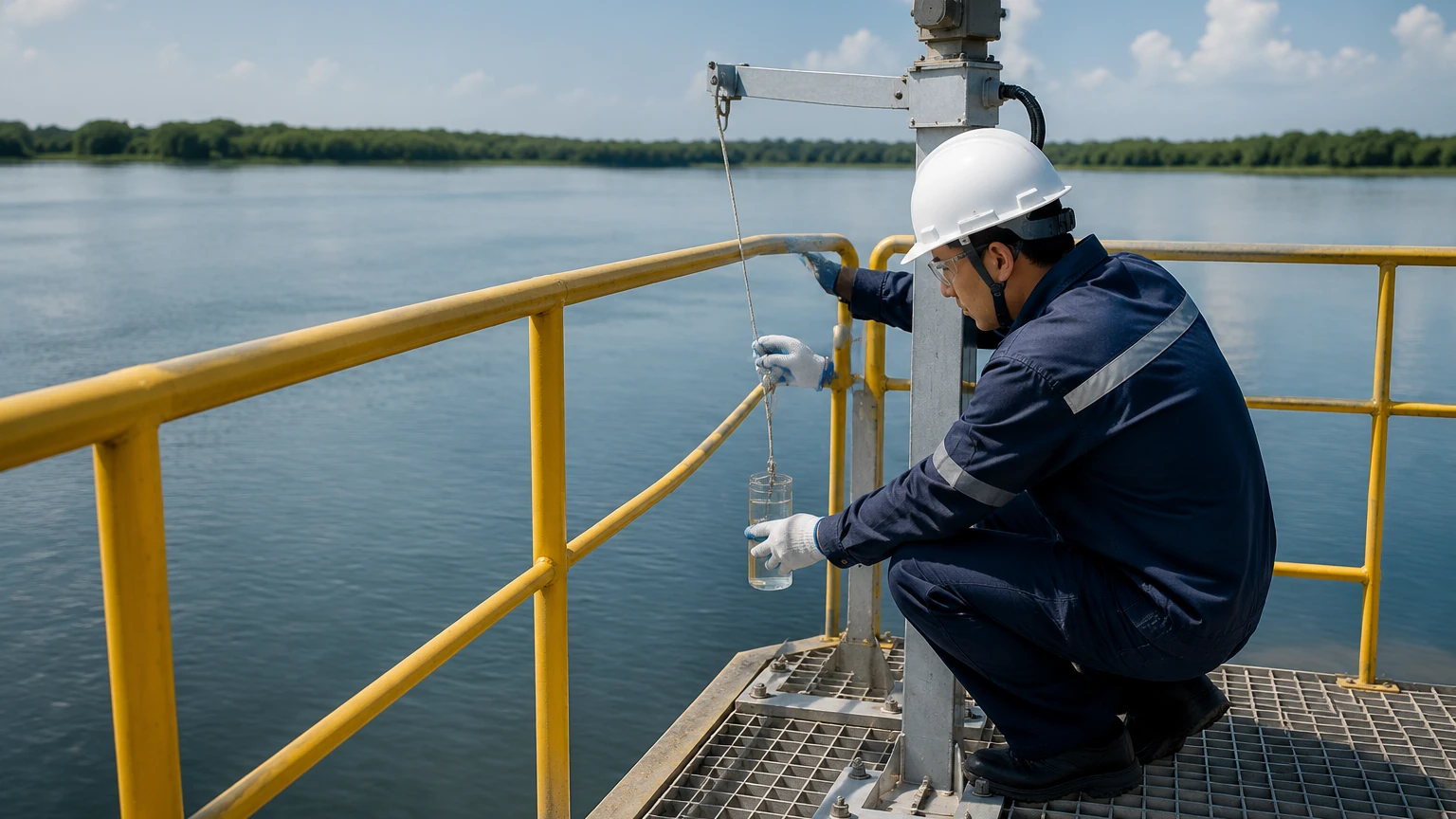
In industrial process control and environmental monitoring, a sampling station serves as a critical junction for quality assurance and regulatory compliance. These stations are specialized installations designed to extract representative samples of liquids—ranging from raw wastewater to refined chemicals—for real-time or laboratory analysis. For engineers and facility managers, the reliability of a sampling station is not merely dependent on the collection mechanism itself, but on the precise integration of level measurement technologies that ensure the station operates within safe parameters and provides accurate volumetric data.
Effective liquid level management within these stations prevents pump cavitation, avoids hazardous overflows, and ensures that the volume of the sample collected is consistent with process requirements. As a professional manufacturer, Welk provides a comprehensive suite of industrial level measurement instruments, including radar level meters and ultrasonic sensors, specifically engineered to meet the rigorous demands of modern sampling applications.
The Role of Level Measurement in Sampling Stations
A sampling station typically consists of a collection vessel, a pumping system, and a series of sensors. Level measurement instruments are used to monitor the "sample header" or the primary tank from which the sample is drawn. Without accurate level data, the automated logic of the station cannot determine if there is sufficient fluid to perform a draw or if the discharge tank has reached capacity.
In many B2B industrial environments, such as water treatment plants or chemical processing facilities, sampling stations must operate autonomously. This requires high-precision sensors that can communicate with PLCs (Programmable Logic Controllers) or SCADA systems. By visiting the Main Page of professional instrumentation providers, engineers can find specific hardware configurations that support these automated workflows.
Core Measurement Principles
Before selecting instrumentation for a sampling station, it is essential to understand the underlying physics of the most common level measurement technologies.
1. Radar Level Measurement (Non-Contact)
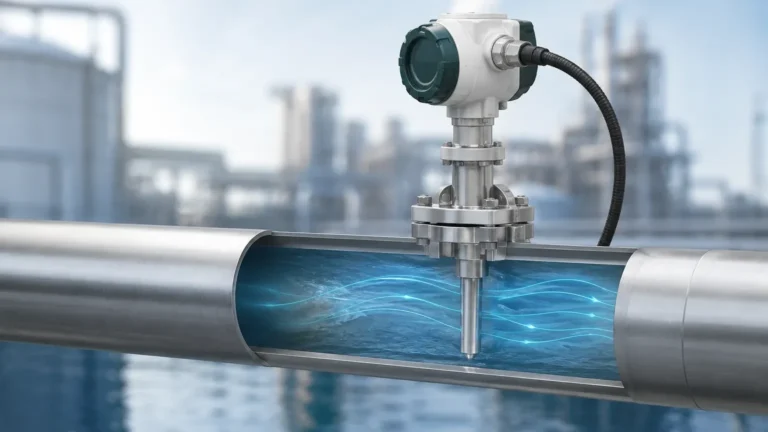
Radar level meters utilize high-frequency electromagnetic waves (typically in the 26GHz or 80GHz range). The sensor emits a pulse that travels to the liquid surface and reflects back. The instrument calculates the distance based on the time-of-flight (ToF).
- Advantage: It is unaffected by temperature fluctuations, pressure changes, or the presence of vapors and dust. This makes it ideal for chemical sampling stations where volatile substances are present.
2. Ultrasonic Level Measurement (Non-Contact)
Ultrasonic sensors emit high-frequency sound pulses. Like radar, they use the time-of-flight principle. However, because sound requires a medium (air) to travel, the accuracy can be influenced by air temperature and turbulence.
- Advantage: Highly cost-effective for water-based sampling stations and open-channel flow monitoring.
3. Hydrostatic Level Measurement (Contact)
This method measures the pressure exerted by the liquid column. The pressure ($P$) is proportional to the height of the liquid ($h$) and its density ($
ho$), following the formula $P =
ho gh$.
- Advantage: Extremely reliable for deep sumps or tanks where top-mounting a non-contact sensor is impractical.
4. Magnetic Level Gauges and Switches
For localized visual indication and point-level control, magnetic gauges use a float equipped with a magnet to actuate external switches or a visual flapper scale.
- Advantage: Provides a fail-safe mechanical backup to electronic systems.
Selection Criteria for Sampling Station Instrumentation
Choosing the right sensor for a sampling station requires an evaluation of the chemical compatibility, the physical environment, and the required precision. The following table provides a comparative overview of the technologies offered by Welk to assist in the selection process.
Technical Selection Table
| Feature | Radar Level Meter | Ultrasonic Sensor | Hydrostatic Transmitter | Magnetic Level Gauge |
| :— | :— | :— | :— | :— |
| Measurement Range | Up to 30m – 120m | 0.3m to 20m | 1m to 200m | 0.5m to 10m |
| Accuracy | ±2mm | ±0.25% of range | ±0.1% to 0.5% | ±5mm to 10mm |
| Media Type | Corrosive, foamy, boiling | Clean liquids, wastewater | Liquids and slurries | Clean liquids |
| Process Temp. | -40°C to +250°C | -40°C to +80°C | -20°C to +80°C | -40°C to +400°C |
| Output Signal | 4-20mA / HART / RS485 | 4-20mA / Modbus | 4-20mA / HART | SPDT Switch / 4-20mA |
| Installation | Top-mounted | Top-mounted | Submerged or Side-mount | Side-mounted |
Installation Considerations for Sampling Stations
Proper installation is paramount to ensuring the longevity and accuracy of the sensors within a sampling station. Engineers should adhere to the following guidelines:
Avoid the "Dead Zone"
All non-contact sensors (radar and ultrasonic) have a "dead zone" or "blocking distance" directly beneath the sensor face where measurements cannot be taken. For a typical ultrasonic sensor, this might be 0.25m to 0.5m (approx. 10 to 20 inches). Ensure the sensor is mounted high enough so that the maximum liquid level never enters this zone.
Positioning and Obstructions
Sensors should be mounted away from the tank wall to prevent signal interference from weld seams or ladders. If the sampling station involves an agitator or a high-velocity inlet pipe, the sensor should be positioned to avoid the turbulent area, or a stilling well should be used to provide a calm surface for measurement.
Environmental Shielding
For outdoor sampling stations, ultrasonic sensors should be equipped with a sunshade to prevent temperature errors caused by solar heating of the sensor body. While radar is less sensitive to temperature, protective housing helps maintain the integrity of the electronics in harsh industrial climates.
Operational Limitations and Risks
While modern level meters are highly advanced, certain conditions can challenge their performance within a sampling station:
1. Heavy Foam: Thick, dense foam can absorb ultrasonic signals and scatter radar waves. In stations where surfactants are present, a high-frequency (80GHz) radar or a hydrostatic pressure transmitter is often the better choice.
2. Vacuum Conditions: Ultrasonic sensors cannot function in a vacuum because sound waves require a medium. Radar is the preferred technology for pressurized or vacuum-sealed sampling vessels.
3. Build-up and Scaling: In wastewater sampling, fats, oils, and grease (FOG) can build up on contact-based sensors. Non-contact radar is recommended here to reduce maintenance frequency.
4. Chemical Compatibility: When dealing with aggressive acids or bases in a chemical sampling station, ensure that the wetted parts of the sensor (such as the PTFE flange of a radar meter or the stainless steel diaphragm of a hydrostatic probe) are resistant to the specific chemicals in use.
Frequently Asked Questions (FAQ)
Q: How often should the level sensors in a sampling station be calibrated?
A: For most industrial applications, an annual calibration check is sufficient. However, in high-precision chemical sampling, a bi-annual verification against a manual dip-tape or a secondary reference is recommended.
Q: Can one sensor handle both level measurement and flow calculation?
A: Yes. Many ultrasonic level sensors used in sampling stations include built-in software to calculate flow rates in open channels (using flumes or weirs) based on the measured head level.
Q: What is the benefit of 80GHz radar over 26GHz radar for sampling?
A: 80GHz radar has a much narrower beam angle, which allows it to be installed in small tanks or sampling headers with internal obstructions without receiving false echoes.
Q: Are hydrostatic transmitters safe for flammable liquids?
A: Yes, provided they are specified with intrinsically safe (Ex ia) or flameproof (Ex d) certifications suitable for the specific hazardous zone of the sampling station.
Conclusion
A well-engineered sampling station is a cornerstone of process transparency and environmental responsibility. By integrating robust level measurement solutions—such as those provided by Welk—operators can ensure continuous, accurate, and maintenance-free monitoring of their liquid assets. Whether the application calls for the sophisticated precision of radar or the cost-effective reliability of ultrasonic sensors, understanding the technical boundaries of each technology is the first step toward operational excellence.
For technical specifications and customized OEM/ODM support regarding level measurement in your facility, you may Review product options and application support to identify the most suitable instrumentation for your specific sampling station requirements.