Tailings Dam Monitoring
Tailings Dam Monitoring
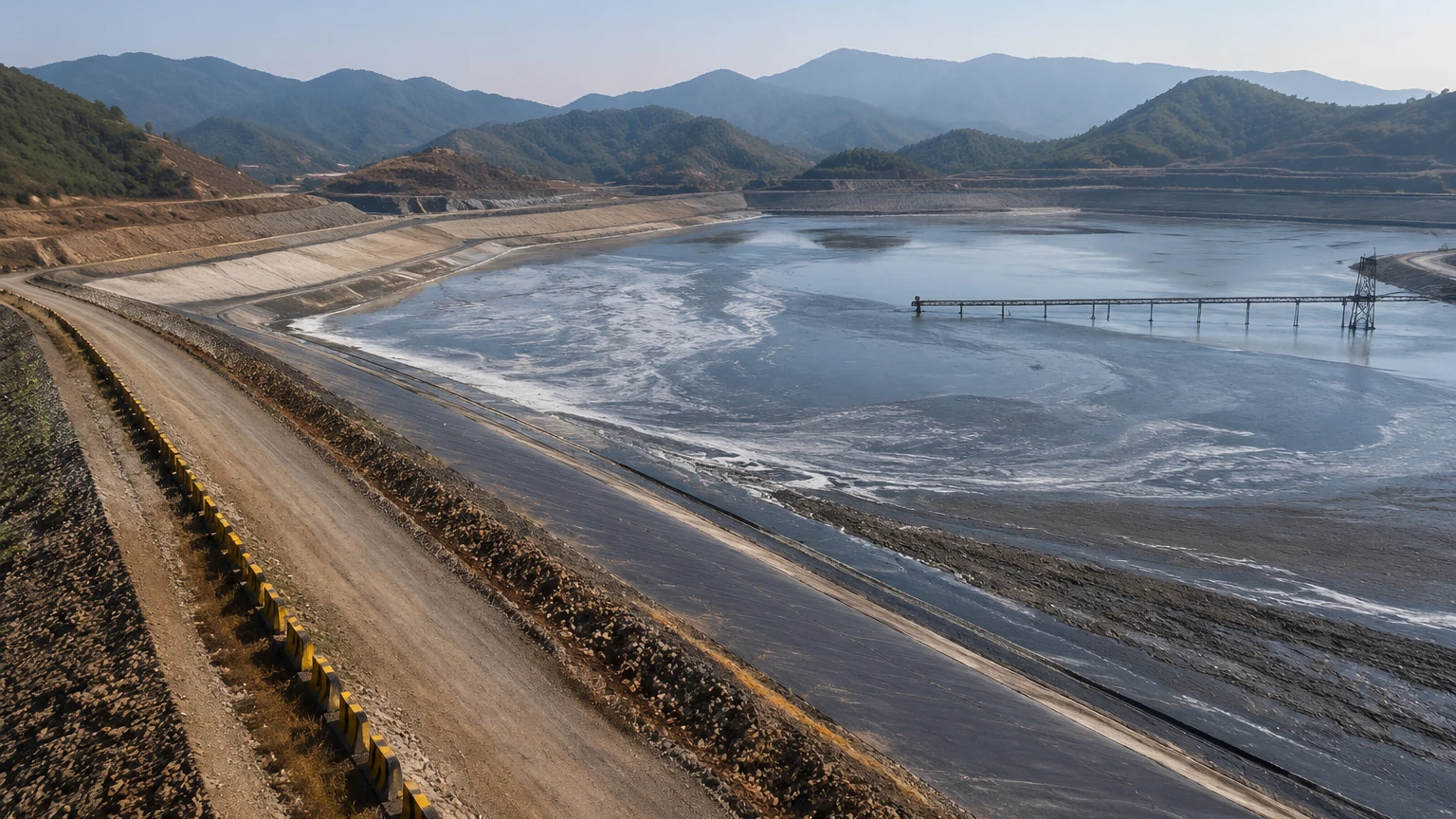
Tailings dams are among the most critical engineered structures in the mining industry, designed to store the byproduct of mineral processing. Unlike conventional water dams, tailings dams are often constructed over decades using the tailings themselves as part of the embankment. This evolving nature necessitates a rigorous approach to tailings dam monitoring to ensure structural stability, prevent environmental contamination, and protect downstream communities. Precise level measurement of both surface water and groundwater within the dam structure is a fundamental component of any safety management system.
For engineers and site managers, selecting the appropriate instrumentation requires a deep understanding of the physical principles governing level measurement and the specific environmental challenges of a mining site. This guide explores the technologies, application strategies, and selection criteria for effective monitoring in these high-stakes environments.
Understanding the Critical Role of Level Measurement in Tailings Dam Safety
Tailings dam monitoring focuses on two primary objectives: managing the water balance and monitoring the internal pore pressure. The "freeboard"—the vertical distance between the water surface and the top of the dam crest—must be maintained to prevent overtopping during extreme weather events. Simultaneously, the phreatic line (the surface of seepage within the dam) must be tracked to ensure the embankment remains stable and does not suffer from internal erosion or piping.
Welk provides specialized industrial level measurement instruments designed to operate in these demanding conditions. By integrating accurate sensors into a centralized monitoring network, operators can receive real-time data to support decision-making and regulatory compliance.
Measurement Principles for Tailings Dam Instrumentation
Before selecting a specific sensor, it is essential to understand the underlying measurement principles. In tailings dam monitoring, three primary technologies are commonly deployed: radar, ultrasonic, and hydrostatic measurement.
Radar Level Measurement (Non-Contact)
Radar level meters operate on the Time-of-Flight (ToF) principle. The sensor emits high-frequency microwave pulses (typically in the 26GHz or 80GHz range). These pulses travel at the speed of light, reflect off the surface of the tailings or water, and return to the sensor. The distance is calculated based on the time elapsed between emission and reception.
Radar technology is highly valued in mining because it is unaffected by air temperature fluctuations, heavy dust, or wind. High-frequency 80GHz radar, in particular, offers a narrow beam angle, which is advantageous when measuring in narrow spaces or near structural obstructions.
Ultrasonic Level Sensors (Non-Contact)
Ultrasonic sensors also use the ToF principle but utilize sound waves instead of microwaves. The sensor emits an ultrasonic pulse that reflects off the target surface. While cost-effective for shorter ranges (typically up to 15 or 20 meters), ultrasonic waves are sensitive to air temperature, humidity, and heavy dust. Integrated temperature compensation is required to maintain accuracy, as the speed of sound varies with air density.
Hydrostatic Pressure Transmitters (Contact)
Hydrostatic measurement is based on the principle that the pressure at a specific depth in a liquid is proportional to the height of the liquid column above it. The formula used is $P = \rho \cdot g \cdot h$, where $P$ is pressure, $\rho$ (rho) is the density of the liquid, $g$ is gravity, and $h$ is the height of the liquid.
In tailings applications, submersible pressure transmitters are often placed in piezometers or stilling wells to monitor the phreatic line or groundwater levels. These sensors are robust but require careful consideration of liquid density, especially if the tailings slurry has a high solids content.
Key Applications in Tailings Dam Monitoring
Pond Water Level and Freeboard Management
Monitoring the supernatant pond level is critical for flood control. Non-contact radar level meters are the preferred choice here. They are typically mounted on discharge towers or floating platforms. Because they do not touch the often-corrosive or abrasive tailings water, they require significantly less maintenance than contact-based systems. Accurate freeboard monitoring ensures that the dam can accommodate sudden inflows from storm events without the risk of overtopping.
Seepage and Phreatic Line Monitoring
The phreatic line represents the level of saturation within the dam's cross-section. If this line rises too high, it can compromise the stability of the downstream slope. Engineers use hydrostatic transmitters installed in boreholes (piezometers) at various depths and locations across the embankment. This data allows for the modeling of seepage patterns and the early detection of potential structural weaknesses.
Internal Drainage and Pump Control
Many tailings dams include internal drainage systems to collect and remove seepage. Level switches and transmitters are used in collection sumps to automate pumping systems. Ensuring these pumps operate correctly prevents the buildup of internal water pressure, which is a leading cause of dam failure.
Technical Selection Criteria for Industrial Level Sensors
When evaluating instruments for a monitoring project, several technical factors must be prioritized:
1. Accuracy and Resolution: For phreatic line monitoring, high resolution (millimeter-level) is often required to detect subtle trends in seepage.
2. Environmental Durability: Sensors must be rated for outdoor use (IP68) and be capable of withstanding extreme temperatures, ranging from -40°C to +80°C in some mining regions.
3. Signal Output and Connectivity: In remote tailings facilities, sensors must support long-distance signal transmission. Common outputs include 4-20mA with HART, RS485 Modbus, or integration with wireless LoRaWAN and satellite telemetry systems.
4. Power Consumption: Since many monitoring points are solar-powered, low-power consumption is a critical requirement for continuous operation during periods of low sunlight.
For a comprehensive overview of available technologies and technical specifications, engineers can visit the Main Page to review product options and application support.
Practical Selection Table for Monitoring Technologies
| Technology | Typical Range | Accuracy | Best For | Limitations |
| :— | :— | :— | :— | :— |
| 80GHz Radar | Up to 120m | ±1mm | Supernatant ponds, long-range freeboard | Higher initial cost |
| Ultrasonic | 0.5m – 20m | ±0.25% FS | Short-range sumps, water tanks | Sensitive to dust and wind |
| Hydrostatic | 1m – 200m | ±0.1% to 0.5% | Piezometers, deep wells, sumps | Requires density compensation |
| Magnetic Gauge | 0.3m – 6m | ±5mm | Chemical reagent tanks | Contact-based, bypass required |
Installation Guidelines and Best Practices
Proper installation is as important as sensor selection. For tailings dam monitoring, follow these engineering best practices:
* Stilling Wells: When using hydrostatic or ultrasonic sensors in turbulent water or areas with floating debris, install the sensor inside a stilling well. This pipe protects the sensor and provides a calm surface for measurement.
* Lightning Protection: Tailings dams are often the highest points in a landscape and are prone to lightning strikes. Ensure all sensors and telemetry units have robust surge protection and proper grounding.
* Mounting Stability: For radar and ultrasonic sensors, the mounting bracket must be rigid. Even slight vibrations or movement caused by wind can introduce errors in the distance calculation.
* Cable Protection: Submersible cables for hydrostatic sensors should be run through conduits to prevent damage from rodents or mechanical equipment during dam lifts.
* Calibration: Regular field verification is necessary. For hydrostatic sensors, this involves comparing the electronic reading with a manual water level tape measurement.
Limitations and Operational Challenges
While modern instrumentation is highly reliable, certain conditions can impact performance:
* Varying Density: Hydrostatic sensors assume a constant liquid density. If the tailings slurry density changes significantly due to process variations, the level reading will drift. In such cases, non-contact radar is a more reliable alternative for surface levels.
* Surface Foam: Heavy foam on the surface of a pond can absorb ultrasonic signals, leading to "lost echo" errors. Radar is generally more effective at penetrating foam, though extremely thick, dense foam may still require specialized signal processing.
* Build-up and Scaling: In chemical-heavy tailings, material may build up on the sensor face. Welk’s radar units often feature flat-face designs that minimize the surface area available for build-up, reducing cleaning intervals.
Frequently Asked Questions (FAQ)
Q: How often should tailings dam sensors be calibrated?
A: It is recommended to perform a physical verification every 6 to 12 months. However, if the data shows unexpected trends, immediate manual verification is required to rule out sensor drift.
Q: Can radar sensors measure the level of dry tailings?
A: Yes, high-frequency radar is excellent for measuring solids. It can track the level of dry or semi-dry tailings as they are deposited, provided the sensor is positioned to account for the angle of repose of the material.
Q: What is the benefit of 80GHz over 26GHz radar for dam monitoring?
A: 80GHz radar has a much narrower beam (typically 3° to 8°), which allows it to avoid reflections from the dam walls or nearby pipes. This makes it much easier to install on existing infrastructure without interference.
Q: How do you protect sensors from freezing in cold climates?
A: For hydrostatic sensors, ensure they are placed below the expected frost line. For non-contact sensors, the housing is usually sufficient, but internal heaters can be provided for extreme arctic conditions to prevent ice buildup on the antenna.
By implementing a robust tailings dam monitoring strategy using high-quality instrumentation from Welk, mining operations can significantly reduce their risk profile. Accurate data not only protects the environment but also optimizes the operational life of the storage facility.