Haworth Internships
Haworth Internships
In the landscape of modern industrial engineering and manufacturing, the bridge between academic theory and practical application is often built through structured professional experiences. For those pursuing careers in facility management, process automation, or industrial design, Haworth internships represent a significant opportunity to engage with complex supply chains and sophisticated manufacturing environments. Haworth, a global leader in workspace solutions, operates extensive manufacturing facilities where the integration of automation and precise measurement is critical to operational efficiency.
For an intern or an entry-level engineer entering such a high-output environment, understanding the fundamental technologies that keep a factory running is essential. Among these technologies, level measurement stands as a cornerstone of process control. Whether managing water treatment systems, chemical storage for upholstery processing, or fuel levels for logistics fleets, the ability to accurately monitor liquid and solid levels is a prerequisite for safety and cost-effectiveness. This guide explores the technical foundations of level measurement that are vital for professionals navigating industrial environments like those found during Haworth internships.
The Role of Level Measurement in Industrial Operations
Industrial environments require rigorous monitoring of resources. In large-scale manufacturing, level measurement is not merely about knowing if a tank is full or empty; it is about data-driven decision-making. High-precision instruments allow for real-time inventory management, overflow prevention, and pump protection.
When participating in Haworth internships or similar programs within the manufacturing sector, engineers often encounter various measurement challenges, such as corrosive fluids, high-pressure vessels, and turbulent surfaces. Selecting the correct technology requires a deep understanding of physics and process conditions. Before making equipment recommendations, it is necessary to analyze the principles of the most common measurement technologies.
Core Measurement Principles
1. Radar Level Measurement (Non-Contact)
Radar level meters operate on the Time-of-Flight (ToF) principle. The instrument emits high-frequency electromagnetic waves (typically in the GHz range) toward the material surface. These waves are reflected back to the sensor. The distance is calculated based on the time interval between emission and reception.
* FMCW (Frequency Modulated Continuous Wave): This advanced radar technology varies the frequency of the signal. The difference in frequency between the emitted and received signal is directly proportional to the distance. This provides exceptional accuracy (up to ±2mm) and is ideal for complex environments with vapors or dust.
* Pulse Radar: Sends discrete microwave pulses. It is often more energy-efficient and suitable for simpler liquid level applications.
2. Ultrasonic Level Sensors
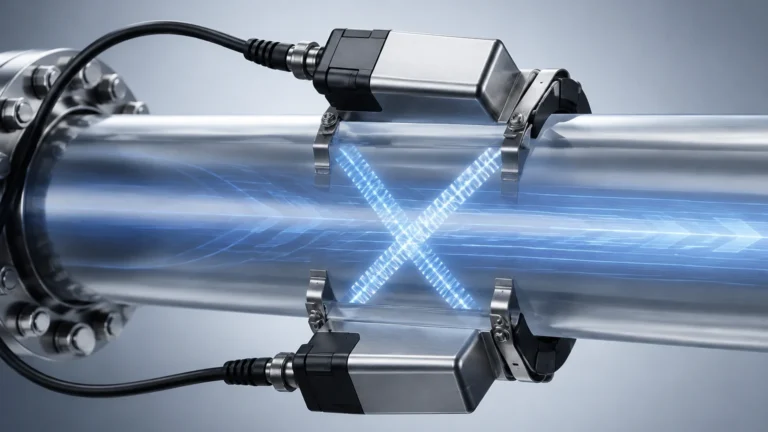
Ultrasonic sensors also use the ToF principle but utilize sound waves instead of electromagnetic waves. A transducer emits an ultrasonic pulse that bounces off the surface of the media and returns to the sensor.
Because sound requires a medium to travel, ultrasonic sensors are sensitive to air temperature, which affects the speed of sound. Most modern units, such as those provided by Welk, include integrated temperature compensation to maintain accuracy. However, they are generally not recommended for vacuum applications or environments with heavy foam, which can absorb the sound signal.
3. Hydrostatic Level Transmitters
Hydrostatic measurement is based on the principle that the pressure at the bottom of a liquid column is directly proportional to the height of the liquid and its density ($P = \rho \cdot g \cdot h$).
These sensors are typically submersible or mounted to the bottom of a tank. They are highly reliable for water and wastewater applications. It is important to note that if the tank is pressurized, a differential pressure transmitter must be used to subtract the top-side pressure from the total pressure at the bottom.
4. Magnetic Level Gauges
Magnetic level gauges utilize a bypass chamber connected to the side of a vessel. A float containing a permanent magnet moves up and down with the liquid level. This magnet interacts with an external indicator (flaps or a tracker) and can also trigger reed switches or a continuous transmitter. This provides a clear visual indication without requiring power, making it a favorite for high-pressure and high-temperature boiler applications.
Technical Selection Criteria
Choosing the right instrument is a critical skill for engineers. During Haworth internships, one might be tasked with auditing existing systems or proposing upgrades for new production lines. The following table provides a practical reference for technology selection.
Level Technology Comparison Table
| Technology | Typical Accuracy | Media Type | Max Temperature | Advantages | Limitations |
| :— | :— | :— | :— | :— | :— |
| Radar | ±2 mm to ±5 mm | Liquids, Solids, Slurries | Up to +450°C | Non-contact, unaffected by vacuum/pressure | Higher initial cost |
| Ultrasonic | ±0.25% of range | Water, Acids, Bases | Up to +80°C | Cost-effective, easy to install | Sensitive to foam and heavy dust |
| Hydrostatic | ±0.1% to ±0.5% | Clean liquids, Wastewater | Up to +100°C | Simple, robust, deep well capable | Density changes affect calibration |
| Magnetic | ±5 mm | Hazardous/High-pressure liquids | Up to +400°C | Visual local indication, no power needed | Mechanical wear, bypass piping required |
| Level Switches | N/A (Point level) | Almost any | Varies | Low cost, high reliability for alarms | No continuous level data |
For those looking to explore specific hardware configurations and integration options, you can Review product options and application support on our Main Page to see how these technologies are applied in professional settings.
Installation and Engineering Considerations
Proper installation is as important as selecting the right technology. Engineering interns must be aware of common pitfalls that can lead to signal interference or premature sensor failure.
1. The "Dead Zone" or Blocking Distance
Every non-contact sensor (Radar and Ultrasonic) has a minimum distance near the sensor face where it cannot accurately measure. This is known as the dead zone. If the liquid level enters this zone, the sensor may report an error or a "full" reading regardless of the actual level. Always mount the sensor high enough to ensure the maximum liquid level stays below the dead zone.
2. Beam Angle and Obstructions
Radar and ultrasonic signals spread out in a cone. If this cone hits a tank wall, a ladder, or an agitator blade, it will create a "false echo."
* Rule of Thumb: Mount the sensor at least 1/6th of the tank diameter away from the wall.
* Software Solutions: Many Welk instruments feature "false echo suppression," allowing the software to ignore static reflections from internal tank structures.
3. Environmental Factors
* Vapor and Condensation: In chemical processing, steam or solvent vapors can attenuate ultrasonic signals. Radar is generally immune to these effects.
* Turbulence: Rapidly mixing liquids can cause signal scattering. Using a stilling well (a pipe that shields the sensor from waves) can stabilize readings for both radar and hydrostatic sensors.

Practical Applications in Manufacturing
In a facility like those managed by Haworth, level measurement is applied in several key areas:
1. Adhesive and Coating Tanks: Precise levels of glues and finishes must be maintained to ensure production continuity. Radar is often preferred here due to the non-contact requirement with sticky substances.
2. Wastewater Treatment: Manufacturing processes often produce runoff that must be treated. Hydrostatic and ultrasonic sensors are the industry standard for monitoring sumps and open channels.
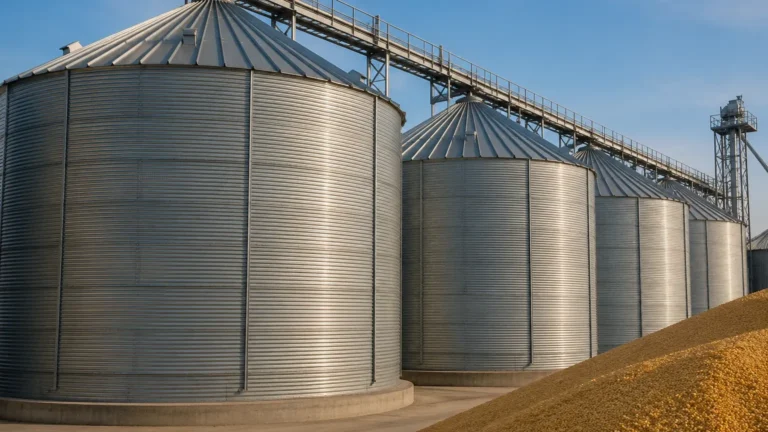
3. Bulk Solid Silos: Monitoring wood chips, fabric scraps, or plastic pellets requires high-frequency radar capable of penetrating dust and measuring uneven surfaces.
Frequently Asked Questions (FAQ)
Q: How does the dielectric constant affect radar measurement?
A: Radar relies on the reflection of electromagnetic waves. Materials with a high dielectric constant (like water) reflect signals very well. Materials with a low dielectric constant (like some oils or plastics) reflect less energy, requiring more sensitive radar units or guided-wave radar (GWR).
Q: Can hydrostatic sensors be used in tanks with varying liquid densities?
A: Since hydrostatic pressure depends on density, if the liquid density changes significantly (e.g., due to temperature or concentration changes), the level reading will drift. In these cases, a radar sensor or a pressure transmitter with density compensation is recommended.
Q: What is the maintenance requirement for ultrasonic sensors?
A: Ultrasonic sensors are generally low-maintenance because they have no moving parts. However, the transducer face should be checked periodically for condensation or material buildup, which can block the signal.
Q: Are there specific certifications required for sensors in manufacturing?
A: Yes, depending on the environment, sensors may need ATEX/IECEx certification for explosive atmospheres (e.g., solvent storage) or food-grade certifications for hygienic applications.
Conclusion
For students and professionals engaged in Haworth internships, mastering the nuances of industrial instrumentation is a vital step toward becoming an effective engineer. The ability to distinguish between the physics of sound and electromagnetism, or to understand the relationship between pressure and height, allows for the design of safer and more efficient manufacturing systems.
By focusing on the principles of measurement and adhering to rigorous installation standards, engineers can ensure that the data driving their automation systems is accurate and reliable. For further technical specifications and to consult with application engineers regarding specific industrial needs, visit our Main Page at https://www.level-meters.com/.