Differential Ph Probe
Differential Ph Probe
In industrial liquid analysis, the accuracy and longevity of sensors are often challenged by harsh chemical environments, electrical interference, and physical fouling. While standard combination pH electrodes are suitable for many light-duty applications, demanding industrial processes frequently require the robust performance of a differential pH probe. This technology is designed to overcome the common failure modes of conventional sensors, particularly those related to reference electrode contamination and ground loop interference.
Understanding the mechanics of differential measurement is essential for process engineers and instrumentation specialists tasked with maintaining water quality, chemical concentration, or effluent compliance. This guide explores the measurement principles, selection criteria, and installation best practices for differential pH probes within the broader context of industrial process control.
Measurement Principles of the Differential pH Probe
To appreciate the differential pH probe, one must first understand the limitations of the conventional "combination" pH sensor. A standard sensor typically consists of two main parts: a glass measuring electrode and a reference electrode (usually silver/silver chloride). These two electrodes are housed in a single body. The reference electrode relies on a porous junction to maintain electrical contact with the process liquid. Over time, the process liquid can leak into the junction, poisoning the reference electrolyte and causing measurement drift or total sensor failure.
The Three-Electrode System
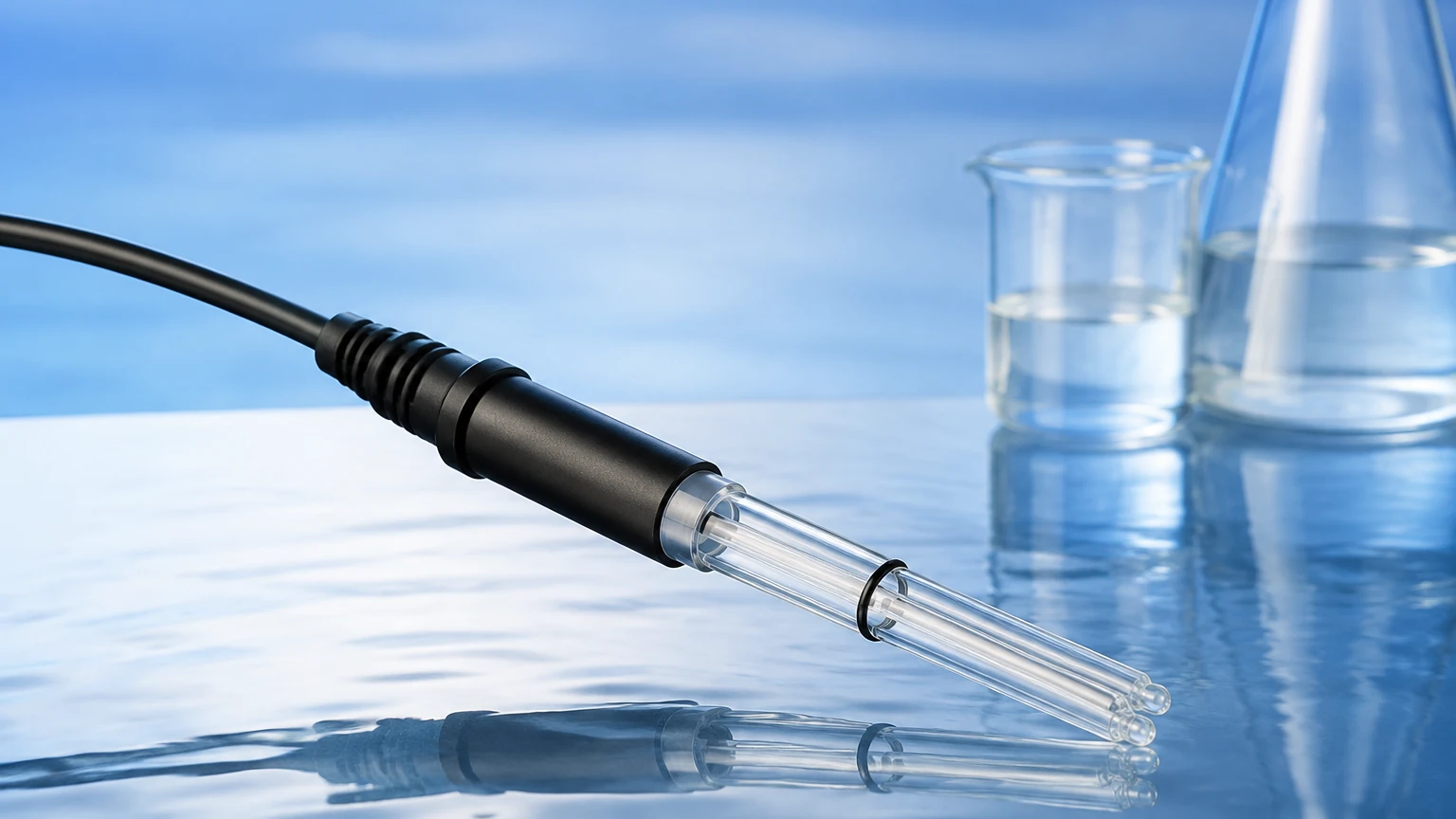
The differential pH probe utilizes a three-electrode technique rather than two. This design significantly enhances stability in difficult environments.
1. The Active (pH) Electrode: This is a standard glass electrode that generates a voltage proportional to the hydrogen ion activity in the process liquid.
2. The Reference Electrode: Unlike a conventional sensor, the reference electrode in a differential probe is housed in a sealed chamber filled with a concentrated pH 7 buffer solution. It makes contact with the process liquid through a double salt bridge or a specialized junction. Because the internal reference is a known, stable pH buffer, it provides a consistent baseline.
3. The Ground Electrode (Solution Ground): A third electrode, typically made of titanium or stainless steel, is in direct contact with the process liquid. This electrode provides a common reference point for both the active and reference electrodes.
Signal Processing
The transmitter or analyzer measures the voltage difference between the active electrode and the ground electrode, as well as the difference between the reference electrode and the ground electrode. By subtracting these two signals, the analyzer eliminates common-mode noise and electrical interference (ground loops) that often plague industrial sites. The resulting differential signal represents the true pH of the process, isolated from external electrical influences.
Key Advantages Over Conventional Sensors
The move from a standard electrode to a differential pH probe is usually driven by the need for reliability in high-fouling or electrically noisy environments.
Elimination of Ground Loops
In large industrial tanks or piping systems, different parts of the plant may be at slightly different electrical potentials. If a standard pH sensor is used, these potential differences can cause current to flow through the reference junction, leading to significant measurement errors and accelerated depletion of the reference electrolyte. Because the differential pH probe uses a solution ground to "zero out" these potentials, it is immune to ground loop interference.
Resistance to Reference Poisoning
In many chemical processes, ions from the process (such as sulfides, cyanides, or heavy metals) can migrate through the junction of a standard sensor and react with the silver/silver chloride reference. This "poisoning" changes the reference potential, leading to constant calibration drift. The differential probe’s use of a buffered reference solution and a multi-stage salt bridge provides a much higher barrier against contamination, extending the service life of the sensor from weeks to months or even years.
Replaceable Salt Bridges
Most high-quality differential probes feature a replaceable salt bridge. When the junction eventually becomes fouled or the internal buffer is depleted, the user can simply replace the bridge and the buffer solution rather than discarding the entire sensor. This modularity reduces the total cost of ownership (TCO) in aggressive applications.
Technical Selection Criteria
Selecting the right differential pH probe requires an analysis of the process chemistry, temperature, and pressure. The following table summarizes the key differences between standard and differential technologies to assist in the selection process.
| Feature | Conventional pH Electrode | Differential pH Probe |
| :— | :— | :— |
| Measurement Method | 2-Electrode (Active + Reference) | 3-Electrode (Active + Reference + Ground) |
| Ground Loop Immunity | Low (Requires isolated transmitter) | High (Inherent in design) |
| Reference Stability | Susceptible to poisoning/drift | High (Protected by buffer/salt bridge) |
| Maintenance Frequency | High in harsh chemicals | Moderate to Low |
| Initial Cost | Lower | Higher |
| Service Life | Short in aggressive media | Long (Repairable components) |
| Typical Applications | Clean water, laboratory, HVAC | Wastewater, chemical processing, mining |
Installation and Engineering Guidelines
Proper installation is critical to ensuring the longevity and accuracy of a differential pH probe. Engineers should consider the following factors during the design phase:
Mounting Configurations
Differential probes are available in various mounting styles to suit different process requirements:
* Immersion Mounting: Used for open tanks or basins. The probe is attached to the end of a pipe (typically 1 to 3 meters in length) and submerged. It is vital to ensure the cable entry is sealed to prevent moisture ingress.
* In-line (Flow-through) Mounting: The probe is installed directly into a process pipe using a tee-fitting. This is common in recirculation loops.
* Insertion (Retractable) Mounting: For processes that cannot be shut down for maintenance, a retractable assembly allows the probe to be removed from a pressurized pipe through a ball valve.
Temperature and Pressure Limits
Standard differential probes are typically rated for temperatures up to 95°C (203°F) and pressures up to 6.9 bar (100 psi). If the process exceeds these limits, specialized high-temperature glass or pressure-compensated housings may be required. Always verify that the sensor body material (e.g., Ryton, PEEK, or Stainless Steel) is chemically compatible with the process media.
Cabling and Distance
Because pH signals are high-impedance, they are sensitive to electromagnetic interference (EMI). While the differential design mitigates ground loops, the cable between the probe and the transmitter should still be kept as short as possible. If the distance exceeds 15 meters (approx. 50 feet), a preamplifier—either integrated into the probe head or located in a nearby junction box—is highly recommended to convert the high-impedance signal into a low-impedance signal.
Maintenance and Operational Limitations
While differential probes are more robust than conventional sensors, they are not maintenance-free. Regular care is necessary to ensure accuracy.
1. Cleaning: In applications involving oils, fats, or mineral scales, the glass bulb and salt bridge can become coated. Regular cleaning with a mild detergent or a dilute acid (such as 5% HCl) is necessary.
2. Calibration: Even differential probes drift over time. A two-point calibration using standard NIST-traceable buffers (typically pH 4, 7, or 10) should be performed on a schedule determined by the process stability.
3. Salt Bridge Replacement: If the sensor response becomes sluggish or if the probe cannot be calibrated, the salt bridge and internal buffer solution likely need replacement. This is a routine procedure that restores the sensor to factory-spec performance.
Limitations
* Cost: The initial investment for a differential probe and its compatible transmitter is higher than for standard electrodes.
* Complexity: The three-electrode system requires a specific analyzer that can process differential signals; it cannot be used with a standard two-wire pH transmitter unless an external preamp is used.
* Dehydration: Like all pH sensors, the glass electrode must remain hydrated. If the process remains dry for extended periods, the sensor will fail.
Synergies with Industrial Level Control
In many industrial automation scenarios, pH measurement is rarely an isolated task. It is often part of a comprehensive liquid management system that includes level monitoring. For instance, in a chemical neutralization tank, ultrasonic or radar level sensors are used to manage the volume of the tank, while the differential pH probe controls the dosing of neutralizing agents.
Integrating high-accuracy analytical sensors with reliable level measurement instruments ensures that tanks do not overflow and that the chemical reactions occurring within them are safe and efficient. For engineers looking to optimize their entire liquid handling process, from inventory management to chemical analysis, it is helpful to Review product options and application support to find integrated solutions that combine level measurement with analytical precision.
Frequently Asked Questions (FAQs)
Q: How long does a differential pH probe typically last?
In standard wastewater applications, a differential probe can last 2 to 5 years, provided the salt bridge is replaced annually. In aggressive chemical applications, the life might be 1 to 2 years, which is still significantly longer than the 3 to 6 months typical of conventional electrodes.
Q: Can I use a differential pH probe with any pH meter?
No. A differential probe requires a transmitter designed for a five-wire or six-wire differential input. Standard pH meters are designed for two-wire (coaxial) inputs from combination electrodes.
Q: What is the purpose of the internal buffer in the probe?
The internal buffer (usually pH 7) provides a stable reference for the internal reference electrode. This prevents the reference potential from shifting when the process liquid changes, which is the primary cause of drift in conventional sensors.
Q: When should I choose a differential probe over a standard one?
You should choose a differential probe if you experience frequent sensor failure (less than 3 months of life), significant calibration drift, or if your process involves heavy metals, sulfides, or high electrical noise.
Conclusion
The differential pH probe represents a significant advancement in industrial liquid analysis. By utilizing a three-electrode system and a protected reference environment, it solves the most persistent problems of pH measurement in the field. While the initial cost is higher, the reduction in maintenance labor, calibration frequency, and replacement costs makes it the preferred choice for professional engineering applications in water treatment, chemical processing, and industrial automation.