Low Pressure Flow Meter
Low Pressure Flow Meter
In industrial process control, measuring the flow of gases or liquids at low operating pressures presents a unique set of engineering challenges. A low pressure flow meter is specifically designed to operate in environments where the system pressure is near atmospheric or significantly below the thresholds required for standard differential pressure devices. Typically, "low pressure" in this context refers to systems operating below 1 bar (14.5 psi), often extending down to a few millibars of gauge pressure.
Selecting the correct instrumentation for these applications requires an understanding of fluid dynamics, specifically how low density and minimal driving force affect sensor sensitivity. This guide examines the measurement principles, selection criteria, and installation requirements for low pressure flow measurement across various industrial sectors.
Measurement Principles for Low Pressure Applications
Standard flow meters often rely on a significant pressure drop (delta P) across a restriction to calculate flow rate. In low-pressure systems, introducing a large pressure drop is often impossible because the system lacks the energy to overcome the resistance. Therefore, technologies that minimize or eliminate permanent pressure loss are preferred.
Thermal Mass Flow Measurement
Thermal mass flow meters operate on the principle of thermal dispersion. A heated sensor is placed in the flow stream, and the flowing fluid carries heat away from the sensor. The rate of heat loss is directly proportional to the mass flow rate. Because this method measures the molecular cooling effect, it is highly sensitive to low-velocity gas flows and does not require a high-pressure environment to function. This makes it a primary choice for low-pressure gas applications like tank blanketing or flare gas monitoring.
Ultrasonic Transit-Time Measurement
Ultrasonic meters use sound waves to determine the velocity of a fluid. By measuring the time difference between pulses traveling upstream and downstream, the meter calculates the flow rate. Since the sensors are usually non-intrusive or flush-mounted, there is zero pressure drop introduced into the system. However, at extremely low pressures (near vacuum), the scarcity of gas molecules can impede the transmission of ultrasonic signals, requiring specialized high-sensitivity transducers.
Laminar Flow Elements (LFE)
Laminar flow elements force the fluid into a laminar state using a series of small parallel channels. According to the Poiseuille Equation, in a laminar state, the pressure drop is linearly proportional to the volumetric flow rate rather than the square of the flow rate (as seen in turbulent orifice plates). This linearity allows for highly accurate measurements at very low pressures and low flow rates, though they are sensitive to particulate contamination.
Variable Area (Rotameters)
In a rotameter, a float moves within a tapered tube. The upward force of the fluid is balanced by the weight of the float. While simple and cost-effective, rotameters do introduce a constant pressure drop equivalent to the weight of the float divided by its cross-sectional area. For very low-pressure applications, lightweight floats (e.g., hollow plastic or aluminum) are used to minimize this requirement.
Key Evaluation Criteria for Selection
When specifying a low pressure flow meter, engineers must prioritize parameters that differ from standard high-pressure process loops. The following factors are critical for ensuring long-term reliability.
Permanent Pressure Loss (PPL)
The most significant constraint is the allowable pressure drop. If a flow meter requires a 50 mbar (0.72 psi) drop to function, but the total system pressure is only 30 mbar (0.43 psi), the meter will effectively act as a plug, stopping the flow entirely. Technologies like thermal mass or ultrasonic are favored specifically for their low or zero PPL.
Turndown Ratio and Sensitivity
Low-pressure systems often experience wide fluctuations in flow velocity. A meter with a high turndown ratio (the ratio of maximum to minimum measurable flow) is essential. Thermal meters typically offer turndowns of 100:1 or better, allowing them to detect leaks or pilot-light flows in gas systems that other meters would miss.
Media Composition and Density
For gas measurement, the density of the gas is directly related to its pressure. As pressure drops, density decreases, which can reduce the signal-to-noise ratio for certain sensors. It is vital to confirm that the meter is calibrated for the specific gas composition and the actual operating pressure rather than standard conditions (STP).
Practical Selection Table
The following table compares common technologies used in low-pressure environments to assist in preliminary instrument selection.
| Technology | Typical Min. Pressure | Pressure Drop | Accuracy (Typical) | Best Use Case |
| :— | :— | :— | :— | :— |
| Thermal Mass | Atmospheric / Vacuum | Negligible | ±1% of Rate | Nitrogen blanketing, biogas, air intake. |
| Ultrasonic | >0.5 bar (for gas) | Zero | ±0.5% to 2% | Large diameter pipes, flare gas, chemicals. |
| Laminar Flow | <0.1 bar | Low (Linear) | ±0.7% of Reading | Laboratory settings, leak detection. |
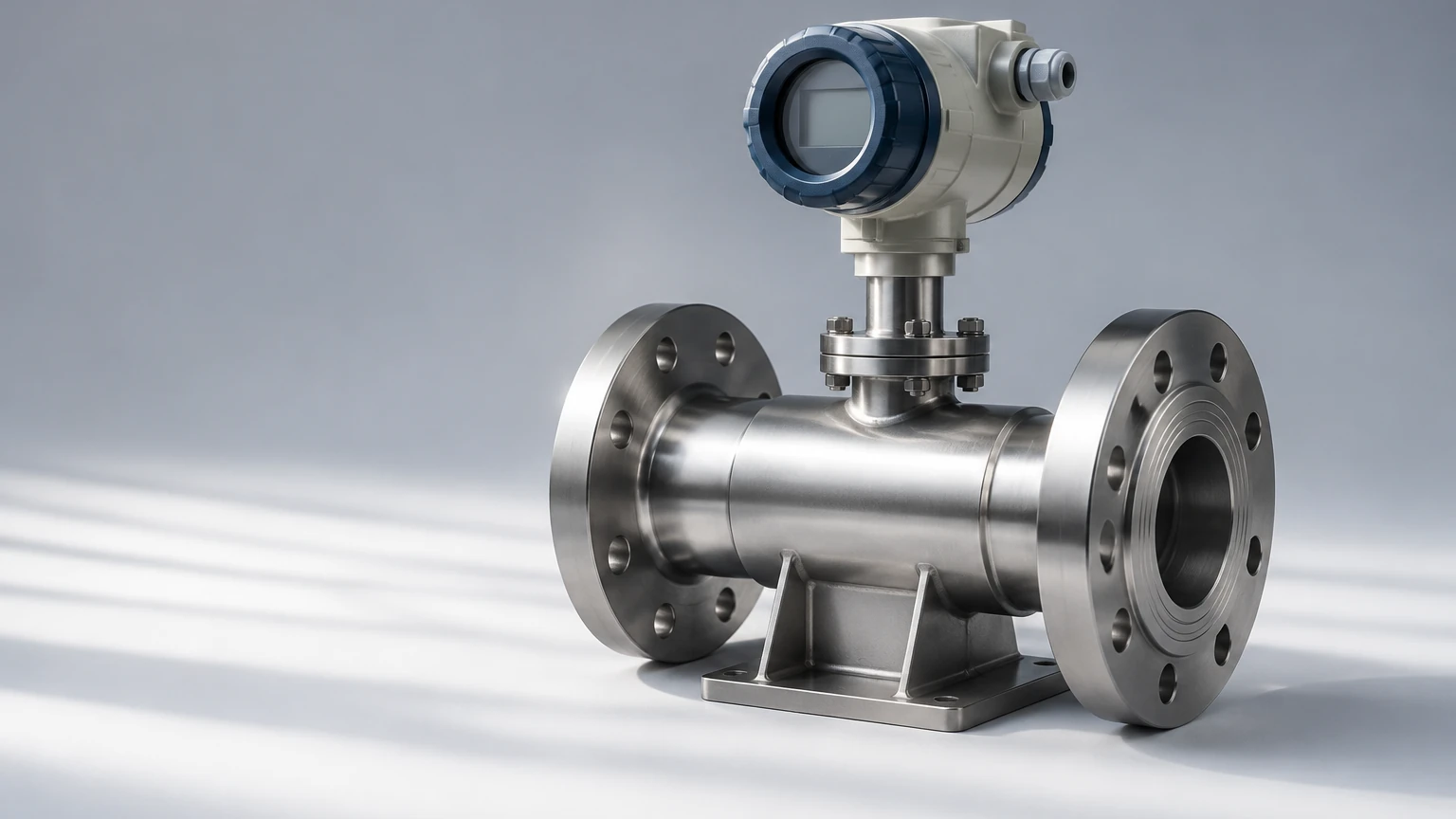
| Vortex | >0.3 bar | Moderate | ±1% of Rate | Steam or high-velocity gas at low pressure. |
| Rotameter | Atmospheric | Constant (Low) | ±2% to 5% | Visual flow indication, purge water. |
Installation and Engineering Considerations
Proper installation is more critical in low-pressure systems because there is less energy to "correct" flow profile disturbances. Small errors in installation can lead to significant measurement inaccuracies.
1. Straight Run Requirements: Most low pressure flow meters require a specific length of straight pipe upstream (typically 10-20 diameters) and downstream (5 diameters) to ensure a fully developed flow profile. If space is limited, flow conditioners or honeycombs may be necessary, though these will introduce a small pressure drop.
2. Orientation and Buoyancy: For gas meters operating at very low velocities, the orientation of the meter (horizontal vs. vertical) can affect the measurement due to natural convection or the weight of internal components. Always follow the manufacturer's specified orientation.
3. Moisture and Condensation: In low-pressure gas lines (like biogas or wastewater digester gas), moisture often condenses on the pipe walls. If water droplets hit a thermal sensor or accumulate in a laminar element, the readings will spike or fail. Installing the meter at a high point in the piping and using moisture traps is recommended.
4. Integration with Level Systems: In many industrial setups, flow measurement is part of a larger mass balance system involving tank levels. For comprehensive industrial instrumentation beyond flow, including radar and ultrasonic sensors, engineers often consult the Main Page for integrated system components that can withstand the same environmental constraints as low-pressure flow devices.
Common Risks and Limitations
While a low pressure flow meter is designed for these specific environments, it is not without limitations. Engineers should be aware of the following risks:
* Signal Attenuation: In gas applications, as the pressure approaches vacuum, there are fewer molecules to transfer heat or carry sound waves. Most meters have a "cutoff" pressure below which they cannot provide a reliable signal.
* Contamination Sensitivity: Because low-pressure systems often have low velocities, they do not have a "self-cleaning" effect. Dust, oils, or condensates can build up on sensors more easily than in high-pressure, high-velocity lines.
* Calibration Drift: Changes in the ambient temperature or small fluctuations in the base pressure can significantly impact the volumetric flow calculation in low-pressure gas systems. Regular zero-point checks are essential.
Frequently Asked Questions (FAQ)
Q: Can I use a standard Orifice Plate for low pressure gas?
A: Generally, no. Orifice plates require a significant pressure drop to generate a measurable signal. In low-pressure systems, this drop often exceeds the available system pressure, leading to flow stagnation or inaccurate readings due to the square-root relationship of the DP signal.
Q: How does temperature affect low pressure flow meters?
A: Temperature has a profound effect on gas density, especially at low pressures. For mass flow measurement (like thermal), the meter compensates for this. For volumetric meters (like ultrasonic), a separate temperature and pressure transmitter may be required to calculate the corrected flow.
Q: What is the best meter for low pressure biogas?
A: Thermal mass flow meters are widely considered the standard for biogas because they handle the low pressure and low flow rates well. However, they must be constructed from corrosion-resistant materials (like 316SS or Hastelloy) to withstand the H2S content in the gas.
Q: Is there a minimum velocity required for these meters?
A: Yes. Every meter has a "low-flow cutoff." For example, vortex meters require a minimum Reynolds number to shed vortices. If the pressure is too low, the density might be insufficient to trigger the sensor at low speeds.
In conclusion, successful low-pressure flow measurement hinges on selecting a technology that respects the limited energy available in the process. By prioritizing low permanent pressure loss and high sensitivity, and by ensuring rigorous installation standards, operators can achieve accurate and repeatable data even in the most challenging atmospheric or sub-atmospheric conditions. For those managing complex tank farms or chemical storage, aligning these flow measurements with reliable level instrumentation ensures a complete and safe process control loop.