Sensing Ph
Sensing Ph
In industrial process control, the chemical composition of a liquid is often as critical as its physical quantity. Sensing pH—the measurement of hydrogen-ion activity in a solution—is a fundamental requirement in water treatment, chemical manufacturing, and pharmaceutical production. However, for a process engineer, sensing pH is rarely an isolated task. It is intrinsically linked to level measurement, as the acidity or alkalinity of a medium dictates the material compatibility and technology selection for level instrumentation.
Understanding the principles of sensing pH and how these chemical properties interact with level measurement hardware is essential for ensuring long-term reliability and accuracy in harsh industrial environments.
Principles of Sensing pH
Sensing pH relies on electrochemical principles, specifically the potential difference generated between two electrodes immersed in a solution. The standard pH scale ranges from 0 to 14, where 7 is neutral, values below 7 are acidic, and values above 7 are alkaline.
The Potentiometric Method
Most industrial pH sensors utilize a potentiometric measurement system consisting of a glass sensing electrode and a reference electrode.
1. Sensing Electrode: This electrode features a specialized pH-sensitive glass membrane. When immersed, hydrogen ions in the process liquid exchange with ions in the glass bulb, creating a millivolt (mV) potential proportional to the hydrogen ion concentration.
2. Reference Electrode: This electrode provides a stable, constant potential regardless of the pH of the liquid. It typically uses a silver/silver chloride (Ag/AgCl) internal element and a salt bridge (usually KCl) to complete the electrical circuit.
3. The Nernst Equation: The theoretical output of a pH sensor follows the Nernst Equation. At 25°C (298.15 K), a change of one pH unit corresponds to a change of 59.16 mV.
Temperature Compensation
Temperature significantly affects the activity of hydrogen ions and the sensitivity of the glass electrode. For accurate sensing pH, integrated temperature elements (such as Pt100 or Pt1000 RTDs) are used to provide automatic temperature compensation (ATC), adjusting the pH slope calculation in real-time.
How pH Influences Level Measurement Technology
When designing a system for sensing pH, the chemical nature of the fluid must be the primary factor in selecting a level meter. A highly acidic (low pH) or highly caustic (high pH) environment can rapidly degrade standard instrumentation.
Material Compatibility
Standard 304 or 316L stainless steel is often insufficient for extreme pH levels.
* Low pH (Acids): Hydrochloric or sulfuric acids require materials like Hastelloy C, PTFE (Teflon), or PVDF.
* High pH (Bases): Strong caustic solutions (Sodium Hydroxide) can attack certain glass types and plastics, requiring specialized polymers or high-grade alloys.
Vapor and Gas Evolution
Chemical reactions associated with pH changes often produce vapors. For example, neutralizing an acidic waste stream can generate heat and gas. These factors interfere with ultrasonic level sensors by changing the speed of sound in the tank headspace, leading to measurement errors. In such cases, non-contact radar is the preferred choice as it is unaffected by vapor composition.
Level Measurement Solutions for Chemically Active Media
When sensing pH is a core part of the process, the following level measurement technologies are typically deployed based on their chemical resistance.
1. Non-Contact Radar Level Meters
Radar transmitters use high-frequency microwave pulses (typically 26GHz or 80GHz). Because the signal is electromagnetic, it does not rely on the air medium.
* Advantage: The antenna can be encapsulated in PTFE or PP, making it impervious to corrosive fumes from low-pH liquids.
* Application: Storage tanks for concentrated acids or alkalis.
2. Ultrasonic Level Sensors
Ultrasonic sensors measure the time-of-flight of a sound wave.
* Advantage: Cost-effective for open-air water treatment basins where pH is relatively stable (near neutral).
* Limitation: Not recommended for tanks with high chemical concentrations where vapors fluctuate, as this alters the acoustic path.
3. Hydrostatic Level Transmitters
These measure the pressure exerted by the liquid column.
* Advantage: Simple installation in deep sumps.
* Selection Criteria: For sensing pH in aggressive media, the diaphragm must be made of ceramic or coated with gold/PTFE to prevent corrosion.
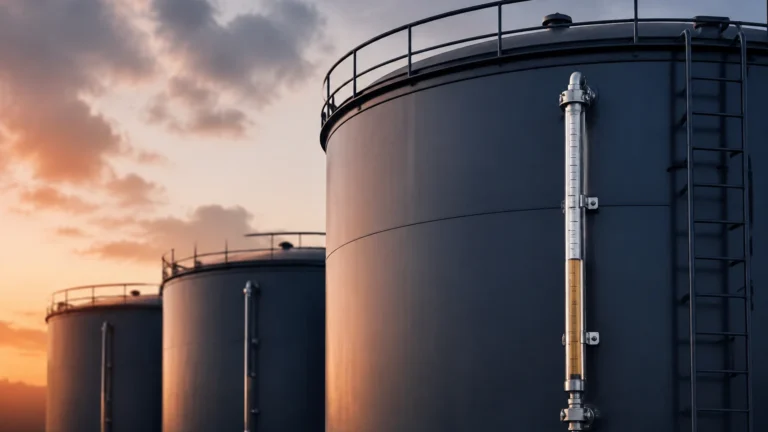
4. Magnetic Level Gauges
These provide local visual indication and can be equipped with transmitters.
* Advantage: The liquid is contained within a bypass chamber, which can be constructed from PVC, PP, or PVDF for full chemical compatibility.
Selection Table: Level Instrumentation by pH Range
| Fluid Type | pH Range | Recommended Level Technology | Recommended Wetted Materials |
| :— | :— | :— | :— |
| Potable Water | 6.5 – 8.5 | Ultrasonic / Hydrostatic | 316L SS / PP |
| Strong Acids | 0 – 3 | Non-contact Radar / PTFE Magnetic Gauge | PTFE / PVDF / Hastelloy |
| Strong Bases | 12 – 14 | Non-contact Radar / Ceramic Hydrostatic | Ceramic / PTFE / EPDM |
| Wastewater | 4 – 10 | Ultrasonic / Radar | PP / PVDF |
| Chemical Slurries | Variable | Radar (80GHz) | PTFE Encapsulated |

Installation Considerations for Integrated Sensing
When installing systems for sensing pH alongside level measurement, several engineering factors must be addressed to ensure data integrity.
Sensor Placement and Turbulence
pH probes should be installed in a location with representative flow to avoid "dead zones" where chemicals might pool. Level sensors, conversely, should be placed away from inlets to avoid surface turbulence. In small vessels, ensuring that the pH probe does not obstruct the radar or ultrasonic beam path is critical to prevent false echoes.
Grounding and Electrical Noise
pH measurements involve high-impedance circuits (often exceeding 1000 MΩ). They are highly susceptible to electromagnetic interference (EMI) from pumps, agitators, and even the level transmitter itself. Proper grounding of the tank and the use of shielded cables for both the pH and level sensors are mandatory.
Maintenance Access
While a radar level meter might operate for years without maintenance, sensing pH requires frequent calibration (weekly or monthly) and cleaning. Probes should be installed in retractable housings or accessible bypass lines so they can be serviced without draining the tank or interrupting level monitoring.
Limitations and Challenges
1. Coating and Scaling: In many pH-adjustment processes (like lime softening), calcium carbonate or other scales can build up. This affects pH probe sensitivity and can cause "hang-up" on mechanical level switches or float gauges. Non-contact measurement is always preferred in scaling applications.
2. Glass Fragility: Industrial pH electrodes are made of glass. In high-vibration environments or applications with abrasive solids, these sensors can break. Level sensors like the Main Page solutions are often designed to be more robust, but the overall system reliability is limited by the most fragile component.
3. Pressure and Temperature Limits: Standard pH probes often have lower pressure ratings (typically <10 bar) compared to industrial level meters. If the process operates at high pressure, specialized high-pressure pH assemblies are required.
Frequently Asked Questions (FAQ)
Q: Can I use a single transmitter for both sensing pH and level?
A: While some multi-parameter controllers can accept inputs from both a pH probe and a 4-20mA level transmitter, the physical sensors remain distinct due to their different operating principles.
Q: How does the specific gravity of a high-pH liquid affect level measurement?
A: Specific gravity affects hydrostatic level transmitters (pressure-based). If a liquid becomes denser due to high chemical concentration (common in high-pH caustic storage), the hydrostatic sensor will over-read unless calibrated for the specific density. Radar and ultrasonic sensors are unaffected by density changes.
Q: Why is my ultrasonic level sensor failing in a pH-neutralization tank?
A: Neutralization often releases heat (exothermic reaction) or creates foam. Heat creates temperature gradients that refract sound waves, and foam absorbs them. Switching to a radar-based system usually resolves these issues.
Conclusion
Effective process management requires a holistic view of the medium's properties. Sensing pH provides the chemical context, while level measurement provides the physical inventory. By understanding the interplay between these two parameters—particularly regarding material compatibility and the physical environment—engineers can select the most durable and accurate instrumentation for their specific application. For those seeking a comprehensive range of level measurement technologies suitable for diverse chemical environments, exploring professional options on the Main Page is a recommended next step in system design.