Trace Gas Analyzer
Trace Gas Analyzer
Trace gas analysis is a critical component of modern industrial process control, environmental monitoring, and safety management. In complex industrial environments—ranging from petrochemical refineries to semiconductor cleanrooms—the ability to detect and quantify gas species at parts-per-million (ppm), parts-per-billion (ppb), or even parts-per-trillion (ppt) levels is essential. A trace gas analyzer is a specialized instrument designed to identify these minute concentrations within a primary gas matrix.
While level measurement technologies, such as those found on the Main Page, focus on the volume and interface of liquids and solids, trace gas analyzers monitor the chemical composition of the atmosphere or process streams. Together, these instruments provide a comprehensive view of industrial vessel and pipeline integrity. This guide explores the fundamental principles, selection criteria, and installation requirements for trace gas analyzers in professional B2B applications.
Understanding Trace Gas Analysis Principles
Before selecting an instrument, it is necessary to understand the physical and chemical principles that allow for the detection of trace components. Most trace gas analyzers rely on one of several core technologies, each with specific strengths regarding sensitivity and selectivity.
Optical Absorption (Beer-Lambert Law)
Many high-end analyzers utilize the principle of light absorption. According to the Beer-Lambert law, the amount of light absorbed by a gas is proportional to its concentration and the path length of the light through the gas.
* Tunable Diode Laser Absorption Spectroscopy (TDLAS): This method uses a laser that is tuned to a specific absorption line of the target gas. Because the laser's linewidth is extremely narrow, it minimizes interference from other gases in the stream.
* Cavity Ring-Down Spectroscopy (CRDS): This is an ultra-sensitive technique where a laser pulse is trapped in a high-finesse optical cavity. The rate of decay (the "ring-down") of the light is measured, allowing for detection limits in the low ppb or ppt range.
Electrochemical Sensing
Electrochemical sensors operate by reacting with the gas of interest and producing an electrical signal proportional to the gas concentration. The gas diffuses through a semi-permeable membrane into a cell containing an electrolyte and electrodes. A chemical redox (reduction-oxidation) reaction occurs, generating a current. These are commonly used for toxic gases like Hydrogen Sulfide (H2S) or Carbon Monoxide (CO).
Ionization Detection
* Photoionization Detectors (PID): These use high-energy ultraviolet (UV) light to ionize gas molecules. The resulting ions are collected by electrodes, creating a current. PIDs are highly effective for Volatile Organic Compounds (VOCs).
* Flame Ionization Detectors (FID): These burn the sample in a hydrogen flame, which ionizes organic compounds. They are the industry standard for total hydrocarbon (THC) analysis.
Key Technologies in Trace Gas Detection
Selecting the right technology depends on the target molecule and the background gas matrix. The following table provides a comparison of common trace gas analyzer technologies used in industrial automation.
Technology Comparison Table
| Technology | Typical Target Gases | Detection Range | Advantages | Primary Limitations |
| :— | :— | :— | :— | :— |
| TDLAS | H2O, NH3, CH4, CO2 | ppm to ppb | High selectivity, no contact | Higher initial cost |
| Electrochemical | O2, H2S, Cl2, NO2 | ppm | Low cost, compact | Sensor depletion, cross-sensitivity |
| CRDS | H2, CH4, CO, H2O | ppb to ppt | Extreme sensitivity | Sensitive to vibration/particles |
| PID | VOCs, Benzene | ppm to ppb | Fast response | Non-selective to specific VOCs |
| Zirconia | Oxygen (O2) | ppm to % | Robust at high temps | Requires high operating temp |
Selection Criteria for Industrial Trace Gas Analyzers
When evaluating a trace gas analyzer for a specific project, engineers must look beyond the detection limit. The following criteria are essential for long-term reliability in B2B environments.
1. Selectivity and Cross-Sensitivity
In many industrial processes, the target gas is present alongside other gases that may interfere with the measurement. For example, an electrochemical sensor for CO might also react to Hydrogen (H2). It is vital to confirm the "cross-sensitivity" profile of the analyzer with the manufacturer to ensure accurate readings in the presence of background contaminants.
2. Response Time (T90)
The T90 time refers to the duration required for the analyzer to reach 90% of its final stable reading after a step change in concentration. In safety-critical applications, such as detecting explosive gas leaks, a T90 of less than 10–30 seconds is often required. For process optimization, slower response times may be acceptable.
3. Stability and Calibration Drift
All sensors drift over time. Trace gas analyzers used in continuous emissions monitoring systems (CEMS) or hazardous areas must demonstrate high stability. Inquire about the "Zero Drift" and "Span Drift" specifications. Instruments with automated calibration cycles can significantly reduce manual maintenance labor.
4. Hazardous Area Certification
If the analyzer is to be installed in a refinery or chemical plant, it must comply with local safety standards such as ATEX (Europe), IECEx (International), or Class/Division (North America). The housing must be rated for the specific zone (e.g., Zone 1 or Zone 2) and gas group.
Installation and Sampling System Requirements
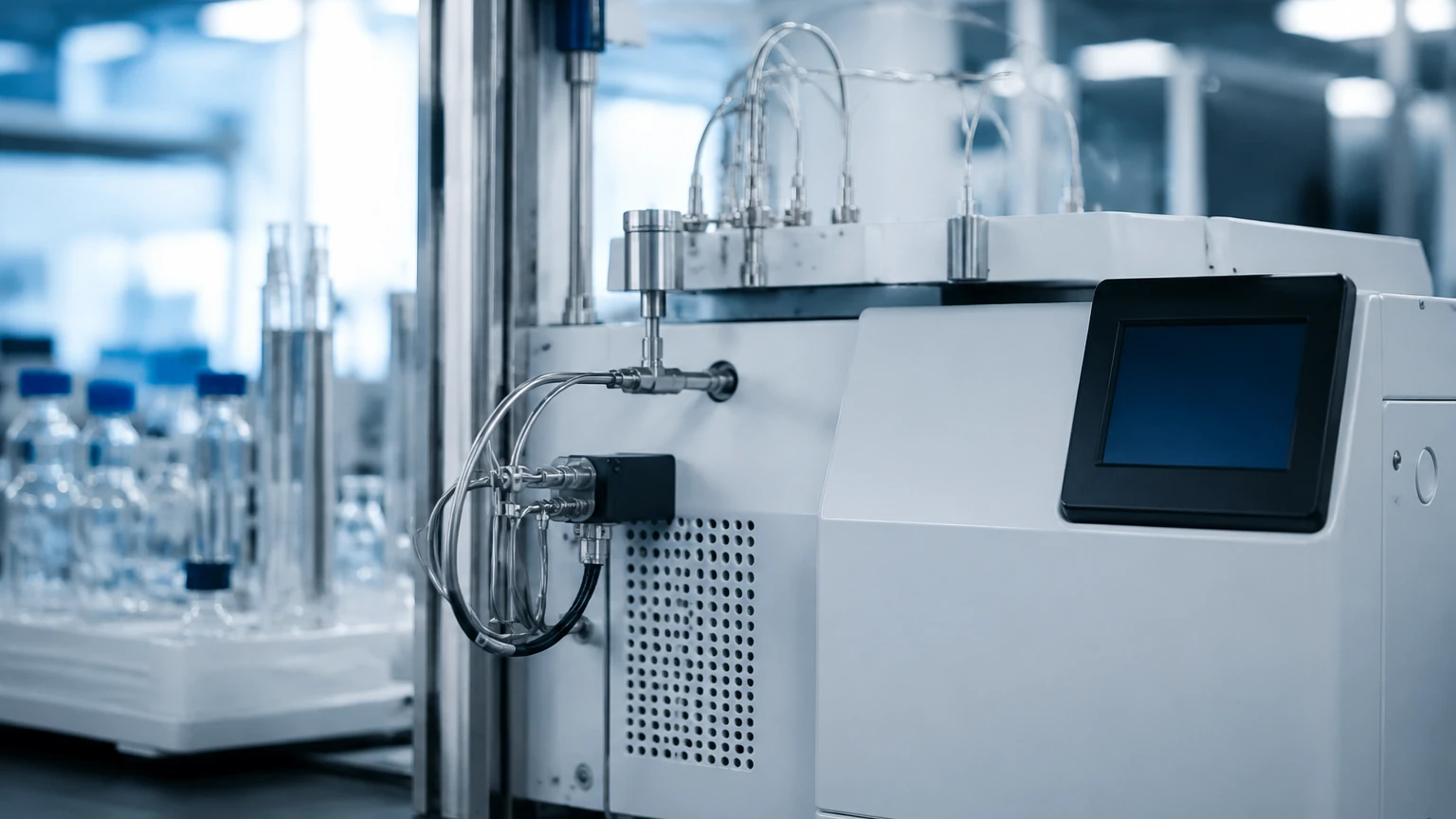
The performance of a trace gas analyzer is often determined more by the sampling system than the sensor itself. If the gas sample does not reach the sensor in a representative state, the data is useless.
Sampling Line Considerations
* Material Selection: For trace moisture or reactive gases like Ammonia (NH3), stainless steel tubing with specialized coatings (e.g., SilcoTek) is often required to prevent the gas molecules from "sticking" to the tube walls (adsorption).
* Temperature Control: Sampling lines should often be heated (e.g., to 150°C or 180°C) to prevent condensation. If the sample gas cools below its dew point, liquid droplets can damage the analyzer or scrub out the trace gases you are trying to measure.
* Distance: Keep the distance between the extraction point and the analyzer as short as possible to minimize lag time. Distances exceeding 15–20 meters typically require a "fast loop" system to maintain high flow rates.
Filtration and Conditioning
Particulates and aerosols must be removed before the gas enters the analyzer. A multi-stage filtration system—starting with a coarse filter at the probe and ending with a fine membrane filter at the analyzer inlet—is recommended. For wet gas streams, a thermoelectric cooler or a Perma Pure dryer may be necessary to remove water vapor without removing the target trace gas.
Integration with Process Level Control Systems
In integrated industrial automation, trace gas analyzers do not operate in isolation. They are frequently paired with level measurement instruments to provide a total safety and production solution.
For instance, in a large chemical storage tank, a radar level meter monitors the liquid volume to prevent overfills, while a trace gas analyzer monitors the headspace for oxygen ingress or volatile leaks. This dual monitoring approach is a cornerstone of modern Functional Safety (SIL) protocols. Data from both the level sensors and the gas analyzers are typically fed into a Distributed Control System (DCS) or Programmable Logic Controller (PLC) via 4-20mA, Modbus, or Foundation Fieldbus protocols.
By consulting the technical resources on the Main Page, engineers can coordinate the installation of level transmitters and gas detection systems to ensure they share compatible communication infrastructures and power requirements.
Common Limitations and Operational Challenges
Despite their advanced technology, trace gas analyzers face several practical limitations:
1. Sensor Poisoning: Certain chemicals can permanently damage sensors. For example, lead or silicone vapors can "poison" catalytic bead sensors, rendering them insensitive to flammable gases.
2. Saturation: If a trace gas analyzer designed for ppb levels is exposed to high percentage-level concentrations of the target gas, the sensor may become saturated. This can lead to long recovery times or the need for sensor replacement.
3. Environmental Factors: Extreme ambient temperatures or high humidity can affect the electronics and the chemical reactions within the sensors. Most industrial analyzers require an environmental enclosure with heating or cooling if installed outdoors in climates exceeding 40°C or dropping below -20°C.
4. Calibration Gas Costs: High-precision trace gas analysis requires certified calibration gas cylinders. These gases can be expensive and have limited shelf lives, especially for reactive species like HCl or Cl2.
Frequently Asked Questions (FAQ)
Q: How often should a trace gas analyzer be calibrated?
A: This depends on the technology and the application. Electrochemical sensors may require monthly calibration, while TDLAS systems are often stable for 6–12 months. Always follow the manufacturer's specific maintenance schedule.
Q: Can one analyzer measure multiple gases?
A: Some technologies, like FTIR (Fourier Transform Infrared) or GC (Gas Chromatography), can measure dozens of gases simultaneously. However, most point-of-use trace gas analyzers are optimized for one or two specific species to ensure maximum sensitivity.
Q: What is the difference between a gas detector and a trace gas analyzer?
A: A gas detector is typically a safety device designed to trigger an alarm at high concentrations (e.g., LEL or TLV levels). A trace gas analyzer is a process instrument designed for continuous, high-precision measurement of very low concentrations for process control or quality assurance.
Q: How does pressure affect the measurement?
A: Most gas analyzers are pressure-sensitive. Changes in process pressure can change the density of the gas, leading to inaccurate concentration readings. High-quality analyzers include integrated pressure compensation to adjust the calculation in real-time.
Q: What is the typical lifespan of a trace gas sensor?
A: Optical sensors (TDLAS/CRDS) can last 5–10 years or more, as they have no moving parts or consumable reagents. Electrochemical sensors typically need replacement every 18–24 months due to electrolyte depletion.
By carefully considering the measurement principle, sampling requirements, and the specific needs of the industrial environment, organizations can implement trace gas analysis solutions that enhance both safety and efficiency. For more information on integrating these systems with broader process measurement technologies, refer to the technical guides available on the Main Page.