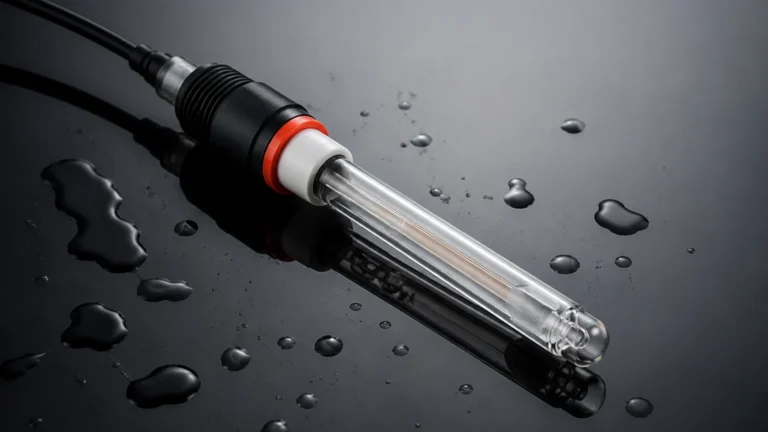
Vacuum Gauge Controller Display Pressure Range Storage Temperature Rs232
Vacuum Gauge Controller Display Pressure Range Storage Temperature Rs232
In the realm of industrial automation and process control, the precise measurement of vacuum levels is as critical as the measurement of positive pressure or liquid levels. A vacuum gauge controller serves as the central hub for vacuum measurement systems, translating raw signals from sensors into readable data and actionable control outputs. For engineers and facility managers, understanding the technical nuances of a vacuum gauge controller—specifically its display capabilities, pressure range, storage temperature resilience, and RS232 communication protocols—is essential for maintaining system integrity and operational efficiency.
Welk, as a professional manufacturer of industrial level measurement instruments, recognizes that vacuum control often intersects with level measurement in sealed tanks, distillation columns, and chemical reactors. This guide provides a technical overview of vacuum gauge controllers to assist in the selection and implementation of these vital instruments.
Understanding the Role of Vacuum Gauge Controllers in Industrial Processes
A vacuum gauge controller is an electronic device designed to power vacuum sensors (transducers), process their output signals, and provide a user interface for monitoring and control. Unlike a simple standalone gauge, a controller often manages multiple sensor heads simultaneously, allowing for a comprehensive view of a vacuum system’s performance across different zones.
In industries such as water treatment, chemical processing, and oil and gas, vacuum systems are used for degassing, vacuum distillation, and maintaining low-pressure environments for sensitive chemical reactions. The controller ensures that the vacuum levels remain within specified safety and operational parameters. By integrating a vacuum gauge controller into a broader control architecture, operators can automate pump-down sequences, trigger safety interlocks, and log data for quality assurance.
Measurement Principles and Sensor Compatibility
Before selecting a controller based on its display or interface, it is crucial to understand the measurement principles it supports. Vacuum measurement is generally divided into three regimes: rough vacuum, high vacuum, and ultra-high vacuum (UHV). No single sensor technology covers the entire spectrum from atmospheric pressure to UHV, which is why controllers are often designed to be multi-channel and multi-technology compatible.
Thermal Conductivity (Pirani Gauges)
Pirani sensors measure vacuum by monitoring the heat loss from a heated wire to the surrounding gas. As the gas pressure decreases, the thermal conductivity drops. These are typically used for rough to medium vacuum ranges ($10^3$ to $10^{-3}$ mbar).
Ionization (Cold Cathode and Hot Cathode)
For high and ultra-high vacuum, ionization gauges are used. They work by ionizing gas molecules and measuring the resulting ion current. Cold cathode (Penning) gauges are robust and suitable for industrial environments, while hot cathode (Bayard-Alpert) gauges offer higher precision in laboratory settings.
Piezoelectric and Capacitive Diaphragm
These sensors measure the physical deflection of a diaphragm caused by pressure. They are highly accurate in the rough vacuum range and are independent of gas type, making them ideal for precise chemical processing applications.
Analyzing Pressure Range and Display Resolution
The pressure range of a vacuum gauge controller is determined by the sensors it supports. A high-quality controller should be able to display measurements across several orders of magnitude. For instance, a system might need to monitor a process from 1013 mbar (atmospheric pressure) down to $10^{-9}$ mbar.
Display Characteristics
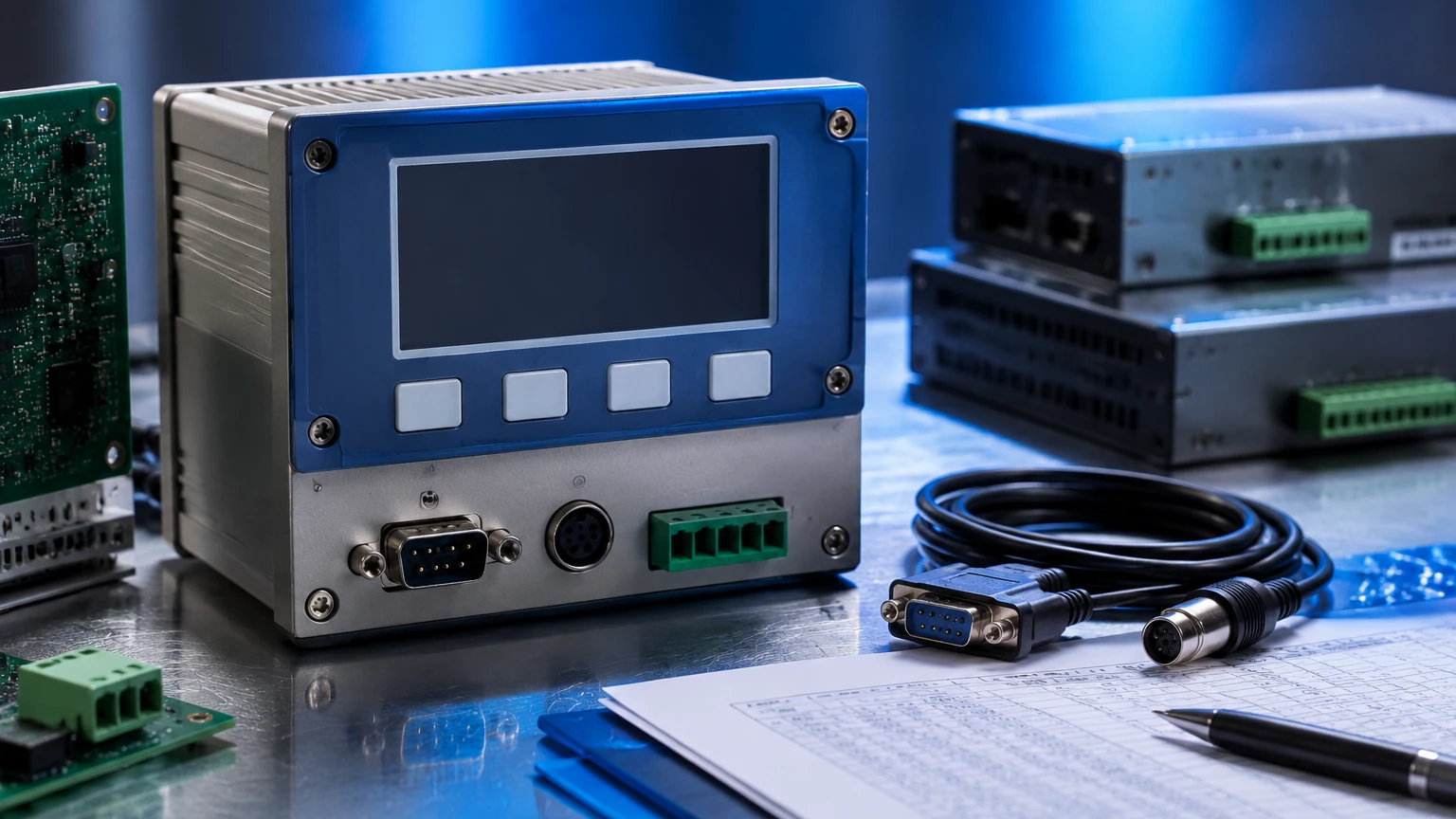
The display of a controller is the primary interface for onsite operators. Modern controllers utilize LED or LCD screens that provide:
* Real-time Pressure Readings: Often displayed in scientific notation (e.g., 1.2E-05 mbar) due to the wide range of values.
* Unit Conversion: The ability to switch between mbar, Torr, Pascal (Pa), and psi. In the Main Page of technical specifications for such devices, the ability to customize units is a frequently requested feature.
* Channel Status: Indicators showing which sensors are active and if any setpoints have been triggered.
* Trend Graphs: Some advanced controllers offer graphical displays to visualize pressure changes over time, which is invaluable for leak detection.
Environmental Specifications: Storage Temperature and Operating Conditions
Industrial instruments are often subjected to harsh environments, not just during operation but also during transit and periods of inactivity. This is where storage temperature and operating temperature specifications become critical.
Storage Temperature
The storage temperature range (typically -20°C to +70°C or -4°F to +158°F) defines the limits within which the controller can be kept without powering it on. Exceeding these limits can lead to:
* Component Degradation: Electrolytic capacitors and LCD screens are particularly sensitive to extreme temperatures.
* Calibration Drift: Significant thermal cycling can affect the internal reference voltages, necessitating recalibration once the unit is put into service.
Operating Temperature
The operating temperature (usually 0°C to +50°C) is typically narrower than the storage range. Controllers generate internal heat, and if the ambient temperature is too high, the electronic components may overheat, leading to erratic readings or total system failure. In chemical plants where ambient temperatures can be high, proper ventilation or cooling for the instrument cabinet is required.
Data Communication: The Importance of RS232 Interfaces
In the era of Industrial Internet of Things (IIoT) and Industry 4.0, a vacuum gauge controller cannot exist in isolation. The RS232 interface remains a staple in industrial communication for several reasons.
Why RS232?
While newer protocols like Ethernet or RS485 (Modbus) are common, RS232 is valued for its simplicity and point-to-point reliability. It allows the controller to connect directly to a PC, PLC, or data logger. Through the RS232 port, a controller can:
* Transmit Data: Send real-time pressure values to a central monitoring system.
* Receive Commands: Allow remote configuration of setpoints and units.
* Firmware Updates: Provide a pathway for updating the device’s internal software to add features or improve sensor compatibility.
Integration with SCADA
By using serial communication, vacuum data can be integrated into a Supervisory Control and Data Acquisition (SCADA) system. This allows for the synchronization of vacuum levels with other process variables, such as tank levels or temperature, providing a holistic view of the industrial process.
Selection Criteria and Practical Comparison Table
When selecting a vacuum gauge controller for your facility, use the following table to evaluate different models based on the key parameters discussed.
| Feature | Specification Requirement | Industrial Application Note |
| :— | :— | :— |
| Pressure Range | $10^{-9}$ to $10^3$ mbar | Ensure the controller supports both Pirani and Ionization sensors if wide range is needed. |
| Display Type | High-contrast LCD or LED | Must be readable in low-light or high-glare environments. |
| Communication | RS232 / RS485 | RS232 is ideal for local PC connection; RS485 for long-distance PLC integration. |
| Storage Temp | -20°C to +70°C | Critical for equipment stored in unconditioned warehouses. |
| Operating Temp | 0°C to +50°C | Consider cabinet cooling if ambient temps exceed 40°C. |
| Setpoints | 2 to 6 Relay Outputs | Essential for automated safety interlocks and pump control. |
| Power Supply | 90-260 VAC or 24 VDC | Universal AC input is preferred for global compatibility. |
| Measurement Units | mbar, Torr, Pa, psi | Selectable units prevent manual conversion errors by operators. |
| Update Rate | < 100 ms | Fast response is necessary for dynamic vacuum processes. |
Installation Guidelines and Maintenance Best Practices
Proper installation is paramount to ensuring the accuracy and longevity of a vacuum gauge controller and its associated sensors.
Installation Considerations
1. Mounting Location: Install the controller in a clean, dry environment, ideally in a standard 19-inch rack or a dedicated control panel. Avoid locations with high electromagnetic interference (EMI) from large motors or frequency drives.
2. Cable Lengths: While RS232 is reliable, it is limited to approximately 15 meters (50 feet). For longer distances, use a signal converter to transition to RS485 or Ethernet.
3. Sensor Orientation: While the controller is remote, the sensors should be mounted such that debris or condensates do not accumulate in the sensor head. For Pirani gauges, horizontal mounting is often recommended to prevent convection errors.
Maintenance and Calibration
* Zeroing the Gauge: Periodically, the controller should be used to "zero" the sensors when the system is at a known base vacuum. This compensates for sensor aging.
* Atmospheric Adjustment: Similarly, checking the sensor at atmospheric pressure ensures the full scale of the measurement is accurate.
* Data Port Inspection: Ensure the RS232 port is free of dust and that the connector is securely fastened to prevent intermittent communication loss.
Limitations and Considerations
While vacuum gauge controllers are highly versatile, they do have limitations:
* Gas Dependency: Most vacuum sensors (except capacitive diaphragms) are gas-type dependent. If the process gas changes from air to argon or helium, the controller must be programmed with the appropriate correction factors.
* Sensor Lifespan: High-vacuum sensors like hot cathode gauges have filaments that eventually burn out. The controller should have a diagnostic feature to alert the operator of filament failure.
* Environmental Sensitivity: Despite robust storage temperature ratings, the sensors themselves can be sensitive to contamination from oils or corrosive gases, which can lead to measurement errors that the controller cannot internally correct.
Frequently Asked Questions (FAQs)
Q: Can I use one controller for different brands of vacuum sensors?
A: This depends on the controller. Some are "universal" and support standard analog inputs (0-10V), while others are proprietary and only work with sensors from the same manufacturer. Always verify compatibility before purchase.
Q: How does storage temperature affect the controller's internal clock or memory?
A: Most modern controllers use non-volatile memory (EEPROM) to store settings, which is not affected by temperature within the specified storage range. However, extremely low temperatures can affect the battery life of real-time clocks if equipped.
Q: Is RS232 fast enough for high-speed vacuum control?
A: For most industrial vacuum processes, the baud rates provided by RS232 (e.g., 9600 to 115200 bps) are more than sufficient to transmit pressure data and receive commands without significant latency.
Q: What happens if the pressure goes out of the controller's range?
A: The display will typically show an error code or an "Over Range/Under Range" message. If setpoints are configured, the controller can be programmed to shut down pumps to protect the system.
For those involved in complex industrial setups requiring integrated measurement, exploring the Main Page of specialized instrument providers like Welk can offer further insights into how vacuum control fits into a total facility automation strategy. By focusing on the critical specifications of display, pressure range, storage temperature, and RS232 connectivity, engineers can ensure they select a controller that is both reliable and future-proof.
Download Vacuum Gauge Controller Display Pressure Range Storage Temperature Rs232 as a PDF