Houser Tracking
Houser Tracking
In the landscape of industrial automation and inventory management, the term "houser tracking" refers to the systematic monitoring and data logging of material levels within storage structures, silos, bins, and housings. For process industries ranging from chemical manufacturing to water treatment, maintaining an accurate, real-time record of what is contained within these "housers" is essential for preventing stockouts, avoiding overfills, and optimizing the supply chain. Effective tracking is not merely about knowing if a container is full or empty; it involves precise measurement principles, robust hardware selection, and the integration of data into broader industrial control systems.
Industrial level measurement serves as the backbone of houser tracking. By deploying advanced sensors, facilities can transition from manual inspections to automated digital twins of their storage capacities. This guide explores the core technologies used in these applications, the engineering principles behind them, and the practical considerations for implementing a reliable tracking system.
Core Measurement Principles in Houser Tracking
Before selecting a tracking solution, it is vital to understand the physics of how level instruments interact with the stored media. Most modern systems rely on one of three primary physical principles: electromagnetic wave reflection (Radar), acoustic wave reflection (Ultrasonic), or pressure measurement (Hydrostatic).
1. Radar Level Measurement (Electromagnetic Waves)
Radar sensors are the gold standard for high-accuracy houser tracking. They operate on the Time of Flight (ToF) principle. The sensor emits a high-frequency electromagnetic pulse (typically in the 26 GHz or 80 GHz range) that travels through the air space of the housing. When the pulse hits the surface of the material—whether liquid or solid—it is reflected back to the sensor.
Because electromagnetic waves travel at the speed of light, the sensor uses sophisticated electronics to measure the nanosecond intervals between emission and reception. The distance is calculated using the formula:
*Distance = (Speed of Light × Time) / 2*.
Radar is particularly effective because it is largely unaffected by changes in temperature, pressure, or the presence of dust and vapors, which are common in industrial storage housings.
2. Ultrasonic Level Measurement (Acoustic Waves)
Ultrasonic sensors also use the ToF principle but utilize sound waves instead of electromagnetic pulses. A piezoelectric crystal within the sensor converts electrical energy into mechanical vibrations, creating ultrasonic sound waves. These waves bounce off the material surface and return to the transducer.
While cost-effective, ultrasonic tracking is sensitive to the medium through which the sound travels. Factors such as heavy dust, significant temperature gradients, or high-pressure environments can alter the speed of sound, requiring integrated temperature compensation to maintain accuracy. These are best suited for stable liquid storage or short-range solids monitoring.
3. Hydrostatic Level Measurement (Pressure)
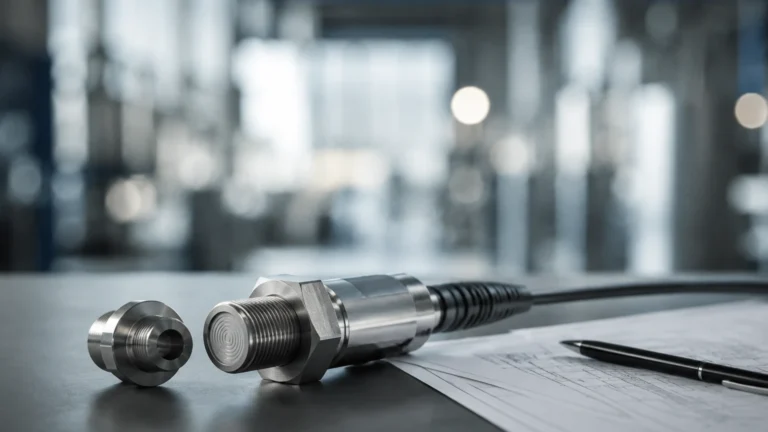
For liquid houser tracking in vented or open-topped tanks, hydrostatic transmitters measure the pressure exerted by the liquid column. The principle is based on Pascal’s Law, where the pressure at the bottom of a vessel is directly proportional to the height of the liquid and its specific gravity.
*Level = Measured Pressure / (Density × Gravity)*.
This method is highly reliable for liquids with constant density and provides a direct correlation to the mass of the stored product, which is often a key metric in inventory tracking.
Technology Comparison for Houser Tracking Systems
Selecting the right technology depends on the physical characteristics of the material and the environment of the housing. The following table provides a comparison of common instruments used in industrial tracking applications.
| Technology | Typical Range | Accuracy | Ideal Media | Environmental Limitations |
| :— | :— | :— | :— | :— |
| Non-Contact Radar | 0.3m to 70m | ±1mm to ±5mm | Liquids, Slurries, Corrosives | Minimal; handles foam and steam well. |
| Guided Wave Radar | 0.3m to 30m | ±2mm | Powders, Granules, Low Dielectrics | Physical contact required; sensitive to lateral pull forces. |
| Ultrasonic | 0.2m to 15m | ±0.25% of range | Water, Wastewater, Chemicals | Poor performance in heavy dust or vacuum. |
| Hydrostatic | 1m to 200m | ±0.1% to ±0.5% | Fuel, Water, Oils | Limited to liquids; requires constant density. |
| Capacitance | 0.1m to 5m | ±1% | Non-conductive liquids | Requires calibration for different media. |
For engineers and procurement officers looking to evaluate specific hardware for these applications, the Welk Main Page offers detailed specifications on radar and ultrasonic models designed for diverse industrial housings.
Key Evaluation Criteria for Tracking Solutions
When designing a houser tracking system, several technical factors must be confirmed to ensure the longevity and accuracy of the installation.
Dielectric Constant (εr)
In radar-based tracking, the dielectric constant of the material determines how much energy is reflected back to the sensor. Materials with high dielectric constants (like water, εr > 80) reflect signals strongly. Materials with low dielectric constants (like plastic pellets or dry grains, εr < 2) reflect very little energy, often requiring Guided Wave Radar (GWR) to concentrate the signal along a probe.
Material Surface Profile
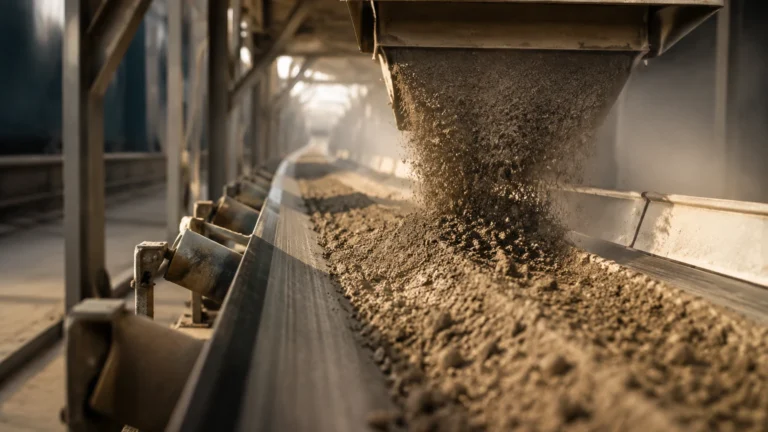
In solids tracking, the material does not sit flat. It forms a cone (angle of repose) during filling and a funnel during discharge. A single-point level sensor might report a "full" status if it hits the peak of the cone, even if the total volume is low. Advanced tracking systems often use multi-point mapping or specific algorithms to average these levels for a more accurate volume calculation.
Housing Geometry and Obstructions
Internal structures such as ladders, agitators, or heating coils can create "false echoes." When setting up a tracking sensor, engineers must use "false signal suppression" or "background masking" to tell the sensor to ignore reflections from these fixed objects. The beam angle of the sensor is critical here; a narrower beam (common in 80 GHz radar) is less likely to hit the walls or internal obstructions.
Installation Considerations for Reliable Data
Proper installation is the difference between a functional tracking system and one that provides constant errors. The following guidelines should be followed for most industrial housings:
1. Nozzle Dimensions: The mounting nozzle should be as short as possible. If a nozzle is too long or too narrow, the sensor may detect the edge of the nozzle as the material surface (the "ringing" effect). For radar, the antenna should ideally extend slightly past the bottom of the nozzle.
2. Positioning: Sensors should never be mounted in the exact center of a circular housing (to avoid multiple reflections) nor too close to the wall (to avoid signal interference). A common rule of thumb is to mount the sensor at 1/3 the radius of the tank.
3. Inflow Avoidance: Never install a tracking sensor directly in the path of the infilling material. The turbulence and the physical presence of the falling product will cause erratic readings and may damage the sensor over time.
4. Dead Zones: Every non-contact sensor has a "dead zone" or "blocking distance" (typically 0.1m to 0.5m) directly below the sensor face where measurements cannot be taken. The sensor must be mounted high enough to ensure the maximum fill level does not enter this zone.

Data Integration: The "Tracking" Element
Hardware is only half of the houser tracking equation. The data must be communicated to a system that can interpret it. Most modern sensors provide several output options:
* 4-20 mA HART: The industry standard, allowing for a digital signal to be superimposed on a traditional analog loop. This is ideal for basic level monitoring and remote configuration.
* Modbus RTU / RS485: Used for daisy-chaining multiple sensors in a large facility, allowing a single PLC to track dozens of housings over a simple two-wire connection.
* IoT and Wireless: For remote sites or mobile housings, LoRaWAN or NB-IoT enabled sensors can transmit level data to cloud-based dashboards, providing global visibility of inventory.
Common Risks and Limitations
While technology has advanced, certain conditions still pose risks to houser tracking accuracy:
* Condensation and Buildup: In high-humidity environments, moisture can collect on the sensor face. While many radar sensors can "see through" thin films, heavy buildup of sticky materials (like resins or wet powders) will eventually attenuate the signal, requiring the use of sensors with PTFE-coated antennas or air-purge systems.
* Foam: Heavy, dense foam on liquid surfaces can absorb radar and ultrasonic signals, leading to a "loss of echo." In these cases, hydrostatic pressure or guided wave radar (which uses a physical probe) are more reliable alternatives.
* Vacuum and High Pressure: Ultrasonic sensors cannot operate in a vacuum because sound requires a medium to travel. Radar is unaffected by vacuum but may require specialized high-pressure flanges and seals for pressurized housings.
Frequently Asked Questions (FAQ)
Q: How often do houser tracking sensors need calibration?
A: Most modern digital radar and ultrasonic sensors are factory-calibrated and do not "drift" like older analog systems. However, a yearly verification against a manual tape measure is recommended for ISO compliance and safety audits.
Q: Can one sensor track both the liquid level and the interface of a sediment layer?
A: Yes, Guided Wave Radar (GWR) is particularly adept at interface measurement. It can detect the top of an oil layer and the interface where the oil meets water, provided the upper layer has a lower dielectric constant than the lower layer.
Q: What is the maximum range for solids tracking in large silos?
A: High-frequency 80 GHz radar sensors can accurately track solids up to 70 meters (approximately 230 feet), even in high-dust environments created during pneumatic filling.
Q: Is it possible to track levels in plastic tanks without cutting a hole?
A: Yes, certain high-frequency radar sensors can transmit through the plastic walls of a container (if the wall is not too thick and the material is non-conductive), allowing for non-invasive tracking.
Conclusion
Implementing a robust houser tracking system is an investment in operational certainty. By understanding the measurement principles of radar, ultrasonic, and hydrostatic technologies, engineers can select the instrument that best matches their specific media and environmental challenges. Whether the goal is to manage bulk solids in a construction silo or monitor chemical reagents in a processing plant, the integration of accurate sensors with digital communication protocols ensures that inventory data is always available, accurate, and actionable. For those in the planning stages of a facility upgrade, consulting technical documentation and product catalogs on the Welk Main Page is a critical step in identifying the right tools for the task.