Endress Hauser Ftm50 Manual
Endress Hauser Ftm50 Manual
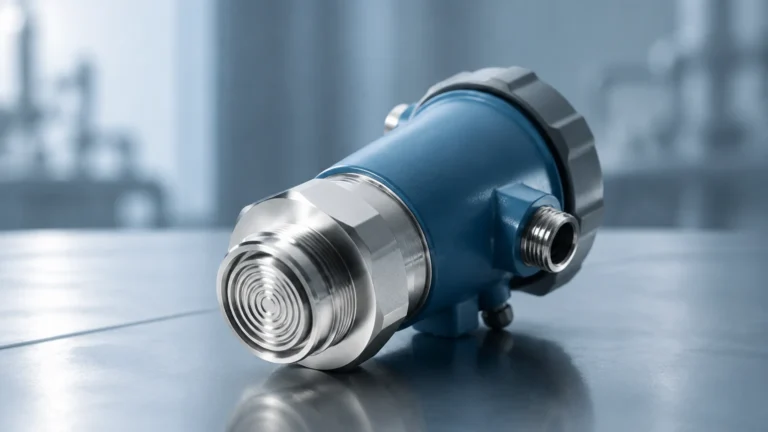
In the field of industrial process automation, the reliable detection of bulk solids is essential for preventing silo overfills, managing inventory, and protecting downstream equipment. The Soliphant M FTM50 is a robust vibrating limit switch designed specifically for fine-grained solids and powders. For engineers and maintenance technicians, the endress hauser ftm50 manual serves as the definitive technical reference for ensuring the device is correctly specified, installed, and maintained. This article provides a comprehensive technical overview of the FTM50, detailing its measurement principles, installation requirements, and selection criteria compared to other level measurement technologies.
Understanding the Vibrating Fork Measurement Principle
Before delving into the specifics of the endress hauser ftm50 manual, it is vital to understand the physics governing the device. The FTM50 operates on the principle of a vibrating tuning fork.
A piezoelectric drive excites the fork of the sensor to its resonant frequency. In free air, the fork vibrates at a specific, stable frequency. When the fork is covered by a solid medium (such as flour, cement, or plastic granules), the density of the material dampens the vibration, causing the frequency to drop. The internal electronics monitor this frequency shift continuously. Once the frequency falls below a predefined threshold, the electronics trigger a change in the switching status (e.g., from "open" to "closed").
Key Factors Influencing Performance
1. Bulk Density: The sensitivity of the FTM50 is highly dependent on the density of the medium. Most manuals specify two density settings: 0.01 g/cm³ (for very light, aerated powders) and 0.05 g/cm³ (for standard applications). Selecting the correct density setting ensures the device does not trigger falsely due to air turbulence or fail to trigger in light materials.
2. Grain Size: The FTM50 is optimized for fine-grained solids, typically with a maximum grain size of 10 mm (0.39 in). For larger, coarser materials, different fork geometries or alternative technologies may be required.
3. Internal Friction: The mechanical properties of the solid, including its flowability and internal friction, affect how the material interacts with the fork tines.
Technical Specifications and Operating Limits
The endress hauser ftm50 manual provides detailed boundaries for the device's operation. Adhering to these limits is critical for long-term reliability and safety, particularly in hazardous environments.
| Feature | Specification (Metric) | Specification (Imperial) |
| :— | :— | :— |
| Process Temperature | -50 °C to +280 °C | -60 °F to +536 °F |
| Process Pressure | -1 bar to +25 bar | -14.5 psi to +362 psi |
| Min. Medium Density | 0.01 g/cm³ | 0.6 lb/ft³ |
| Max. Grain Size | 10 mm | 0.39 in |
| Housing Materials | Aluminum, Stainless Steel | Aluminum, Stainless Steel |
| Sensor Material | 316L (1.4435 / 1.4404) | 316L Stainless Steel |
The FTM50 is often preferred over other sensors because it does not require calibration for specific materials. As long as the density is within the specified range, the switch will operate reliably across different media without manual adjustment.
Mechanical Installation and Orientation
Correct mechanical installation is the most significant factor in preventing premature failure or measurement errors. The endress hauser ftm50 manual emphasizes several critical considerations regarding the orientation and placement of the sensor within a silo or hopper.
Mounting Position
* Top Mounting (Point Level): The device is installed vertically from the top of the silo to act as a high-level alarm. In this orientation, the fork tines should be aligned so that the material flows parallel to the narrow edge of the tines to minimize build-up.
* Side Mounting: When installed through the side wall of a vessel, the fork should be tilted slightly (approx. 20°) to allow material to slide off the tines easily. The tines must be oriented vertically (one above the other) so that material does not get trapped between them.
Avoiding Damage
* Material Curtain: The sensor should never be placed directly in the path of the incoming material flow. The kinetic energy of falling solids can bend or break the fork tines. If placement in the flow path is unavoidable, a protective roof (angled baffle) must be installed 150 mm to 200 mm (6 in to 8 in) above the fork.
* Build-up and Bridging: In applications where the material is prone to sticking, ensure there is sufficient clearance between the fork and the silo wall to prevent "bridging," where material creates a solid connection between the wall and the sensor, leading to a permanent "covered" signal.
Electrical Connection and Configuration
Wiring the FTM50 requires attention to the specific electronic insert chosen during the procurement process. The endress hauser ftm50 manual details several common output types, including DPDT relay, PNP, 8/16mA, and NAMUR.
Electronic Inserts
1. FEM51 (Two-wire AC): Typically used for direct series connection with a load (e.g., a contactor).
2. FEM52 (Three-wire DC, PNP): Common in PLC-based automation systems.
3. FEM54 (DPDT Relay): Provides two potential-free changeover contacts for universal switching tasks.
Configuration Switches
Inside the housing, users will find small DIP switches used to configure the device's logic:
* Fail-Safe Mode (MIN/MAX): This is a critical safety setting. "MAX" fail-safe means the switch will signal "covered" if power is lost, preventing overfills. "MIN" fail-safe is used for low-level detection to prevent pumps or conveyors from running dry.
* Switching Delay: Users can often select a delay (typically 0.5s to 5s) to prevent the switch from toggling rapidly due to turbulence or splashing during the filling process.

Comparative Analysis: Choosing the Right Level Switch
While the FTM50 is a versatile tool, it is important to compare it with other technologies to ensure it is the most cost-effective and reliable choice for a specific application. As a professional manufacturer of industrial level measurement instruments, Welk offers a variety of solutions that can be explored on our Main Page.
| Technology | Advantages | Limitations |
| :— | :— | :— |
| Vibrating Fork (FTM50) | No calibration; robust; handles build-up well; high temperature options. | Limited grain size; sensitive to very low densities (<0.01 g/cm³). |
| Rotary Paddle | Simple; very low cost; unaffected by dielectric properties. | Mechanical wear; seal failure; not suitable for very fine powders. |
| Capacitance Switch | No moving parts; can detect interface; high pressure/temp. | Requires calibration; sensitive to moisture changes and build-up. |
| Ultrasonic (Non-contact) | No contact with medium; measures continuous level. | Affected by dust, foam, and surface turbulence. |
| Radar (Non-contact) | Highly accurate; unaffected by dust or vacuum. | Higher initial cost; requires dielectric constant > 1.4. |
For engineers seeking a comprehensive range of industrial level measurement instruments, including radar and ultrasonic alternatives, reviewing product options and application support on the Main Page provides access to diverse technological solutions tailored to modern industrial needs.
Troubleshooting and Maintenance
The FTM50 is designed for low-maintenance operation, but environmental factors can occasionally cause issues. The endress hauser ftm50 manual includes a troubleshooting guide based on the LED status indicators found on the electronic insert.
Common Issues and Solutions
* Green LED Off: Check the power supply. If power is present, the electronic insert may be defective.
* Red LED Flashing: This often indicates a frequency error. This can be caused by heavy build-up on the fork or mechanical damage to the tines. Cleaning the fork usually resolves the issue.
* False High-Level Signal: Ensure the density setting is correct. If the material is very light, the sensor might need to be set to the 0.01 g/cm³ sensitivity level. Also, check for bridging between the tines.
* Corrosion: In chemical applications, inspect the 316L stainless steel fork for signs of pitting. If the medium is too aggressive, a protective coating or a different material may be necessary.
Maintenance Best Practices
In most applications, the only required maintenance is a periodic visual inspection of the fork tines, especially if the medium is abrasive or prone to sticking. If cleaning is required, use a soft brush or water jet; avoid using sharp tools that could scratch or dent the fork, as this can change its resonant frequency.
Safety and Compliance (SIL and ATEX)
For plants operating in explosive atmospheres or requiring high functional safety, the FTM50 offers specific certifications. The manual details the requirements for SIL2 (Safety Integrity Level) applications. When used in a safety-instrumented system (SIS), the device must undergo regular proof tests to ensure the switching logic remains functional.
Furthermore, for ATEX or IECEx zones, the endress hauser ftm50 manual specifies the use of appropriate cable glands and housing seals to maintain the explosion-proof or intrinsically safe rating. Always verify that the marking on the device nameplate matches the zone classification of the installation site.
Frequently Asked Questions (FAQ)
Q: Can the FTM50 be used for liquid level detection?
No. The FTM50 is specifically tuned for the resonant frequencies associated with solids. For liquids, a different series, such as the Liquiphant, which is tuned for higher-density media, should be used.
Q: What is the maximum pull force the FTM50 can withstand?
This is particularly relevant for the FTM52 (cable version), but for the FTM50 (compact version), the primary concern is lateral force from material movement. The manual specifies maximum lateral loads; if these are exceeded, a protective baffle must be installed.
Q: Does the FTM50 require grounding?
Yes. For both safety and to ensure electromagnetic compatibility (EMC), the housing must be connected to the plant's ground system. This is usually achieved through the process connection or a dedicated grounding terminal on the housing.
Q: How do I handle heavy build-up?
The vibrating motion of the fork naturally sheds most material. However, for extremely sticky substances, the manual suggests using the "Build-up" setting if available or ensuring the fork is positioned in a way that gravity assists in shedding the material.
By following the guidelines outlined in the endress hauser ftm50 manual and considering the comparative advantages of various level measurement technologies, process engineers can ensure high system availability and safety. For further assistance in selecting the right level measurement technology for your specific industrial application, please refer to the Main Page for detailed product specifications and engineering support.