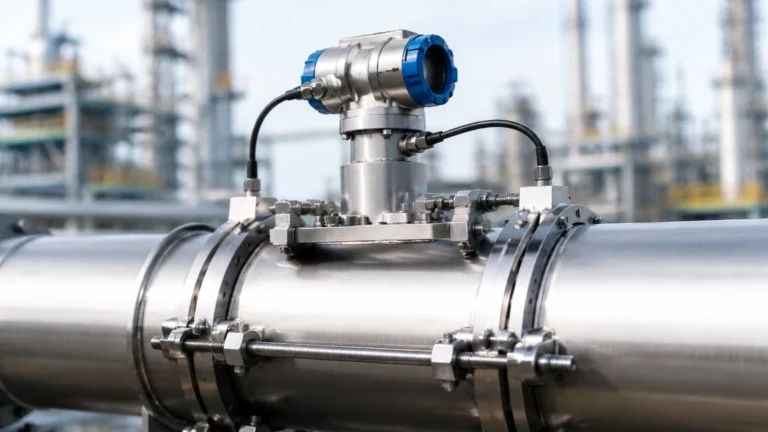
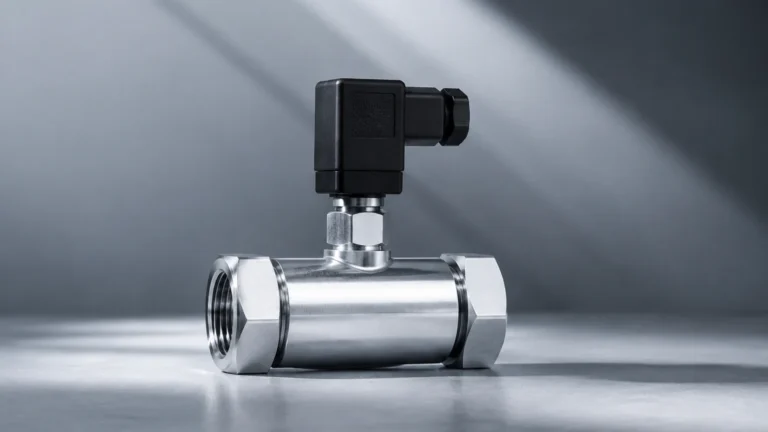
Water Level Detector Sensor
Water Level Detector Sensor
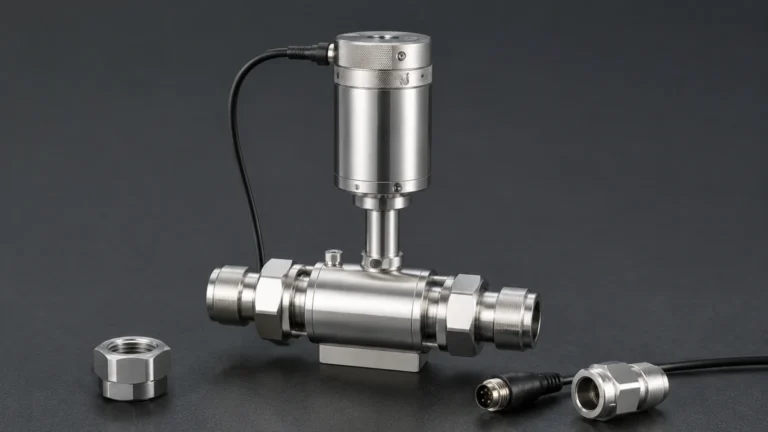
In industrial automation and process control, the water level detector sensor serves as a critical component for monitoring, managing, and securing liquid storage and transport systems. Whether applied in municipal water treatment, chemical processing, or oil and gas facilities, selecting the appropriate sensing technology is essential for operational efficiency and safety. This guide explores the fundamental measurement principles, selection criteria, and installation best practices for modern water level detection systems.
Measurement Principles of Water Level Sensors
Before selecting a water level detector sensor, it is vital to understand the physics behind the various measurement technologies. Each method offers distinct advantages depending on the physical properties of the water (purity, temperature, pressure) and the environment of the vessel.
Hydrostatic Pressure Measurement
Hydrostatic level transmitters operate on the principle that the pressure at a specific point in a static liquid is proportional to the height of the liquid column above it. The relationship is defined by the formula:
*P = ρ × g × h*
Where *P* is pressure, *ρ* (rho) is the density of the liquid, *g* is the gravitational constant, and *h* is the height of the liquid.
These sensors are typically submersible or mounted to the bottom of a tank. They are highly effective for deep wells, open reservoirs, and vented tanks where liquid density remains relatively constant.
Ultrasonic (Time-of-Flight)
Ultrasonic sensors are non-contact devices that emit high-frequency sound waves. These waves travel through the air, reflect off the water surface, and return to the sensor. By measuring the time it takes for the pulse to return (Time-of-Flight), the sensor calculates the distance to the water surface.
Because sound speed is affected by air temperature, most high-quality ultrasonic sensors include integrated temperature compensation. They are ideal for wastewater applications and open channel flow measurement but may struggle in the presence of heavy foam or vacuum conditions.
Radar (Radio Detection and Ranging)
Radar level meters use electromagnetic waves rather than sound. Similar to ultrasonic sensors, they measure the time-of-flight of the signal. However, radar waves travel at the speed of light and are largely unaffected by temperature fluctuations, pressure changes, or the presence of vapor and dust.
Modern 80GHz high-frequency radar sensors provide narrow beam angles, allowing for precise measurement even in narrow tanks with internal obstructions. Radar is often the preferred choice for high-precision industrial applications.
Magnetic Level Gauges
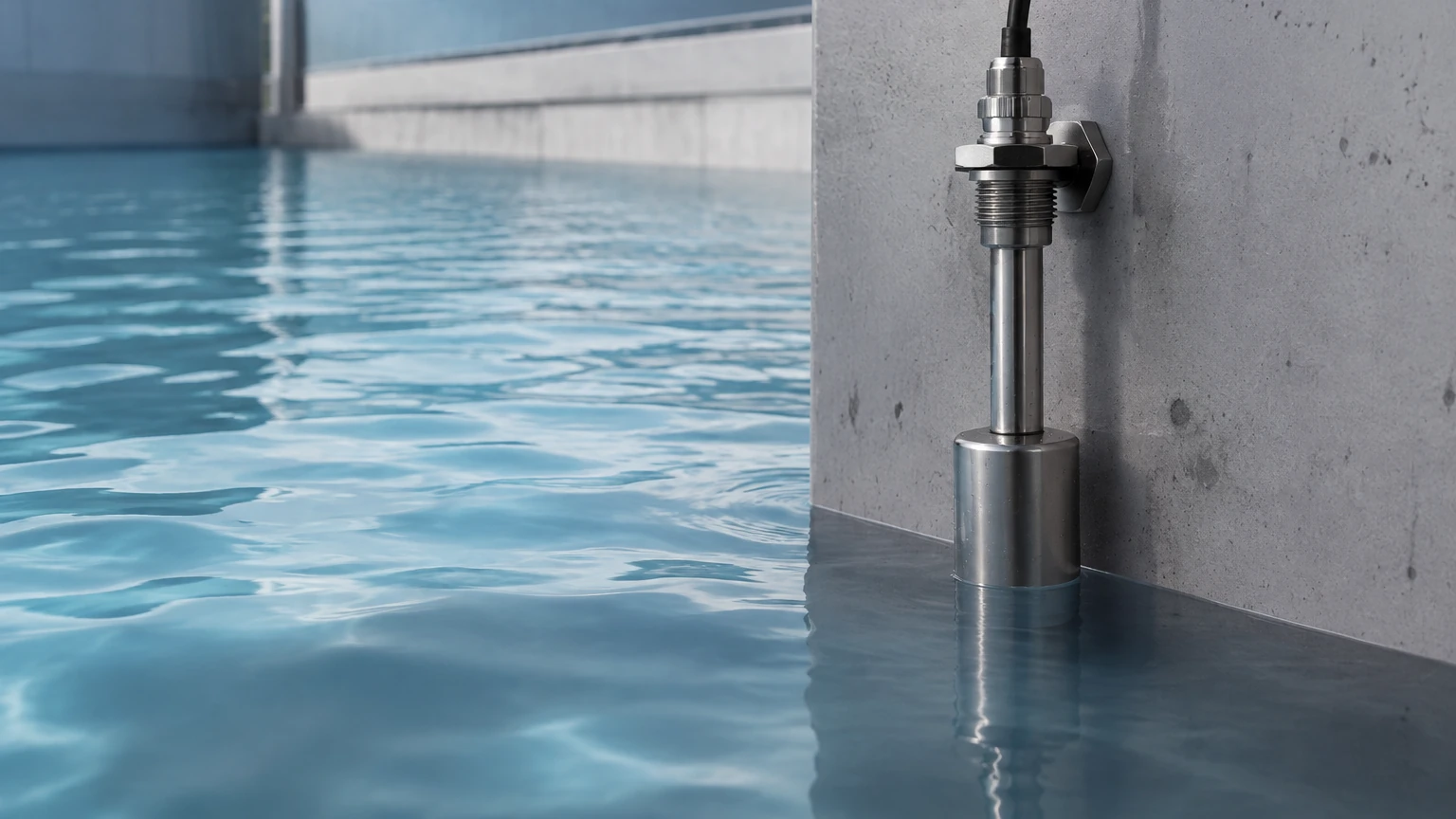
Magnetic level sensors utilize a float containing an internal magnet that moves with the water level. As the float rises or falls, it actuate switches or interacts with a reed-chain transmitter inside a sealed tube. This technology provides both a local visual indication and a remote electronic signal, making it highly reliable for boiler feed water and chemical storage tanks.
Technical Selection Criteria
Choosing the right water level detector sensor requires a systematic evaluation of the application's parameters. The following table provides a comparison of common technologies used in industrial water management.
| Sensor Type | Measurement Method | Accuracy | Best For | Limitations |
| :— | :— | :— | :— | :— |
| Hydrostatic | Contact / Pressure | ±0.25% to ±0.5% | Deep wells, vented tanks | Affected by density changes |
| Ultrasonic | Non-contact / Sound | ±0.25% of range | Wastewater, sumps | Sensitive to foam and steam |
| Radar | Non-contact / EM Wave | ±1mm to ±3mm | Process tanks, high temp | Higher initial cost |
| Magnetic | Contact / Float | ±5mm to ±10mm | Visual monitoring | Moving parts can scale/clog |
| Capacitance | Contact / Electrical | ±1% | Small tanks, oils | Requires constant dielectric |
Key Considerations for Selection
1. Media Characteristics: Is the water deionized, potable, or wastewater? Suspended solids can clog pressure ports, while corrosive chemicals require PTFE or PVDF coatings.
2. Process Conditions: High-pressure tanks (above 10 bar) or high-temperature steam environments typically necessitate radar or magnetic gauges rather than ultrasonic sensors.
3. Accuracy Requirements: For billing or inventory custody transfer, high-frequency radar is often required. For simple pump control, a hydrostatic sensor or ultrasonic switch may suffice.
4. Output Signals: Most industrial sensors provide a 4-20mA analog signal, often with HART protocol. Digital options like RS485 Modbus or Profibus are increasingly common for integration into PLC and SCADA systems.
For a comprehensive overview of available technologies and specific model specifications, engineers should consult the Main Page of professional instrumentation providers.
Installation Considerations and Best Practices
Correct installation is as important as sensor selection. Even the most accurate water level detector sensor will provide erroneous data if mounted incorrectly.
Avoiding the "Dead Zone"
Non-contact sensors (ultrasonic and radar) have a "dead zone" or "blocking distance" directly beneath the sensor face. In this zone, the sensor cannot accurately process the returning signal. Ensure the sensor is mounted high enough so that the maximum water level never enters this dead zone.
Positioning and Obstructions
Sensors should be mounted away from the tank walls to prevent signal interference from weld seams or scale buildup. Furthermore, sensors must not be placed directly above an inflow pipe, as the turbulence and air bubbles will cause erratic readings. If a tank has internal agitators or cooling coils, a radar sensor with a narrow beam or a stilling well should be utilized to isolate the water surface.
Stilling Wells and Bypass Chambers
In applications with significant turbulence or surface foam, a stilling well (a vertical pipe with vent holes) can be installed. The sensor measures the level inside the pipe, which remains calm even if the rest of the tank is agitated. This is a common practice in large reservoirs and chemical reactors.
Limitations and Environmental Challenges
While modern sensors are robust, certain environmental factors present challenges that must be mitigated during the engineering phase.
* Foam and Turbulence: Heavy foam absorbs ultrasonic signals, leading to a "loss of echo." Radar is more resistant to foam but may still experience signal attenuation depending on the foam's dielectric constant and thickness.
* Condensation and Steam: In hot water applications, condensation can form on the sensor face. Many ultrasonic and radar sensors feature "drip-off" antenna designs or specialized coatings to prevent water droplets from blocking the signal.
* Build-up and Scaling: In hard water or wastewater applications, calcium carbonate or biological growth can accumulate on contact-type sensors. Hydrostatic sensors may require periodic cleaning of the diaphragm, while magnetic floats may need inspection to ensure they move freely.
Maintenance and Troubleshooting
To ensure long-term reliability, a routine maintenance schedule should be established for any water level detector sensor.
1. Calibration Verification: Periodically compare the sensor's output against a manual dip-tape measurement. Most digital sensors allow for field re-calibration via a handheld communicator or integrated display.
2. Visual Inspection: For submersible hydrostatic sensors, check the cable jacket for signs of wear or chemical attack. For non-contact sensors, ensure the transducer face is clean and free of debris.
3. Signal Integrity: Check for moisture in the terminal housing. Ensure that cable shields are properly grounded at one end to prevent EMI (Electromagnetic Interference) from variable frequency drives (VFDs) or motors from corrupting the signal.
Frequently Asked Questions (FAQ)
Q: Can a water level detector sensor measure the volume of a tank?
A: Yes. Most modern transmitters can be programmed with tank strapping tables or geometric formulas (linear, cylindrical, spherical) to convert the measured level into a volume output (liters, cubic meters, or gallons).
Q: What is the difference between a level sensor and a level switch?
A: A level sensor provides continuous measurement (e.g., 0-100%), allowing for precise monitoring. A level switch provides a point-level alert (on/off) at a specific height, typically used for high-level alarms or dry-run protection for pumps.
Q: How does temperature affect water level measurement?
A: Temperature affects the density of water, which impacts hydrostatic sensors. It also affects the speed of sound, impacting ultrasonic sensors. High-quality sensors include internal compensation to account for these variables.
Q: Is radar always better than ultrasonic for water measurement?
A: Not necessarily. While radar is more versatile in complex environments, ultrasonic sensors are often more cost-effective for simple, open-air applications like river level monitoring or wastewater sumps where there are no vapors or extreme temperatures.
Conclusion
Selecting the right water level detector sensor is a balance of technical requirements, environmental constraints, and budget. By understanding the underlying principles of hydrostatic, ultrasonic, and radar technologies, process engineers can implement solutions that provide accurate data and long-term reliability. For further technical documentation and product selection tools, visit the Main Page to explore professional-grade measurement instruments tailored for industrial automation.