Water Level Monitoring
Water Level Monitoring
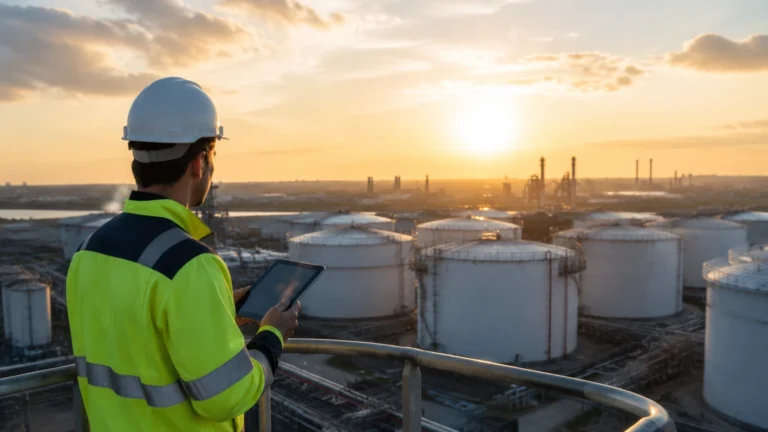
Effective water level monitoring is a fundamental requirement across diverse industrial sectors, including municipal water treatment, chemical processing, and power generation. Accurate measurement ensures process efficiency, prevents equipment damage from dry running or overfilling, and assists in regulatory compliance regarding environmental discharge. This guide examines the primary technologies used in modern industrial level measurement, their operating principles, and the criteria for selecting the most appropriate solution for specific application environments.
Core Principles of Water Level Measurement
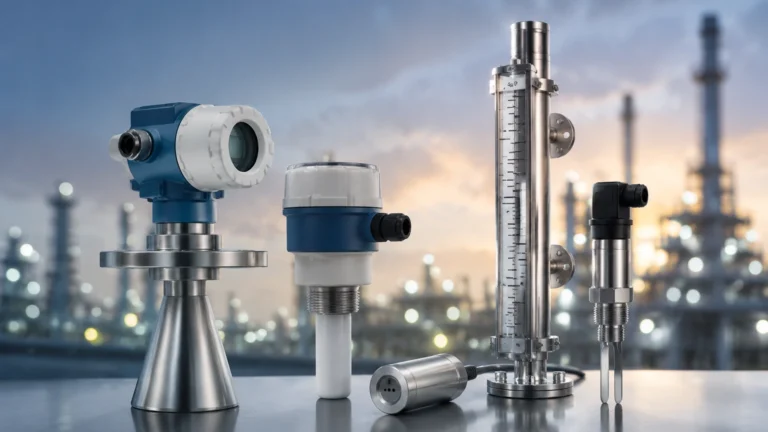
Before selecting a specific instrument, it is essential to understand the physical principles that govern different measurement technologies. Industrial level sensors are generally categorized into non-contact and contact-based systems.
Radar Level Measurement (Non-Contact)
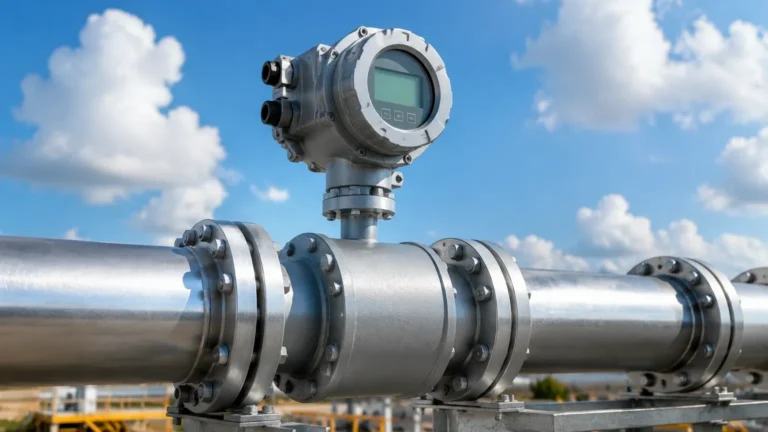
Radar level meters utilize electromagnetic waves, typically in the microwave frequency range (26 GHz or 80 GHz). The sensor emits a signal that travels to the water surface, reflects back, and is captured by the antenna. By calculating the time-of-flight or the frequency shift (in Frequency Modulated Continuous Wave or FMCW radar), the device determines the distance to the surface with high precision.
Radar technology is highly valued because it is independent of the physical properties of the air above the liquid, such as temperature, pressure, or vapor. This makes it ideal for sealed tanks or outdoor reservoirs where environmental conditions fluctuate.
Ultrasonic Level Measurement (Non-Contact)
Ultrasonic sensors emit high-frequency sound pulses. These pulses reflect off the water surface and return to the transducer. The distance is calculated based on the speed of sound. While cost-effective, ultrasonic measurement is sensitive to the medium through which the sound travels. Changes in air temperature significantly affect the speed of sound; therefore, most high-quality ultrasonic sensors include integrated temperature compensation.
Hydrostatic Level Measurement (Contact)
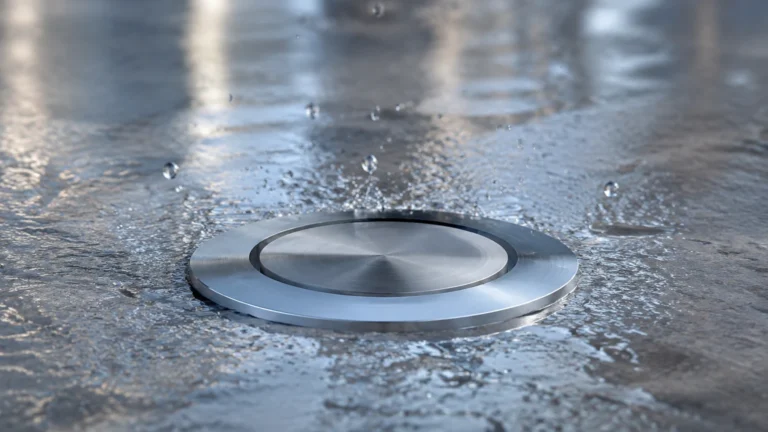
Hydrostatic transmitters measure the pressure exerted by the liquid column above the sensor. Based on the principle that pressure at a specific depth is proportional to the height of the liquid and its density ($P = \rho gh$), the sensor converts the measured pressure into a level reading. These are often submersible sensors or externally mounted pressure transmitters at the base of a tank.
Magnetic Level Gauges and Switches (Contact)
Magnetic level gauges utilize a float containing a permanent magnet that moves with the water level inside a bypass chamber. This magnet actuates external flags or a transmitter. Level switches, conversely, are used for point-level detection (high or low alarms) rather than continuous monitoring, providing a discrete signal when the water reaches a specific threshold.
Technology Selection Criteria
Choosing the right technology for water level monitoring requires an analysis of the liquid characteristics, the vessel geometry, and the environmental conditions. Engineers should refer to the Main Page of technical documentation to review specific product specifications before procurement.
| Technology | Accuracy | Typical Range | Best Use Case | Limitations |
| :— | :— | :— | :— | :— |
| 80GHz Radar | ±1 mm | Up to 120 m | Precision process tanks, narrow silos | High initial cost |
| Ultrasonic | ±0.25% of range | 0.3 m – 15 m | Open channels, sumps, water pits | Affected by foam and heavy vapor |
| Hydrostatic | ±0.1% to 0.5% | 1 m – 200 m | Deep wells, reservoirs, vented tanks | Requires constant fluid density |
| Magnetic Gauge | ±5 mm | 0.3 m – 6 m | High-pressure boilers, visible local indication | Mechanical parts subject to wear |
Application-Specific Considerations
Municipal Water and Wastewater
In wastewater treatment, sensors often encounter turbulence, foam, and floating debris. Ultrasonic sensors are frequently used in open-channel flow measurement (flumes and weirs), but radar is increasingly preferred for lift stations where heavy condensation or grease buildup can interfere with ultrasonic transducers. For deep-well water level monitoring, submersible hydrostatic transmitters are the industry standard due to their ability to withstand high static pressures at depths exceeding 100 meters (approx. 328 feet).
Chemical and Industrial Process Water
When monitoring deionized water or chemical-laden process water, material compatibility is paramount. Sensors must be constructed from corrosion-resistant materials such as PTFE, PVDF, or 316L stainless steel. Radar level meters are particularly advantageous here because the non-contact nature of the measurement prevents chemical attack on the sensitive electronic components.
Oil and Gas Produced Water
Produced water in the oil and gas sector often contains traces of hydrocarbons and varying salt concentrations. These variations can change the dielectric constant or the density of the fluid. In such cases, 80GHz radar is often the most reliable choice as it is unaffected by dielectric changes above a certain threshold and does not rely on fluid density for accuracy.
Installation Guidelines for Accurate Monitoring
Proper installation is as critical as selecting the correct technology. Incorrect mounting is the leading cause of measurement errors in industrial water level monitoring.
1. Avoid the "Dead Zone": Every non-contact sensor has a "dead zone" or "blocking distance" near the transducer face where measurement is impossible. Ensure the sensor is mounted high enough so that the maximum water level never enters this zone.
2. Nozzle and Obstruction Clearance: For radar and ultrasonic sensors, the signal beam spreads as it travels. Sensors must be installed away from tank walls, ladders, agitators, or inlet pipes to prevent false reflections. A standard rule is to maintain a clearance of at least 200 mm (approx. 8 inches) from the tank wall for every 1 meter (3.28 feet) of depth.
3. Stilling Wells: In applications with heavy surface turbulence or foam, installing the sensor inside a stilling well (a vertical pipe) can provide a calm surface for more accurate measurement. This is common in large storage tanks or reservoirs.
4. Submersible Venting: Hydrostatic sensors must have a vented cable to allow the internal pressure sensor to reference atmospheric pressure. Failure to keep this vent tube clear and dry will result in significant measurement drift as barometric pressure changes.
Limitations and Common Risks
While modern instruments from manufacturers like Welk are highly robust, certain conditions pose risks to measurement integrity:
* Foam Accumulation: Heavy, dense foam can absorb ultrasonic and radar signals, leading to a "loss of echo" error. In these scenarios, hydrostatic pressure sensors or guided wave radar (GWR) are more reliable alternatives.
* Vapor and Condensation: While radar penetrates vapor easily, ultrasonic waves can be refracted or attenuated. Heavy condensation on an ultrasonic transducer face can also cause the sensor to "lock" on a high-level reading.
* Build-up and Scaling: In hard water applications, calcium carbonate or other minerals can scale on contact sensors. Hydrostatic diaphragms are particularly sensitive to build-up, which can cause a shift in the zero-point calibration.
* Vacuum Conditions: Hydrostatic sensors designed for vented tanks will provide incorrect readings if the tank is under vacuum or pressurized. For pressurized vessels, a differential pressure (DP) transmitter or radar system is required.
Maintenance and Calibration
To maintain long-term accuracy in water level monitoring, a scheduled maintenance program should be implemented. For hydrostatic sensors, this includes periodic cleaning of the diaphragm to remove silt or bio-growth. For non-contact sensors, maintenance is generally lower, but checking for moisture ingress in the housing and verifying the integrity of cable connections is recommended.
Calibration should be verified annually using a secondary measurement method, such as a manual dip tape or a sight glass. Most modern digital transmitters support HART or Modbus protocols, allowing for remote diagnostics and recalibration without removing the sensor from the process.
Frequently Asked Questions (FAQ)
Q: Can I use an ultrasonic sensor for boiling water?
A: It is not recommended. Boiling water creates heavy steam and temperature gradients that significantly affect the speed of sound and signal attenuation. Radar is a much more reliable choice for high-temperature water applications.
Q: How does water density affect hydrostatic level sensors?
A: Hydrostatic sensors measure weight (pressure), not actual height. If the water temperature increases significantly, its density decreases. The sensor will perceive this as a lower pressure and report a lower level, even if the physical volume has expanded. If the density is variable, a radar sensor should be used instead.
Q: What is the advantage of 80GHz radar over 26GHz radar for water?
A: 80GHz radar has a much narrower beam angle. This allows it to be installed in smaller tanks, near internal obstructions, or through smaller nozzles without interference. It also provides better resolution for detecting small changes in level.
Q: Are these sensors suitable for outdoor use in freezing conditions?
A: Yes, but precautions are necessary. For hydrostatic sensors, ensure the water does not freeze around the sensor, as the expansion of ice can damage the diaphragm. For non-contact sensors, internal heaters or protective housings can prevent ice buildup on the antenna or transducer face.
Conclusion
Water level monitoring is a complex task that requires a thorough understanding of both the technology and the application environment. By prioritizing measurement principles and considering the specific limitations of each sensor type, engineers can implement systems that offer long-term reliability and precision. For detailed product configurations and technical support, professionals should consult the Main Page of the manufacturer's catalog to ensure the selected instrument meets the specific demands of their industrial process.