Gas Flow Meter
Gas Flow Meter
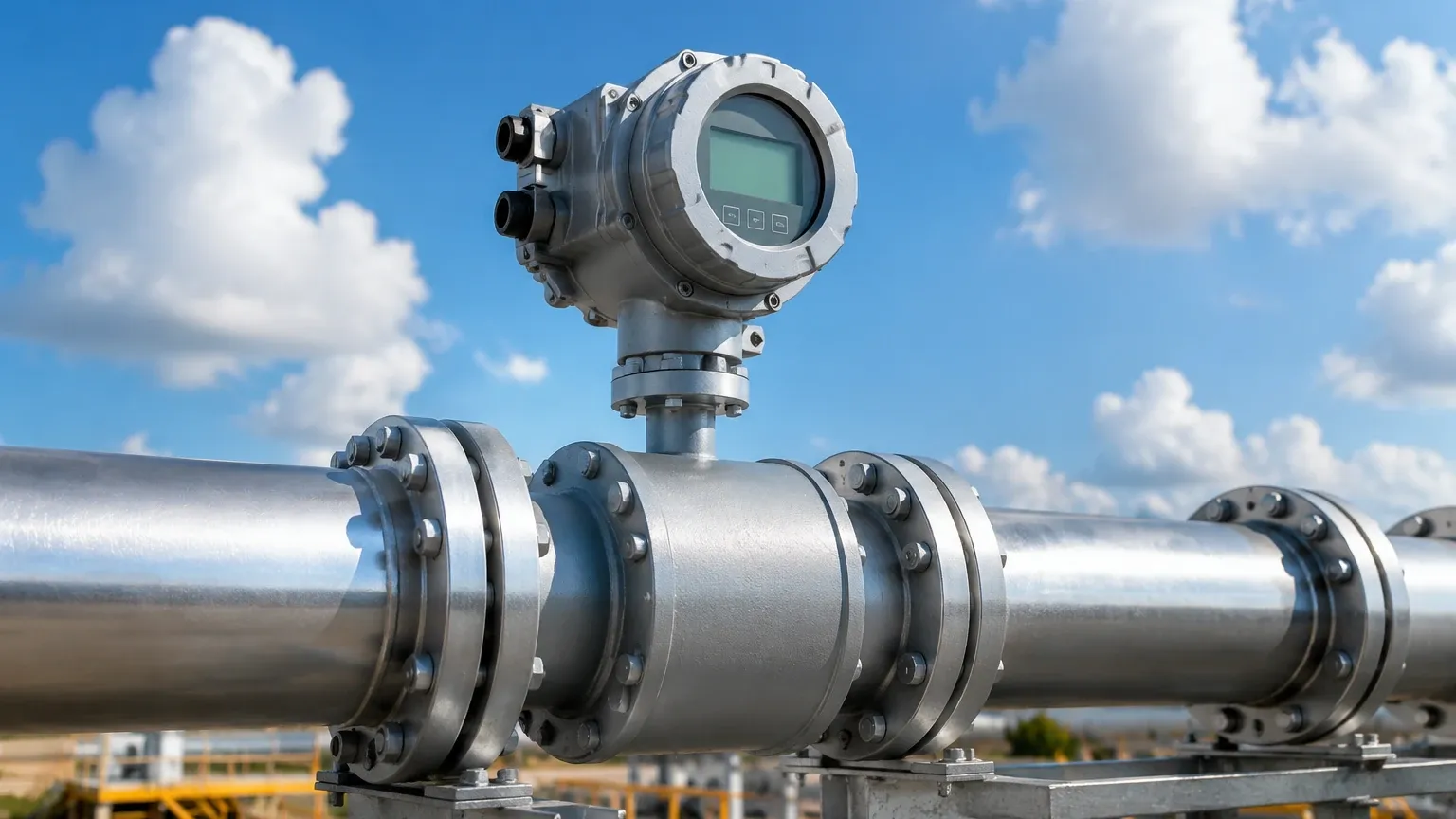
In industrial automation and process control, the accurate measurement of gas flow is as critical as monitoring liquid levels. While level measurement instruments ensure inventory control and vessel safety, a gas flow meter provides the necessary data for mass balance, energy efficiency, and chemical reaction control. From monitoring compressed air in a manufacturing plant to measuring natural gas in a utility pipeline, selecting the appropriate technology requires a deep understanding of fluid dynamics and gas properties.
Industrial environments, such as water treatment facilities, chemical processing plants, and oil and gas refineries, rely on these instruments to maintain operational stability. This guide explores the fundamental principles of gas flow measurement, the various technologies available, and the practical considerations for selection and installation.
Understanding Gas Flow Measurement Principles
Unlike liquids, gases are highly compressible. Their volume changes significantly with variations in pressure and temperature. Therefore, gas flow is typically measured in two ways: volumetric flow and mass flow.
Volumetric Flow vs. Mass Flow
Volumetric flow measurement records the volume of gas passing through a point per unit of time (e.g., cubic meters per hour, $m^3/h$). However, because gas density fluctuates, volumetric readings must often be compensated for pressure and temperature to be converted into "standard" or "normal" volumetric units ($Sm^3/h$ or $Nm^3/h$).
Mass flow measurement, on the other hand, tracks the actual mass of the gas (e.g., kilograms per hour, $kg/h$). This is often preferred in B2B industrial applications because mass remains constant regardless of pressure or temperature changes, providing a more accurate representation of the energy content or chemical quantity being transported.
The Role of Reynolds Number
The Reynolds number ($Re$) is a dimensionless value used to predict flow patterns. It is calculated based on gas velocity, pipe diameter, and the gas's density and viscosity. Most gas flow meters require a specific flow profile—either laminar or turbulent—to provide accurate readings. Understanding the $Re$ of a process is essential when choosing between technologies like vortex or differential pressure meters.
Key Technologies in Industrial Gas Flow Measurement
Several distinct technologies are used to measure gas flow, each with specific advantages depending on the gas type, pipe size, and required accuracy.
1. Thermal Mass Flow Meters
Thermal mass flow meters operate on the principle of thermal dispersion. A heated sensor is placed in the flow stream, and the gas flowing past it carries heat away. The meter measures either the amount of power required to maintain a constant temperature difference between the heated sensor and a reference sensor or the temperature rise of the gas.
* Advantages: Direct mass flow measurement without additional pressure or temperature compensation; high sensitivity to low flow rates (low-end cut-off).
* Applications: Compressed air monitoring, nitrogen blanketing, and biogas measurement.
2. Vortex Flow Meters
Vortex meters utilize the Karman Vortex Street principle. When gas flows past a bluff body (a non-streamlined object) placed in the pipe, vortices are shed alternately on each side. The frequency of these vortices is directly proportional to the velocity of the gas.
* Advantages: No moving parts, high durability, and wide temperature/pressure range.
* Applications: Steam measurement, high-velocity gas flow, and chemical processing.
3. Ultrasonic Flow Meters (Transit-Time)
Ultrasonic meters use sound waves to determine flow velocity. In the transit-time method, transducers send ultrasonic pulses diagonally across the pipe. Pulses traveling with the flow move faster than those traveling against it. The time difference is proportional to the gas velocity.
* Advantages: Non-intrusive (no pressure drop), high accuracy, and able to handle large pipe diameters.
* Applications: Natural gas custody transfer and large-scale industrial gas distribution.
4. Differential Pressure (DP) Meters
DP meters are a traditional yet reliable technology. They involve placing a primary element, such as an orifice plate or Venturi tube, in the pipe to create a pressure drop. The square root of the pressure difference between the upstream and downstream sides is proportional to the flow rate.
* Advantages: Well-understood standards (ISO 5167), low initial cost for large pipes, and suitability for high-temperature environments.
* Limitations: Significant permanent pressure loss and requires external compensation for gas density changes.
5. Turbine Flow Meters
Turbine meters feature a rotor that spins as gas passes through it. The rotational speed of the blades is proportional to the gas velocity. A pickup coil or sensor detects the blade movement and converts it into a flow signal.
* Advantages: Excellent repeatability and high accuracy in clean gas applications.
* Limitations: Moving parts are subject to wear; sensitive to gas cleanliness.
Selection Criteria for Gas Flow Metering Applications
Choosing the right gas flow meter involves more than just matching a pipe size. Engineers must evaluate the specific conditions of the medium and the environment. For comprehensive system integration, professionals often Review product options and application support to ensure compatibility between flow and level measurement systems.
Practical Selection Table
| Technology | Accuracy (Typical) | Turndown Ratio | Pressure Drop | Ideal Gas Type |
| :— | :— | :— | :— | :— |
| Thermal Mass | ±1% of Rate | 100:1 | Negligible | Clean, dry gases |
| Vortex | ±1% to 1.5% | 15:1 | Medium | High-velocity gas/steam |
| Ultrasonic | ±0.5% to 1% | 50:1 | None | Natural gas, large pipes |
| DP (Orifice) | ±2% | 4:1 | High | Most gases (with comp.) |
| Turbine | ±1% | 20:1 | Low | Clean, dry gases |
Key Evaluation Factors
1. Gas Composition: Is the gas a single component or a mixture? Thermal meters require known gas properties to calculate mass flow accurately.
2. Flow Range (Turndown): The ratio between the maximum and minimum measurable flow. If a process has high seasonal or operational variance, a high turndown ratio (like that of thermal or ultrasonic meters) is necessary.
3. Accuracy vs. Repeatability: In B2B billing or custody transfer, absolute accuracy is paramount. In process control, repeatability (the ability to provide the same result under the same conditions) might be more important.
4. Installation Environment: Consider hazardous area ratings (ATEX/IECEx), ambient temperature extremes, and potential vibration.
Installation Guidelines and Best Practices
Even the most advanced gas flow meter will fail to provide accurate data if installed incorrectly. Proper installation ensures a stable flow profile and protects the instrument from damage.
Straight Pipe Requirements
Most flow meters require a certain length of straight pipe upstream and downstream to eliminate turbulence caused by elbows, valves, or reducers. A common rule of thumb is "10D upstream and 5D downstream" (where D is the pipe diameter), though some technologies like DP meters may require up to 40D depending on the upstream disturbance.
Orientation and Moisture Management
* Horizontal vs. Vertical: Most gas meters prefer horizontal installation. If installed vertically, the flow should generally be upward to prevent the accumulation of heavy condensates on the sensor.
* Condensation: In wet gas applications (like biogas), the meter should be installed at a high point in the piping system, or a moisture trap should be used. Water droplets hitting a thermal sensor or a turbine blade can cause significant measurement errors or mechanical damage.
Pressure and Temperature Taps
For meters that require external compensation (like DP or Vortex), the pressure and temperature sensors must be installed at specific distances from the flow element to avoid interfering with the flow profile while still capturing representative process conditions.
Limitations and Operational Challenges
Gas flow measurement is inherently more complex than liquid measurement due to the following factors:
* Compressibility: Changes in line pressure can drastically change the volume of the gas. If a volumetric meter is used without compensation, the error can exceed 10-20% with even minor pressure fluctuations.
* Gas Purity: Particulates or oil mist in compressed air lines can coat the sensors of thermal mass meters or erode the edges of orifice plates, leading to "drift" in accuracy over time.
* Low Density: At low pressures, gases have very little mass and momentum. This makes it difficult for mechanical meters (like turbines) to overcome internal friction and for ultrasonic meters to transmit signals effectively.
* Noise and Vibration: High-frequency noise from control valves can interfere with the sensors in ultrasonic and vortex meters. Proper spacing and acoustic insulation are often required.
Frequently Asked Questions (FAQ)
Q: Can a gas flow meter measure different types of gases without recalibration?
A: It depends on the technology. Thermal mass meters are gas-specific because they rely on the thermal properties of the gas. If you switch from Nitrogen to Carbon Dioxide, the meter must be reconfigured or recalibrated. Vortex and Ultrasonic meters are velocity-based and are generally less sensitive to gas composition changes, provided the density is within the operating range.
Q: What is the difference between "Standard" and "Actual" flow?
A: "Actual" flow (ACFM or $Am^3/h$) is the volume of gas at the current operating pressure and temperature. "Standard" flow (SCFM or $Nm^3/h$) is the volume the gas would occupy at a reference pressure (usually 1.013 bar) and temperature (usually 0°C or 15°C). Industrial B2B contracts almost always use Standard units.
Q: How often should a gas flow meter be calibrated?
A: For non-critical process monitoring, every 2-3 years is common. For custody transfer or environmental compliance (such as flare gas monitoring), annual calibration is often mandated by local regulations.
Q: Does pipe vibration affect gas flow measurement?
A: Yes, particularly for vortex meters, which detect frequency. Excessive pipe vibration can be misinterpreted by the sensor as flow, leading to a "false positive" reading even when the gas is stationary. Using vibration-resistant sensors or flexible pipe couplings can mitigate this.
Conclusion
Selecting the right gas flow meter is a balancing act between technical requirements, installation constraints, and budget. Whether the goal is to optimize a burner's air-to-fuel ratio or to monitor the output of a chemical reactor, understanding the physics of the gas and the limitations of the hardware is essential for long-term reliability. By following engineering best practices and consulting authoritative resources on Main Page, project managers and engineers can ensure their flow measurement systems provide the precision required for modern industrial automation.