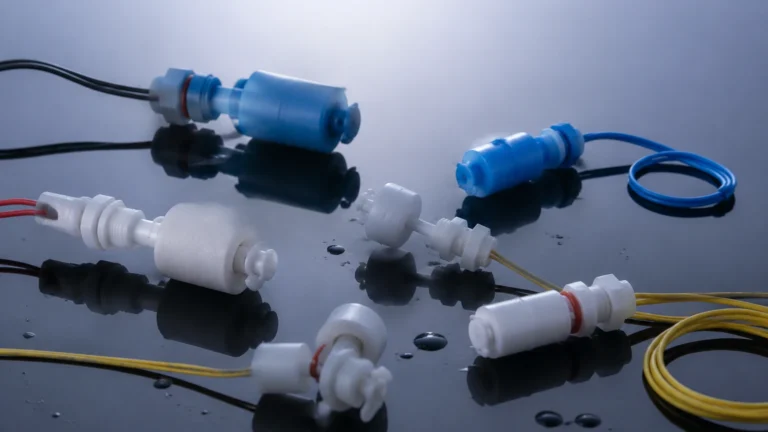
Vertical Water Level Sensor Liquid Float Switch
Vertical Water Level Sensor Liquid Float Switch
In the landscape of industrial automation and process control, the vertical water level sensor liquid float switch remains one of the most reliable and cost-effective methods for point-level detection. Despite the emergence of complex electronic sensors, the mechanical simplicity and high reliability of float-based systems make them a staple in water treatment, chemical processing, and HVAC applications. This guide provides a comprehensive technical overview of vertical float switches, their operating principles, selection criteria, and installation best practices for engineering professionals.
Understanding the Operating Principle of Vertical Float Switches
The fundamental operation of a vertical water level sensor liquid float switch is based on two primary physical concepts: buoyancy and magnetic induction. Unlike continuous level transmitters that provide a constant data stream of the liquid level, a float switch is a discrete device designed to open or close an electrical circuit at a specific height.
The Buoyancy Effect
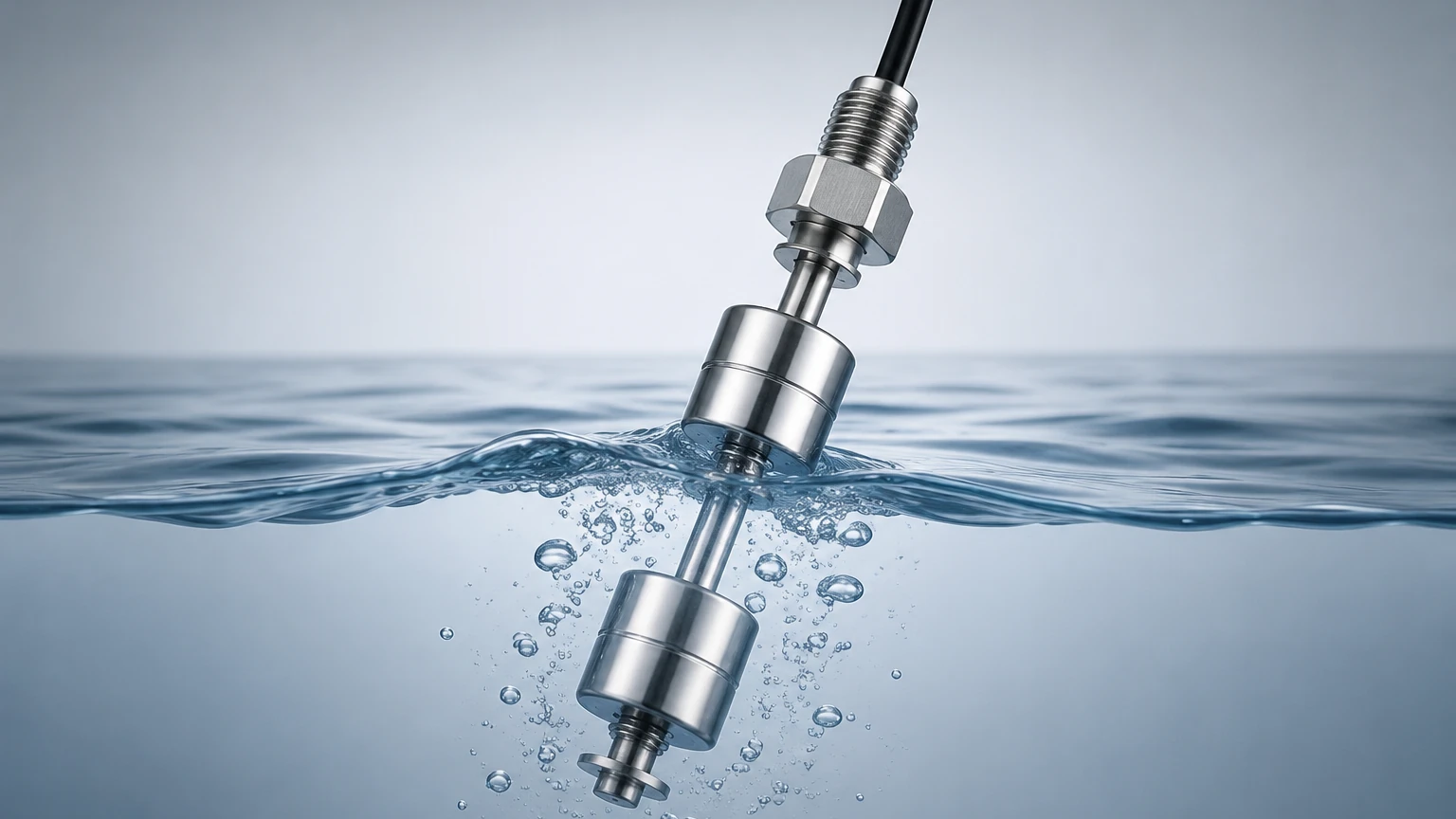
According to Archimedes' principle, any object wholly or partially immersed in a fluid is buoyed up by a force equal to the weight of the fluid displaced by the object. In a vertical float switch, the "float" is a hollow or low-density component designed to stay on the surface of the liquid. As the liquid level rises or falls within a tank or vessel, the float moves vertically along a stationary stem.
Magnetic Coupling and Reed Switches
Inside the stationary stem of the sensor is a hermetically sealed reed switch. The float itself contains a permanent magnet. When the liquid level brings the float into proximity with the internal reed switch, the magnetic field causes the reed's contacts to either close (Normally Open – NO) or open (Normally Closed – NC). This transition sends an electrical signal to a controller, pump, or alarm system. Because the electrical components are sealed within the stem and the magnetic field penetrates the non-magnetic stem material (usually stainless steel or plastic), there is no direct contact between the electrical circuit and the process liquid, ensuring safety and longevity.
For more advanced configurations and a broader range of industrial instrumentation, you can explore the Main Page of our technical catalog.
Key Components and Design Variations
A vertical water level sensor liquid float switch consists of several critical parts that must be compatible with the operating environment:
1. The Stem: The central tube that houses the reed switches and wiring. It is typically mounted to the top or bottom of a tank.
2. The Float: The buoyant element containing the magnet. Floats come in various shapes (cylindrical, spherical) and materials depending on the liquid's density and pressure.
3. The Mounting Interface: Usually a threaded NPT/BSP connection or a flange that secures the sensor to the vessel.
4. The Internal Reed Switch: Rated for specific voltage and current capacities. It is vital to match the switch rating with the load or use an intermediate relay.
Single-Point vs. Multi-Point Switches
Vertical float switches are available in two primary configurations:
* Single-Point Switches: These feature one float and one reed switch, used typically for high-level alarms or low-level dry-run protection.
* Multi-Point Switches: A single stem can house multiple reed switches at different heights, with one or more floats. This allows for complex control logic, such as starting a pump at a low level and stopping it at a high level using only one tank entry point.
Material Selection for Industrial Environments
Choosing the correct material for a vertical water level sensor liquid float switch is critical for chemical compatibility and mechanical durability. The two most common material categories are metallic and plastic.
Stainless Steel (304 or 316L)
Stainless steel is the preferred choice for high-pressure and high-temperature applications. It is highly resistant to corrosion and is suitable for food-grade applications, oil, and various chemicals. 316L stainless steel offers superior resistance to chlorides and acetic acids compared to 304.
Engineered Plastics (PP, PVC, PVDF)
For highly corrosive environments where metals would fail—such as hydrochloric acid or bleach—plastic sensors are necessary.
* Polypropylene (PP): Suitable for general-purpose water and acidic/alkaline solutions at moderate temperatures.
* PVC: Often used in water treatment and irrigation.
* PVDF (Kynar): High-performance plastic capable of handling aggressive chemicals and higher temperatures than PP.
Technical Selection Criteria and Comparison Table
When selecting a vertical float switch, engineers must evaluate the specific gravity of the liquid, the operating pressure, and the temperature. The float must be less dense than the liquid it is measuring to ensure it remains buoyant.
| Feature | Stainless Steel (316L) | Polypropylene (PP) | PVDF (Kynar) |
| :— | :— | :— | :— |
| Max Temperature | Up to 200°C | Up to 80°C | Up to 120°C |
| Max Pressure | Up to 30 bar (3.0 MPa) | Up to 4 bar (0.4 MPa) | Up to 6 bar (0.6 MPa) |
| Chemical Resistance | Excellent (solvents/oils) | Good (acids/bases) | Superior (aggressive chemicals) |
| Min. Specific Gravity | 0.5 to 0.8 | 0.6 to 0.9 | 0.8 to 1.0 |
| Typical Application | Petrochemical, Steam | Water Treatment | Semiconductor, Chemical |
*Note: Always verify the specific gravity of the process fluid. If the fluid is too light (e.g., certain fuels), a standard water float may sink.*
Installation Guidelines for Optimal Performance
Correct installation is paramount to preventing premature failure and ensuring accurate switching. Follow these engineering considerations:
1. Vertical Orientation
As the name implies, a vertical water level sensor liquid float switch must be installed within a few degrees of true vertical. If the stem is tilted significantly, friction between the float and the stem can cause the float to stick, leading to false readings or failure to trigger.
2. Turbulence and Sloshing
In tanks with agitators or high-velocity inflows, turbulence can cause the float to bounce rapidly, leading to "chatter" in the electrical circuit. This can damage pumps or control electronics. To mitigate this, engineers should:
* Install the switch in a stilling well (a pipe that surrounds the sensor to dampen surface movement).
* Use a controller with a built-in time delay to ignore brief state changes.
3. Proximity to Magnetic Fields
Because the internal mechanism relies on a magnetic reed switch, avoid installing the sensor near large motors, transformers, or other sources of strong electromagnetic interference (EMI), as these can inadvertently trigger the switch.
4. Wiring and Load Protection
Reed switches are sensitive to high current and inductive loads. If the switch is used to control a motor or a solenoid directly, the inrush current can weld the reed contacts together. Always use a relay or a contactor to handle the power load, using the float switch only as the pilot signal.
Limitations and Application Constraints
While highly versatile, the vertical water level sensor liquid float switch is not suitable for every application. Engineers should be aware of the following limitations:
* Viscous Liquids: Highly thick or "syrupy" liquids can prevent the float from moving freely along the stem.
* Coating and Scaling: If the process liquid leaves deposits (like calcium buildup or sticky resins), the float may eventually seize or become too heavy to float.
* Magnetic Particles: If the liquid contains metallic or magnetic debris, these particles can adhere to the float's internal magnet, changing its weight or jamming its movement.
* Physical Obstructions: Ensure there is sufficient clearance inside the tank. The float must not hit the tank wall or internal baffles.
For applications involving high solids or non-contact requirements, users may need to consider ultrasonic or radar level meters, which are also detailed on our Main Page.
Frequently Asked Questions (FAQs)
Q: Can I change a Normally Open (NO) switch to Normally Closed (NC)?
A: In many vertical float switch designs, yes. This is often achieved by removing the retaining clip at the bottom of the stem, sliding the float off, flipping it 180 degrees, and reinstalling it. This reverses the position of the internal magnet relative to the switch.
Q: What is the typical lifespan of a vertical float switch?
A: When used within specified electrical and environmental limits, a reed-based float switch can last for millions of cycles. The mechanical life of the float is generally limited only by the corrosive nature of the fluid and the buildup of debris.
Q: How do I choose the right float size?
A: Larger floats generally provide more buoyancy and are more reliable in liquids with lower specific gravity. However, they require larger mounting holes. Smaller floats are ideal for compact tanks and space-constrained environments.
Q: Are these sensors suitable for potable water?
A: Yes, provided the materials are certified (e.g., NSF/ANSI standards). Stainless steel 316 and certain food-grade plastics are commonly used in drinking water applications.
Conclusion
The vertical water level sensor liquid float switch is a fundamental tool in the industrial engineer's toolkit. By understanding the relationship between buoyancy, material compatibility, and electrical load protection, users can implement reliable level control solutions that require minimal maintenance. Whether for a simple sump pump or a complex chemical reactor, selecting the right vertical float switch ensures process safety and operational efficiency.
Download Vertical Water Level Sensor Liquid Float Switch as a PDF