What Is Static Water Level in a Well
What Is Static Water Level in a Well
In industrial water management and hydrogeology, understanding the fundamental metrics of an aquifer is essential for system design and operational efficiency. One of the most critical parameters is the static water level. For engineers and facility managers, knowing what is static water level in a well provides the baseline for determining pump placement, calculating well yield, and monitoring the long-term health of the water source.
This guide examines the technical definition of static water level, the principles of measurement, and the instrumentation required to maintain accurate data in commercial and industrial well applications.
Defining Static Water Level (SWL)
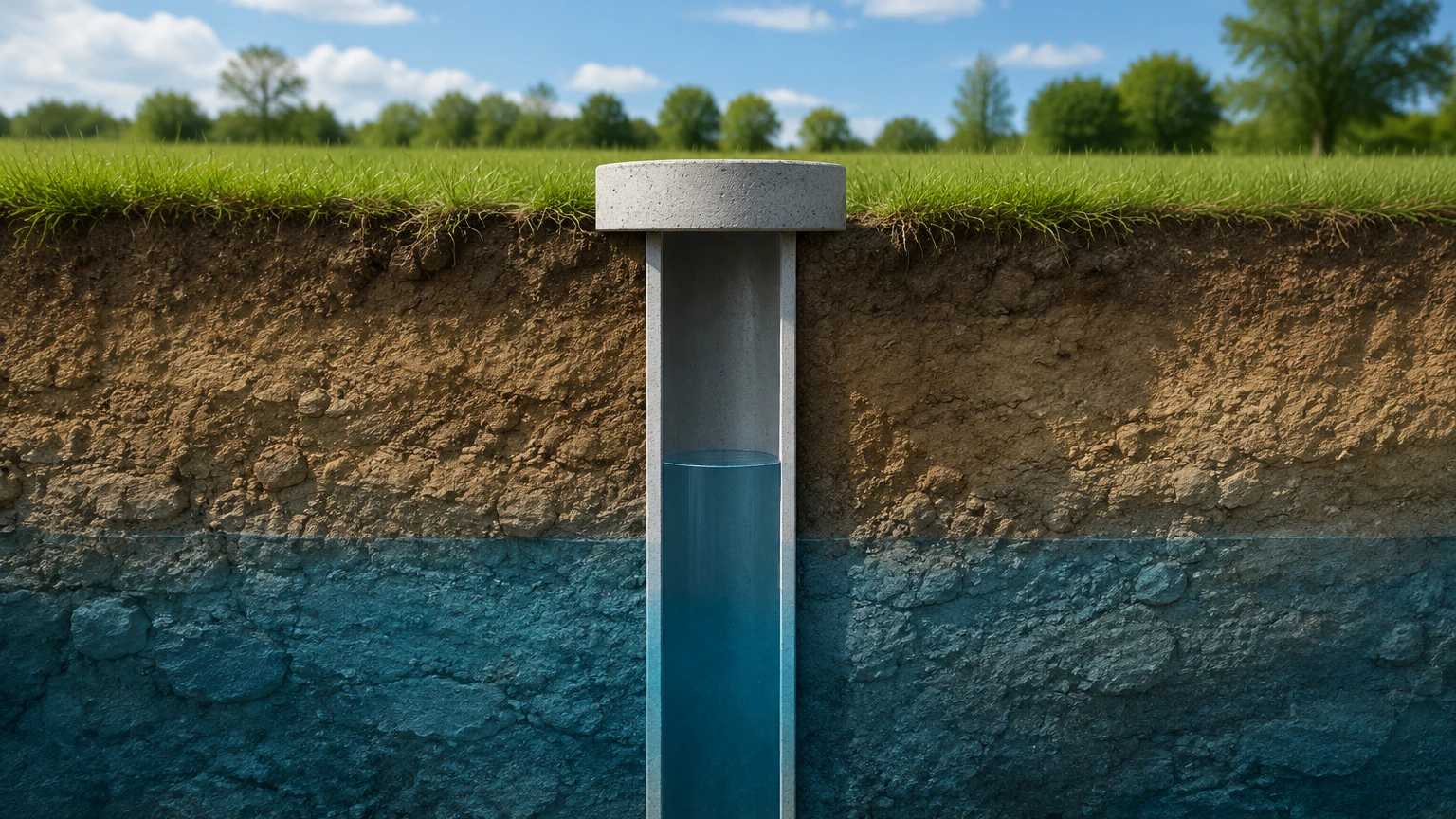
The static water level (SWL) is the distance from the ground surface (or a specific reference point like the top of the well casing) to the water's surface in a well when the pump has been off for a significant period and the water level has stabilized. It represents the equilibrium between the pressure in the aquifer and the atmospheric pressure.
Unlike the dynamic or "drawdown" level, which is measured while the pump is actively extracting water, the static level reflects the natural state of the water table or the potentiometric surface of a confined aquifer. When a pump stops, the water level begins to rise—a process known as recovery. The static level is only reached once the recovery is complete and the inflow from the surrounding geological formations matches the pressure within the wellbore.
Why Static Water Level Matters
For industrial operators, monitoring the SWL is not a one-time task but a continuous requirement. It serves several vital functions:
1. Pump Protection: Knowing the static level helps determine the optimal depth for pump installation to ensure it remains submerged even during seasonal fluctuations.
2. Aquifer Health Monitoring: A consistent drop in the static water level over several years can indicate that the aquifer is being over-pumped or that local recharge rates are declining.
3. Well Efficiency Calculations: By comparing the static water level to the pumping (dynamic) water level, engineers can calculate the "drawdown." This data is used to determine the specific capacity of the well, which is a measure of how many liters per minute (or gallons per minute) the well can produce per meter of drawdown.
4. Regulatory Compliance: Many jurisdictions require industrial users to report static levels to ensure sustainable water usage within a watershed.
Measurement Principles for Well Level Monitoring
To accurately determine what is static water level in a well, various sensing technologies are employed. Each has distinct advantages depending on the well depth, diameter, and the presence of obstructions like pump drop pipes and power cables.
Hydrostatic Pressure Measurement
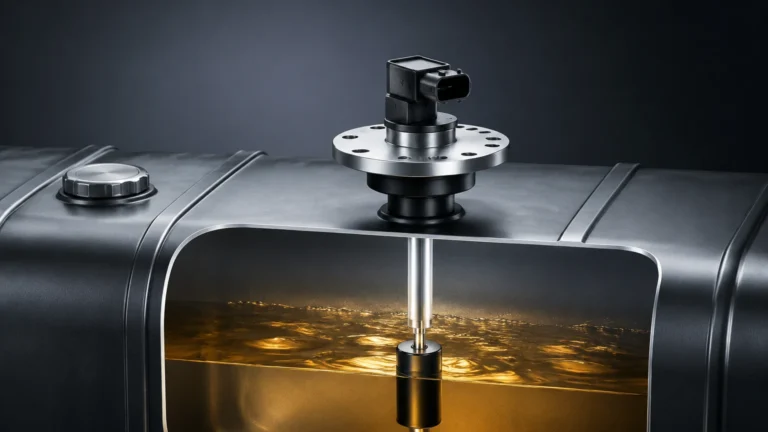
Hydrostatic level transmitters are the most common industrial solution for deep wells. These sensors are submerged below the water line. The principle is based on the weight of the liquid column above the sensor.
The pressure ($P$) at the sensor is calculated as:
$P = \rho \cdot g \cdot h$
Where:
* $\rho$ is the density of the water.
* $g$ is the gravitational constant.
* $h$ is the height of the water column above the sensor.
To get an accurate static water level, these sensors use a vented cable. This vent tube allows the sensor to compensate for changes in atmospheric pressure, ensuring that the measurement reflects only the pressure exerted by the water column. For comprehensive instrumentation options, engineers often consult a Main Page for professional-grade hydrostatic transmitters.
Ultrasonic (Non-Contact) Measurement
Ultrasonic sensors emit high-frequency sound pulses that travel down the well casing and reflect off the water surface. The sensor measures the time it takes for the echo to return. Since the speed of sound in air is known, the distance to the water can be calculated.
While cost-effective, ultrasonic measurement in wells can be challenging. Narrow casings can cause "false echoes" if the sound beam hits the side of the pipe or the pump hardware. Furthermore, temperature gradients within the well can affect the speed of sound, requiring temperature compensation for accuracy.
Radar Level Measurement
Radar (Radio Detection and Ranging) technology, specifically Frequency Modulated Continuous Wave (FMCW) radar, is increasingly used for well monitoring. Radar pulses are unaffected by air temperature, pressure, or vapors. Because radar has a narrower beam angle than ultrasonic sensors, it is better suited for deep wells with internal obstructions. It provides high precision (often within ±2 mm) for monitoring minute changes in static levels.
Technical Selection Criteria
Choosing the right technology to monitor what is static water level in a well depends on the specific environment of the installation. The following table provides a comparison of common industrial methods.
| Feature | Hydrostatic Submersible | Ultrasonic (Non-Contact) | Radar (Non-Contact) |
| :— | :— | :— | :— |
| Measurement Range | Up to 500m+ | Typically up to 15m – 30m | Up to 100m+ |
| Accuracy | High (0.1% to 0.5% FS) | Moderate | Very High |
| Installation | Submerged in well | Top-mounted | Top-mounted |
| Maintenance | Low (periodic cleaning) | Minimal | Minimal |
| Cost | Moderate | Low to Moderate | Higher |
| Best Use Case | Deep wells, constant monitoring | Shallow wells, easy access | High-precision industrial wells |
Installation and Engineering Considerations
Correct installation is paramount to obtaining a reliable static water level reading. If a sensor is installed incorrectly, the data may reflect turbulence or physical interference rather than the true aquifer state.
Stilling Wells and Shrouds
In many industrial wells, the interior is crowded with the pump, the discharge pipe, and electrical conduits. This creates a "noisy" environment for non-contact sensors. A stilling well—a small diameter pipe (typically PVC or stainless steel) installed vertically in the well—can be used to house the sensor. This provides a clear, unobstructed path to the water surface and protects submersible sensors from the turbulence caused by pump startup.
Atmospheric Pressure Compensation
For hydrostatic sensors, the vented cable must terminate in a dry environment. If moisture enters the vent tube, it can block the pressure equalization or damage the internal electronics. Using a desiccant cartridge at the termination point is a standard B2B best practice to ensure long-term reliability.
Reference Point Calibration
All measurements must be referenced to a fixed point, such as the top of the well casing (TOC). When setting up an automated monitoring system, the "offset" must be programmed into the controller. For example, if the sensor is 50 meters below the TOC and it measures 10 meters of water head, the static water level is 40 meters below the TOC.
Limitations and Environmental Factors
While modern instrumentation is highly accurate, several factors can influence the static water level or the accuracy of the reading:
* Barometric Efficiency: In confined aquifers, changes in atmospheric pressure can cause the water level in the well to rise or fall slightly, even if the volume of water in the aquifer hasn't changed. This is known as barometric efficiency.
* Tidal Influence: In coastal areas, the static water level may fluctuate in response to ocean tides, even in freshwater wells located several kilometers inland.
* Interference from Nearby Wells: In industrial parks, multiple wells often draw from the same aquifer. The static level in one well may be affected by the pumping activity of a neighbor, a phenomenon known as "interference drawdown."
* Thermal Expansion: In very deep wells, significant temperature variations can slightly change the density of the water, which must be accounted for if using hydrostatic sensors for high-precision scientific studies.
Frequently Asked Questions (FAQ)
How long should a well be shut off before measuring the static water level?
This depends on the aquifer's transmissivity. In high-yield sand and gravel aquifers, recovery may happen in minutes. In low-yield bedrock wells, it may take 24 to 48 hours for the water to return to its true static level. For most industrial reporting, a period of 4 to 12 hours is standard.
What is the difference between static water level and the water table?
In an unconfined aquifer, the static water level is essentially the water table. In a confined (artesian) aquifer, the static water level represents the potentiometric surface, which may actually be higher than the top of the aquifer itself.
Can I use a manual tape to verify electronic sensors?
Yes, manual "e-tapes" or water level meters are the industry standard for periodic calibration. It is recommended to verify automated sensors against a manual reading at least twice a year to account for sensor drift or silt buildup.
Does the static water level change with the seasons?
Yes. In most regions, static levels are highest in the spring (following snowmelt and rain) and lowest in the late summer or autumn when recharge is minimal and regional demand is high.
Conclusion
Understanding what is static water level in a well is the first step toward professional groundwater management. By selecting the appropriate measurement technology—whether it be a robust hydrostatic transmitter for deep-well monitoring or a precision radar unit for non-contact sensing—industrial operators can ensure the longevity of their infrastructure and the sustainability of their water supply. For those seeking to implement these systems, reviewing technical specifications on a Main Page for level instrumentation is a recommended starting point for engineering procurement.