Flow Detection
Flow Detection
In industrial process automation, flow detection is a critical function that ensures the safe and efficient movement of liquids and gases through piping systems and open channels. While flow meters measure the volume or mass of a fluid passing a specific point, flow detection often focuses on the presence, absence, or velocity of that movement to trigger alarms, control pumps, or manage chemical dosing. For many engineering applications, particularly in wastewater treatment and large-scale liquid storage, flow detection is inextricably linked to level measurement technologies.
As a professional manufacturer of industrial level measurement instruments, Welk provides the hardware and expertise necessary to implement robust flow detection systems. By utilizing ultrasonic, radar, and hydrostatic sensors, operators can achieve precise monitoring even in challenging environments. Understanding the underlying physics and the selection criteria for these instruments is the first step in designing a reliable system.
Principles of Flow Detection and Measurement
Flow detection operates on several physical principles depending on whether the fluid is in a closed pipe or an open channel. In many B2B industrial contexts, the "detection" aspect refers to a switch or sensor identifying if a minimum flow threshold has been met, whereas "measurement" refers to the continuous tracking of flow rates.
Open Channel Flow Principles
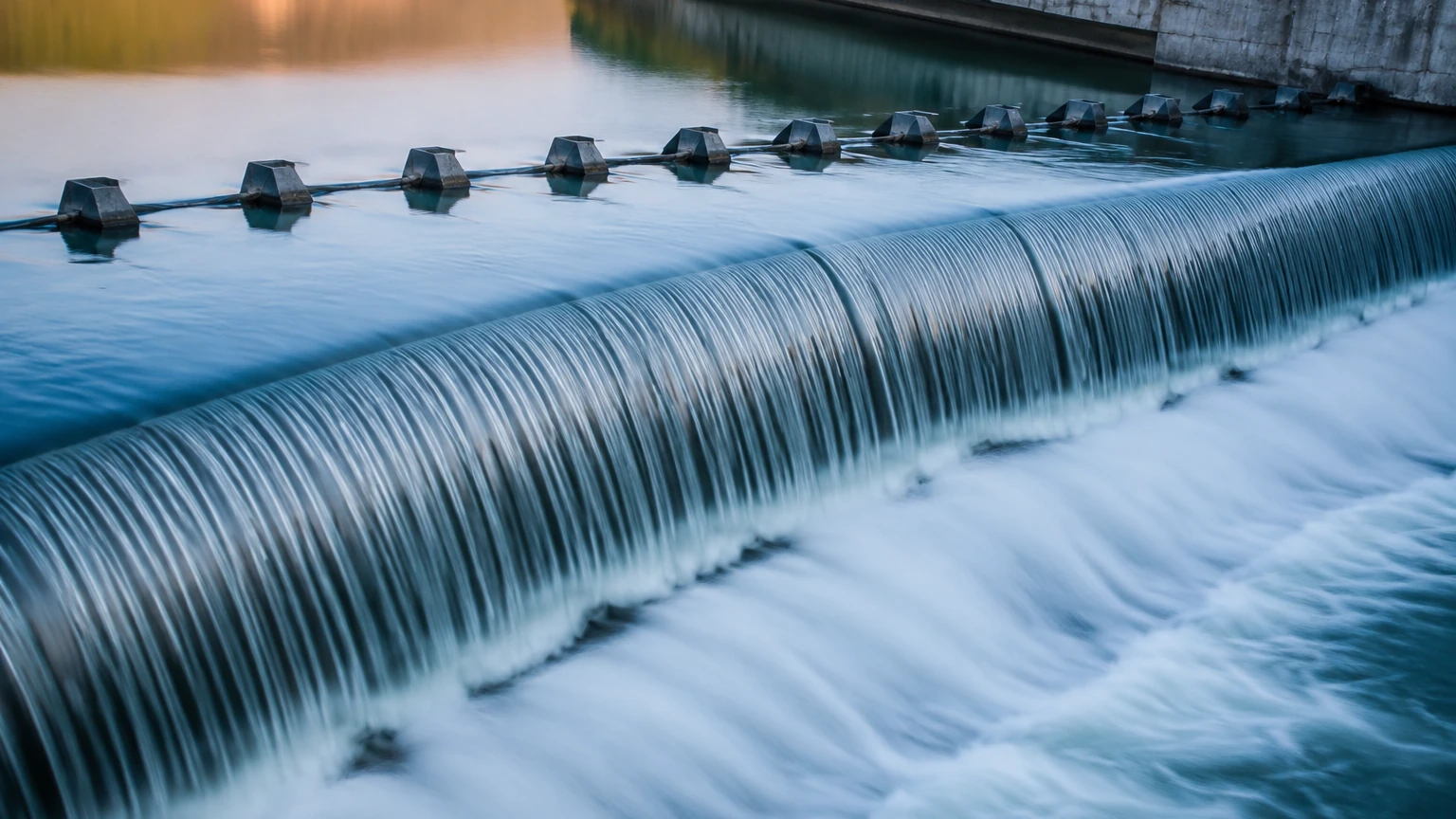
In open channels—such as irrigation ditches, sewers, or flumes—flow detection is typically achieved by measuring the liquid level at a specific point. Because the geometry of the channel (or a primary device like a weir or flume) is known, the height of the liquid correlates directly to the flow rate. This is known as the head-to-flow relationship. Common formulas, such as the Manning equation or specific discharge curves for Parshall flumes, are programmed into the transmitter to convert level data into flow data.
Closed Pipe Detection
In pressurized pipes, flow detection may rely on:
* Thermal Dispersion: A heated sensor is cooled by the moving fluid; the rate of heat loss indicates the flow velocity.
* Ultrasonic Time-of-Flight: Sound waves are sent upstream and downstream. The difference in travel time determines the velocity.
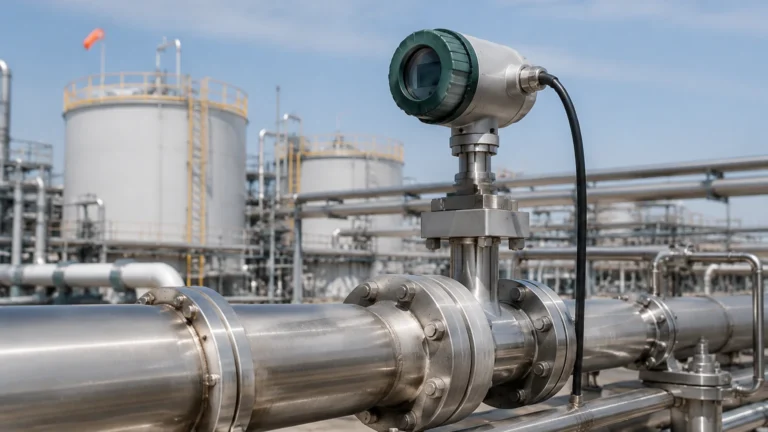
* Differential Pressure: Measuring the pressure drop across an orifice plate or Venturi tube.
The Relationship Between Level Measurement and Flow Detection
For many engineers, the most cost-effective and reliable method for flow detection in non-pressurized systems is the use of level sensors. By monitoring the surface of the liquid, instruments can detect the start of a flow event or calculate totalized volume.
Welk’s range of radar and ultrasonic sensors are frequently deployed in these scenarios. For instance, in a wastewater treatment plant, an ultrasonic level sensor mounted above a weir detects the rise in water level during a storm event. This level increase is processed as a flow detection signal, which then activates secondary treatment pumps. For a comprehensive look at the instruments available for these applications, professionals often consult the Main Page of technical equipment providers to compare sensor specifications.
Key Technologies for Industrial Flow Detection
Selecting the right technology requires an analysis of the fluid properties, the environment, and the required accuracy. Below are the primary technologies used in modern industrial flow detection.
1. Radar Level Meters
Radar technology, particularly 80GHz high-frequency radar, has become a standard for flow detection in volatile or corrosive liquids. It works by emitting a microwave signal that reflects off the liquid surface.
* Advantages: Non-contact, unaffected by steam, dust, or temperature fluctuations.
* Application: Detecting flow in chemical runoff channels or high-temperature industrial drains.
2. Ultrasonic Level Sensors
Ultrasonic sensors emit sound pulses that bounce off the liquid surface. The time taken for the echo to return determines the level, which is then converted to flow.
* Advantages: Cost-effective and easy to install.
* Limitations: Can be affected by heavy foam, surface turbulence, or significant air temperature gradients.
3. Hydrostatic Level Transmitters
These sensors are submerged at the bottom of a tank or channel. They measure the pressure exerted by the liquid column above them.
* Advantages: Excellent for deep wells or underground tanks where top-down mounting is impossible.
* Application: Detecting the flow of groundwater into a collection sump.
4. Level Switches
For simple "flow/no-flow" detection, magnetic or tuning fork level switches can be installed at specific heights. When the liquid reaches the sensor, it flips a relay, providing a binary detection signal.
Selection Criteria for Flow Detection Systems
When specifying a flow detection system, engineers should use the following table to narrow down technology choices based on common industrial variables:
| Feature | Radar Sensors | Ultrasonic Sensors | Hydrostatic Transmitters |
| :— | :— | :— | :— |
| Measurement Type | Non-contact | Non-contact | Contact (Submerged) |
| Media Compatibility | Corrosive, volatile, viscous | Water-based, non-foaming | Clean liquids, oils |
| Accuracy | High (±1mm to ±3mm) | Moderate (±0.25% of range) | High (±0.1% to ±0.5% FS) |
| Max Range | Up to 120m (393 ft) | Up to 30m (98 ft) | Up to 200m (656 ft) |
| Process Temp | -40°C to +250°C | -40°C to +80°C | -20°C to +80°C |
| Cost | Premium | Economical | Moderate |
Installation Considerations and Best Practices
Proper installation is paramount to ensuring that flow detection signals remain accurate over time. Even the most advanced sensor will fail if placed incorrectly.
Straight Run Requirements
In open channel flow detection using flumes, the sensor must be placed at a specific distance upstream from the throat of the flume. This ensures the liquid surface is stable and free from the turbulence caused by the narrowing of the channel. Generally, a straight run of at least 10 times the channel width is recommended before the measurement point.
Dead Zone Management
Both ultrasonic and radar sensors have a "dead zone" (or blocking distance) immediately below the sensor face where measurements cannot be taken. For flow detection in shallow channels, the sensor must be mounted high enough so that the maximum possible liquid level never enters this dead zone. For ultrasonic sensors, this is typically 0.25m to 0.5m (10" to 20").
Beam Angle and Obstructions
Radar and ultrasonic signals spread out in a cone. If the sensor is mounted too close to a wall or a ladder, the signal may reflect off these objects instead of the liquid, leading to false flow detection. Engineers must calculate the beam diameter at the maximum distance to ensure a clear path.
Limitations and Potential Risks
While modern instrumentation is highly reliable, certain conditions can compromise flow detection accuracy:
1. Foam and Turbulence: Thick foam can absorb ultrasonic signals, leading to a "loss of echo." In these cases, radar or hydrostatic sensors are preferred.
2. Environmental Factors: For outdoor flow detection, heavy rain or wind can create surface ripples that jitter the level reading. Digital filtering in the transmitter is necessary to smooth these signals.
3. Build-up: In wastewater applications, grease or debris can accumulate on submerged hydrostatic sensors or the face of ultrasonic transducers. Regular maintenance and the use of self-cleaning flumes can mitigate this risk.
4. Signal Interference: In metal tanks or narrow concrete channels, multiple reflections (multipath interference) can confuse the sensor. Choosing a high-frequency radar with a narrow beam angle (e.g., 3°) helps isolate the true liquid surface.
Frequently Asked Questions (FAQ)
Q: Can I use a level sensor for flow detection in a pressurized pipe?
A: Generally, no. Level sensors require an air-liquid interface to reflect signals. For pressurized pipes, you should use electromagnetic, vortex, or ultrasonic clamp-on flow meters.
Q: How often should flow detection sensors be calibrated?
A: For critical billing or environmental compliance, annual calibration is standard. For process monitoring, a bi-annual check of the zero-point and span is usually sufficient.
Q: What is the difference between a flow switch and a flow transmitter?
A: A flow switch provides a simple on/off signal when a threshold is reached. A flow transmitter provides a continuous signal (such as 4-20mA or RS485) representing the actual rate of flow.
Q: Does the density of the liquid affect radar flow detection?
A: No. Radar is independent of liquid density. However, the dielectric constant (DC) of the liquid affects the strength of the reflection. Low DC liquids like oils reflect less energy than high DC liquids like water.
Conclusion
Effective flow detection is the backbone of industrial safety and process efficiency. By leveraging the principles of level measurement, particularly through non-contact radar and ultrasonic technologies, industries can monitor fluid movement with high precision and minimal maintenance. Whether you are managing a municipal water system or a complex chemical refinery, selecting the appropriate instrument involves balancing accuracy requirements against environmental constraints. For further technical specifications and to explore the full range of measurement solutions, engineers are encouraged to review the available product options and application support on the Welk Main Page.