Diesel Fuel Monitoring System
Diesel Fuel Monitoring System
In the landscape of industrial automation and resource management, a diesel fuel monitoring system is an essential infrastructure component for sectors ranging from logistics and construction to emergency power generation. Diesel fuel is a high-value asset that requires precise tracking to prevent operational downtime, mitigate the risk of theft, and ensure compliance with environmental safety regulations. This guide provides a technical overview of the technologies used in diesel monitoring, the engineering principles behind them, and practical considerations for system implementation.
Understanding Diesel Fuel Measurement Principles
Before selecting a diesel fuel monitoring system, it is necessary to understand the physical principles that govern level measurement. Unlike water, diesel fuel has specific characteristics—such as dielectric constants, viscosity changes with temperature, and the potential for foaming—that influence sensor performance.
Radar Level Measurement (Non-Contact)
Radar level meters operate on the Time-of-Flight (ToF) principle. The sensor emits high-frequency microwave pulses (typically in the 26GHz or 80GHz range) that travel to the fuel surface and reflect back to the receiver. The system calculates the distance based on the time interval between emission and reception.
Because microwaves travel at the speed of light and are largely unaffected by air temperature, pressure, or vapor, radar is considered the gold standard for accuracy in a diesel fuel monitoring system. For diesel, which has a relatively low dielectric constant (εr ≈ 2.1), high-frequency radar sensors are preferred to ensure a strong return signal.
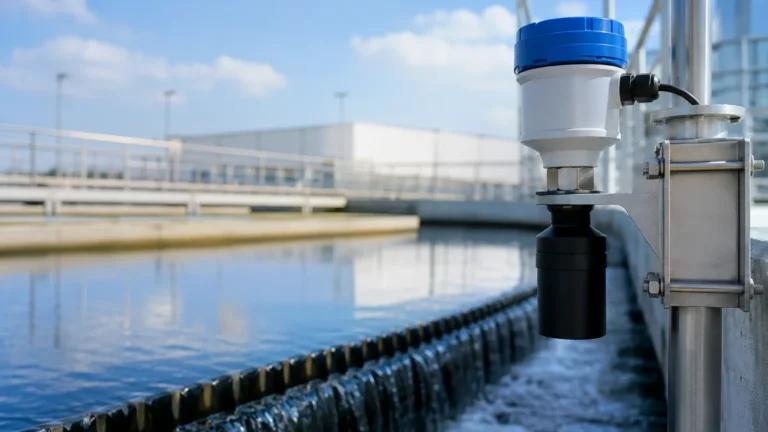
Ultrasonic Level Measurement
Similar to radar, ultrasonic sensors use the ToF principle but utilize sound waves instead of electromagnetic waves. A transducer emits an ultrasonic pulse that bounces off the fuel surface. However, the speed of sound is highly dependent on air temperature and density. While most modern sensors include integrated temperature compensation, ultrasonic systems are generally less accurate than radar in environments with significant temperature fluctuations or heavy fuel vapors.
Hydrostatic Pressure Measurement
Hydrostatic level transmitters measure the pressure exerted by the liquid column above the sensor. The pressure (P) is proportional to the height of the liquid (h) and its density (ρ), following the formula P = ρgh. In a diesel fuel monitoring system, a submersible pressure transducer is lowered to the bottom of the tank. This method is highly reliable for vented tanks but requires precise knowledge of the fuel's density, which can vary slightly with temperature.
Magnetic Level Gauges and Magnetostrictive Probes
Magnetic gauges use a float containing a permanent magnet that rises and falls with the fuel level. For digital monitoring, magnetostrictive probes are often used. These probes send an electrical pulse along a waveguide wire; when the pulse meets the magnetic field of the float, a torsional wave is generated and sent back to the electronics. This provides extremely high resolution (often sub-millimeter), making it ideal for custody transfer and leak detection.
Key Components of a Diesel Fuel Monitoring System
A comprehensive monitoring solution is more than just a sensor. It is an integrated ecosystem designed to provide actionable data. For those seeking professional-grade hardware, exploring the Main Page of specialized manufacturers like Welk reveals the diversity of components required for a robust setup.
1. Level Sensors: The primary data source (Radar, Ultrasonic, or Hydrostatic).
2. Signal Converters/Controllers: Devices that translate raw sensor data (e.g., 4-20mA or RS485 Modbus) into human-readable formats or digital packets for transmission.
3. Telemetry and Connectivity: Modems or Gateway devices that transmit data via Cellular (LTE/5G), Wi-Fi, or Satellite to a central server.
4. Fuel Management Software: A cloud-based or local platform that provides real-time dashboards, historical consumption reports, and automated alerts for low levels or sudden drops (potential theft).
Selection Criteria for Industrial Applications
Choosing the right technology depends on the tank environment, required precision, and budget. The following table provides a comparison of common technologies used in a diesel fuel monitoring system.
| Technology | Accuracy | Installation Complexity | Cost | Best Use Case |
| :— | :— | :— | :— | :— |
| Radar (80GHz) | ±1 mm | Moderate | High | Bulk storage tanks, high-precision requirements. |
| Ultrasonic | ±0.25% of range | Low | Medium | Small to mid-sized tanks, indoor storage. |
| Hydrostatic | ±0.5% of span | Low | Low | Deep underground tanks, vented atmospheric tanks. |
| Magnetostrictive | ±0.1 mm | High | High | Retail fuel stations, leak detection. |
Installation Considerations
Proper installation is critical to the longevity and accuracy of a diesel fuel monitoring system. Engineers must account for several physical factors during the design phase.
Tank Geometry and Dead Zones
Every sensor has a "dead zone" (or blocking distance) near the transducer where measurement is impossible. For example, an ultrasonic sensor might have a 250 mm (approx. 10 inches) dead zone. If the tank is filled above this point, the sensor will lose the signal. Installers should use standpipes or choose sensors with minimal dead zones if the tank must be filled to the brim.
Internal Obstructions
In many industrial diesel tanks, internal structures like heating coils, ladders, or baffles can interfere with the signal. Radar sensors with narrow beam angles (e.g., 3° to 6°) are preferred in these scenarios to avoid false reflections from the tank walls or internal hardware.
Hazardous Area Certification
Diesel is a flammable liquid. Depending on local regulations (such as ATEX in Europe or Class/Division ratings in North America), the monitoring system must be intrinsically safe or explosion-proof. This applies to the sensor itself and the barriers used in the control panel.

Limitations and Common Risks
While modern diesel fuel monitoring systems are highly advanced, they are not immune to environmental and physical challenges.
* Temperature-Induced Volume Changes: Diesel expands and contracts with temperature. A system that measures only level might report a "loss" of fuel during a cold night even if no fuel was removed. Advanced systems use temperature probes to calculate "Net Volume" at a standard temperature (typically 15°C or 60°F).
* Foaming During Filling: High-speed pumping of diesel can create foam on the surface. Ultrasonic sensors may struggle to read through foam, whereas high-frequency radar is generally more resilient.
* Paraffin Wax Precipitation: In extremely cold climates, diesel can "cloud" as paraffin wax precipitates. This can coat submersible hydrostatic sensors or mechanical floats, leading to sluggish readings or failure.
* Signal Interference: In remote areas, the primary risk is not the sensor but the telemetry. If the cellular signal is weak, the system may fail to report critical low-fuel alerts. Redundant connectivity (e.g., Ethernet + Cellular) is recommended for critical backup power systems.
Maintenance and Calibration
To maintain the integrity of a diesel fuel monitoring system, a routine maintenance schedule should be implemented:
1. Visual Inspection: Check for corrosion on sensor housings and cable entries every 6 months.
2. Verification: Periodically compare the digital reading against a manual dip-tape measurement to ensure no drift has occurred.
3. Sensor Cleaning: For hydrostatic sensors, ensure the diaphragm is free from sludge or sediment buildup at the bottom of the tank.
4. Firmware Updates: Ensure that gateway devices and controllers are running the latest software to protect against cybersecurity vulnerabilities in connected systems.
Frequently Asked Questions (FAQ)
Q: Can one system monitor multiple tanks?
A: Yes. Most industrial controllers can aggregate signals from multiple sensors (e.g., via RS485 daisy-chaining) and transmit them through a single gateway to the monitoring platform.
Q: How does the system detect fuel theft?
A: The software analyzes the rate of change in fuel level. If a significant drop occurs outside of scheduled engine run times or known consumption patterns, the system triggers an immediate SMS or email alert.
Q: Is radar better than ultrasonic for outdoor diesel tanks?
A: Generally, yes. Radar is not affected by wind, temperature gradients, or vapors, which are common in outdoor environments. While more expensive, it provides higher reliability and lower maintenance over the long term.
Q: What is the typical lifespan of a diesel level sensor?
A: High-quality industrial sensors from manufacturers like Welk are designed for 10+ years of operation, provided they are installed correctly and protected from electrical surges.
For more detailed technical specifications and to view specific hardware options for your project, you can visit the Main Page for a full catalog of industrial level measurement solutions.
Conclusion
Implementing a diesel fuel monitoring system is a strategic investment that pays dividends in operational security and efficiency. By understanding the underlying measurement principles—whether radar, ultrasonic, or hydrostatic—and accounting for the specific challenges of diesel storage, engineers can design systems that provide accurate, real-time data. As industrial IoT continues to evolve, the integration of high-precision sensors with cloud-based analytics will remain the standard for professional fuel management.