What Is the Measure of Def 78
What Is the Measure of Def 78
In the realm of industrial process control and inventory management, precision is the cornerstone of operational efficiency. When engineers and facility managers encounter specific technical queries such as "what is the measure of def 78," it often pertains to the critical monitoring of Diesel Exhaust Fluid (DEF) storage systems or specific geometric parameters in tank level calculations. Understanding the nuances of these measurements—whether they refer to a fill level of 78%, a tank height of 78 units, or a specific concentration threshold—requires a deep dive into the technologies used to capture this data.
Diesel Exhaust Fluid, a solution of urea and deionized water, is essential for Selective Catalytic Reduction (SCR) systems in modern diesel engines. Monitoring its level is not merely a matter of volume; it is about ensuring compliance, preventing equipment downtime, and managing the corrosive properties of the fluid. This guide explores the principles of level measurement as they apply to these specific industrial requirements.
Principles of Level Measurement in Industrial Applications
Before determining the best approach for a specific setpoint like a 78-unit measure, it is vital to understand how different instruments interpret the physical presence of a liquid. In industrial automation, three primary technologies dominate the landscape for fluids like DEF.
1. Radar Level Measurement (Non-Contact)
Radar level meters operate on the Time-of-Flight (ToF) principle. The sensor emits high-frequency microwave pulses that travel to the surface of the liquid and reflect back to the receiver. The distance is calculated based on the time taken for the pulse to return. This technology is highly favored for DEF because it is non-contact, meaning the sensor is not exposed to the corrosive nature of the urea solution.
2. Ultrasonic Level Sensors
Similar to radar, ultrasonic sensors use sound waves. The transducer emits an ultrasonic pulse that bounces off the liquid surface. While cost-effective, ultrasonic measurement is sensitive to air temperature and vapors. In a DEF tank, where temperature fluctuations can change the speed of sound, integrated temperature compensation is necessary to maintain accuracy at specific levels, such as when evaluating what is the measure of def 78 in terms of remaining volume.
3. Hydrostatic Pressure Transmitters
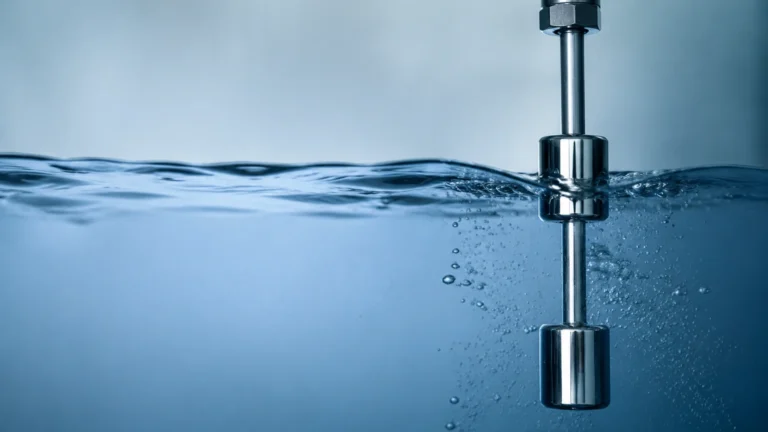
Hydrostatic sensors measure the pressure exerted by the liquid column above the sensor diaphragm. This pressure is directly proportional to the liquid height and density. For a tank with a height of 78 inches or centimeters, a hydrostatic transmitter provides a reliable, continuous signal. However, because DEF density changes slightly with temperature, the sensor must be calibrated to the specific gravity of the fluid to ensure the "78" measure remains precise.
Evaluating the Measure of DEF 78: Selection Criteria
When an application specifies a requirement—such as monitoring a 78% fill threshold or managing a 78cm deep reservoir—the choice of instrument depends on several environmental and physical factors. The following table compares how different technologies handle the specific needs of DEF and similar industrial fluids.
Technology Comparison Table
| Feature | Radar (80GHz) | Ultrasonic | Hydrostatic | Magnetic Level Gauge |
| :— | :— | :— | :— | :— |
| Accuracy | High (±2mm) | Moderate (±0.25%) | Moderate (±0.1%) | Visual/Moderate |
| Contact Type | Non-contact | Non-contact | Contact (Submerged) | Contact (Bypass) |
| Corrosion Resistance | Excellent (PTFE) | Good (Plastic) | Depends on Housing | Excellent (SS316/PVC) |
| Vapor Sensitivity | None | High | None | None |
| Ideal Application | Narrow tanks/Agitation | Open sumps/Short range | Deep vented tanks | High-pressure boilers |
For those seeking specific hardware specifications for these applications, you can Review product options and application support on our Main Page.
Practical Selection and Application Engineering
When determining what is the measure of def 78 in a practical engineering context, the user must define the units and the objective. If the "78" refers to a percentage of total capacity in a 10,000-liter tank, the instrument must be programmed to recognize 7,800 liters as the critical setpoint.
Tank Geometry and Setpoints
In many industrial PLC (Programmable Logic Controller) configurations, "78" might be the raw signal output (e.g., 78% of a 4-20mA scale). To ensure this measure is accurate, the engineer must account for:
* Tank Shape: Spherical or horizontal cylindrical tanks have non-linear volume-to-height ratios. A height of 78cm does not represent the same volume at the bottom of the tank as it does in the middle.
* Dead Zones: Every non-contact sensor has a "blocking distance" or dead zone near the sensor face. If a tank is 80cm tall and you need to measure at 78cm, a standard ultrasonic sensor might be in its dead zone, necessitating a nozzle extension or a radar unit with a smaller dead zone.
Installation Considerations for DEF Systems
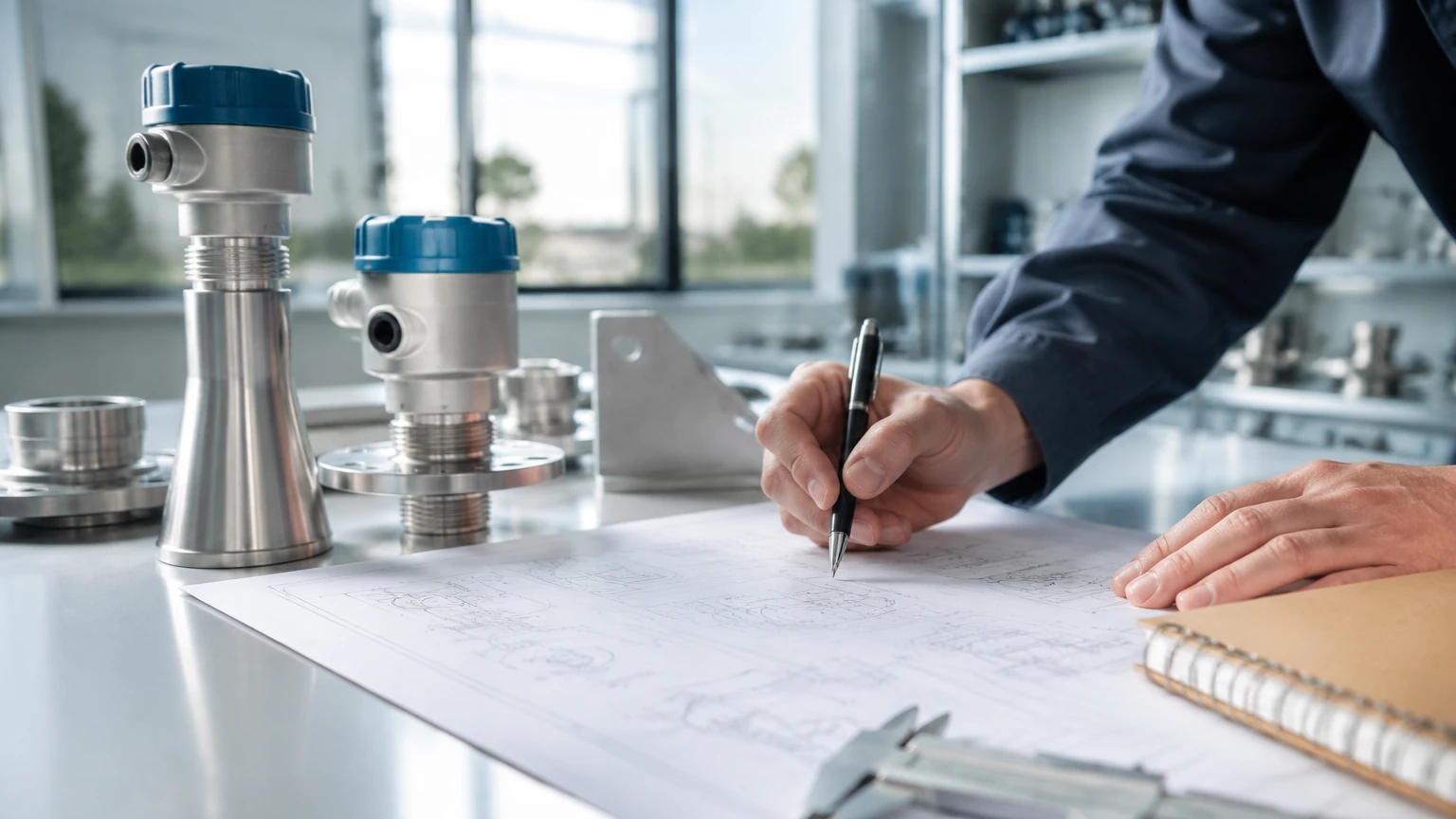
Installing a level meter to monitor DEF requires adherence to specific material compatibility and environmental standards. Urea is corrosive to copper, brass, and mild steel. Therefore, all wetted parts or nearby structural components should be stainless steel (316L) or specialized plastics like PVDF or PTFE.
Mounting and Positioning
1. Avoid Internal Obstructions: When measuring at high levels (like a 78% fill), ensure the sensor beam does not hit ladders, pipes, or agitators, which can cause false echoes.
2. Venting: Hydrostatic sensors require a vented cable to compensate for atmospheric pressure changes. If the vent is blocked, the measure of 78 might drift as weather patterns change.
3. Temperature Control: DEF freezes at -11°C (12°F). If the fluid freezes, non-contact sensors will measure the top of the ice, while hydrostatic sensors may be damaged by the expansion of the freezing liquid.
Limitations and Common Risks
While modern instrumentation is highly reliable, certain factors can compromise the accuracy of a measurement like "def 78."
* Crystallization: Urea can crystallize on the face of an ultrasonic transducer or the diaphragm of a pressure sensor. This buildup can lead to a "frozen" reading where the sensor continues to report a measure of 78 even as the actual level drops.
* Foaming: During the filling process, DEF can foam. Ultrasonic waves may be absorbed by the foam, leading to a loss of signal. Radar is generally more resistant to foam but can still be affected if the foam is exceptionally thick and dense.
* Signal Scaling: A common error in B2B procurement is a mismatch between the sensor's factory calibration and the site's PLC scaling. If the sensor is calibrated for 0-100 inches but the tank is only 80 inches tall, the reported measure of 78 will be mathematically incorrect relative to the actual volume.
Frequently Asked Questions (FAQ)
Q: Does the concentration of DEF affect the level measurement?
A: For radar and ultrasonic sensors, no. For hydrostatic sensors, yes. Hydrostatic pressure depends on density. If the urea concentration varies significantly from the standard 32.5%, the density changes, and the sensor will require recalibration to maintain an accurate measure.
Q: Can I use a standard water level sensor for DEF?
A: Only if the wetted materials are compatible. Many water sensors use brass or low-grade stainless steel which will corrode quickly in DEF. Always specify 316L Stainless Steel or plastic housings.
Q: What is the most reliable way to trigger an alarm at the 78% mark?
A: While a continuous level transmitter (like radar) can provide a 4-20mA or Modbus signal to a controller, adding a redundant point level switch (like a tuning fork or float switch) at the 78% physical height provides an extra layer of safety against overflows.
Conclusion
Accurately identifying what is the measure of def 78 involves more than just selecting a sensor; it requires an integrated understanding of fluid dynamics, material science, and signal processing. Whether the requirement is for high-precision inventory tracking or simple overflow protection, selecting the right technology—be it radar, ultrasonic, or hydrostatic—ensures that your industrial processes remain within safe and efficient boundaries. For detailed technical data sheets and expert consultation on level measurement hardware, visit our Main Page to explore our full range of solutions.