21.6mm to Inches
21.6mm to Inches
In the field of industrial automation and process control, precision is the cornerstone of operational safety and efficiency. Engineers and technicians frequently encounter the need to convert metric measurements to imperial units when integrating components from international manufacturers like Welk into existing systems. One such common dimension is 21.6mm. Understanding the conversion of 21.6mm to inches is not merely a mathematical exercise; it is a critical step in ensuring that level measurement instruments, such as radar level meters or ultrasonic sensors, fit perfectly into process connections, nozzles, and mounting brackets.
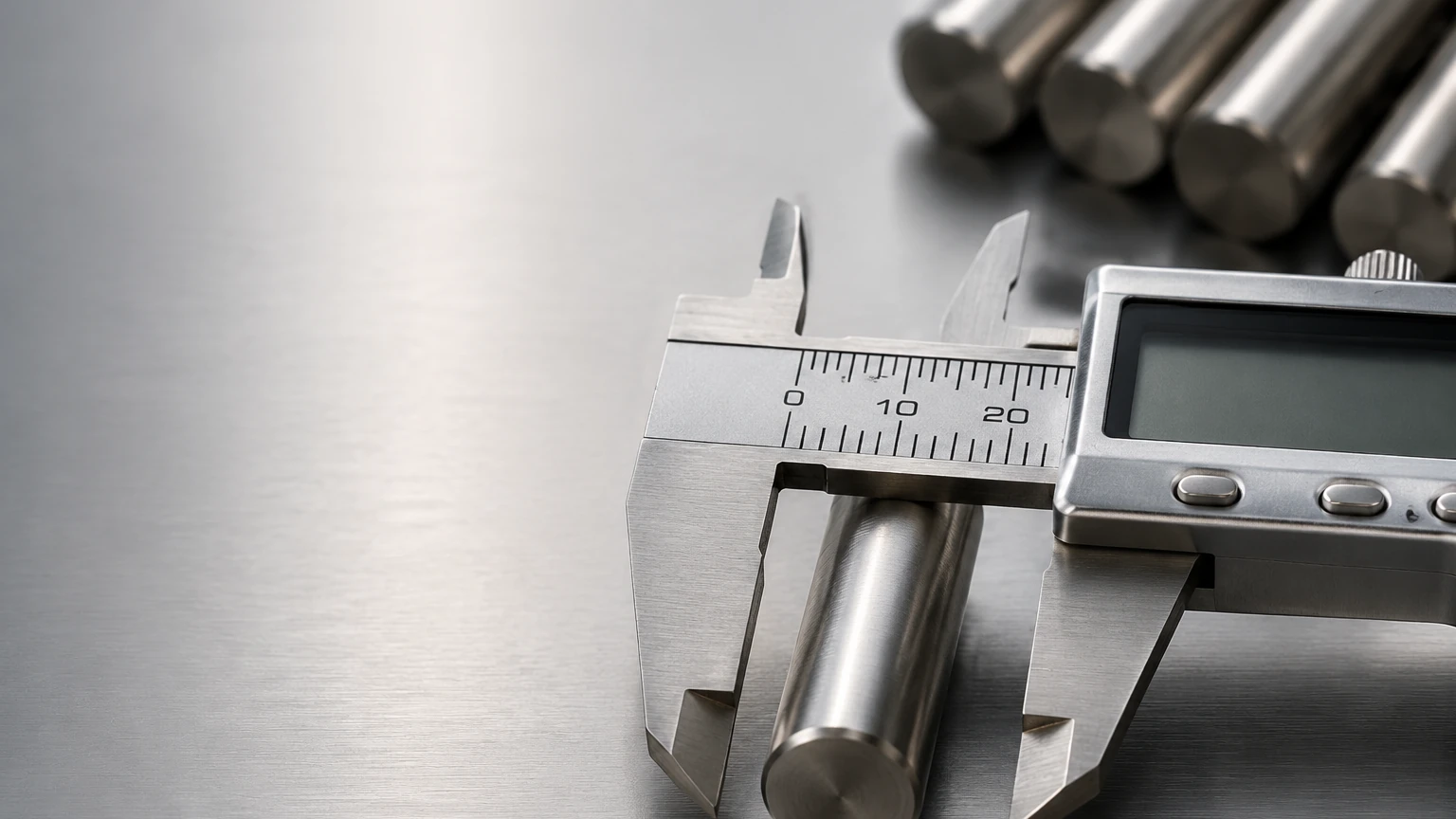
When converting 21.6mm to inches, the standard conversion factor is 1 inch equals 25.4 millimeters. By dividing 21.6 by 25.4, we arrive at approximately 0.8504 inches. In fractional terms used in many machine shops, this is slightly larger than 27/32 of an inch (0.84375") and slightly smaller than 7/8 of an inch (0.875"). In the context of industrial level measurement, this dimension often corresponds to the outer diameter of small-bore sensor probes, cable glands, or specific thread types like G 1/2" (BSP) which has an outer diameter near this range.
Understanding the Conversion: 21.6mm to Inches in Industrial Contexts
The conversion of 21.6mm to inches is most relevant when dealing with mechanical interfaces. For instance, if an engineer is selecting a hydrostatic level transmitter for a deep-well application, the probe diameter must be smaller than the internal diameter of the stilling well or the access pipe. A probe measuring 21.6mm (0.85") is designed to fit comfortably within a 1-inch pipe, providing enough clearance for the sensor to be lowered or raised without snagging on internal scales or welds.
In terms of precision, industrial standards often require tolerances within thousandths of an inch. While 0.8504" is the mathematical result, a drawing might specify 0.85" for general clearance or a more rigorous 0.850" for press-fit components. Understanding these nuances ensures that when you visit the Main Page to select a device, you can match the physical dimensions of the hardware to your specific site requirements without the risk of mechanical interference.
Measurement Principles in Compact Level Sensing
Before selecting an instrument based on its physical size, it is essential to understand the principles governing how these devices measure liquid or solid levels. The physical dimension of a sensor—such as a 21.6mm diameter housing—often dictates its performance characteristics, including its beam angle, frequency, and sensitivity.
Radar Level Measurement
Radar level meters operate on the Time-of-Flight (ToF) principle. The device emits high-frequency microwave pulses (typically in the 26GHz or 80GHz range) toward the product surface. These pulses reflect off the surface and return to the antenna. The distance is calculated based on the time it takes for the pulse to travel to the surface and back.
Compact radar sensors with diameters around 21.6mm (0.85") are increasingly popular in the chemical and water treatment industries. Because the antenna size is small, these units often utilize higher frequencies (80GHz) to maintain a narrow beam angle. A narrow beam is crucial when installing sensors in small tanks or vessels with internal obstructions like agitators or heating coils, as it prevents false echoes from interfering with the level signal.
Ultrasonic Level Sensing
Ultrasonic sensors also use the ToF principle but rely on sound waves rather than electromagnetic waves. A transducer emits an ultrasonic pulse that bounces off the target and returns. The speed of sound is temperature-dependent, so these sensors usually include a temperature probe for compensation.
In ultrasonic technology, the size of the transducer face (which might be approximately 21.6mm for short-range models) directly influences the "dead zone" or "blocking distance." The dead zone is the area immediately in front of the sensor where it cannot accurately measure. Smaller transducers often have smaller dead zones, making them ideal for small tanks or sumps where the liquid level may rise very close to the sensor mounting point.
Hydrostatic Level Measurement
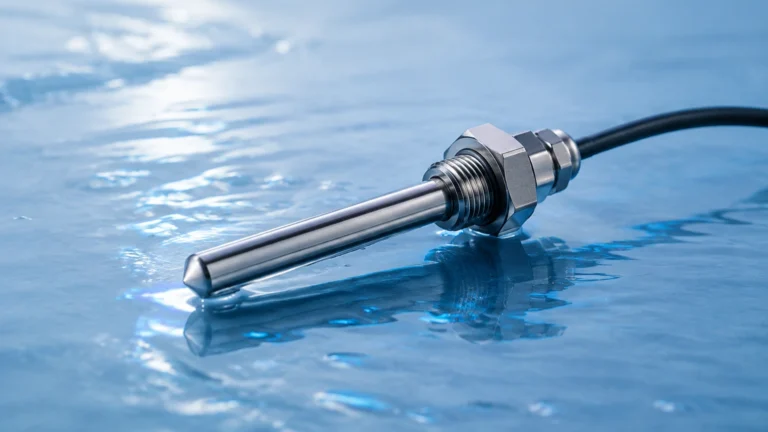
Hydrostatic transmitters measure the pressure exerted by a liquid column. The pressure is proportional to the height of the liquid and its density ($P = \rho \cdot g \cdot h$). These sensors are typically submersible. A 21.6mm (0.85") diameter probe is a standard size for boreholes and narrow pipes. The stainless steel housing protects the sensitive diaphragm, while a vented cable allows the sensor to compensate for atmospheric pressure changes.
Practical Selection Guide for Level Measurement Instruments
Choosing the right technology involves balancing the physical constraints (like the 21.6mm to inches conversion for mounting) with the process conditions. The following table provides a comparison of common technologies offered by Welk to assist in the selection process.
| Technology | Typical Application | Advantages | Limitations | Common Mounting Size |
| :— | :— | :— | :— | :— |
| Radar (80GHz) | Chemical tanks, small vessels | High accuracy, narrow beam, non-contact | Higher initial cost | G 1/2", G 1", or Flange |
| Ultrasonic | Water/Wastewater sumps | Cost-effective, non-contact | Affected by foam, steam, and wind | 1" NPT or G 1 1/2" |
| Hydrostatic | Deep wells, water tanks | Simple installation, reliable | Contacting, density-dependent | Submersible probe (approx. 20-22mm) |
| Magnetic Gauge | High-temp/pressure boilers | Visual indication, no power needed | Requires bypass chamber | Flanged connections |
When evaluating these options, consider the material compatibility. For a 21.6mm probe, the material is often 316L stainless steel or PTFE, depending on the corrosiveness of the medium. Ensuring the mechanical fit (0.85") is just the first step; the chemical resistance of the housing is equally vital for long-term reliability.
Installation Considerations for 21.6mm Components
Successful installation of a level meter requires more than just knowing that 21.6mm converts to roughly 0.85 inches. Engineers must account for the specific mounting environment to ensure the instrument functions as intended.
1. Nozzle Clearance: If you are mounting a sensor through a nozzle, the internal diameter (ID) of the nozzle must be larger than the sensor's widest point. For a 21.6mm sensor, a 1-inch (25.4mm) nozzle is usually the minimum recommended size to allow for easy insertion and to prevent the sensor from touching the nozzle walls, which could cause signal interference in radar and ultrasonic units.
2. Thread Engagement: Many small sensors use a G 1/2" thread. While the 21.6mm dimension might refer to the probe body, the thread itself has specific pitch and diameter requirements. Always use appropriate sealing materials like PTFE tape or O-rings to prevent process leaks.
3. Cable Management: For submersible hydrostatic sensors with a 21.6mm diameter, the cable must be handled carefully. The vent tube inside the cable must not be kinked or blocked, as this would lead to inaccurate level readings due to lack of atmospheric compensation.
4. Orientation: Ensure the sensor is mounted perpendicular to the liquid surface. Even a small tilt can cause the signal (radar or ultrasonic) to bounce away from the receiver, resulting in a "lost signal" error.
Limitations and Engineering Risks
While compact sensors are versatile, they come with specific engineering limitations that must be addressed during the design phase.
* Signal Attenuation: Smaller antennas in radar units generally have lower gain than larger ones. While 80GHz technology has mitigated this, very small sensors may still struggle with low-dielectric liquids (like oils) over long distances (e.g., over 10 meters or 32.8 ft).
* Build-up Sensitivity: A 21.6mm (0.85") diameter probe has a smaller surface area, meaning that even a small amount of material build-up (like crystallized chemicals or mud) can significantly impact the measurement accuracy. In applications with high viscosity or sticky substances, a larger, flush-mounted diaphragm or a non-contact radar might be preferable.
* Environmental Factors: Ultrasonic sensors with small transducers are particularly susceptible to environmental noise and air turbulence. If your application involves heavy steam or dust, the physical size of the sensor might limit its ability to penetrate these obstacles compared to a larger, more powerful unit.
To mitigate these risks, it is recommended to perform a thorough site audit. Confirm the liquid's dielectric constant, the presence of foam, and the expected temperature and pressure ranges. For detailed technical specifications and to compare different models, you can refer to the Main Page of our product catalog.
Frequently Asked Questions (FAQs)
Q: How do I precisely convert 21.6mm to inches for a CAD drawing?
A: For high-precision engineering drawings, use the factor 0.0393701. $21.6 \times 0.0393701 = 0.85039416$ inches. Most industrial applications round this to 0.850".
Q: Can a 21.6mm hydrostatic probe fit in a 3/4-inch pipe?
A: No. A standard 3/4-inch Schedule 40 pipe has an internal diameter of approximately 0.824 inches (20.9mm). Since 21.6mm is 0.850 inches, the probe will be too large to fit. You will need at least a 1-inch pipe, which has an ID of 1.049 inches (26.6mm).
Q: Does the diameter of a radar sensor affect its beam angle?
A: Yes. Generally, for a fixed frequency, a larger antenna diameter results in a narrower beam angle. However, modern 80GHz radar sensors can achieve very narrow beam angles (as low as 3 degrees) even with small physical footprints, allowing them to be used in narrow vessels.
Q: What is the significance of the 21.6mm dimension in cable glands?
A: In many industrial instruments, an M20 cable gland is used. The outer diameter of the gland nut is often in the 20-22mm range. Ensuring you have the correct clearance (approx. 0.85") around the entry port is essential for using standard wrenches during installation.
Q: Are there imperial equivalents for metric threads on these sensors?
A: While metric (M) and British Standard Pipe (G) threads are common, many Welk instruments are available with NPT (National Pipe Taper) threads for the North American market. A 1/2" NPT thread is a common alternative for sensors in the 21.6mm diameter class.
In conclusion, the conversion of 21.6mm to inches is a fundamental task for any engineer working with international instrumentation. By understanding that this measurement equals approximately 0.8504 inches, and by applying the principles of radar, ultrasonic, and hydrostatic measurement, you can ensure a seamless integration of Welk's high-quality level meters into your industrial processes. Always verify the specific tolerances and mounting requirements of your chosen device on the Main Page to guarantee long-term operational success.