High Temperature Flow Switch
High Temperature Flow Switch
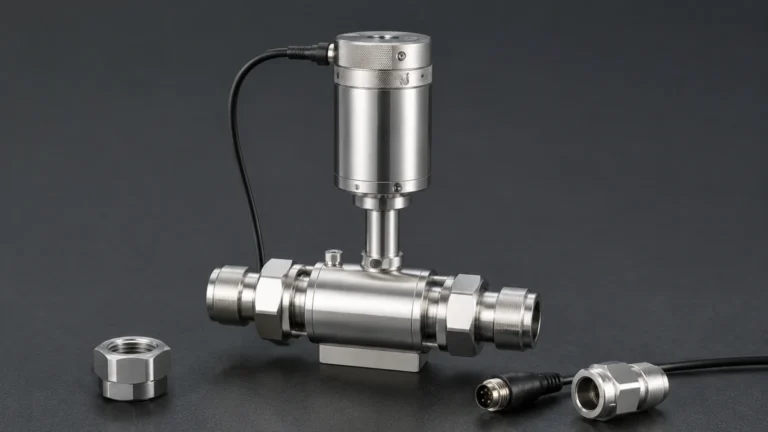
In industrial process control, monitoring the movement of fluids under extreme thermal conditions is a critical safety and operational requirement. A high temperature flow switch is a specialized instrument designed to detect the presence or absence of flow within a piping system when the process media exceeds standard operating temperatures, often reaching up to 450°C (842°F) or higher. Unlike standard flow switches, these devices are engineered with specific materials and cooling mechanisms to prevent electronic failure and ensure mechanical integrity.
For engineers and plant managers, selecting the correct flow switch is not merely about set points; it involves understanding the thermal dynamics of the medium, the pressure ratings of the housing, and the reliability of the sensing technology. This guide provides a technical overview of high temperature flow measurement principles, selection criteria, and installation best practices.
Measurement Principles for High Temperature Environments
Before selecting a specific model, it is essential to understand how different technologies respond to heat. The two most common principles utilized in high-temperature applications are thermal dispersion and mechanical movement.
Thermal Dispersion (Calorimetric)
Thermal dispersion is widely considered the most reliable method for high-temperature flow switching because it contains no moving parts. The sensor probe consists of two thermistors: one is heated, and the other remains at the process temperature (the reference sensor).
As fluid flows past the probe, it carries heat away from the heated sensor. The temperature difference between the two sensors is inversely proportional to the flow velocity. In high-temperature variants, the electronics are often housed in a remote enclosure or separated by a cooling neck to protect the sensitive circuitry from the intense heat of the process pipe. This technology is particularly effective for detecting low flow rates in gases and liquids.
Mechanical Paddle and Vane
Mechanical flow switches rely on the physical force of the fluid pushing against a paddle or vane. This movement triggers a microswitch or a magnetic reed switch. While cost-effective, mechanical switches face significant challenges at high temperatures. Thermal expansion can cause the paddle to bind or the pivot points to seize. Therefore, high-temperature mechanical switches utilize specialized bellows or magnetic couplings to isolate the switch mechanism from the hot fluid, ensuring that the heat does not reach the electrical contacts.
Piston and Spring-Loaded Switches
In these devices, a piston is displaced by the flow against a calibrated spring. At high temperatures, the spring rate can change due to material softening (annealing). High-temperature piston switches use specialized alloys like Inconel for the springs to maintain a consistent set point even when the fluid temperature fluctuates significantly.
Technical Selection Criteria
When evaluating a high temperature flow switch, the following parameters must be confirmed to ensure the device is fit for purpose. For a broader look at industrial measurement solutions, including level and pressure instrumentation, you may visit the Main Page for technical specifications and product ranges.
1. Temperature and Pressure Ratings
Standard industrial switches typically top out at 120°C (248°F). High-temperature models are categorized into medium-heat (up to 250°C) and extreme-heat (up to 450°C+). It is vital to verify that both the process connection and the internal seals (O-rings) can withstand these peaks. Common high-temperature seal materials include Graphite or specialized Viton (FKM) compounds.
2. Media Compatibility
Corrosive fluids at high temperatures are significantly more aggressive than at room temperature. While Stainless Steel 316L is the industry standard, applications involving hot acids or chlorides may require Hastelloy C or Monel. The wetted parts must be chemically compatible with the medium at the maximum operating temperature.
3. Set Point and Hysteresis
The "set point" is the flow rate at which the switch activates. In high-temperature applications, fluid density and viscosity often change as the temperature rises. A switch that is calibrated for cold water may trigger at a different point when the water reaches 200°C. Thermal dispersion switches are particularly sensitive to these changes, so they often require field calibration at the actual operating temperature.
Practical Selection Table
| Feature | Thermal Dispersion | Mechanical Paddle | Piston Type |
| :— | :— | :— | :— |
| Max Temp (Typical) | 450°C (842°F) | 250°C (482°F) | 200°C (392°F) |
| Moving Parts | None | Yes | Yes |
| Pressure Drop | Negligible | Moderate | High |
| Media Type | Liquid & Gas | Liquid Only | Clean Liquids |
| Maintenance | Low | Medium | High (due to scaling) |
| Primary Benefit | No wear/clogging | Low cost | Fast response |
Design Considerations for Extreme Heat
To bridge the gap between the hot process and the sensitive electronics, manufacturers employ several engineering strategies:
* Cooling Fins: Metal fins are integrated into the sensor neck to dissipate heat into the surrounding air before it reaches the junction box.
* Remote Electronics: The sensing element is placed in the pipe, while the control unit and display are mounted several meters away, connected by a high-temperature cable. This is the most effective way to ensure long-term electronic reliability.
* All-Welded Construction: To prevent leaks caused by thermal cycling (the constant expansion and contraction of parts), high-quality switches use all-welded sensor probes rather than threaded or glued assemblies.
Installation Guidelines and Considerations
Proper installation is as critical as the selection of the device itself. Failure to follow these guidelines often results in premature sensor failure or false alarms.
Straight Pipe Runs
To ensure a stable flow profile, flow switches should be installed in a straight section of pipe. A general rule is to have at least 5 diameters (5D) of straight pipe upstream and 2 diameters (2D) downstream of the switch. Turbulence caused by elbows, valves, or pumps can lead to "chatter" in mechanical switches or erratic readings in thermal switches.
Orientation
* Horizontal Pipes: For liquid applications, the switch should ideally be mounted on the side of the pipe. Mounting on the top can lead to issues with air pockets, while mounting on the bottom can lead to sediment buildup around the sensor.
* Vertical Pipes: If the flow is vertical, it must be in an upward direction to ensure the pipe is always full. Downward flow can lead to partially filled pipes, which will cause the switch to indicate a "no flow" condition even if fluid is moving.
Thermal Insulation
While it is common practice to insulate high-temperature pipes to prevent heat loss, the cooling neck or fins of the flow switch should never be covered with insulation. These components need exposure to ambient air to function as a heat sink. Covering them will cause the electronics to overheat and fail.
Common Applications
High temperature flow switches are vital in several industrial sectors:
1. Power Generation: Monitoring the flow of superheated steam or boiler feed water to prevent pump cavitation and boiler dry-firing.
2. Chemical Processing: Controlling the flow of thermal oils used in jacketed reactors. If the oil stops circulating, the reactor can overheat, leading to a dangerous runaway reaction.
3. Oil & Gas: Detecting flow in heavy crude oil lines where the oil must be heated to maintain a pumpable viscosity.
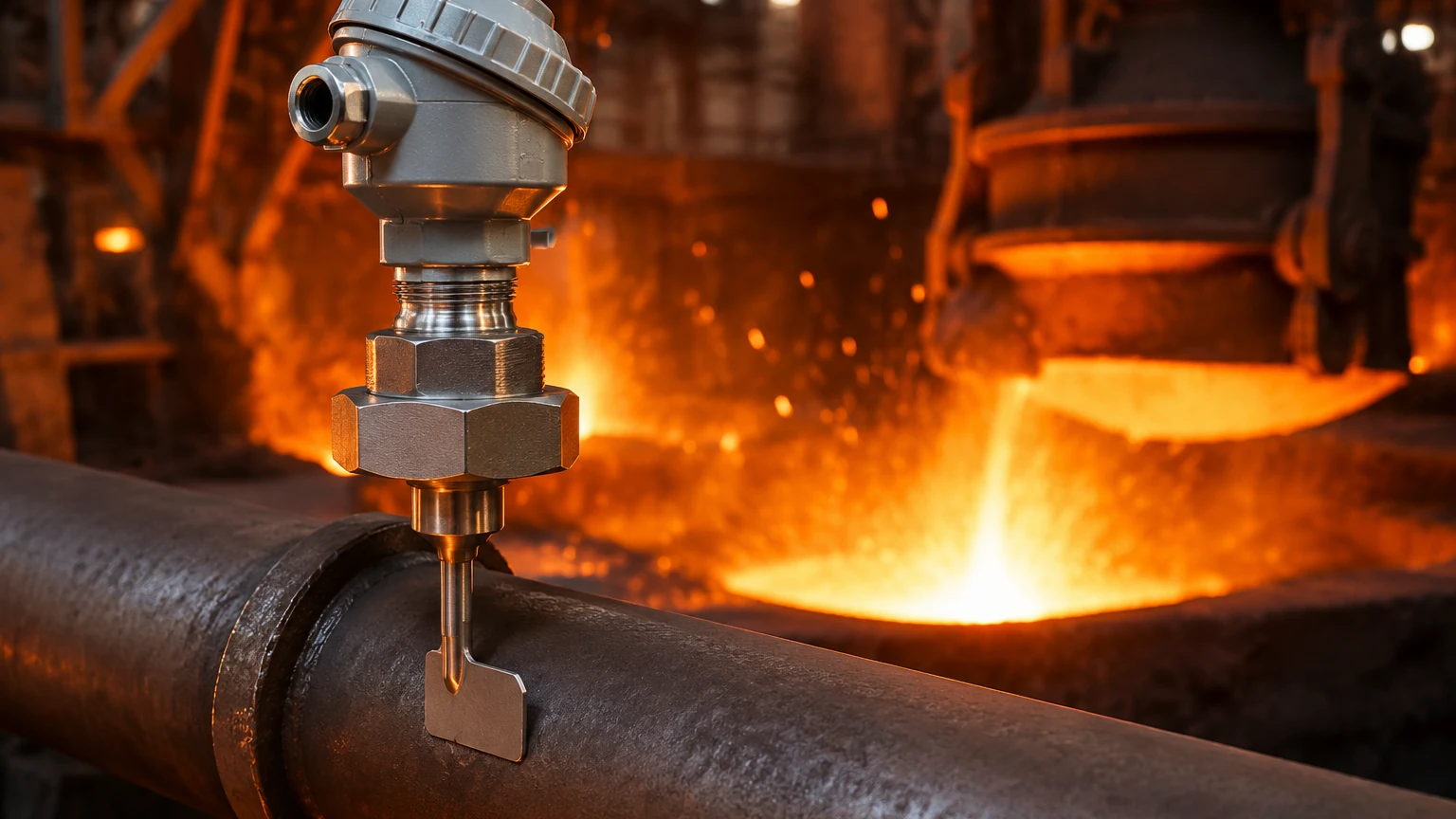
4. Metal Processing: Monitoring cooling water flow in blast furnace tuyeres or induction heating coils where the ambient and process temperatures are extremely high.
Limitations and Potential Risks
Despite their robust design, high temperature flow switches have limitations:
* Scaling and Fouling: In high-temperature water systems, minerals can precipitate out and form a scale on the sensor probe. For thermal dispersion switches, this scale acts as an insulator, slowing the response time. For mechanical switches, it can jam the moving parts.
* Thermal Shock: Rapid changes in temperature (e.g., introducing cold water into a hot system) can cause ceramic insulators or glass-to-metal seals to crack. Systems should be brought up to temperature gradually whenever possible.
* Viscosity Sensitivity: Many flow switches are calibrated for water. If the process fluid is a high-temperature oil with a significantly different viscosity, the switch may require recalibration to avoid false trips.
Frequently Asked Questions (FAQ)
Q: Can I use a standard flow switch if I just add a longer pipe nipple?
A: This is generally not recommended. While a longer nipple might move the electronics further away, the internal seals and the sensing element itself must still withstand the process temperature. Furthermore, stagnant fluid in a long nipple can cool down and solidify (in the case of oils or waxes), preventing the switch from sensing the actual flow in the main line.
Q: How often should a high temperature flow switch be calibrated?
A: For safety-critical applications, an annual calibration check is recommended. Because thermal dispersion switches depend on the thermal properties of the fluid, they should be checked whenever the fluid composition or the standard operating temperature changes significantly.
Q: What is the difference between a flow switch and a flow meter?
A: A flow switch provides a binary output (on/off) based on a specific threshold, whereas a flow meter provides a continuous measurement of the flow rate. Switches are typically used for alarm and protection circuits, while meters are used for process control and totalization.
Q: Why did my thermal flow switch stop working after I insulated the pipe?
A: If you insulated the cooling neck of the switch along with the pipe, the heat from the process was likely trapped and conducted directly into the electronics. Ensure that the cooling fins are exposed to ambient air.
Conclusion
Selecting a high temperature flow switch requires a balance between mechanical durability and electronic protection. By prioritizing technologies like thermal dispersion for extreme heat and ensuring that installation practices allow for proper heat dissipation, engineers can maintain safe and efficient operations in the most demanding thermal environments. For further assistance in selecting the right instrumentation for your specific industrial application, please refer to the technical resources available on the Main Page.