Ultrasonic Water Level Sensor Esphome
Integrating Ultrasonic Water Level Sensors with ESPHome: A Technical Guide
In the landscape of industrial automation and smart water management, non-contact measurement has become the preferred standard for reliability and ease of maintenance. Ultrasonic technology, in particular, offers a versatile solution for monitoring liquid levels in tanks, pits, and open channels. For engineers and developers utilizing open-source ecosystems, the ultrasonic water level sensor esphome integration provides a powerful bridge between physical hardware and digital monitoring platforms.
This guide explores the underlying principles of ultrasonic measurement, the technical requirements for ESPHome integration, and the critical selection criteria for choosing between entry-level IoT components and robust industrial-grade Ultrasonic Level Meters.
Understanding Ultrasonic Level Measurement Principles
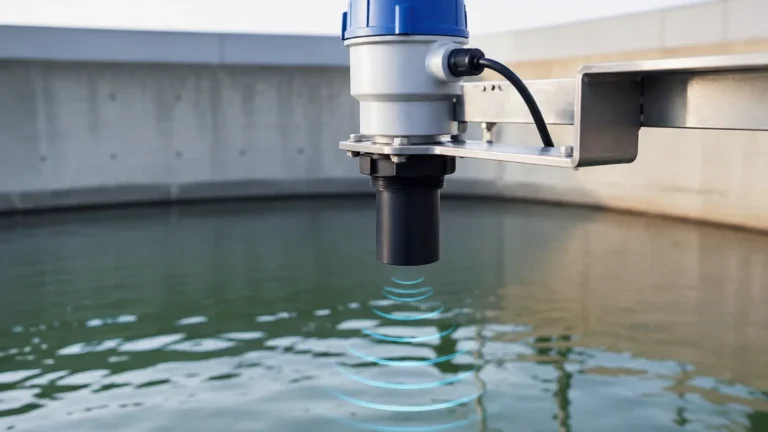
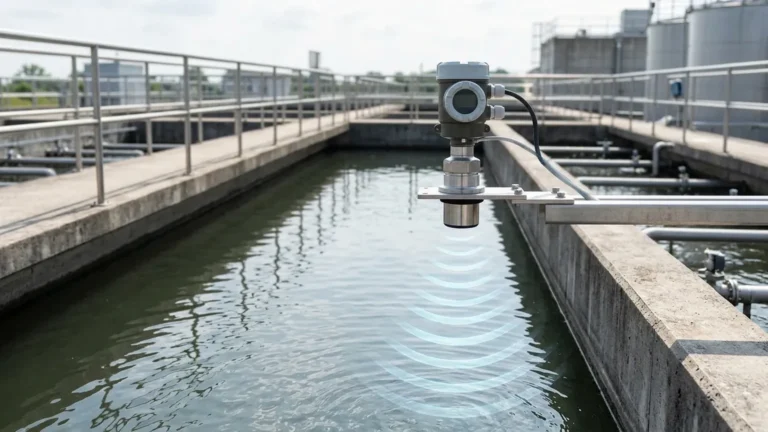
Ultrasonic level measurement is based on the "Time of Flight" (ToF) principle. The sensor, typically mounted at the top of a vessel, contains a piezoelectric transducer that emits high-frequency sound pulses (usually between 20 kHz and 200 kHz). These sound waves travel through the air, strike the surface of the liquid, and reflect back toward the sensor.
The Calculation Logic
The distance between the sensor and the liquid surface is calculated using the following formula:
Distance = (Speed of Sound × Time) / 2
Where:
* Speed of Sound: Approximately 343 meters per second (m/s) in air at 20°C (68°F).
* Time: The duration between the emission of the pulse and the reception of the echo.
Because the pulse must travel to the surface and back, the total distance is divided by two to determine the air gap. To find the actual liquid level, the system subtracts this air gap from the known total height of the tank.
Environmental Variables
The speed of sound is not constant; it fluctuates based on the temperature of the medium (usually air). For every 1°C change in temperature, the speed of sound changes by approximately 0.6 m/s. Professional-grade ultrasonic level meters include integrated temperature sensors to automatically compensate for these fluctuations, ensuring accuracy across varying climates.
Integrating Ultrasonic Water Level Sensors with ESPHome
ESPHome is a system that allows users to create custom firmware for ESP8266 and ESP32 microcontrollers using simple YAML configuration files. It has become a staple in industrial prototyping and remote monitoring due to its seamless integration with Home Assistant and MQTT brokers.
Hardware Configuration
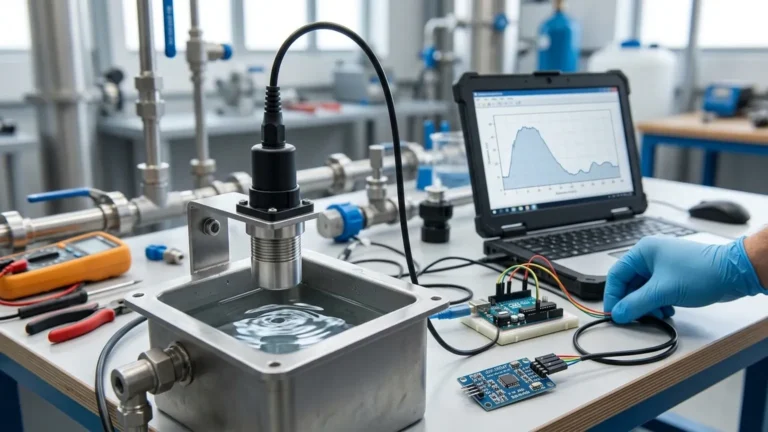
When setting up an ultrasonic water level sensor esphome project, the configuration typically targets sensors like the HC-SR04 (for indoor, clean environments) or the JSN-SR04T (a waterproof version suitable for tanks).
A standard ESPHome YAML block for an ultrasonic sensor looks like this:
“`yaml
sensor:
- platform: ultrasonic
trigger_pin: GPIO12
echo_pin: GPIO13
name: "Tank Water Level"
update_interval: 60s
unit_of_measurement: "m"
filters:
- filter_out: nan
- sliding_window_moving_average:
window_size: 10
send_every: 1
“`
Signal Processing in ESPHome
One of the advantages of using ESPHome is the ability to apply software filters. Ultrasonic sensors can occasionally produce "noisy" data due to surface turbulence or stray echoes. Using a `sliding_window_moving_average` or a `median` filter helps stabilize the readings before they are transmitted to the central monitoring system.
Selection Criteria for Industrial vs. IoT Level Sensors
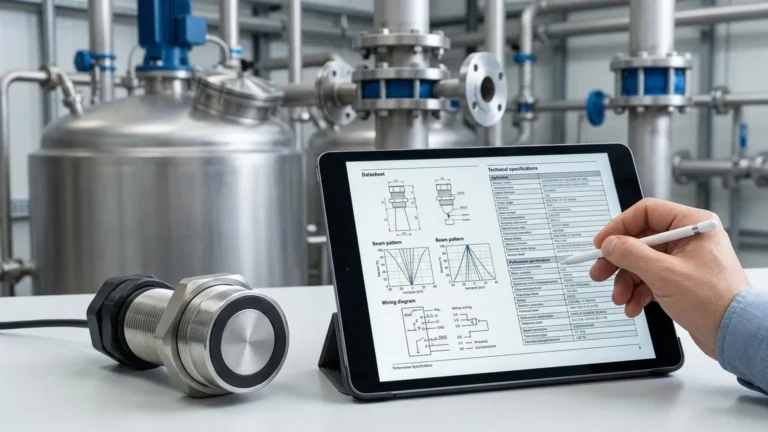
While DIY-style sensors are excellent for proof-of-concept or residential rain barrel monitoring, industrial applications require higher durability and precision. When scaling a project from a prototype to a production environment, it is essential to evaluate the sensor's specifications.
| Feature | IoT/Consumer Grade (e.g., JSN-SR04T) | Industrial Grade (Welk Ultrasonic Meters) |
| :— | :— | :— |
| Housing Material | Plastic / Basic PVC | PVDF, PTFE, or Stainless Steel |
| Ingress Protection | IP65 (often lower for electronics) | IP67 / IP68 (Fully submersible options) |
| Accuracy | ±1% to ±3% of range | ±0.2% to ±0.5% of range |
| Beam Angle | Wide (30° – 60°) | Narrow (5° – 12°) |
| Output Options | TTL / PWM | 4-20mA, RS485 Modbus, HART |
| Dead Zone | 20 cm – 25 cm | 10 cm – 20 cm (Optimized) |
| Max Range | Up to 4.5 meters | Up to 15, 20, or 30 meters |
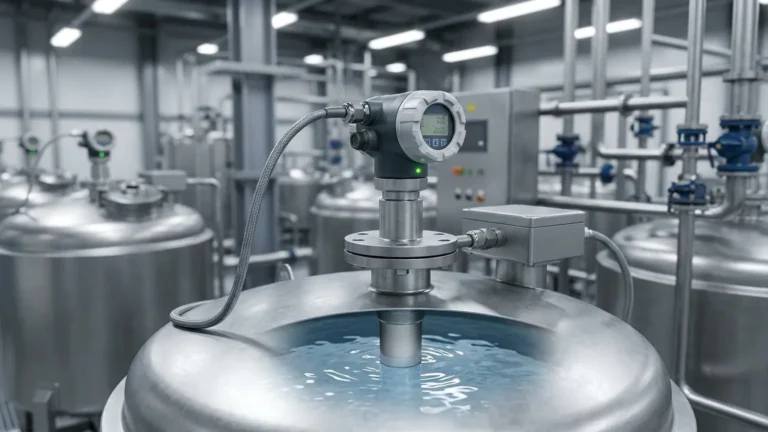
For facilities requiring long-term reliability in harsh chemical environments, upgrading to professional Ultrasonic Level Meters is necessary to prevent frequent sensor failure and data loss.
Critical Installation Considerations
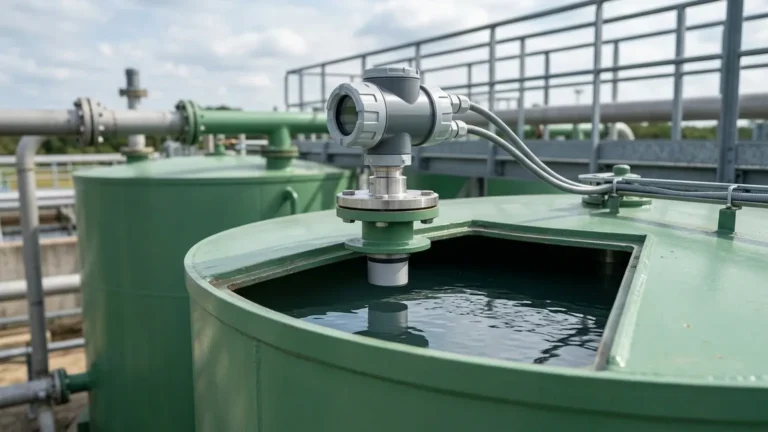
Successful deployment of an ultrasonic sensor, whether integrated via ESPHome or a dedicated PLC, depends heavily on physical placement.
1. The Dead Zone (Blocking Distance)
Every ultrasonic sensor has a "dead zone" directly in front of the transducer face where it cannot accurately process an echo. If the water level rises into this zone, the sensor will provide erratic readings or fail entirely.
* Guideline: Ensure the maximum liquid level remains at least 250 mm (approx. 10 inches) below the sensor face.
2. Beam Angle and Obstructions
The ultrasonic pulse spreads out in a cone shape. If this cone hits a tank wall, a ladder, or a pipe, it will create a false echo.
* Guideline: Install the sensor away from the tank walls (typically at 1/2 or 1/3 of the radius) and ensure the path to the liquid is clear of internal structures.
3. Surface Conditions
Ultrasonic waves require a solid or liquid surface to bounce off.
* Foam: Heavy foam absorbs the sound pulse, leading to a "Loss of Echo" (LOE) error.
* Turbulence: Rapidly moving or boiling liquids can scatter the pulse. In these cases, a stilling well (a vertical pipe) can be used to provide a calm surface for measurement.
4. Mounting Orientation
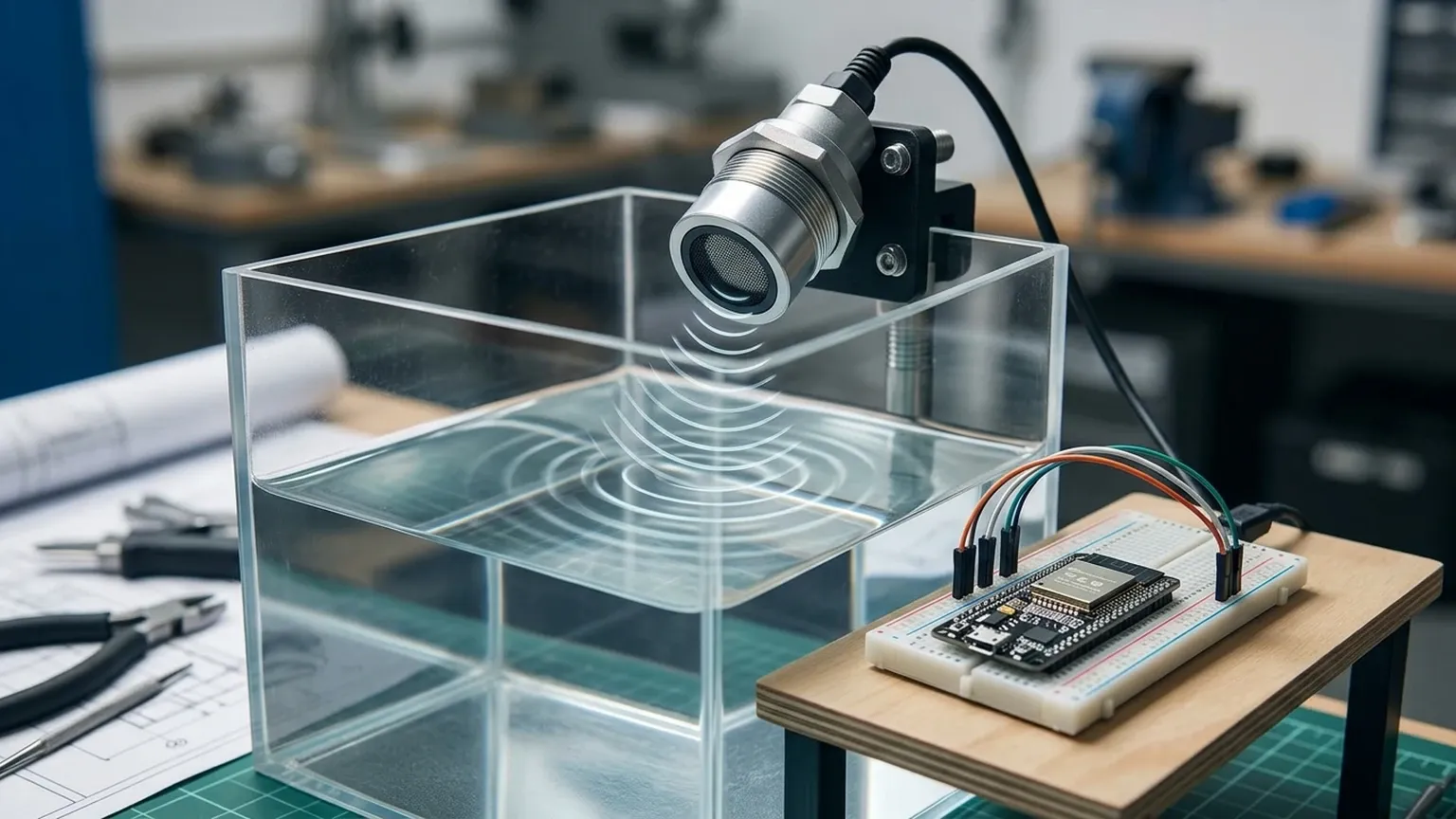
The sensor must be mounted perfectly perpendicular to the liquid surface. Even a small tilt can cause the reflected pulse to miss the receiver, significantly reducing the effective range and accuracy.
Limitations and Environmental Factors
While highly effective, ultrasonic technology is not a universal solution. Engineers must be aware of the following limitations:
* Vacuum Conditions: Sound cannot travel through a vacuum. Ultrasonic sensors will not work in pressurized vessels where a vacuum is present.
* High Pressure/Temperature: Extreme pressure changes the density of the air, affecting the speed of sound beyond what standard temperature compensation can fix. For temperatures exceeding 80°C (176°F) or high-pressure tanks, radar level meters are often recommended.
* Vapor and Dust: Heavy steam or dense dust clouds can attenuate the signal. In such environments, the frequency of the sensor must be carefully selected, or alternative technologies like guided wave radar should be considered.
Frequently Asked Questions (FAQ)
Can I use ESPHome with industrial 4-20mA ultrasonic sensors?
Yes. While ESPHome is often associated with digital TTL sensors, you can connect an industrial 4-20mA sensor to an ESP32 by using a current-to-voltage converter (resistor bridge) and the ESP32's internal Analog-to-Digital Converter (ADC). This allows you to combine industrial reliability with the flexibility of the ESPHome platform.
How do I handle "NaN" (Not a Number) readings in my configuration?
In ESPHome, a `nan` reading usually occurs when the sensor does not receive an echo within its timeout period. This can be caused by the water being too close (dead zone) or too far (out of range). Use the `filter_out: nan` filter in your YAML to prevent these values from affecting your averages or triggering false alarms.
What is the best way to calibrate my ultrasonic water level sensor?
Calibration should be done at two points: the "Empty" level and the "Full" level. Measure the distance from the sensor to the bottom of the tank (Empty) and the distance to the maximum fill line (Full). In ESPHome, you can use the `calibrate_linear` filter to map the raw distance (meters) to a percentage or volume (liters).
Does the sensor need maintenance?
One of the primary benefits of ultrasonic meters is that they have no moving parts. However, in high-humidity environments, condensation can form on the transducer face. Many industrial-grade sensors feature a self-cleaning function through the vibration of the transducer, but occasional manual inspection is recommended to ensure no debris is blocking the sensor.
Conclusion
Implementing an ultrasonic water level sensor esphome solution offers a cost-effective and highly customizable way to monitor liquid levels across various applications. By understanding the physics of sound propagation and adhering to strict installation guidelines regarding dead zones and beam angles, users can achieve high-precision results. For mission-critical industrial processes, transitioning to specialized Ultrasonic Level Meters ensures the durability and advanced signal processing required for complex environments.