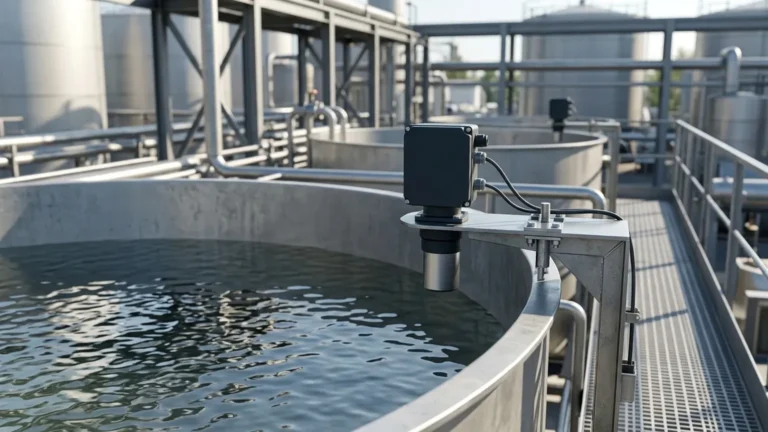
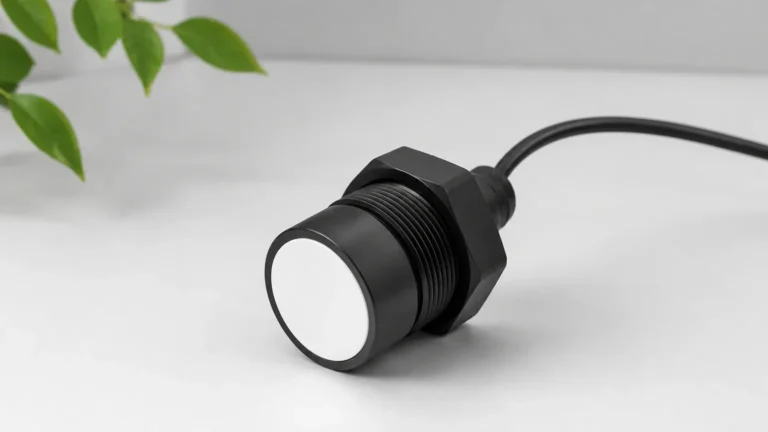
Ultrasonic Level Sensor for Oil Tank
Ultrasonic Level Sensor for Oil Tank: A Practical Engineering Guide
In the landscape of industrial automation, the ability to monitor liquid inventory with precision is fundamental to operational safety and efficiency. For facilities managing petroleum products, lubricants, or hydraulic fluids, selecting an ultrasonic level sensor for oil tank applications represents a balance between cost-effectiveness and high-performance non-contact measurement. This guide explores the technical principles, selection criteria, and installation best practices for utilizing ultrasonic technology in oil storage environments.
Measurement Principles of Ultrasonic Level Meters
Before implementing an ultrasonic level sensor for oil tank monitoring, it is essential to understand the underlying physics of the technology. Ultrasonic level meters operate on the Time-of-Flight (ToF) principle.
The Time-of-Flight Mechanism
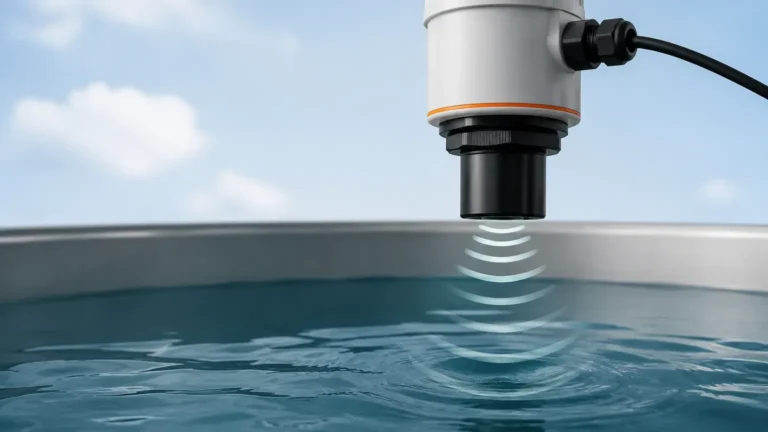
The sensor’s transducer contains piezoelectric crystals that, when excited by an electrical pulse, vibrate at a specific frequency (typically between 20 kHz and 200 kHz). This vibration generates an ultrasonic sound wave that travels through the air gap in the tank, reflects off the surface of the oil, and returns to the transducer.
The device measures the time interval ($t$) between the emission of the pulse and the reception of the echo. Since the speed of sound ($v$) in air is known, the distance ($D$) from the sensor to the liquid surface can be calculated using the formula:
$$D = \frac{v \times t}{2}$$
The internal electronics then subtract this distance from the known total height of the tank to determine the actual level of the oil.
Environmental Factors and Speed of Sound
A critical consideration in oil tank applications is that the speed of sound is not constant; it varies with temperature. Most industrial-grade Ultrasonic Level Meters include an integrated temperature sensor to provide real-time compensation, ensuring accuracy even as the ambient temperature in the tank headspace fluctuates during daily cycles.
Why Use an Ultrasonic Level Sensor for Oil Tank Applications?
Oil storage presents unique challenges, including the potential for viscous buildup, corrosive vapors, and the need for leak prevention. Ultrasonic technology offers several advantages over traditional contact-based methods like float switches or bubblers:
1. Non-Contact Measurement: Because the sensor never touches the oil, there is no risk of mechanical wear, fouling from heavy crude, or chemical degradation of the sensor body. This significantly reduces long-term maintenance costs.
2. Versatility: These sensors can be used for various oil types, including diesel, motor oil, vegetable oils, and hydraulic fluids, provided the vapor pressure is relatively low.
3. Ease of Installation: Most units are top-mounted, requiring only a standard threaded or flanged connection, which simplifies retrofitting existing tanks.
4. Solid-State Reliability: With no moving parts to jam or break, ultrasonic sensors offer a high Mean Time Between Failure (MTBF).
Selection Criteria for Industrial Oil Tanks
When specifying an ultrasonic level sensor, engineers must evaluate several parameters to ensure the device is compatible with the specific oil and tank geometry.
1. Measurement Range and Tank Height
Ultrasonic sensors have a maximum range (often up to 15 or 30 meters) and a minimum "dead zone" (also known as the blocking distance). If the oil level rises into the dead zone, the sensor cannot accurately process the echo. Choosing a sensor with a dead zone smaller than the distance between the mounting point and the maximum fill line is vital.
2. Chemical Compatibility
While the measurement is non-contact, the transducer face is exposed to the atmosphere inside the tank, which may contain oil vapors. For standard oils, PVDF (Polyvinylidene fluoride) or PP (Polypropylene) housings are common. For aggressive chemical additives or high-temperature oil vapors, specialized materials may be required.
3. Output Signals and Integration
Modern industrial applications require seamless integration with PLC or SCADA systems. Standard options include:
* 4-20mA Analog: Traditional current loop for distance or level.
* Modbus RTU / RS485: For digital networking and remote configuration.
* HART Protocol: For superimposed digital communication on analog lines.
4. Hazardous Area Certifications
Oil tanks often contain flammable liquids. In these environments, the sensor must carry appropriate explosion-proof or intrinsically safe certifications (such as ATEX, IECEx, or UL Class I, Div 1).
Practical Selection Table
| Feature | Standard Oil Storage | High-Viscosity / Heavy Oil | Small Day Tanks |
| :— | :— | :— | :— |
| Recommended Range | 5m – 15m | 2m – 10m | 0.5m – 3m |
| Housing Material | ABS / Polycarbonate | PVDF | PP / PVDF |
| Accuracy | ±0.25% – 0.5% | ±0.5% | ±0.25% |
| Typical Output | 4-20mA / HART | 4-20mA / Modbus | 4-20mA / RS485 |
| Mounting | 2" NPT / Flange | 2" NPT / Flange | 1" or 1.5" NPT |
Installation Considerations and Best Practices
Proper installation is the single most important factor in the success of an ultrasonic level sensor for oil tank deployment. Incorrect placement can lead to false echoes and erratic readings.
Avoiding Obstructions
The ultrasonic beam spreads as it travels (typically at a 5° to 12° beam angle). The sensor must be mounted in a location where the beam path is clear of internal tank structures such as ladders, heating coils, or support struts. If an obstruction is unavoidable, many high-end Ultrasonic Level Meters offer "false echo suppression" software to ignore these static reflections.
Mounting Position
* Vertical Alignment: The sensor must be mounted perfectly perpendicular to the liquid surface. Even a few degrees of tilt can cause the echo to reflect away from the transducer rather than back to it.
* Distance from Walls: Do not mount the sensor too close to the tank wall. The wall can cause interference or "ringing" that affects the signal quality. A general rule is to maintain a distance of at least 200mm from the wall for every meter of tank height.
* Inlet Turbulence: Avoid mounting the sensor directly above the oil inlet pipe. The turbulence and splashing during filling will scatter the ultrasonic signal and cause unstable readings.
Dealing with Foam and Vapors
While oils generally do not foam as much as detergents, heavy agitation can create a foam layer. Foam absorbs ultrasonic waves, potentially leading to a lost signal. Similarly, extremely dense vapors can change the speed of sound significantly. In such cases, if accuracy remains an issue despite compensation, a radar level meter might be considered as an alternative, though ultrasonic remains the preferred cost-effective choice for standard atmospheric oil storage.
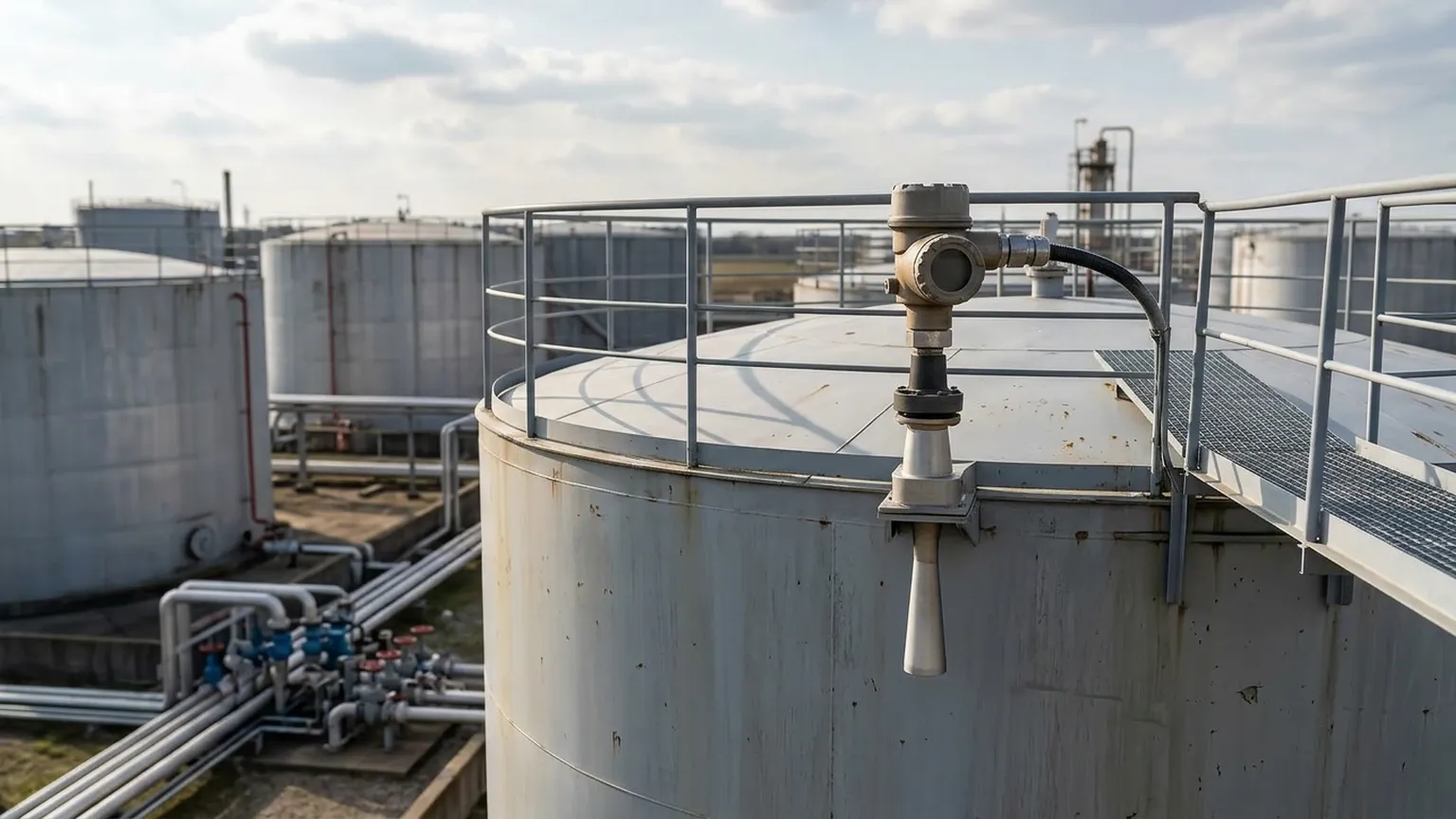
Limitations of Ultrasonic Technology
While highly effective, ultrasonic sensors are not universal solutions. Engineers should be aware of the following limitations:
* Vacuum Conditions: Sound waves require a medium (air/gas) to travel. Ultrasonic sensors will not work in a vacuum.
* High Pressure: High-pressure environments change the density of the air, which can attenuate the sound signal and affect the accuracy of the ToF calculation.
* Extreme Temperatures: Most ultrasonic sensors are rated for temperatures up to 70°C or 80°C. For high-temperature thermal oil or steam-jacketed tanks, specialized high-temperature transducers or radar technology may be required.
Maintenance and Troubleshooting
Because there are no moving parts, maintenance is minimal. However, periodic checks are recommended:
1. Transducer Cleaning: In tanks with high condensation or heavy oil mist, a film may develop on the transducer face. Wiping this with a soft cloth and a compatible solvent ensures signal strength remains high.
2. Cable Integrity: Ensure that the cable entry points are sealed to prevent moisture ingress into the electronics housing.
3. Signal Strength Monitoring: Most digital ultrasonic meters provide a "signal quality" or "echo strength" metric. Monitoring this via Modbus can provide early warning of potential sensor fouling or environmental changes.
Frequently Asked Questions (FAQs)
Q: Can I use an ultrasonic sensor for diesel fuel tanks?
A: Yes, ultrasonic sensors are widely used for diesel storage. Ensure the sensor is rated for hazardous areas (Ex-rated) if the tank is in a regulated zone.
Q: How does the sensor handle temperature changes between summer and winter?
A: Quality Ultrasonic Level Meters include built-in temperature compensation. As the air temperature in the tank changes, the sensor adjusts its internal calculation for the speed of sound to maintain accuracy.
Q: What happens if the oil level reaches the sensor?
A: If the oil enters the "dead zone," the reading will become unreliable or lock at the minimum distance. If the oil actually touches the transducer, it may require cleaning once the level drops to function correctly again.
Q: Is ultrasonic better than radar for oil tanks?
A: It depends on the budget and the environment. Ultrasonic is generally more cost-effective and perfectly suitable for most atmospheric oil tanks. Radar is superior for high-pressure, high-temperature, or heavy-vapor applications but comes at a higher price point.
Conclusion
The use of an ultrasonic level sensor for oil tank monitoring provides a reliable, low-maintenance solution for a wide range of industrial fluids. By understanding the ToF principle and adhering to strict installation guidelines regarding beam angles and dead zones, facilities can achieve precise inventory control and enhanced safety. For complex applications involving high temperatures or heavy vapors, consulting with a technical specialist is recommended to ensure the chosen instrument meets the specific demands of the process environment.