Ultrasonic Level Sensor for Powder
Ultrasonic Level Sensor for Powder: A Technical Guide for Solid Bulk Measurement
In the realm of industrial automation, measuring the level of dry bulk solids presents a unique set of challenges compared to liquid level monitoring. While liquids generally provide a flat, reflective surface, powders and granular materials are characterized by uneven surfaces, dust generation, and sound-absorbent properties. An ultrasonic level sensor for powder offers a non-contact solution that is both cost-effective and reliable when applied with a deep understanding of the underlying physics and environmental constraints.
As a professional manufacturer of industrial level measurement instruments, Welk provides advanced Ultrasonic Level Meters designed to handle the complexities of solid bulk materials. This guide explores the measurement principles, selection criteria, and installation best practices essential for engineers and plant managers.
Measurement Principle: Time-of-Flight (ToF)
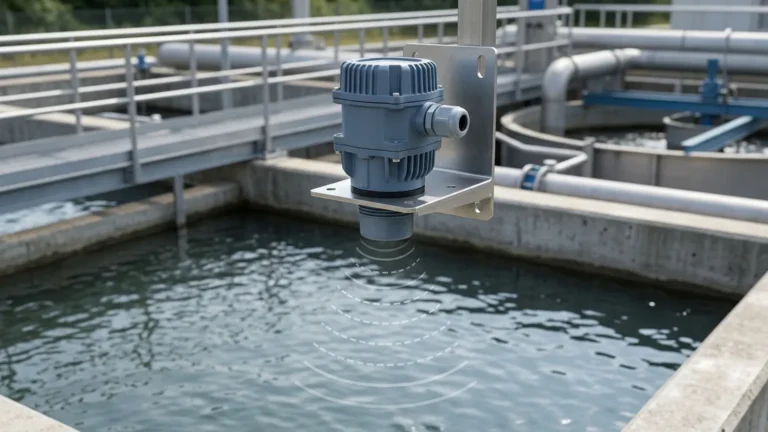
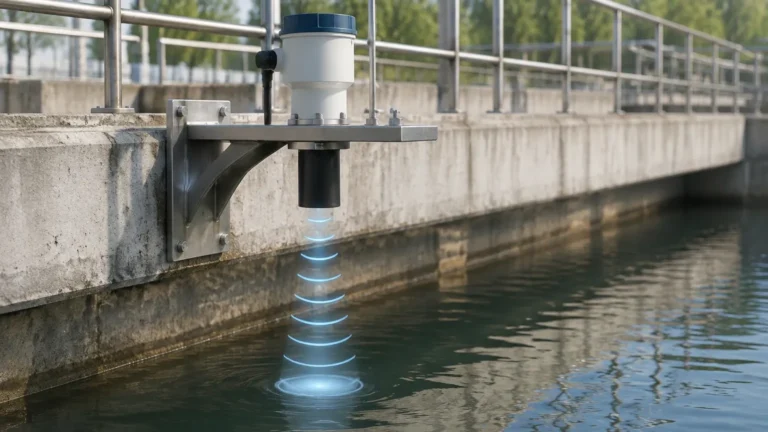
Ultrasonic level measurement is based on the "Time-of-Flight" principle. The sensor, typically mounted at the top of a silo or bin, contains a piezoelectric crystal that converts electrical energy into mechanical pulses. These pulses are emitted as high-frequency sound waves directed toward the material surface.
When the sound waves reach the powder, they are reflected back to the sensor. The device then measures the time interval between the emission of the pulse and the reception of the echo. Since the speed of sound in air is relatively constant (approximately 340 m/s or 1,115 ft/s at 20°C), the distance to the material surface is calculated using the following formula:
Distance = (Speed of Sound × Time Delay) / 2
The level of the powder is then determined by subtracting the measured distance from the total height of the vessel. Modern Ultrasonic Level Meters utilize sophisticated digital signal processing (DSP) to filter out noise caused by dust, agitators, or internal tank structures, ensuring that only the echo from the material surface is recorded.
Challenges Specific to Powder Measurement
Measuring powders involves variables that are absent in liquid applications. Understanding these factors is critical when selecting an ultrasonic level sensor for powder.
1. The Angle of Repose
Unlike liquids, which maintain a level surface, powders form a cone-shaped pile during filling (the angle of repose) and a funnel-shaped depression during discharge. This slanted surface can reflect the ultrasonic signal away from the sensor rather than back to it, potentially leading to signal loss.
2. Sound Absorption
Fine powders, such as flour, lime, or cement, are often porous. These materials tend to absorb sound energy rather than reflect it. To compensate for this, sensors used for powder often require higher power output or lower frequencies to ensure a return signal is strong enough to be detected.
3. Dust and Air Turbulence
Filling processes often generate significant dust clouds. While ultrasonic waves can penetrate moderate amounts of dust, extremely dense dust can attenuate the signal. Furthermore, heavy dust can accumulate on the sensor face (the transducer), dampening the vibration and reducing accuracy.
Key Evaluation Criteria for Selection
When evaluating an ultrasonic level sensor for powder, technical specifications must be matched to the specific physical properties of the material and the dimensions of the storage vessel.
Frequency and Range
Lower frequency sensors (e.g., 10 kHz to 20 kHz) have longer wavelengths, which are better at penetrating dust and traveling longer distances. These are typically used for tall silos up to 30 meters (approx. 100 feet). Higher frequency sensors (e.g., 40 kHz to 70 kHz) offer higher resolution and smaller dead zones but are limited to shorter ranges and cleaner environments.
Beam Angle
The beam angle defines the spread of the ultrasonic pulse. In narrow silos or vessels with internal obstructions (ladders, braces), a narrow beam angle (typically 5° to 10°) is preferred to avoid false reflections from the walls.
Temperature Compensation
The speed of sound varies with air temperature. Because the air space in a silo can fluctuate significantly due to external weather or the temperature of the incoming powder, the sensor must include an integrated temperature sensor to automatically adjust the distance calculation.
Practical Selection Table
The following table provides a general guideline for selecting technology based on powder characteristics:
| Material Property | Recommended Ultrasonic Specification | Alternative Technology |
| :— | :— | :— |
| Large Granules (e.g., Plastic Pellets) | Standard 20-40 kHz sensor | Radar Level Meter |
| Fine, Dusty Powder (e.g., Cement) | Low frequency (15-20 kHz) with high power | Guided Wave Radar (GWR) |
| Light/Low Density (e.g., Fumed Silica) | High power, low frequency | Laser or GWR |
| Corrosive Powders | PVDF or PTFE coated transducers | Non-contact Radar |
| Short Range (< 5m) | High frequency (50+ kHz) for precision | Ultrasonic Level Meter |
Installation Considerations and Best Practices
Proper installation is the most significant factor in the success of an ultrasonic level sensor for powder.
1. Avoid the Filling Stream: Never mount the sensor directly above the point where material enters the silo. The falling material will block the ultrasonic signal and may cause physical damage to the sensor.
2. Positioning Relative to Walls: Install the sensor at least 0.5 meters (20 inches) away from the side walls. If the sensor is too close to a wall, the beam may reflect off the wall or internal ridges, resulting in inaccurate readings.
3. Aiming Flanges (Gimbal Mounts): Because powders form slopes, it is often necessary to use an adjustable aiming flange. This allows the sensor to be tilted so that the beam is perpendicular to the slope of the powder, maximizing the strength of the return echo.
4. The Dead Zone (Blocking Distance): Every ultrasonic sensor has a "dead zone" directly in front of the transducer face where it cannot measure. Ensure the sensor is mounted high enough that the powder level never enters this zone, typically ranging from 0.2m to 0.8m depending on the model.
5. Standpipe Usage: If a standpipe is used to mount the sensor, the interior must be smooth and free of burrs. For powders, standpipes are generally discouraged as they can easily clog with dust.
Limitations and Prohibitions
While versatile, Ultrasonic Level Meters are not suitable for every powder application:
* Vacuum Environments: Sound requires a medium (air/gas) to travel. In a vacuum, ultrasonic sensors will not function.
* High Pressure: High-pressure environments change the air density significantly, which can distort the sound wave and accuracy.
* Extreme Dust: In applications like pneumatic conveying into a silo where dust is thick enough to obscure vision, ultrasonic sensors may struggle. In these cases, 80GHz Radar is often a superior alternative.
* High Temperature: Most ultrasonic transducers are limited to operating temperatures below 80°C to 100°C (176°F to 212°F).
Frequently Asked Questions (FAQ)
Q: Can an ultrasonic sensor measure the level of flour or starch?
A: Yes, but these materials are highly sound-absorbent. You should select a sensor with a higher power rating and a lower frequency than you would use for a liquid of the same depth.
Q: How do I handle dust buildup on the sensor face?
A: Many Welk sensors feature a self-cleaning effect where the vibration of the transducer face sheds light dust. For heavy buildup, some models can be equipped with a dust shield or an air-purge connection to blow clean air across the sensor face.
Q: Is the sensor affected by the noise of the filling machinery?
A: Most industrial-grade Ultrasonic Level Meters operate at frequencies well above the range of human hearing and mechanical noise. Furthermore, digital filters can be programmed to ignore constant background noise frequencies.
Q: What is the maximum range for powder measurement?
A: While some sensors are rated for 40 meters in liquid, for powders, the effective range is usually reduced by 30-50% due to signal absorption. A 30-meter sensor may only be reliable up to 15-20 meters on fine powder.
Conclusion
Selecting the right ultrasonic level sensor for powder requires a balance between frequency, power, and physical installation. By accounting for the angle of repose and potential dust interference, these sensors provide a low-maintenance, non-contact solution for a wide range of dry bulk applications. For complex silos or extremely dusty environments, consulting with a technical specialist is recommended to ensure the chosen instrument meets the specific demands of the process.
For detailed product specifications and assistance with application engineering, Review product options and application support to find the ideal solution for your industrial level measurement needs.