How Ultrasonic Meters Work
How Ultrasonic Meters Work: A Technical Guide to Non-Contact Level Measurement
In the landscape of industrial automation, precise level measurement is a cornerstone of operational efficiency and safety. Among the various technologies available, ultrasonic sensors have emerged as a preferred solution for many liquid and solid applications. Understanding how ultrasonic meters work is essential for engineers and plant managers who need to implement reliable monitoring systems in water treatment, chemical processing, and industrial storage environments. This guide provides a deep dive into the physics, application engineering, and selection criteria for these versatile instruments.
Understanding the Measurement Principle
To understand how ultrasonic meters work, one must first look at the principles of acoustics. Ultrasonic level measurement is a non-contact technology that utilizes high-frequency sound waves—typically above the range of human hearing (20 kHz to 200 kHz)—to determine the distance to a target material.
The Time-of-Flight (ToF) Method
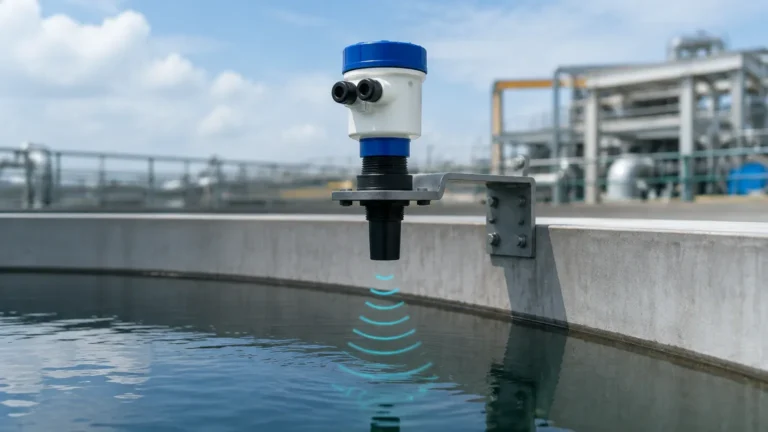
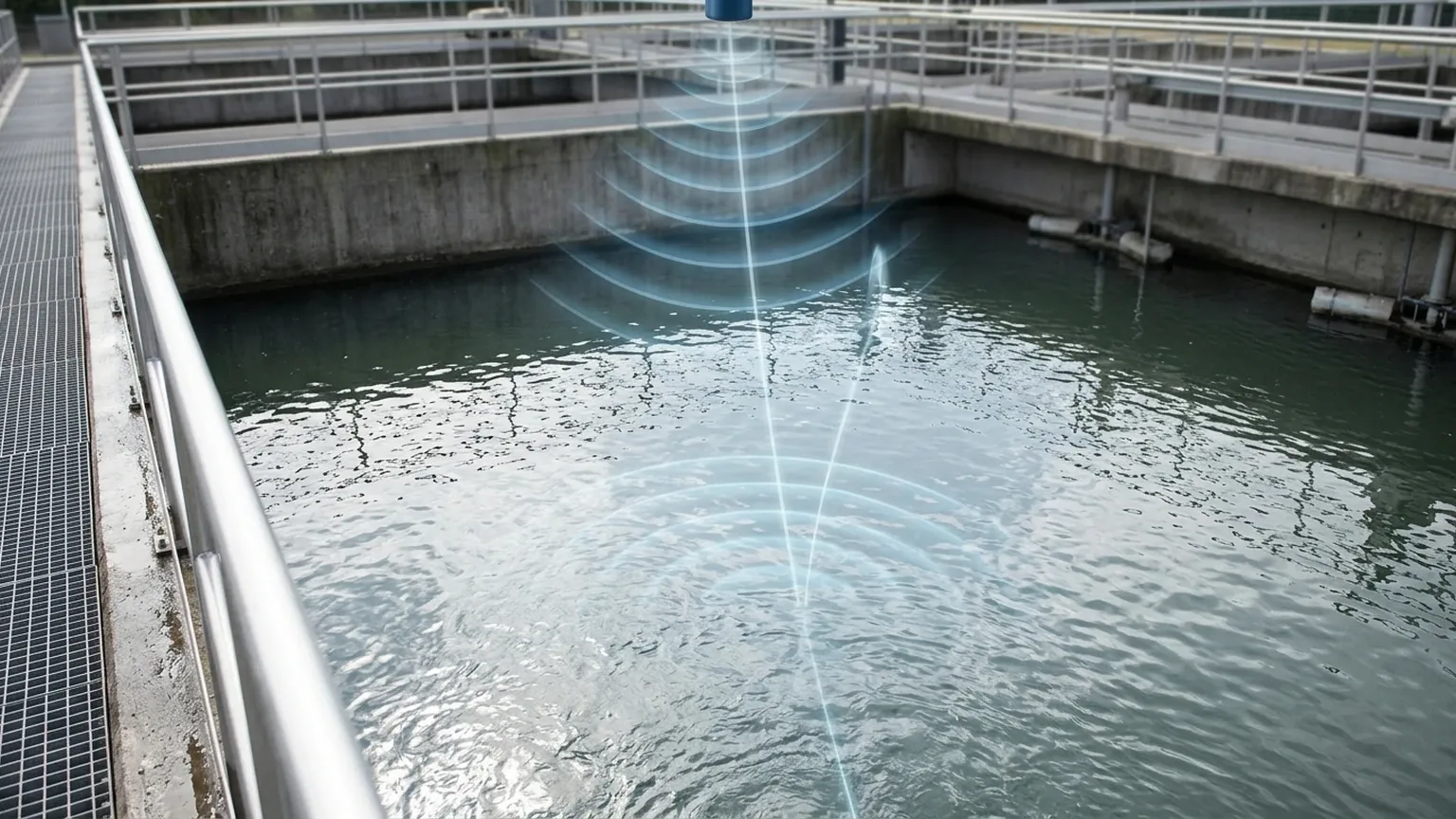
The fundamental operation follows a "transmit-reflect-receive" cycle. The sensor, often referred to as a transducer, contains a piezoelectric crystal. When energized with electrical pulses, this crystal vibrates, generating a burst of ultrasonic energy. These sound waves travel through the air or gas space toward the surface of the medium being measured.
Upon hitting the surface (the interface between air and the liquid or solid), the sound waves are reflected back toward the sensor. The transducer then acts as a receiver, converting the returning mechanical energy back into an electrical signal. The internal electronics of the Ultrasonic Level Meters calculate the time elapsed between the emission of the pulse and the reception of the echo. This is known as the Time-of-Flight.
The Calculation Formula
The distance ($D$) from the sensor to the material surface is calculated using the following formula:
$$D = \frac{c \times t}{2}$$
Where:
* $c$ is the speed of sound in the medium (usually air).
* $t$ is the total transit time (the time taken for the pulse to travel to the surface and back).
Because the pulse travels the distance twice, the result is divided by two. Once the distance to the surface is known, the meter subtracts this value from the total tank height (the "zero point") to determine the actual level of the material.
Key Components of Ultrasonic Level Meters
Modern industrial instruments, such as those manufactured by Welk, consist of several critical components designed to ensure accuracy in harsh environments.
1. The Transducer: The heart of the device, typically housed in PVDF, PTFE, or UPVC to resist chemical corrosion. It manages both the transmission and reception of signals.
2. Signal Processing Electronics: These circuits filter out "noise" or false echoes caused by tank walls, agitators, or internal structures. Advanced algorithms use "echo mapping" to ignore stationary obstructions.
3. Temperature Sensor: Since the speed of sound changes with air temperature (approximately 0.17% per degree Celsius), a built-in temperature probe provides real-time compensation to maintain accuracy.
4. User Interface and Output: Most units feature a digital display for local monitoring and provide standard industrial outputs such as 4-20mA, RS485 (Modbus), or HART protocols for integration into PLC/SCADA systems.
Factors Influencing Measurement Accuracy
While the principle of how ultrasonic meters work is straightforward, several environmental variables can affect the reliability of the data. Successful implementation requires accounting for the following:
Speed of Sound Variations
As mentioned, temperature is the primary factor. However, the composition of the gas in the vapor space also matters. If the tank is filled with a gas other than air (e.g., Nitrogen or Carbon Dioxide), the speed of sound will differ significantly, requiring manual calibration of the propagation speed within the meter settings.
Beam Angle and Spread
Ultrasonic pulses do not travel in a perfectly straight line; they spread out in a cone shape, typically between 5° and 15°. Any obstruction within this cone—such as a ladder, a pipe, or a weld seam—can create a false reflection. Engineers must ensure the "keep-out zone" is clear of such interference.
Surface Conditions
A calm liquid surface provides an ideal reflection. However, heavy turbulence, foam, or a steep angle of repose in solid materials (like grain or plastic pellets) can scatter the sound waves, resulting in a weak or lost signal.
Selecting the Right Ultrasonic Sensor
Choosing the correct instrument involves balancing the measurement range, the chemical compatibility of the housing, and the physical constraints of the installation site. Welk offers a range of solutions tailored to these specific needs.
Practical Selection Table
| Feature | Specification Range | Application Note |
| :— | :— | :— |
| Measurement Range | 0.3m to 30m | Shorter ranges use higher frequencies for better resolution. |
| Accuracy | ±0.25% to ±0.5% of range | Depends on temperature stability and echo quality. |
| Beam Angle | 6° to 12° | Narrower beams are better for deep, narrow tanks. |
| Operating Temp | -40°C to +70°C | Standard industrial range; requires compensation. |
| Output Signals | 4-20mA, Modbus, HART | For integration with automation systems. |
| Enclosure Rating | IP66, IP67, or IP68 | Crucial for outdoor or wash-down environments. |
Installation Best Practices for Reliable Performance
To ensure that the theory behind how ultrasonic meters work translates into practical success, following strict installation guidelines is mandatory.
The Blocking Distance (Dead Zone)
Every ultrasonic sensor has a "blocking distance" or "dead zone" immediately in front of the transducer face. In this zone, the sensor cannot accurately receive an echo because it is still vibrating from the transmission. If the liquid level rises into this zone, the reading will become erratic or fail. Always mount the sensor high enough so that the maximum level never enters the dead zone (typically 0.2m to 0.5m depending on the model).
Mounting Orientation
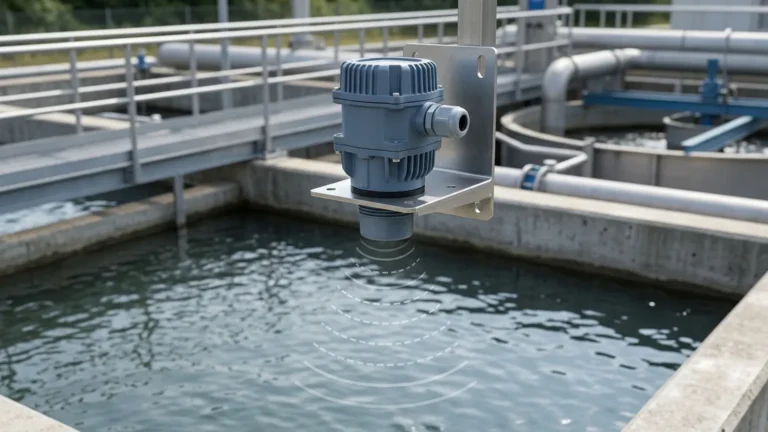
The transducer face must be mounted perfectly parallel to the liquid surface. Even a few degrees of tilt can cause the reflected signal to miss the receiver, especially over longer distances. For solids, a swiveling flange is often used to aim the sensor at the optimal angle to capture reflections from the material's slope.
Avoiding the Fill Stream
Never install a sensor directly above the point where the tank is being filled. The falling liquid or falling solids will interfere with the ultrasonic pulse and lead to inaccurate readings or "lost echo" errors.
Limitations and Common Risks
While ultrasonic technology is highly effective, it is not a "one-size-fits-all" solution. Understanding its limitations prevents costly misapplications.
* Vacuum Applications: Sound waves require a medium (gas/air) to travel. Therefore, ultrasonic meters cannot function in a vacuum.
* High Pressure: High-pressure environments change the density of the air, which can attenuate the signal and alter the speed of sound beyond the compensation limits of standard sensors.
* Heavy Foam: Foam acts as an acoustic absorber. While light foam might be penetrable, thick, dense foam will often absorb the ultrasonic pulse entirely, preventing any signal from returning to the sensor.
* Dust and Vapor: While ultrasonic waves can penetrate some dust, extremely high concentrations (common in pneumatic filling of silos) can scatter the signal. Similarly, heavy steam or chemical vapors can change the medium's density and affect accuracy.
Comparison: Ultrasonic vs. Other Technologies
In the B2B procurement process, it is often necessary to justify the choice of ultrasonic over other methods like Radar or Hydrostatic transmitters.
* Vs. Radar (ToF): Radar uses electromagnetic waves. It is better for high-temperature, high-pressure, or vacuum environments. However, ultrasonic is generally more cost-effective for standard atmospheric liquid storage and water/wastewater applications.
* Vs. Hydrostatic: Hydrostatic sensors are contact-based and measure pressure at the bottom of the tank. They are excellent for deep wells but can be affected by changes in liquid density. Ultrasonic remains superior when the media is corrosive or when a non-contact solution is required for hygiene.
Frequently Asked Questions (FAQs)
Q: Can ultrasonic meters measure the level of solids like sand or grain?
A: Yes, but with considerations. Solids have an angle of repose and a rougher surface than liquids, which scatters the signal. Lower frequency sensors with higher power are typically used for solids to ensure a return echo.
Q: Does wind affect the measurement of an ultrasonic meter?
A: In outdoor applications, such as open channel flow or reservoir monitoring, strong winds can "blow" the ultrasonic pulse away or create air turbulence that affects the speed of sound. Using a stilling well or a protective sunshade/windbreak can mitigate this.
Q: How often do ultrasonic level meters need calibration?
A: Because they have no moving parts and are non-contact, they require very little maintenance. Recalibration is usually only necessary if the vessel's geometry changes or if the sensor is moved to a medium with a different gas composition.
Q: What is the maximum range for an ultrasonic level meter?
A: Most industrial units top out at approximately 30 meters (98 feet). Beyond this range, the signal attenuation in the air becomes too great, and radar technology is typically recommended.
Conclusion
Understanding how ultrasonic meters work allows engineering teams to leverage this technology for maximum reliability. By focusing on the Time-of-Flight principle and respecting the physical requirements of the installation—such as avoiding dead zones and ensuring proper alignment—operators can achieve highly accurate, low-maintenance level monitoring. As a professional manufacturer, Welk continues to provide robust Ultrasonic Level Meters that meet the rigorous demands of modern industrial automation, ensuring that whether you are managing a water treatment facility or a chemical warehouse, your data remains precise and actionable.