Ultrasonic Level Sensor for Water Tank Price
Ultrasonic Level Sensor for Water Tank Price: A Comprehensive Buyer’s Guide
In industrial water management and process automation, selecting the right instrumentation is a balance between technical precision and budgetary constraints. When evaluating the ultrasonic level sensor for water tank price, stakeholders must look beyond the initial capital expenditure and consider the technical specifications that drive performance in specific environments. Ultrasonic technology has become the industry standard for non-contact liquid level measurement due to its reliability, ease of installation, and lack of moving parts.
As a professional manufacturer, Welk provides high-performance Ultrasonic Level Meters designed to meet the rigorous demands of water treatment, chemical processing, and industrial automation. This guide explores the measurement principles, pricing variables, and selection criteria essential for engineering and procurement teams.
Understanding the Technology: How Ultrasonic Level Meters Work
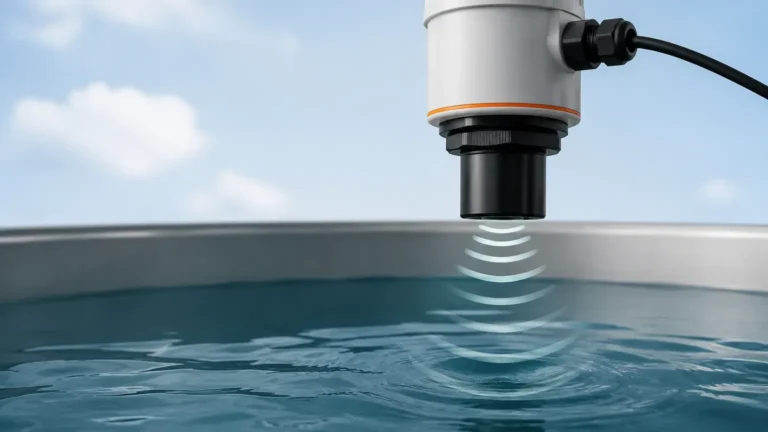
Before analyzing the costs, it is crucial to understand the underlying physics of the measurement. Ultrasonic level sensors operate on the "Time of Flight" (ToF) principle. The sensor’s transducer emits a high-frequency acoustic pulse (usually between 20 kHz and 200 kHz) toward the surface of the water.
1. Emission: The pulse travels through the air at the speed of sound.
2. Reflection: Upon hitting the water surface, the sound wave is reflected back toward the sensor.
3. Reception: The transducer receives the echo.
4. Calculation: The internal microprocessor calculates the distance based on the time elapsed between emission and reception. The formula used is: *Distance = (Speed of Sound × Time) / 2*.
Because the speed of sound is affected by air temperature, professional-grade Ultrasonic Level Meters include integrated temperature sensors to provide automatic compensation, ensuring accuracy remains consistent despite ambient temperature fluctuations.
Factors Determining Ultrasonic Level Sensor for Water Tank Price
The market price for these sensors can range significantly based on several technical variables. Understanding these factors allows project managers to avoid over-specifying (which wastes budget) or under-specifying (which leads to system failure).
1. Measuring Range
The maximum distance a sensor can accurately measure is a primary cost driver. A sensor designed for a small 2-meter (6.5 ft) header tank requires less acoustic power and simpler signal processing than a sensor designed for a 15-meter (49 ft) or 30-meter (98 ft) deep reservoir. Generally, as the required range increases, the transducer size and the complexity of the electronics also increase, raising the price.
2. Accuracy and Resolution
Standard industrial sensors typically offer an accuracy of ±0.25% to ±0.5% of the full range. High-precision models required for custody transfer or precise chemical dosing may reach higher accuracy levels, commanding a premium price. Resolution—the smallest change in level the sensor can detect—also influences the cost of the internal processing components.
3. Material Construction and Chemical Compatibility
For standard water tanks, an ABS or PVC housing is usually sufficient. However, if the tank contains corrosive chemicals, wastewater with high acidity, or if the sensor is installed in a coastal environment, specialized materials like PVDF (Polyvinylidene Fluoride) or PTFE (Teflon) coatings are required. These materials significantly increase the ultrasonic level sensor for water tank price but are necessary for long-term durability.
4. Output Signals and Connectivity
The complexity of the integration affects the cost:
* Basic Analog: 4-20mA or 0-10V outputs are standard and cost-effective.
* Digital Communication: RS485 (Modbus RTU), HART, or Profibus protocols allow for remote configuration and diagnostic data transmission, increasing the unit price.
* Wireless Options: LoRaWAN, NB-IoT, or cellular connectivity for remote tanks add significant hardware and potentially recurring data costs.
5. Integrated vs. Split Design
* Integrated (Compact) Type: The transducer and display/electronics are in a single housing. These are easier to install and generally more affordable.
* Split (Remote) Type: The transducer is installed at the tank, while the display and control unit are mounted at eye level or in a control room (often up to 50 meters or 164 feet away). This design is more expensive due to the separate housings and specialized cabling required.
Selection Criteria and Comparative Table
When comparing different models, use the following table to identify which category fits your project requirements. Note that prices are indicative of industrial-grade equipment and vary by manufacturer and volume.
| Feature | Economy / Basic | Industrial Standard | High-Performance / Specialized |
| :— | :— | :— | :— |
| Measuring Range | 0–5 Meters (16.4 ft) | 0–15 Meters (49.2 ft) | Up to 30+ Meters (98.4 ft) |
| Accuracy | ±0.5% | ±0.25% | ±0.1% to ±0.2% |
| Housing Material | ABS / Plastic | Reinforced Polymer / Aluminum | Stainless Steel / PVDF |
| Output | 4-20mA | 4-20mA + RS485 | HART, Profibus, Wireless |
| Display | None or Basic LCD | Backlit Multi-line LCD | High-Res Graphic / Remote Display |
| Typical Application | Small water tanks, sumps | Industrial process water | Corrosive chemicals, deep silos |
| Price Impact | Lowest | Moderate | Highest |
Installation Requirements for Optimal Performance
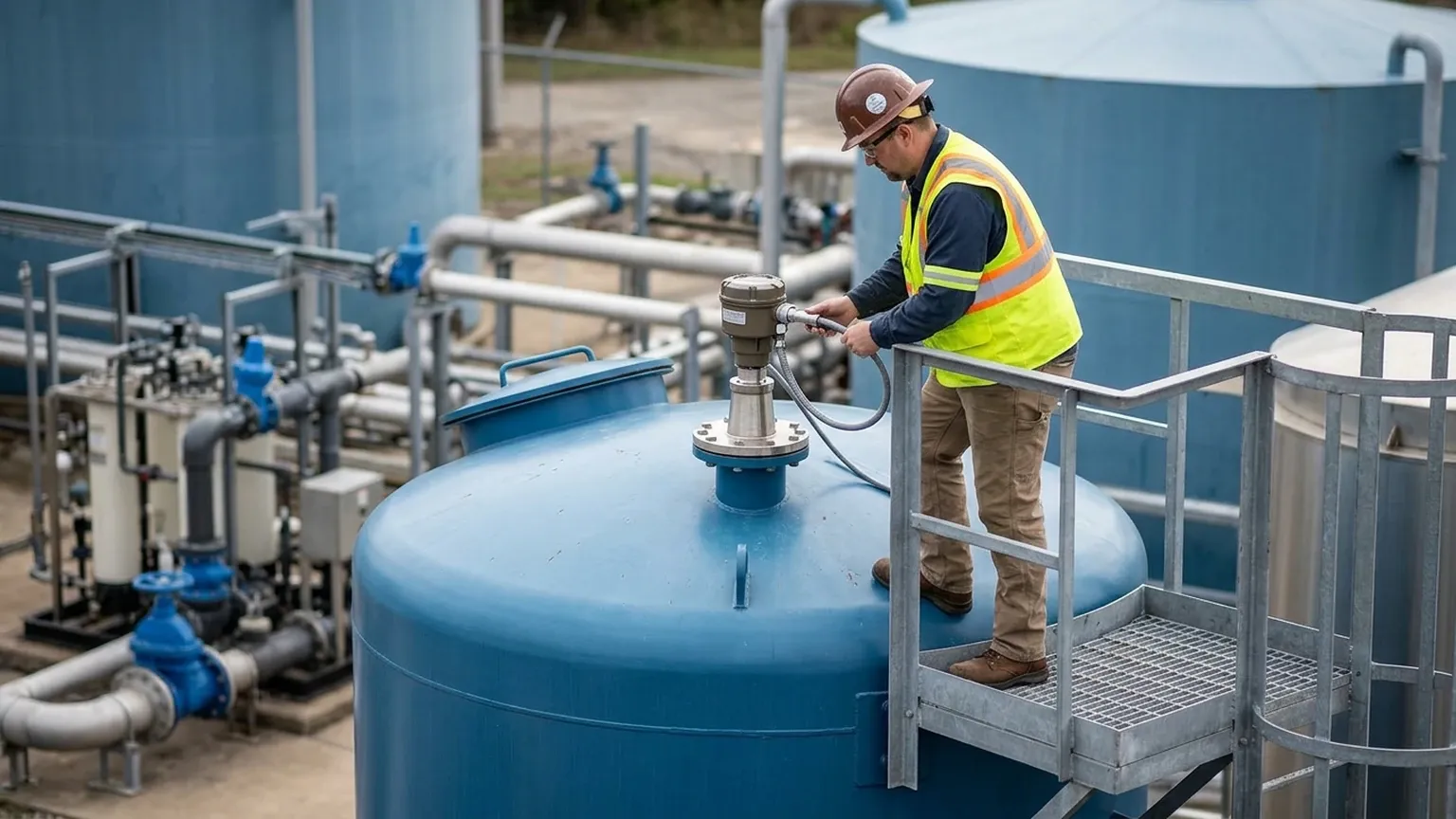
The effectiveness of an ultrasonic sensor is heavily dependent on correct installation. Even the most expensive sensor will fail if placed incorrectly. To maximize the value of your investment, consider the following:
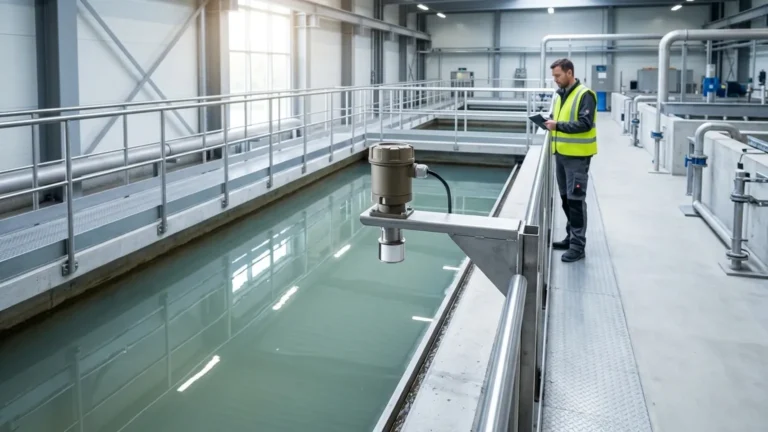
* The Blind Zone (Dead Zone): Every ultrasonic sensor has a "blind zone" directly beneath the transducer (typically 0.2m to 0.5m or 8" to 20"). The water level must never enter this zone, or the sensor will provide false readings. Ensure the sensor is mounted high enough to account for the maximum possible fill level.
* Perpendicular Alignment: The sensor face must be perfectly parallel to the liquid surface. A tilt of even a few degrees can cause the echo to bounce away from the transducer, resulting in signal loss.
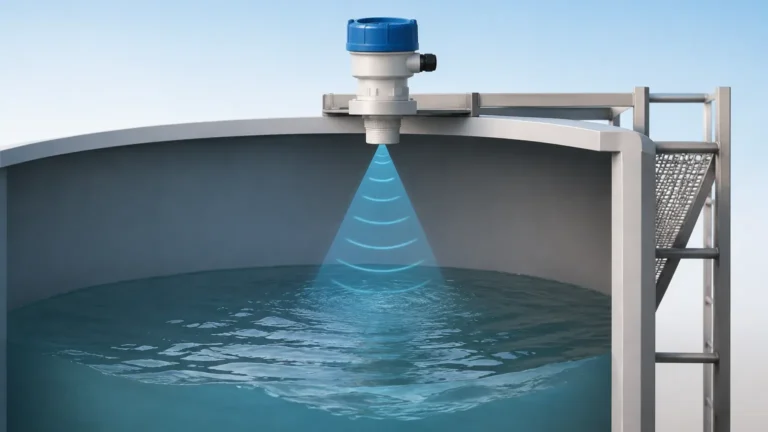
* Obstruction Clearance: The acoustic beam spreads as it travels (the beam angle is usually between 5° and 12°). Ensure there are no ladders, pipes, or internal tank struts within the beam path, as these will create "false echoes."
* Avoid the Fill Stream: Never install the sensor directly above the point where water enters the tank. The turbulence and bubbles will scatter the sound waves and cause erratic readings.
Limitations and Application Constraints
While Ultrasonic Level Meters are versatile, they are not universal solutions. Certain conditions can interfere with sound propagation, making other technologies (like radar or hydrostatic transmitters) more suitable:
1. Heavy Foam: Thick foam on the surface of the water acts as an acoustic insulator, absorbing the pulse rather than reflecting it. If your tank has significant foaming, ultrasonic sensors may struggle.
2. Vacuum or High Pressure: Sound requires a medium (air) to travel. Ultrasonic sensors cannot function in a vacuum. High-pressure environments can also alter the speed of sound beyond the compensation limits of standard sensors.
3. Steam and Dust: Heavy steam or extremely high dust concentrations can attenuate the signal. In these cases, a high-power transducer or a radar-based solution is often recommended.
4. Extreme Temperatures: While sensors have internal compensation, temperatures exceeding 80°C (176°F) can affect the integrity of the transducer face over time.
Total Cost of Ownership and Maintenance
When evaluating the ultrasonic level sensor for water tank price, it is vital to consider the Total Cost of Ownership (TCO). Ultrasonic sensors typically offer a lower TCO than mechanical alternatives (like float switches or bubblers) because they have no moving parts to wear out or clog.
* Maintenance: Maintenance is generally limited to a periodic visual inspection to ensure no condensation or debris has built up on the transducer face. In outdoor installations, checking for spider webs or insect nests is also advised.
* Calibration: Most modern digital sensors are calibrated at the factory and do not require frequent field calibration. However, periodic verification against a manual tape measure is a best practice for ISO-regulated environments.
* Longevity: A high-quality industrial ultrasonic sensor from a reputable manufacturer like Welk can easily last 7–10 years in standard water applications, making the annualized cost very low.
Frequently Asked Questions (FAQs)
Q: Can I use an ultrasonic sensor for a tank containing diesel or oil?
A: Yes, but you must ensure the sensor is explosion-proof (ATEX/IECEx certified) if the fluid is flammable. Additionally, the speed of sound in fuel vapors is different than in air, so the sensor must be calibrated for that specific vapor space.
Q: How does wind affect the measurement in an open reservoir?
A: Strong winds can "blow" the acoustic pulse away or create surface waves that scatter the echo. For open-air applications, using a sensor with a higher power output or a stilling well can mitigate these effects.
Q: Is a split-type sensor better than an integrated one?
A: It depends on accessibility. If the tank top is difficult to reach or is in a hazardous area, a split-type sensor is better because the operator can check the display and adjust settings from a safe, accessible location.
Q: Does the tank material affect the price of the sensor?
A: No, the sensor measures the distance to the liquid, regardless of whether the tank is plastic, concrete, or metal. However, the mounting method (flange, thread, or bracket) may vary based on the tank design.
Conclusion
Determining the right ultrasonic level sensor for water tank price requires a clear understanding of your application's physical and chemical environment. By prioritizing the necessary range, accuracy, and material compatibility, and by following strict installation guidelines, industrial users can achieve highly reliable level monitoring with a low total cost of ownership. For complex applications or specialized chemical storage, consulting with a manufacturer like Welk ensures that the selected Ultrasonic Level Meters will provide the precision and durability required for long-term operational success.
Download Ultrasonic Level Sensor for Water Tank Price as a PDF