Ultrasonic Water Level Sensor Raspberry Pi
Ultrasonic Water Level Sensor Raspberry Pi: A Guide to Integration and Industrial Scaling
In the landscape of industrial automation and Internet of Things (IoT) prototyping, the combination of an ultrasonic water level sensor raspberry pi has become a foundational setup for engineers developing proof-of-concept (PoC) monitoring systems. While the Raspberry Pi provides a versatile computing platform, the accuracy and reliability of the system depend entirely on the physics of ultrasonic measurement and the quality of the sensor hardware.
This guide explores the technical principles of ultrasonic level measurement, the practicalities of integrating these sensors with Raspberry Pi controllers, and the critical transition points where a prototype must evolve into professional-grade Ultrasonic Level Meters for industrial reliability.
Understanding the Ultrasonic Measurement Principle
Before implementing a sensor with a Raspberry Pi, it is essential to understand the underlying physics. Ultrasonic level sensors operate on the Time-of-Flight (ToF) principle.
The Transducer Mechanism
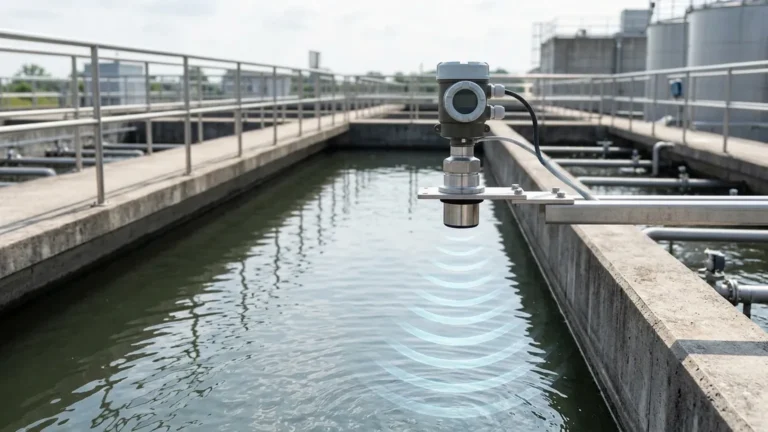
The sensor contains a piezoelectric transducer that converts electrical energy into mechanical vibrations, creating high-frequency sound waves (typically between 40 kHz and 200 kHz). These waves travel through the air, strike the surface of the liquid, and reflect back toward the sensor.
The Calculation
The distance from the sensor to the liquid surface is calculated using the formula:
Distance = (Time × Velocity of Sound) / 2
The factor of two accounts for the round-trip travel of the pulse. In standard conditions (20°C at sea level), the speed of sound is approximately 343 meters per second (m/s).
Environmental Variables
Accuracy is heavily influenced by the medium through which the sound travels. The speed of sound in air changes by approximately 0.6 m/s for every degree Celsius change in temperature. For precise industrial applications, temperature compensation is mandatory, either through an integrated thermistor in the sensor or an external temperature probe connected to the Raspberry Pi.
Hardware Integration: Raspberry Pi and Ultrasonic Sensors
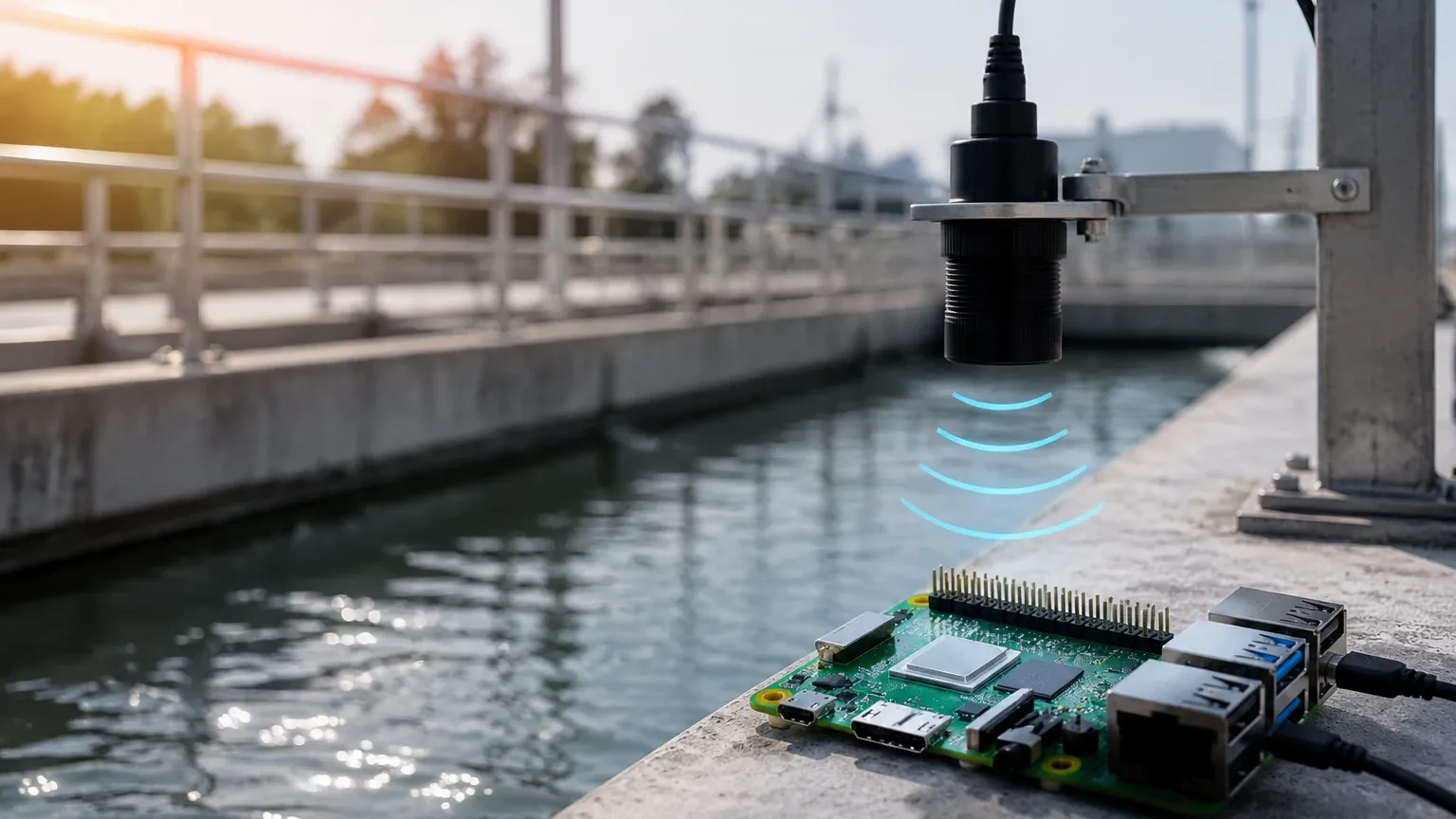
When building an ultrasonic water level sensor raspberry pi system, engineers typically choose between low-cost modules for indoor testing and ruggedized modules for outdoor or tank environments.
Common Sensor Modules
1. HC-SR04: The most common hobbyist sensor. It is suitable for indoor, non-condensing environments but lacks the durability for industrial water tanks.
2. JSN-SR04T: A waterproof version featuring a detached probe. This is often preferred for water level monitoring as the electronic board can be housed in a protected enclosure while the transducer is exposed to the humid environment of a tank.
Logic Level Challenges
One critical technical hurdle is the voltage difference. Most ultrasonic modules operate at 5V, while the Raspberry Pi’s GPIO (General Purpose Input/Output) pins operate at 3.3V. Connecting a 5V "Echo" signal directly to a Raspberry Pi GPIO pin can damage the processor. A simple voltage divider circuit (using resistors) or a logic level shifter is required to step down the signal to 3.3V.
Practical Selection Criteria for Engineering Projects
Selecting the right sensor involves more than just checking compatibility with a Raspberry Pi. Engineers must evaluate the specific constraints of the installation site.
| Feature | DIY/Prototyping (HC-SR04/JSN) | Industrial Ultrasonic Level Meters |
| :— | :— | :— |
| Measurement Range | 0.02m to 4m | 0.3m to 15m+ |
| Accuracy | ±3mm to ±10mm | ±0.2% of full scale |
| Output Signal | TTL Pulse (Requires Pi Processing) | 4-20mA, Modbus RTU, HART |
| Ingress Protection | None or IP65 (Probe only) | IP67 / IP68 (Full unit) |
| Temperature Comp. | Manual/Software-based | Automatic Internal Compensation |
| Mounting | Custom Brackets | Standard Threaded (G1 1/2", NPT) |
Installation Considerations and Limitations
Successful deployment of an ultrasonic water level sensor requires adherence to specific physical installation rules to avoid signal interference.
1. The Blocking Distance (Dead Zone)
Every ultrasonic sensor has a "dead zone" directly in front of the transducer face. This is the time required for the transducer to stop vibrating after emitting a pulse before it can listen for the return echo. For most sensors used with Raspberry Pi, this is between 200mm and 250mm. If the water level rises into this zone, the sensor will provide erratic or maximum-distance readings.
2. Beam Angle and Obstructions
The ultrasonic pulse spreads in a cone shape, typically between 10° and 15°. Any internal tank structures, such as ladders, pipes, or cooling coils, that fall within this cone will create "false echoes." When programming the Raspberry Pi, engineers must often implement software filters to ignore these static reflections.
3. Surface Conditions
Ultrasonic waves require a solid reflective surface. If the water surface is covered in heavy foam, the sound waves may be absorbed rather than reflected, leading to a "Loss of Echo" error. Similarly, extreme turbulence can scatter the signal. In these cases, a stilling well (a vertical pipe) is recommended to provide a calm surface for measurement.
Technical Implementation Logic
When coding the Raspberry Pi to interface with the sensor, the logic typically follows these steps:
1. Trigger: Send a 10-microsecond pulse to the "Trig" pin.
2. Listen: Record the timestamp when the "Echo" pin goes high.
3. Stop: Record the timestamp when the "Echo" pin goes low.
4. Calculate: Subtract the start time from the end time to find the duration.
5. Filter: Implement a moving average or median filter to smooth out noise caused by surface ripples or electrical interference.
For B2B applications where data integrity is paramount, the Raspberry Pi should also log "Confidence Scores"—checking if the returned distance is physically possible within the tank's dimensions before pushing the data to a cloud database or SCADA system.
Transitioning from Raspberry Pi to Industrial Solutions
While an ultrasonic water level sensor raspberry pi setup is excellent for data logging and remote monitoring in non-critical environments, industrial process control often demands higher reliability.
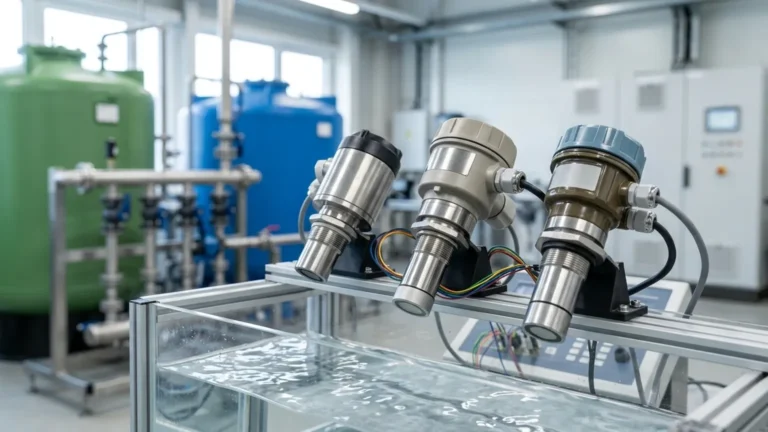
Professional Ultrasonic Level Meters integrate the transducer, processing electronics, and communication interface into a single, calibrated unit. These industrial devices offer:
* Advanced Signal Processing: Built-in algorithms to filter out agitator blades and tank wall reflections.
* Standardized Connectivity: Direct integration with PLCs (Programmable Logic Controllers) via 4-20mA loops, which are much more resistant to electromagnetic interference (EMI) than the TTL signals used by Raspberry Pi GPIOs.
* Hazardous Area Certification: Options for ATEX/Ex-proof ratings required in chemical or oil and gas environments.
Frequently Asked Questions (FAQ)
Q: Can an ultrasonic sensor measure water level through a closed plastic tank lid?
A: No. Ultrasonic waves cannot penetrate solid materials like plastic or metal lids. The sensor must be mounted through a hole in the lid so the transducer has a clear air path to the liquid surface.
Q: How does humidity affect the Raspberry Pi ultrasonic sensor?
A: High humidity can lead to condensation on the transducer face. In standard DIY sensors, this causes the device to fail or report a constant minimum distance. Industrial-grade sensors often feature a self-cleaning or vibrating face to shed droplets.
Q: What is the maximum cable length between the sensor and the Raspberry Pi?
A: For TTL signals (like those from an HC-SR04), cable length should be kept under 2 meters to avoid signal degradation and noise. If longer distances are required, it is better to use a sensor with an RS485/Modbus output.
Q: Is an ultrasonic sensor suitable for boiling water?
A: Generally, no. Heavy steam changes the density of the air significantly, which fluctuates the speed of sound and creates high signal attenuation. For boiling liquids, radar level technology is usually preferred over ultrasonic.
Summary
Using an ultrasonic water level sensor raspberry pi is a cost-effective way to develop smart water management systems, providing valuable data for irrigation, tank monitoring, and environmental research. However, engineers must account for the physical limitations of sound travel, including temperature effects and the sensor's dead zone. For applications requiring long-term stability and integration into factory automation, upgrading to dedicated industrial level meters ensures the accuracy and durability required for professional process control.
Download Ultrasonic Water Level Sensor Raspberry Pi as a PDF