Ultrasonic Water Level Sensor Rs485
Ultrasonic Water Level Sensor RS485: A Guide to Digital Level Measurement
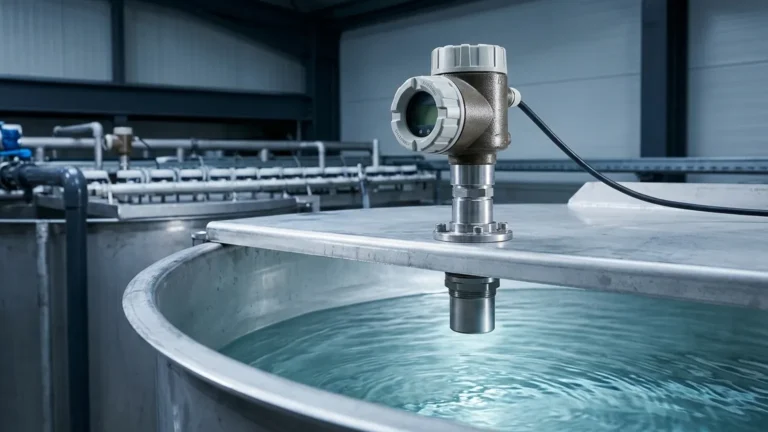
In the landscape of industrial automation and water resource management, the transition from analog to digital monitoring has become a standard requirement for efficiency and accuracy. Among the various technologies available, the ultrasonic water level sensor rs485 stands out as a versatile and reliable solution for non-contact measurement. By combining the physical reliability of ultrasonic waves with the robust communication capabilities of the RS485 interface, these devices enable seamless integration into SCADA systems, PLCs, and IoT frameworks.
As a professional manufacturer of industrial level measurement instruments, Welk provides advanced Ultrasonic Level Meters designed to meet the rigorous demands of water treatment, chemical processing, and industrial automation. This guide explores the principles, selection criteria, and practical installation requirements for RS485-enabled ultrasonic sensors.
Measurement Principle: The Physics of Sound
Before selecting a sensor, it is essential to understand the underlying technology. Ultrasonic level measurement is based on the "Time of Flight" (ToF) principle.
How it Works
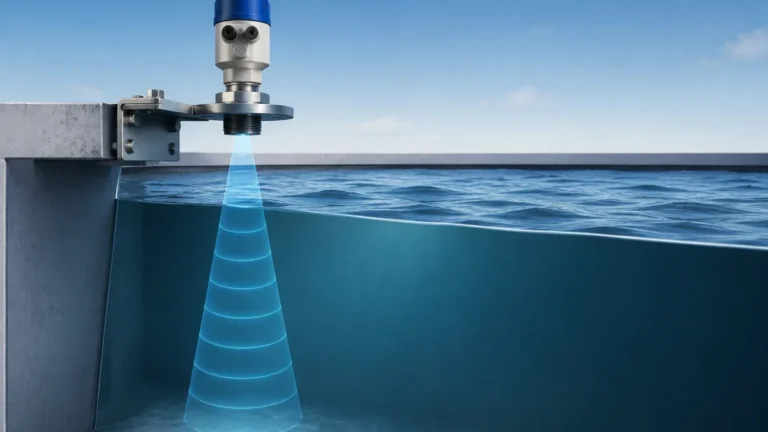
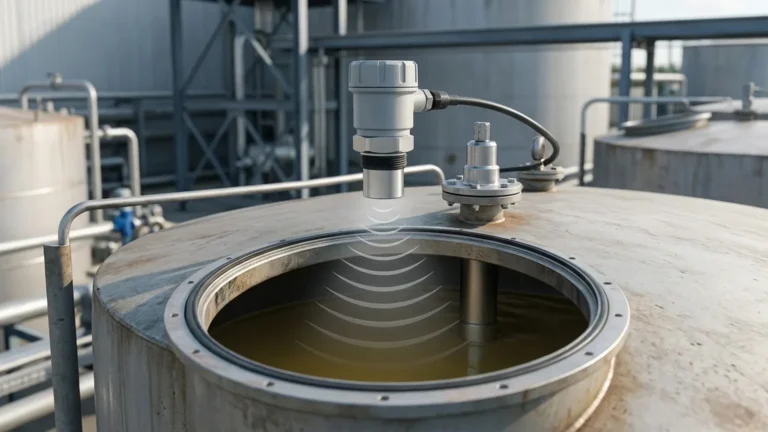
The sensor’s transducer emits high-frequency sound pulses (typically between 20 kHz and 200 kHz). These pulses travel through the air, strike the surface of the water, and reflect back to the sensor. The device measures the time interval between the emission of the pulse and the reception of the echo.
Since the speed of sound in air is known (approximately 340 meters per second at 20°C), the distance to the water surface can be calculated using the formula:
Distance = (Speed of Sound × Time) / 2
The "divided by two" accounts for the round-trip travel of the sound wave. Once the distance to the liquid is known, the sensor subtracts this value from the total tank height (programmed during setup) to determine the actual water level.
Temperature Compensation
The speed of sound is significantly affected by air temperature. For every 1°C change, the speed of sound changes by about 0.6 m/s. To maintain accuracy, a high-quality ultrasonic water level sensor rs485 includes an integrated temperature sensor to automatically compensate for these fluctuations in real-time.
The Advantage of RS485 Communication
While traditional 4-20mA analog signals are still common, the RS485 digital interface offers several critical advantages for modern industrial projects.
Noise Immunity
RS485 uses differential signaling, which makes it highly resistant to electromagnetic interference (EMI). In industrial environments where high-voltage cables and motors are present, RS485 ensures data integrity over long distances—up to 1,200 meters (approx. 3,937 feet) without the need for signal repeaters.
Multi-Drop Capability
Unlike a point-to-point 4-20mA loop, RS485 supports a multi-drop network. Using the Modbus RTU protocol, up to 32 sensors (and sometimes more with repeaters) can be connected to a single twisted-pair cable. This significantly reduces wiring costs and simplifies the architecture of large-scale water monitoring projects.
Diagnostic Data
Digital communication allows the sensor to transmit more than just the level reading. An RS485-enabled sensor can provide diagnostic information, such as signal strength (echo quality), internal temperature, and error codes, allowing for predictive maintenance and remote troubleshooting.
Technical Evaluation and Selection Criteria
Choosing the right ultrasonic water level sensor rs485 requires a detailed assessment of the application environment. The following table provides a general reference for evaluating performance specifications.
| Feature | Standard Specification | Industrial/High-End Specification |
| :— | :— | :— |
| Measurement Range | 0.3m to 5m | Up to 30m or 40m |
| Accuracy | ±0.5% of full scale | ±0.2% to ±0.25% of full scale |
| Resolution | 1mm to 3mm | 1mm |
| Beam Angle | 10° to 12° | 5° to 9° (Narrow beam) |
| Communication | RS485 (Modbus RTU) | RS485 + 4-20mA / HART |
| Power Supply | 12-24V DC | 24V DC / 220V AC |
| Enclosure Rating | IP65 | IP67 / IP68 |
| Operating Temp | -20°C to +60°C | -40°C to +80°C |
Key Selection Factors
1. The Dead Zone (Blocking Distance): Every ultrasonic sensor has a minimum distance it cannot measure, typically ranging from 0.2m to 0.5m depending on the frequency. Ensure the sensor is mounted high enough so the water level never enters this zone.
2. Beam Angle: A wider beam angle is more likely to hit obstructions like ladders or wall reinforcements. For narrow tanks or deep wells, a sensor with a narrow beam angle (e.g., 6°) is preferred.
3. Process Conditions: If the application involves heavy foam, steam, or high pressure, ultrasonic technology may not be suitable, and radar level meters should be considered.
Installation Considerations for Accuracy
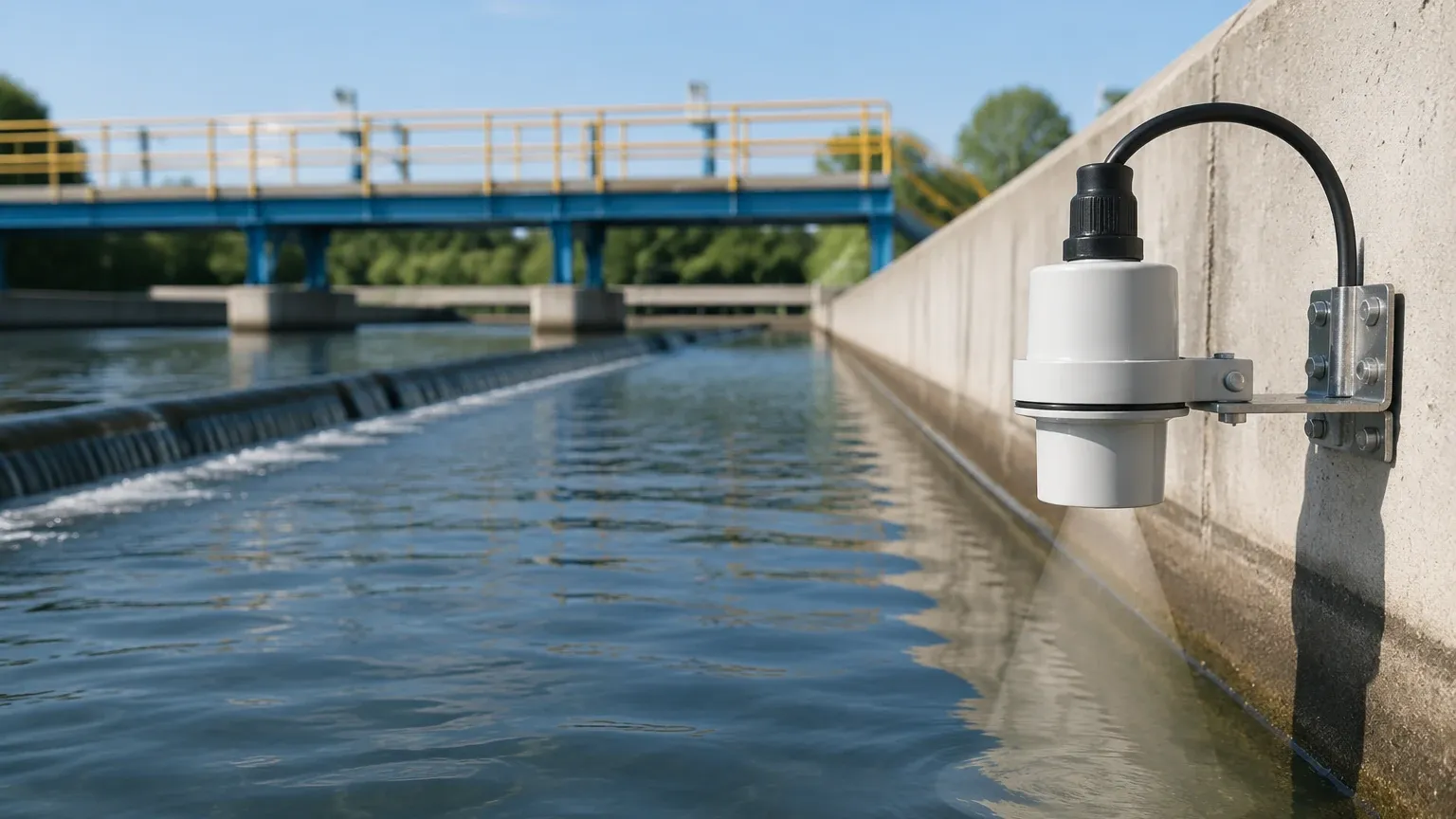
Proper installation is the most critical factor in ensuring the reliability of an ultrasonic water level sensor rs485. Follow these engineering guidelines:
* Perpendicular Alignment: The transducer face must be perfectly parallel to the water surface. Even a few degrees of tilt can cause the signal to bounce away from the sensor rather than reflecting back, leading to signal loss.
* Avoid Obstacles: Ensure there are no pipes, brackets, or agitators within the "signal cone" produced by the beam angle. If an obstruction is unavoidable, many Welk sensors offer "False Echo Suppression" software to ignore these static reflections.
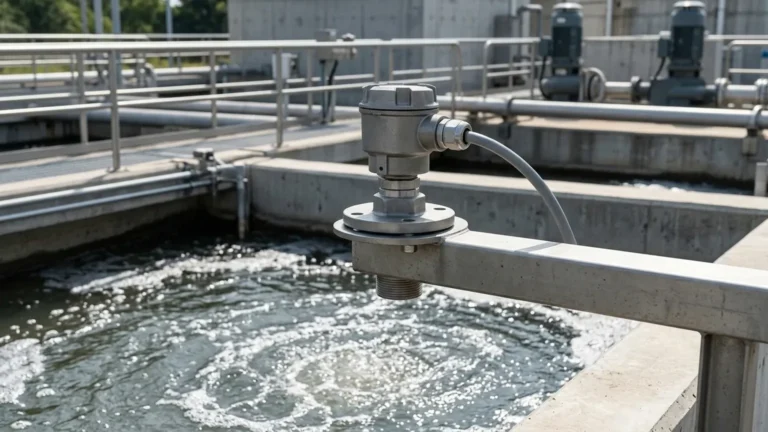
* Inflow Turbulence: Do not install the sensor directly above the point where water enters the tank. Turbulence and splashing can scatter the ultrasonic signal and create unstable readings.
* Stilling Wells: In applications with heavy surface agitation or foam, installing the sensor inside a vertical plastic pipe (stilling well) can provide a calm surface for measurement. The pipe must have a vent hole at the top to equalize pressure.
* Sun Shielding: For outdoor installations, use a sunshade to prevent the sensor body from overheating, which can skew the internal temperature compensation readings.
Limitations and Environmental Challenges
While highly effective, ultrasonic technology has specific physical boundaries:
1. Vacuum Conditions: Sound requires a medium (air/gas) to travel. Ultrasonic sensors cannot function in a vacuum.
2. Heavy Foam: Thick, dense foam absorbs the sound pulse rather than reflecting it. If foam is present, the sensor may report a "Loss of Echo" or provide an incorrect reading of the foam's top surface.
3. Vapor and Dust: Extremely high concentrations of dust or heavy steam can attenuate the signal. In these cases, high-frequency radar is often a more robust choice.
4. Pressure Extremes: Standard ultrasonic sensors are designed for atmospheric pressure. High-pressure environments can change the density of the air, affecting the speed of sound beyond the capabilities of standard compensation.
Common Applications
* Wastewater Treatment: Monitoring levels in influent channels, aeration tanks, and chemical dosing skids.
* Open Channel Flow: Used in conjunction with flumes or weirs to calculate flow rates in irrigation and sewage systems.
* Reservoir and River Monitoring: Remote monitoring of water levels for flood warning systems using RS485 to transmit data to cellular gateways.
* Industrial Cooling Towers: Maintaining water levels to ensure efficient heat exchange and prevent pump cavitation.
Frequently Asked Questions (FAQ)
Q: Can I use an RS485 ultrasonic sensor for solids like grain or sand?
A: While possible, it is challenging. Solids do not reflect sound as uniformly as liquids and often have a "repose angle." You must select a sensor specifically designed for solids with a higher power output and specialized signal processing.
Q: How do I address the "Dead Zone" if my tank is full?
A: You can install the sensor on a standpipe or extension neck. This raises the sensor higher, ensuring that even when the tank is at 100% capacity, the water surface remains outside the dead zone.
Q: What cable should I use for the RS485 connection?
A: Use a shielded twisted-pair cable (e.g., Belden 9841 or equivalent). The shielding should be grounded at one end (usually the PLC/Controller side) to prevent ground loops and reduce noise.
Q: How do I configure the Modbus settings?
A: Most sensors come with default settings (e.g., Baud rate 9600, Parity None, Stop bits 1, Slave ID 1). These can be adjusted using manufacturer-provided software or by writing to specific registers via a Modbus polling tool.
Conclusion
The ultrasonic water level sensor rs485 is a cornerstone of modern industrial fluid management. By providing non-contact, high-precision measurement combined with the networking strengths of the RS485 interface, it offers a cost-effective and scalable solution for diverse applications. For engineers and project managers, success lies in matching the sensor specifications to the environmental conditions and adhering to strict installation protocols.
For more detailed technical data or to explore specific models for your application, you can Review product options and application support from Welk’s comprehensive range of level measurement solutions.