Ultrasonic Level Sensor Supmea
Ultrasonic Level Sensor Supmea: A Technical Guide to Selection and Application
In the realm of industrial process control, non-contact level measurement has become the gold standard for efficiency and reliability. Among the various technologies available, ultrasonic sensors are frequently selected for their balance of cost-effectiveness and performance. Engineers and procurement specialists often evaluate the ultrasonic level sensor Supmea as a benchmark for general-purpose industrial applications. However, selecting the right instrument requires a deep understanding of ultrasonic principles, environmental constraints, and the specific technical requirements of the site.
As a professional manufacturer, Welk provides a range of Ultrasonic Level Meters designed to meet these rigorous industrial standards. This guide examines the core technology, selection criteria, and installation best practices for ultrasonic level sensors to help technical teams make informed decisions.
1. Understanding Ultrasonic Measurement Principles
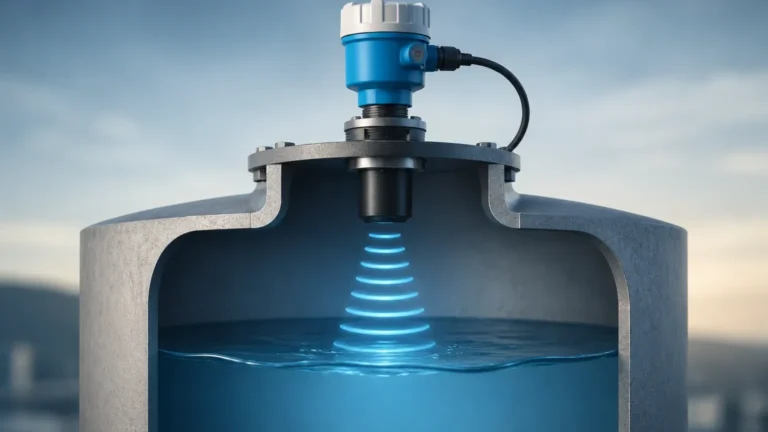
Before evaluating specific brands like Supmea or Welk, it is essential to understand the physics governing these devices. Ultrasonic level meters operate on the "Time-of-Flight" (ToF) principle.
The Transducer Mechanism
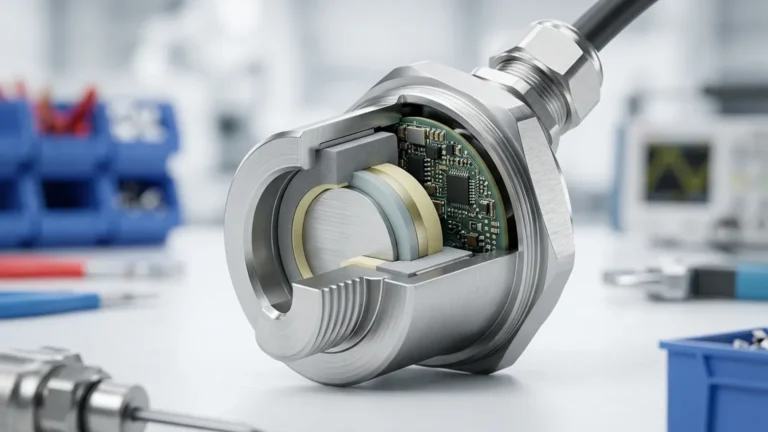
The heart of the sensor is a piezoelectric transducer. When energized, this transducer vibrates at a specific frequency (typically between 20 kHz and 200 kHz), emitting a pulse of ultrasonic sound waves. These waves travel through the air or gas space in a tank, strike the surface of the medium (liquid or solid), and reflect back to the sensor.
Distance Calculation
The sensor measures the time interval between the pulse emission and the return of the echo. Since the speed of sound in air is known (approximately 340 m/s at 20°C), the distance to the surface is calculated using the following formula:
Distance = (Speed of Sound × Time) / 2
By subtracting this distance from the total height of the tank (the calibration zero point), the instrument determines the precise level of the material. Modern instruments, including the ultrasonic level sensor Supmea and Welk’s product line, utilize advanced digital signal processing (DSP) to filter out false echoes caused by internal tank obstructions like ladders or agitators.
2. Evaluating the Ultrasonic Level Sensor Supmea vs. Industrial Standards
When a project specifies an ultrasonic level sensor Supmea, the user is typically looking for a versatile, cost-effective solution for water treatment, chemical storage, or simple tank monitoring. These sensors are known for their integrated design and ease of configuration.
However, industrial environments often demand specific variations in sensor architecture. At Welk, we categorize these into two primary types:
* Integrated Type: The transducer and the signal processing electronics are housed in a single unit. This is the most common configuration for standard tanks and sumps where space is available at the top of the vessel.
* Split Type: The transducer is installed at the measurement point, while the display and control unit are mounted remotely (up to 50 or 100 meters away). This is ideal for hazardous areas or locations where the sensor is difficult to access for routine monitoring.
3. Technical Selection Criteria
Choosing between different models requires a comparison of technical specifications. The following table outlines the typical parameters for industrial-grade ultrasonic level meters.
Selection Table: Industrial Ultrasonic Level Meters
| Feature | Standard Integrated Model | High-Precision / Long-Range | Split-Type System |
| :— | :— | :— | :— |
| Measurement Range | 0.4m – 10m | 0.5m – 30m | 0.4m – 20m |
| Accuracy | ±0.5% of Full Scale | ±0.25% of Full Scale | ±0.5% of Full Scale |
| Output Signal | 4-20mA / RS485 Modbus | 4-20mA / HART / Modbus | 4-20mA / Relays / RS485 |
| Power Supply | 24V DC | 24V DC / 220V AC | 24V DC / 220V AC |
| Beam Angle | 9° – 12° | 6° – 9° | 9° – 12° |
| Protection Rating | IP65 / IP67 | IP68 | IP65 (Transducer IP68) |
| Dead Zone | 0.25m – 0.5m | 0.4m – 0.8m | 0.25m – 0.6m |
4. Critical Installation Considerations
Even the highest quality ultrasonic level sensor Supmea or Welk unit will fail if installed incorrectly. Proper placement is the most significant factor in measurement accuracy.
The Dead Zone (Blocking Distance)
Every ultrasonic sensor has a "dead zone" immediately below the transducer face where it cannot measure. This occurs because the transducer cannot receive an echo while it is still vibrating from the pulse emission. If the liquid level enters this zone, the sensor will provide erratic readings.
* Guideline: Ensure the maximum liquid level is at least 20cm to 50cm (depending on the model's range) below the sensor face.
Beam Angle and Obstructions
The ultrasonic pulse spreads out in a cone shape. Any object within this cone—such as a pipe, a ladder, or a weld seam—will create a false echo.
* Guideline: Install the sensor at a distance from the tank wall equal to at least 1/6th of the tank height. Avoid placing the sensor directly over the center of a domed tank, as this can concentrate multiple reflections and cause signal interference.
Surface Conditions
Ultrasonic waves require a solid surface to reflect.
* Turbulence: Heavy splashing or waves can scatter the signal. In these cases, a stilling well (a vertical pipe) may be required to provide a calm surface for measurement.
* Foam: Some types of foam absorb ultrasonic signals entirely, leading to a "loss of echo" error. If heavy foam is present, a radar level meter may be a more appropriate choice than an ultrasonic sensor.
5. Environmental Limitations and Mitigation
While ultrasonic technology is robust, it is sensitive to the medium through which the sound travels (the air gap).
Temperature Gradients
The speed of sound changes with temperature. A change of 1°C results in approximately a 0.17% change in the speed of sound. Most professional Ultrasonic Level Meters include a built-in temperature sensor to automatically compensate for these changes. However, if the sensor is in the sun and the air inside the tank is much cooler, the compensation may be inaccurate. Using a sunshade is a common industrial best practice.
Pressure and Vacuum
Ultrasonic sensors rely on air molecules to transmit sound. They do not work in a vacuum and are generally limited to atmospheric or near-atmospheric pressure (typically up to 0.3 MPa). For high-pressure reactors, hydrostatic or radar sensors are preferred.
Vapor and Dust
Heavy steam or high concentrations of dust can attenuate the ultrasonic signal. While the ultrasonic level sensor Supmea is capable of handling moderate dust, extreme environments like cement silos often require high-power transducers or acoustic cleaners to maintain signal integrity.
6. Frequently Asked Questions (FAQ)
Q: Can I use an ultrasonic sensor to measure solids?
A: Yes, but with caveats. Solids like grain or sand often form a conical pile rather than a flat surface. This scatters the signal. When measuring solids, it is often necessary to use a sensor with a higher power output and a narrower beam angle, and the range is typically reduced by 50% compared to liquid measurement.
Q: What is the difference between a 2-wire and a 4-wire ultrasonic sensor?
A: A 2-wire sensor uses the same two wires for both power (24V DC) and the 4-20mA output signal. This simplifies wiring but provides less power for the transducer. A 4-wire sensor has separate wires for power (which can be 220V AC or 24V DC) and output, allowing for a stronger ultrasonic pulse and better performance in difficult conditions.
Q: How do I handle a "Loss of Echo" (LOE) alarm?
A: Check for three things: First, ensure the liquid hasn't entered the dead zone. Second, check for heavy foam or turbulence. Third, verify that the transducer face is clean and free of condensation or material buildup.
7. Conclusion: Making the Right Choice
Whether you are considering an ultrasonic level sensor Supmea or a customized solution from Welk, the success of your level measurement project depends on matching the sensor specifications to your specific process environment. Ultrasonic technology remains the most cost-effective solution for a vast majority of water and chemical applications, provided that temperature, pressure, and tank geometry are properly accounted for.
For engineers seeking reliable, accurate, and cost-effective level measurement, Welk offers advanced technology and comprehensive support. We invite you to explore our full range of Ultrasonic Level Meters and consult with our technical team to ensure your next installation is optimized for long-term performance.