Feed Gas Compressor Knockout Drum Definition
Feed Gas Compressor Knockout Drum Definition
In industrial process engineering, the integrity of rotating equipment is paramount to operational uptime and safety. Among the most critical components in a gas processing or petrochemical facility is the feed gas compressor. To protect this high-value asset, engineers utilize a specialized vessel known as a knockout drum. Understanding the feed gas compressor knockout drum definition involves exploring its role as a safety barrier, its mechanical design, and the vital role that precise level measurement plays in its operation.
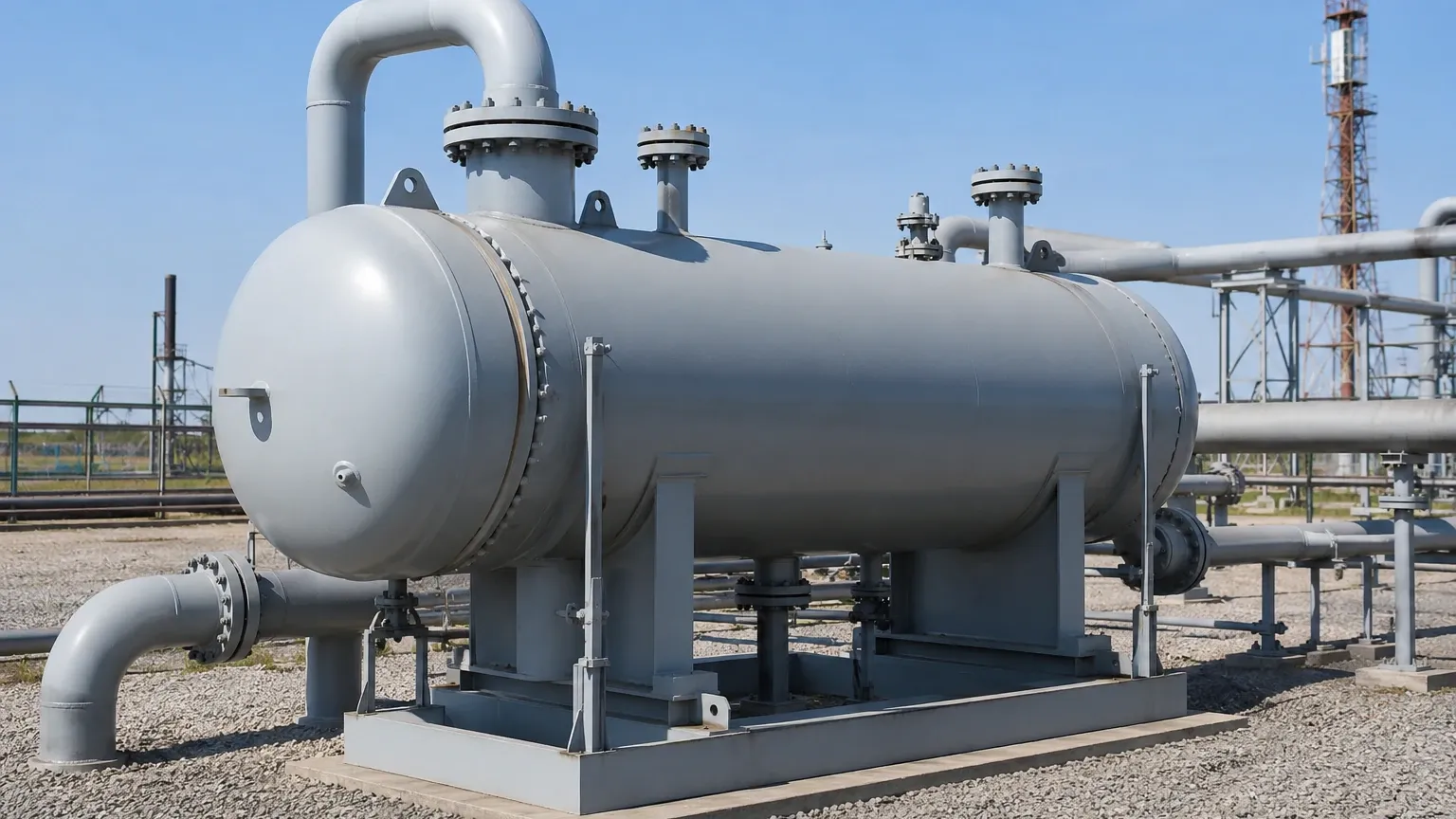
A knockout drum, often referred to as a suction scrubber or inlet separator, is a vertical or horizontal vessel designed to remove entrained liquids from a gas stream before it enters a compressor. Because gases are compressible and liquids are essentially incompressible, the entry of liquid droplets into a compressor—a phenomenon known as "slugging"—can lead to catastrophic mechanical failure, including broken impellers, damaged valves, and bent connecting rods.
The Fundamental Mechanics of Liquid-Gas Separation
Before selecting instrumentation for a knockout drum, it is essential to understand how these vessels achieve separation. The process typically relies on three physical principles: gravity settling, impingement, and centrifugal force.
Gravity Settling
As the feed gas enters the knockout drum, the vessel's larger cross-sectional area causes a significant reduction in gas velocity. According to Stokes' Law, when the upward velocity of the gas is lower than the terminal settling velocity of the liquid droplets, the droplets will fall to the bottom of the vessel. This is the primary method for removing larger liquid particles.
Impingement and Coalescence
To capture smaller droplets that gravity alone cannot settle, knockout drums often feature internal components such as mist eliminators or demister pads. As the gas passes through these mesh or vane-type structures, liquid particles strike the surface, coalesce into larger drops, and eventually fall to the liquid collection section at the base of the drum.
Centrifugal Separation
In some designs, the inlet nozzle is oriented tangentially to the vessel wall. This creates a cyclonic motion, using centrifugal force to throw heavier liquid particles against the walls, where they drain downward while the lighter gas rises through the center.
The Critical Role of Level Measurement in Knockout Drums
The primary functional requirement of a knockout drum is to maintain a clear separation zone. If the liquid level rises too high, the gas will re-entrain the liquid, defeating the purpose of the drum and risking compressor damage. Conversely, if the level is not monitored, the vessel cannot be drained effectively. Therefore, level measurement is the heartbeat of knockout drum safety.
Effective level control allows for:
1. Automatic Draining: Activating pump-out systems or drain valves when liquids reach a predefined high level.
2. Emergency Shutdown (ESD): Triggering an immediate compressor trip if levels reach a critical "High-High" point.
3. Interface Monitoring: In some applications, identifying the interface between water and hydrocarbons to ensure proper fluid handling.
For engineers seeking high-performance instrumentation to manage these critical points, reviewing professional Main Page resources for radar and ultrasonic solutions is a recommended step in the design phase.
Level Measurement Technologies: Principles and Applications
Selecting the right technology depends on the pressure, temperature, and chemical composition of the feed gas. Below are the primary measurement principles used in modern industrial knockout drums.
Guided Wave Radar (GWR)
Guided Wave Radar operates on the principle of Time Domain Reflectometry (TDR). A low-energy electromagnetic pulse is sent along a probe (waveguide). When the pulse hits the liquid surface, the change in the dielectric constant causes a reflection back to the transmitter. The device measures the time-of-flight to calculate the distance.
* Advantages: Highly accurate, unaffected by gas density changes, pressure, or temperature fluctuations.
* Limitations: Requires a physical probe inside the vessel, which may be subject to coating if the gas is particularly "dirty."
Non-Contact Radar
Similar to GWR, non-contact radar emits microwave signals through the air. These reflect off the liquid surface and return to the sensor.
* Advantages: No contact with the process fluid, making it ideal for corrosive or aggressive feed gases.
* Limitations: Can be affected by heavy foam or extremely turbulent surfaces, though advanced signal processing in modern units often mitigates these issues.
Magnetic Level Gauges (MLG)
This technology uses a float containing an internal magnet assembly that moves up and down inside a bypass chamber attached to the knockout drum. Outside the chamber, a series of magnetic flags or a transmitter responds to the float's position.
* Advantages: Provides a clear visual indication for field operators and requires no power for the visual display.
* Limitations: Mechanical parts (the float) can get stuck if solids or wax buildup occurs.
Ultrasonic Level Sensors
Ultrasonic sensors emit high-frequency sound waves that bounce off the liquid surface. The time taken for the echo to return determines the level.
* Advantages: Cost-effective for low-pressure applications.
* Limitations: Not suitable for high-pressure gas environments, as the speed of sound changes significantly with gas density and pressure.
Comparison Table: Level Instrument Selection
| Technology | Pressure Rating | Accuracy | Maintenance | Best Use Case |
| :— | :— | :— | :— | :— |
| Guided Wave Radar | Very High | ±2 mm | Low | High-pressure hydrocarbon gas |
| Non-Contact Radar | High | ±3 mm | Minimal | Corrosive or toxic feed gas |
| Magnetic Gauge | Medium-High | ±5 mm | Moderate | Visual field reference |
| Hydrostatic | Variable | ±0.5% Span | Moderate | Stable temperature liquids |
| Ultrasonic | Low | ±0.25% Range | Low | Atmospheric water treatment |
Installation Considerations for Knockout Drums
Proper installation is just as important as technology selection. Even the most advanced sensor will fail if placed incorrectly within the process environment.
Nozzle Placement and Stilling Wells
Level instruments should be installed away from the inlet nozzle to avoid the turbulence of the incoming gas stream. For radar and ultrasonic sensors, using a stilling well (a perforated pipe) can protect the measurement from surface agitation and foam, providing a stable "liquid mirror" for the signal to reflect from.
Bypass Chambers (External Cages)
In many feed gas compressor knockout drum definitions, the use of a bypass chamber is standard. By mounting the level instrument in a separate chamber connected to the side of the drum, maintenance can be performed without depressurizing the main vessel. This also isolates the sensor from the high-velocity gas flow inside the drum.
Redundancy and Voting Logic
For critical safety applications (SIL-rated systems), it is common to use redundant level technologies. For example, a Guided Wave Radar might be used for continuous control, while a separate level switch or a second radar unit provides the High-High alarm for the Emergency Shutdown system. Using 2-out-of-3 (2oo3) voting logic can prevent nuisance trips while ensuring maximum safety.
Limitations and Environmental Factors
When defining the requirements for a knockout drum level system, engineers must account for several limiting factors:
* Dielectric Constant: Radar relies on a difference in dielectric constants. If the liquid is a light hydrocarbon with a very low dielectric constant (e.g., <1.4), the reflection may be weak, requiring specialized high-sensitivity probes.
* Condensation and Coating: In feed gas applications, heavier hydrocarbons or glycol may coat the sensor. Selecting instruments with "heavy coating rejection" software or using non-contact methods can alleviate this.
* Gas Composition Changes: If the molecular weight of the feed gas changes significantly, technologies that rely on the speed of sound (ultrasonic) or gas-phase pressure (differential pressure) may require frequent recalibration.
Frequently Asked Questions (FAQ)
Q: What is the difference between a knockout drum and a filter separator?
A: A knockout drum primarily uses gravity and impingement to remove bulk liquids. A filter separator uses disposable filter elements to remove much finer solid particles and liquid aerosols that a standard knockout drum might miss.
Q: Why is a vertical knockout drum more common than a horizontal one for compressors?
A: Vertical drums generally handle higher gas-to-liquid ratios more efficiently and occupy a smaller footprint. Horizontal drums are typically reserved for applications with very high liquid loads or where head-room is limited.
Q: Can I use a simple float switch for a knockout drum?
A: While a float switch can provide a point level alarm, it does not provide continuous level data. For modern automated plants, continuous measurement (like radar) is preferred to allow for predictive maintenance and better control of drain cycles.
Q: How often should level instruments on a knockout drum be calibrated?
A: This depends on the technology. Magnetic gauges should be checked for float buoyancy annually. Radar units are generally "set and forget" but should undergo a loop check every 12 to 24 months to ensure the signal integration with the control system remains accurate.
Conclusion
The feed gas compressor knockout drum definition extends beyond a simple vessel; it is a sophisticated separation system that serves as the final line of defense for industrial compressors. By understanding the principles of separation and the nuances of level measurement technology, engineers can ensure that liquids are effectively "knocked out" and managed. Whether utilizing Guided Wave Radar for precision or Magnetic Level Gauges for visual reliability, the goal remains the same: protecting the compressor from liquid carryover and ensuring the continuous flow of clean gas. For those specifying new systems or upgrading existing ones, consulting a professional manufacturer like Welk for tailored level measurement solutions is a vital step in maintaining plant safety and efficiency.
Download Feed Gas Compressor Knockout Drum Definition as a PDF