Pumping Station Monitoring
Pumping Station Monitoring
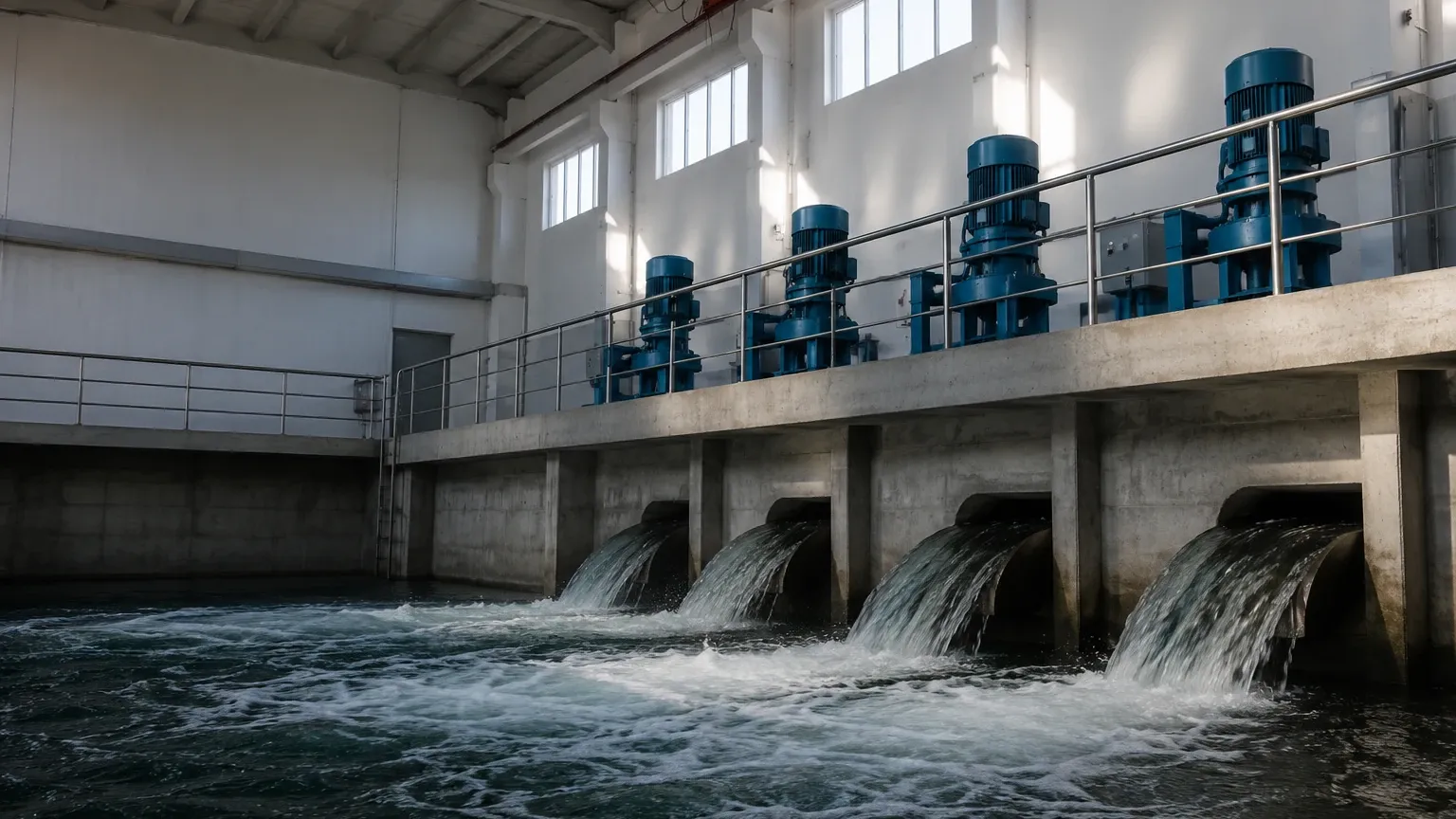
Pumping station monitoring is a critical component of modern water management, wastewater treatment, and industrial fluid handling. These facilities, often located in remote or subterranean environments, serve as the heart of distribution and collection networks. Effective monitoring ensures that pumps operate within their designed parameters, prevents costly overflows, and protects equipment from damage due to dry-running or cavitation. At the center of any robust monitoring system is the accurate measurement of liquid levels, which dictates pump start/stop cycles and emergency alarm triggers.
Reliable pumping station monitoring requires an understanding of the specific environment—whether it is a municipal lift station, a storm water basin, or an industrial sump—and the selection of instrumentation that can withstand the rigors of that environment. This guide explores the principles of level measurement technology, selection criteria, and installation best practices for engineering professionals.
The Role of Level Measurement in Pumping Station Monitoring
In a typical pumping station, the primary objective is to move fluid from a lower elevation to a higher one or to maintain a specific volume within a wet well. The monitoring system relies on level sensors to provide real-time data to a controller (such as a PLC or RTU).
When the liquid reaches a high-level setpoint, the lead pump is activated. If the level continues to rise, a lag pump may be engaged. Conversely, once the level drops to a low-level setpoint, the pumps are deactivated to prevent air intake. Without precise level data, the risk of environmental contamination from overflows or mechanical failure from dry-running increases significantly. For those seeking comprehensive hardware solutions, the Main Page of Welk provides a detailed overview of industrial-grade instrumentation suited for these tasks.
Core Measurement Principles
Before selecting a sensor for pumping station monitoring, it is essential to understand the physical principles governing the most common technologies: ultrasonic, radar, and hydrostatic measurement.
Ultrasonic Level Measurement
Ultrasonic sensors operate on the "Time of Flight" (ToF) principle. The sensor emits a high-frequency sound pulse that travels through the air, reflects off the liquid surface, and returns to the transducer. The distance is calculated based on the speed of sound and the time elapsed between emission and reception.
* Advantages: Non-contact measurement, no moving parts, and generally cost-effective for clean water applications.
* Limitations: Performance can be affected by heavy foam, high turbulence, and significant temperature fluctuations, which alter the speed of sound in the air gap.
Radar Level Measurement
Similar to ultrasonic sensors, radar (Radio Detection and Ranging) uses the ToF principle but employs electromagnetic microwave pulses instead of sound waves. These pulses travel at the speed of light and are largely unaffected by air temperature, pressure, or the presence of vapors and gases.
* Advantages: Highly accurate, non-contact, and capable of penetrating foam or steam. Radar is often preferred in volatile industrial environments or deep wet wells where ultrasonic signals might dissipate.
* Limitations: Higher initial capital expenditure compared to ultrasonic or hydrostatic options.
Hydrostatic Level Measurement
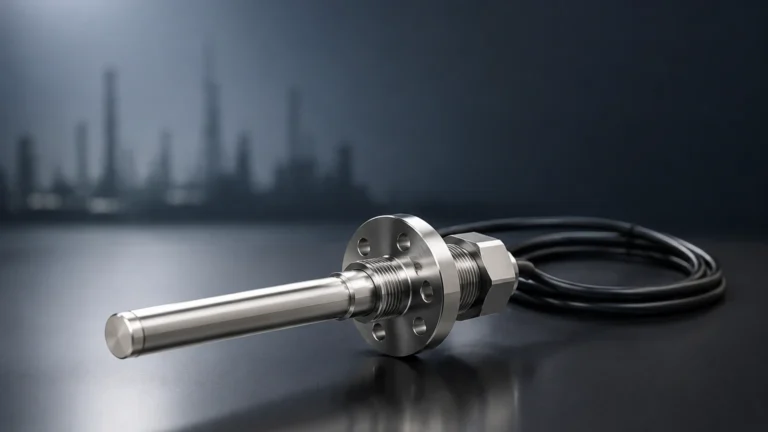
Hydrostatic transmitters measure the pressure exerted by the liquid column above the sensor. Based on the formula $P = \rho gh$ (where $P$ is pressure, $\rho$ is fluid density, $g$ is gravity, and $h$ is height), the sensor converts the weight of the liquid into a level reading. These are typically submersible sensors lowered to the bottom of the tank or well.
* Advantages: Unaffected by surface conditions like foam or turbulence. Ideal for deep wells and narrow spaces where non-contact sensors might face interference from walls.
* Limitations: The sensor is in constant contact with the fluid, making it susceptible to buildup, corrosion, or clogging in heavy sludge or wastewater applications.
Selection Criteria for Pumping Station Instrumentation
Choosing the right technology for pumping station monitoring depends on the fluid characteristics, the physical layout of the station, and the required accuracy. The following table provides a comparison of these technologies in the context of common pumping scenarios.
| Feature | Ultrasonic Sensors | Radar Level Meters | Hydrostatic Transmitters |
| :— | :— | :— | :— |
| Measurement Type | Non-contact (Sound) | Non-contact (Microwave) | Contact (Pressure) |
| Accuracy | $\pm$ 0.25% to 0.5% of range | $\pm$ 2mm to 5mm | $\pm$ 0.1% to 0.5% of span |
| Typical Range | 0.3m to 15m (1ft to 49ft) | 0.1m to 30m+ (0.3ft to 98ft+) | 1m to 200m (3ft to 656ft) |
| Foam Resistance | Poor to Moderate | Excellent | Excellent (Unaffected) |
| Turbulence Resistance | Moderate | High | High |
| Maintenance | Low | Very Low | Moderate (Cleaning required) |
| Best Application | Clean water sumps | Chemical tanks, deep wells | Deep boreholes, narrow wells |
Installation Considerations and Best Practices
Correct installation is as vital as sensor selection. Even the most advanced radar meter will fail to provide accurate data for pumping station monitoring if it is poorly positioned.
1. Avoiding Obstructions
For non-contact sensors (ultrasonic and radar), the "beam angle" must be considered. Any internal structures such as ladders, pipes, or pump supports within the beam's path will create false echoes. Sensors should be mounted at least 300mm (approx. 12 inches) away from the side walls to prevent signal interference.
2. Managing the Dead Zone (Blanking Distance)
All non-contact sensors have a "dead zone" directly beneath the transducer where measurement is impossible. For an ultrasonic sensor, this might be 0.25m to 0.5m (10 to 20 inches). The sensor must be mounted high enough so that the maximum liquid level never enters this zone.
3. Turbulence and Inflow
Inflow pipes can create significant surface turbulence and air entrainment. Sensors should be located away from the direct path of incoming water. If turbulence is unavoidable, a stilling well (a vertical pipe that dampens surface movement) may be required for hydrostatic or radar sensors.
4. Environmental Protection
Pumping stations are often damp and prone to flooding. Sensors should have a minimum ingress protection rating of IP68. In wastewater applications, the presence of Hydrogen Sulfide ($H_2S$) gas can be highly corrosive; therefore, sensor housings should be made of corrosion-resistant materials like PVDF, 316L stainless steel, or specialized plastics.
Potential Risks and Mitigation Strategies
In the field of pumping station monitoring, several risks can compromise system integrity. Understanding these allows engineers to build redundancy into their designs.
* Sensor Fouling: In sewage or industrial runoff, grease and solids can accumulate on hydrostatic diaphragms or ultrasonic faces. Regular maintenance schedules or the use of "self-cleaning" non-contact sensors can mitigate this.
* Power Surges: Pumping stations are susceptible to lightning strikes and power fluctuations. Using surge protection devices and isolated 4-20mA loops helps protect sensitive electronics.
* Signal Loss: In deep subterranean wells, wireless signals may struggle. Hardwired connections or high-gain antennas for remote monitoring (SCADA) are often necessary.
* Redundancy: For critical stations, it is common practice to use a primary non-contact sensor (Radar/Ultrasonic) paired with a secondary high-level float switch. This ensures that if the primary sensor fails, the float switch provides a mechanical backup to trigger an emergency pump start or alarm.
Maintenance and Calibration
While modern electronic level meters are designed for long-term stability, periodic verification is necessary. For hydrostatic sensors, this involves checking the vent tube in the cable to ensure it is not blocked by moisture or debris, which would cause atmospheric pressure compensation errors. For ultrasonic and radar units, maintenance usually involves a quick visual inspection to ensure no debris is clinging to the sensor face.
Calibration should be verified annually by comparing the sensor's output against a manual tape measurement or a known reference point in the well. Most digital transmitters allow for field calibration via a handheld communicator or onboard display.
Frequently Asked Questions (FAQs)
Q: Can ultrasonic sensors be used in sewage lift stations?
A: Yes, but with caution. Sewage often produces foam and steam, which can attenuate ultrasonic signals. If the station experiences heavy foaming, a radar sensor or a hydrostatic transmitter is generally a more reliable choice.
Q: How does temperature affect pumping station monitoring?
A: Temperature primarily affects ultrasonic sensors because the speed of sound changes with air density. Most high-quality ultrasonic sensors include integrated temperature compensation. Radar and hydrostatic sensors are largely unaffected by air temperature changes.
Q: What is the benefit of using 80GHz radar over 26GHz radar?
A: 80GHz radar has a much narrower beam angle and higher resolution. This makes it easier to install in crowded wet wells where there are many internal obstructions like pipes and brackets, as the narrow beam can "steer" around them.
Q: Are submersible hydrostatic sensors safe for chemical sumps?
A: It depends on the material compatibility. For acidic or caustic fluids, the sensor body and cable jacket (often PTFE or FEP) must be chemically resistant to the specific medium.
Conclusion
Effective pumping station monitoring is the result of matching the right measurement technology to the specific environmental challenges of the site. Whether utilizing the precision of radar, the cost-effectiveness of ultrasonic, or the ruggedness of hydrostatic transmitters, engineers must prioritize reliability and ease of maintenance. By following established installation guidelines and considering the physical properties of the fluid, operators can ensure their pumping infrastructure remains efficient and secure for years to come.