Dielectric Constant Tetrachloroethylene
Dielectric Constant Tetrachloroethylene
In the field of industrial process control, the accurate measurement of liquid levels is contingent upon understanding the physical and electrical properties of the medium. Tetrachloroethylene, also known as perchloroethylene or PCE, is a chlorocarbon widely utilized in dry cleaning, metal degreasing, and chemical synthesis. For engineers and technicians, the dielectric constant tetrachloroethylene is one of the most critical parameters to consider when selecting and calibrating level measurement instrumentation.
This article provides a comprehensive technical analysis of how the dielectric properties of tetrachloroethylene influence level sensor performance, offering guidance on technology selection, installation, and maintenance for industrial applications.
Understanding the Dielectric Constant of Tetrachloroethylene
The dielectric constant, or relative permittivity ($ε_r$), is a dimensionless measure of a substance's ability to store electrical energy in an electric field. It is defined as the ratio of the permittivity of the substance to the permittivity of a vacuum.
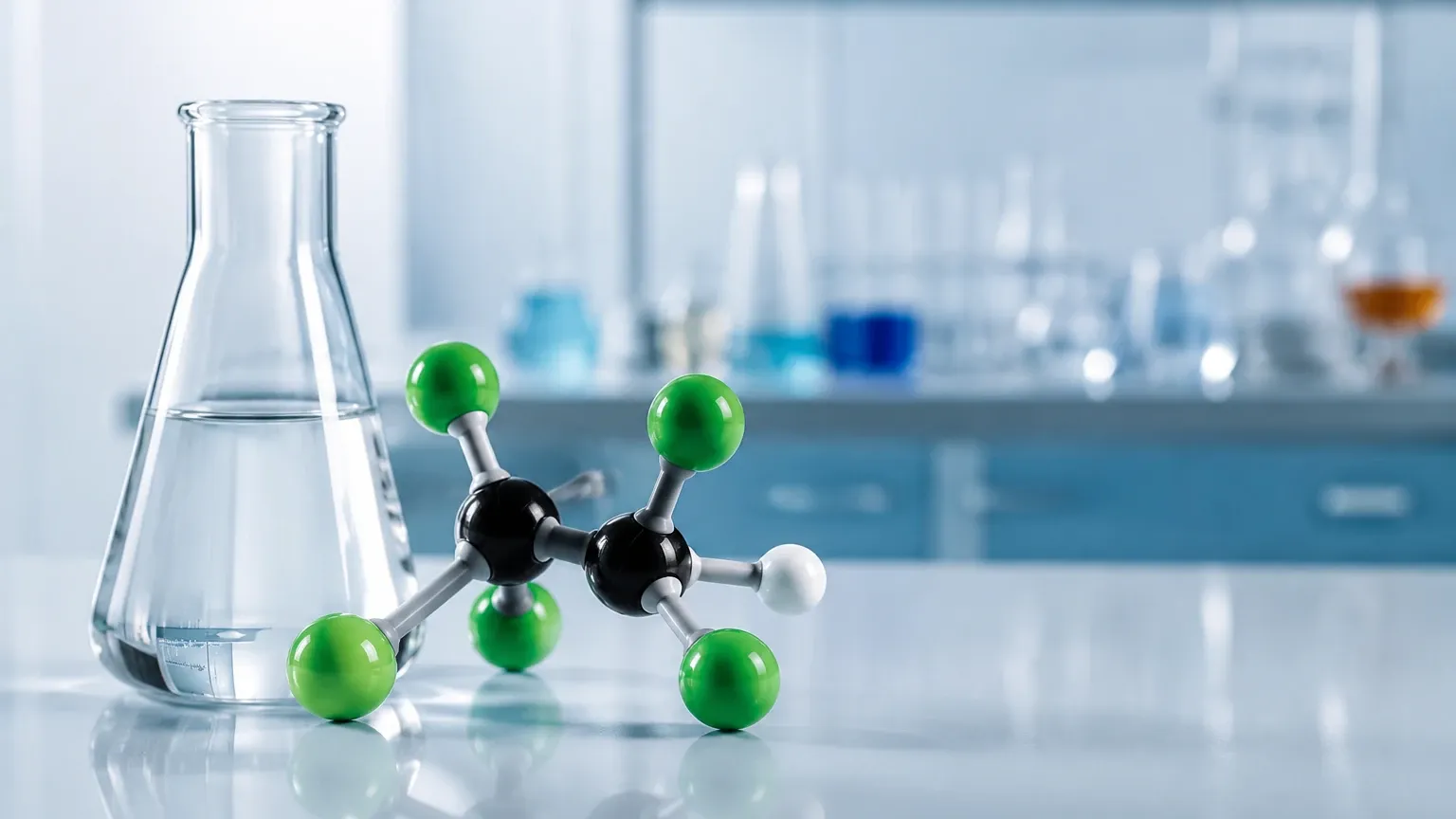
For tetrachloroethylene ($C_2Cl_4$), the dielectric constant is notably low. At a standard temperature of 20°C (68°F), the dielectric constant tetrachloroethylene is approximately 2.3.
Factors Influencing the Dielectric Constant
1. Temperature: Like most organic solvents, the dielectric constant of tetrachloroethylene decreases as temperature increases. As molecular motion increases with heat, the ability of the molecules to align with an external electric field diminishes.
2. Purity: The presence of contaminants, particularly water ($ε_r ≈ 80$), can significantly raise the effective dielectric constant of the mixture. Even trace amounts of moisture can lead to measurement inaccuracies in high-precision capacitance or radar systems.
3. Frequency: For most industrial radar applications, the dielectric constant of PCE remains relatively stable across the microwave frequency spectrum (6 GHz to 80 GHz).
Impact on Level Measurement Principles
Level measurement technologies interact with the dielectric constant in different ways. Understanding these interactions is essential for achieving reliable data in chemical storage and processing tanks.
Radar Level Measurement (Time Domain Reflectometry and FMCW)
Radar sensors emit electromagnetic pulses or continuous waves that travel through the air (or vapor space) and reflect off the liquid surface. The strength of the reflected signal (echo) is directly proportional to the dielectric constant of the medium.
Because the dielectric constant of tetrachloroethylene is low (~2.3), only a small portion of the radar energy is reflected, while the majority penetrates the liquid. This results in a "weak" echo. If the dielectric constant were lower than 1.4, non-contact radar measurement would become extremely challenging without specialized high-sensitivity electronics.
Guided Wave Radar (GWR)
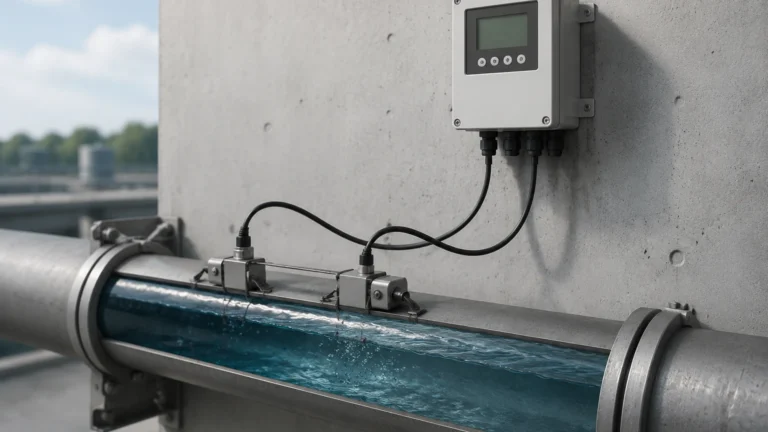
Guided Wave Radar utilizes a physical probe (rod or cable) to direct the microwave signal. This technology is highly effective for low-dielectric liquids like tetrachloroethylene because the probe concentrates the energy, reducing signal dispersion. Even with a low $ε_r$, GWR can typically detect the surface reliably, provided the correct probe type is selected.
Capacitance Level Sensors
Capacitance sensors treat the tank, the probe, and the liquid as a capacitor. The total capacitance changes as the liquid level rises and falls, displacing air ($ε_r = 1$) with the process medium. Since the dielectric constant of tetrachloroethylene (2.3) is relatively close to that of air, the change in capacitance ($ΔC$) per unit of level change is small. This requires highly sensitive transmitters and careful calibration to avoid signal-to-noise ratio issues.
Ultrasonic Sensors
Ultrasonic sensors rely on sound waves rather than electromagnetic waves. Consequently, they are unaffected by the dielectric constant. However, they are sensitive to the heavy vapors often found above tetrachloroethylene, which can change the speed of sound and introduce measurement errors.
Technology Selection Guide for Tetrachloroethylene
When choosing an instrument from a professional manufacturer like Welk, engineers must balance the low dielectric properties of PCE with the specific requirements of the installation environment.
| Technology | Suitability for PCE | Key Advantages | Limitations |
| :— | :— | :— | :— |
| 80 GHz Free-Space Radar | Excellent | High sensitivity, narrow beam, non-contact. | Higher cost; requires clear line of sight. |
| Guided Wave Radar (GWR) | Excellent | Strongest signal return for low $ε_r$ liquids. | Contacting method; probe must be compatible with PCE. |
| Capacitance | Fair | Low cost; robust construction. | Requires high sensitivity; sensitive to coatings. |
| Ultrasonic | Marginal | Unaffected by dielectric constant. | Affected by PCE vapors and temperature gradients. |
| Hydrostatic Pressure | Good | Reliable; independent of $ε_r$. | Density-dependent; requires contact with the fluid. |
Practical Selection and Engineering Considerations
Radar Sensitivity and Frequency
For non-contact radar, higher frequency units (such as 80 GHz) are generally preferred for tetrachloroethylene. The higher frequency allows for a smaller antenna and a more focused beam, which increases the energy density hitting the surface. This compensates for the weak reflection caused by the low dielectric constant. When configuring the transmitter, the "Dielectric Constant" parameter should be set to a range of 2.0–2.5 to optimize the signal processing algorithms.
Guided Wave Radar Probe Selection
If using GWR, a coaxial probe is the most effective choice for tetrachloroethylene. The coaxial design acts as a waveguide, containing the electromagnetic field entirely within the tube. This maximizes the signal return from low-dielectric fluids and eliminates interference from tank internals or nozzles.
Vapor and Pressure Effects
Tetrachloroethylene has a high vapor pressure. In closed tanks, the vapor space can become saturated. While radar signals are generally unaffected by vapors, the chemical compatibility of the sensor's wetted parts (seals and antennas) must be verified. PTFE (Polytetrafluoroethylene) or PEEK are typically recommended for antenna covers and seals.
Installation Guidelines for Low-Dielectric Liquids
To ensure the best performance when measuring substances with a low dielectric constant like tetrachloroethylene, follow these installation best practices:
1. Avoid Nozzle Interference: For non-contact radar, ensure the nozzle is as short as possible and the antenna extends slightly past the nozzle bottom. Internal reflections from the nozzle can drown out the weak echo from the PCE surface.
2. Stilling Wells: If the liquid surface is turbulent or if using a low-frequency radar, a stilling well (bypass pipe) can be used. This concentrates the radar signal and provides a calm surface for measurement.
3. Bottom Reflections: Because radar signals pass through low-dielectric liquids, the signal may reflect off the bottom of the tank. This is known as the "double-bounce" or "bottom echo." Modern transmitters, such as those found on the Welk Main Page, include software algorithms to mask these reflections and prevent false high-level readings when the tank is nearly empty.
4. Minimum Dielectric Settings: Always verify that the instrument's minimum dielectric rating is below 2.3. Some entry-level radar sensors are only rated for $ε_r > 3.0$, which would make them unreliable for tetrachloroethylene.
Maintenance and Troubleshooting
Despite the reliability of modern level meters, applications involving tetrachloroethylene require specific maintenance checks:
* Condensation and Coating: PCE vapors can condense on the sensor face. While PTFE covers help shed droplets, a heavy buildup can attenuate the signal. Periodic cleaning or the use of an air purge may be necessary in high-temperature applications.
* Seal Integrity: Tetrachloroethylene is a powerful solvent. Regularly inspect O-rings and gaskets. Viton (FKM) or Kalrez (FFKM) are often required to prevent swelling and leakage.
* Calibration Verification: If using capacitance or hydrostatic sensors, the calibration should be checked if the process temperature changes significantly, as both density and dielectric constant are temperature-dependent.
Frequently Asked Questions (FAQs)
Q: Can I use a standard ultrasonic sensor for tetrachloroethylene?
A: It is possible, but not recommended for high-accuracy applications. Tetrachloroethylene vapors are much heavier than air, which significantly alters the speed of sound. This results in a large measurement error unless the sensor is specifically compensated for the vapor composition and temperature.
Q: Why is Guided Wave Radar (GWR) often preferred over non-contact radar for PCE?
A: GWR provides a more direct path for the signal and experiences less signal loss. For liquids with a dielectric constant as low as 2.3, GWR provides a much higher signal-to-noise ratio, making it more robust against foam or surface turbulence.
Q: Does the color or opacity of tetrachloroethylene affect radar measurement?
A: No. Radar measurement is an electromagnetic process and is entirely unaffected by the optical properties (color, transparency, or turbidity) of the liquid. It is only concerned with the dielectric constant.
Q: How does the dielectric constant change if tetrachloroethylene is mixed with oil?
A: Most industrial oils have a dielectric constant between 2.0 and 2.2. Since this is very close to the 2.3 of PCE, the mixture will remain a low-dielectric fluid, and the measurement challenges will remain the same.
Conclusion
Successfully measuring the level of tetrachloroethylene requires an engineering approach that accounts for its low dielectric constant of 2.3. While this property presents challenges for traditional measurement techniques, modern high-frequency radar and guided wave radar systems offer the sensitivity and reliability needed for safe and efficient industrial operations. By selecting the appropriate technology and following rigorous installation standards, facilities can ensure accurate monitoring of this critical industrial solvent. For detailed product specifications and application support regarding level measurement in chemical processing, professionals should consult the resources available on the Main Page of industry-leading manufacturers.