Elko Mining
Elko Mining
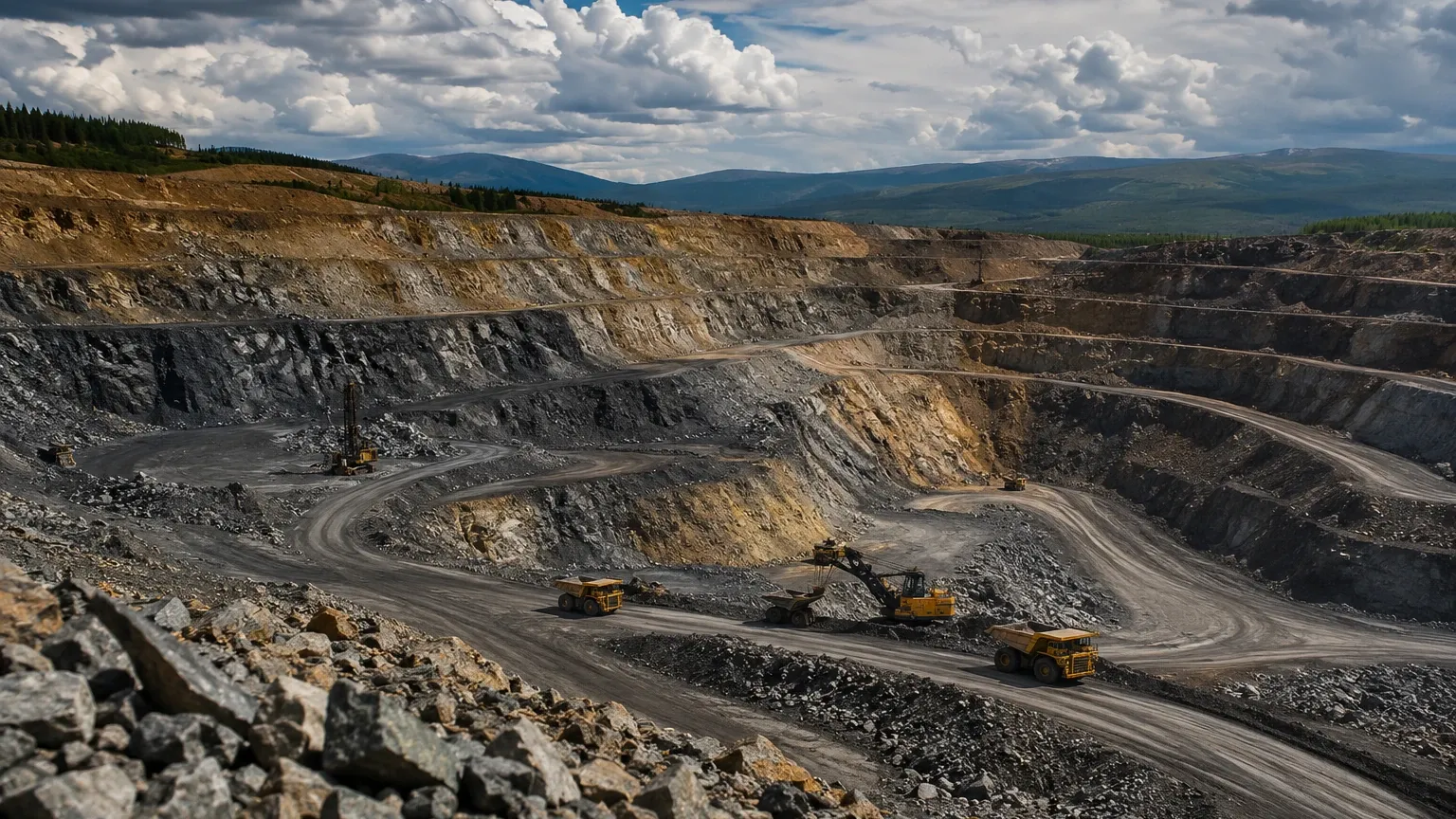
In the high-desert landscape of northeastern Nevada, the mining industry serves as the primary economic engine. Elko mining operations, particularly those centered along the Carlin Trend, represent some of the most productive gold mining regions in the world. For engineers and site managers operating in these environments, the precision of process control is paramount. Efficient extraction, processing, and waste management rely heavily on accurate instrumentation, with level measurement being one of the most critical variables in the production chain.
From the management of cyanide solutions in heap leach pads to the monitoring of abrasive slurries in grinding circuits, level measurement instruments must withstand extreme conditions, including high dust concentrations, chemical corrosion, and significant temperature fluctuations. This guide examines the technical principles of level measurement technologies suitable for the mining sector and provides a framework for selecting the appropriate instrumentation for Elko mining applications.
Principles of Level Measurement in Mining
Before selecting a specific instrument, it is essential to understand the physical principles that govern different measurement technologies. In mining, these are generally categorized into non-contact and contact methods.
Radar Level Measurement
Radar level meters operate on the Time-of-Flight (ToF) principle. The sensor emits an electromagnetic signal—usually in the microwave frequency range—which travels to the surface of the material, reflects, and returns to the sensor. The distance is calculated based on the time elapsed and the speed of light.
1. Frequency Modulated Continuous Wave (FMCW): Modern 80 GHz radar units use FMCW technology, where the signal frequency changes continuously. This allows for superior signal processing and the ability to filter out noise from agitators or internal tank structures.
2. Pulse Radar: Older 26 GHz units emit short pulses. While effective, they are more susceptible to signal attenuation in environments with heavy dust or steam.
Radar is highly favored in Elko mining operations because it is unaffected by vacuum, pressure, or air temperature changes, and it can penetrate heavy dust clouds common in ore bins.
Ultrasonic Level Measurement
Ultrasonic sensors emit high-frequency sound waves. Like radar, they use the ToF principle, but they rely on the speed of sound. Because the speed of sound is influenced by air density and temperature, these sensors require integrated temperature compensation.
While cost-effective, ultrasonic sensors have limitations in mining. They cannot operate in vacuums and are sensitive to heavy foam or significant dust, which can absorb the sound energy and lead to signal loss.
Hydrostatic Level Measurement
Hydrostatic transmitters measure the pressure exerted by a liquid column. The pressure at the bottom of a tank is directly proportional to the height of the liquid and its specific gravity. The formula used is $P = \rho \cdot g \cdot h$, where $P$ is pressure, $\rho$ is density, $g$ is gravity, and $h$ is the height of the liquid.
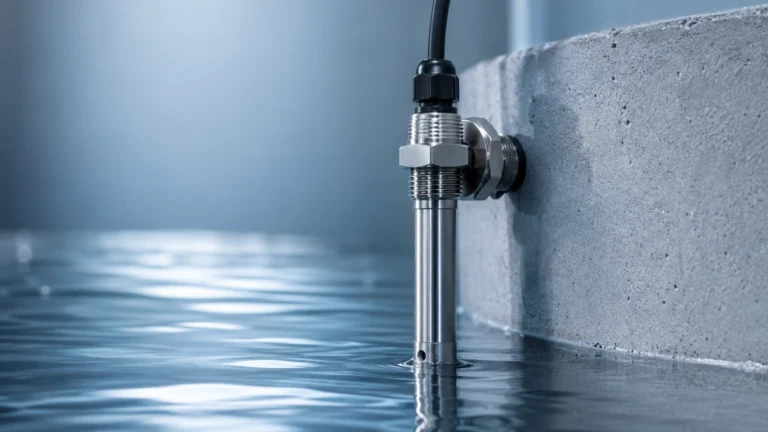
In mining, hydrostatic sensors are often used in deep wells or water storage tanks. However, they are contact-based, meaning the diaphragm must be compatible with the fluid, which can be a challenge with abrasive slurries or corrosive leaching chemicals.
Magnetic Level Gauges
Magnetic level gauges utilize a float containing a magnet that moves with the liquid level inside a bypass chamber. Outside the chamber, magnetic flags or a transmitter track the float's position. This provides a clear visual indication and can be paired with a reed chain or magnetostrictive transmitter for remote monitoring. These are ideal for high-pressure chemical storage where a direct visual check is required for safety.
Key Applications in Elko Mining Operations
The specific demands of mining in the Elko region require instrumentation that can handle a variety of media, from dry solids to viscous liquids.
1. Heap Leaching and Solution Ponds
Gold recovery in Elko often involves heap leaching, where cyanide solution is applied to ore heaps. Level sensors are required in the pregnant solution ponds and barren ponds to manage fluid balance. Radar is preferred here due to its non-contact nature, preventing corrosion of the sensor by the cyanide solution.
2. Slurry and Thickener Tanks
In the milling process, ore is ground and mixed with water to create a slurry. Thickeners are used to separate the solids from the liquid. Measuring the "bed level" (the interface between the clear liquid and the settled solids) and the overall tank level is vital. Radar sensors with high signal sensitivity are typically used to ignore the foam often present on the surface of these tanks.
3. Ore Bins and Silos
Monitoring the level of crushed ore in silos is a significant challenge due to the high dust levels and the uneven surface of the solids (the angle of repose). High-frequency 80 GHz radar is the industry standard for this application, as its narrow beam angle avoids the walls of the silo and its high frequency penetrates dust more effectively than ultrasonic alternatives.
4. Tailings Management
Tailings ponds require continuous level monitoring to ensure environmental compliance and dam integrity. Hydrostatic pressure transducers or long-range non-contact radar sensors are frequently deployed to monitor these large-scale water bodies.
Selection Criteria for Mining Instrumentation
When evaluating level measurement solutions for Elko mining projects, engineers should use the following table to compare technologies based on process conditions:
| Feature | Radar (80 GHz) | Ultrasonic | Hydrostatic | Magnetic Gauge |
| :— | :— | :— | :— | :— |
| Medium | Liquids & Solids | Liquids & Slurries | Liquids Only | Liquids Only |
| Dust Resistance | Excellent | Poor | N/A (Contact) | N/A (Contact) |
| Foam Resistance | Good | Poor | Excellent | Excellent |
| Max Range | Up to 120m (393 ft) | Up to 30m (98 ft) | Up to 200m (656 ft) | Up to 6m (20 ft) |
| Accuracy | ±1 mm (0.04 in) | ±0.25% of range | ±0.1% of span | ±5 mm (0.2 in) |
| Maintenance | Very Low | Low | Moderate | Moderate |
| Corrosion Risk | None (Non-contact) | Low (Non-contact) | High (Contact) | Moderate (Contact) |
Installation Considerations and Best Practices
Proper installation is as important as selecting the right technology. In the harsh environment of an Elko mining site, the following factors must be addressed:
* Beam Angle and Obstructions: For radar and ultrasonic sensors, the "beam angle" determines the footprint of the signal. Sensors should be mounted away from the tank walls and internal structures like ladders or agitators to prevent false echoes.
* Nozzle Design: The mounting nozzle should be as short as possible. If a long nozzle is required, the sensor must be positioned so that the antenna extends past the end of the nozzle to prevent signal interference.
* Stilling Wells and Bypass Chambers: In tanks with heavy agitation or surface turbulence, a stilling well (a vertical pipe) can be used to provide a calm surface for the sensor to measure. This is common in chemical storage tanks.
* Environmental Protection: While many industrial sensors are rated IP66/IP67, the extreme sun and cold in Nevada suggest the use of sunshades to prevent electronic overheating and to protect the housing from UV degradation.
* Vibration Isolation: Mining equipment, such as crushers and mills, generates significant vibration. Sensors should be mounted on stable platforms, and in extreme cases, vibration-dampening mounts should be utilized to protect the internal electronics.
Limitations and Challenges
No single technology is a "silver bullet" for all mining applications. Engineers must be aware of the following limitations:
1. Dielectric Constant (dk): Radar relies on the dielectric constant of the material. Materials with a very low dk (like some dry minerals) reflect less energy, requiring high-sensitivity radar units.
2. Abrasive Wear: In contact-based systems like hydrostatic sensors or float switches, the abrasive nature of ore slurries can wear down diaphragms and mechanical parts rapidly, leading to frequent replacement cycles.
3. Signal Absorption: In ultrasonic systems, heavy steam or certain gas layers can change the speed of sound or absorb the signal entirely, leading to "lost echo" errors.
Frequently Asked Questions (FAQs)
Q: Why is 80 GHz radar preferred over 26 GHz for Elko mining silos?
A: 80 GHz radar has a much narrower beam angle (often as small as 3 degrees). This allows the signal to avoid internal tank obstructions and the vessel walls, which is critical in tall, narrow ore silos. It also provides better resolution for measuring uneven solid surfaces.
Q: How do you measure level in a tank with heavy foam?
A: Foam can absorb radar and ultrasonic signals. If the foam is light, high-frequency radar can often penetrate it to see the liquid below. If the foam is dense and conductive, a hydrostatic pressure transmitter or a magnetic level gauge is a more reliable choice as they are unaffected by surface conditions.
Q: Can these sensors handle the extreme cold of Nevada winters?
A: Most industrial level meters are rated for operation down to -40°C (-40°F). However, in extremely cold conditions, LCD displays may become sluggish, and internal heating elements or insulated enclosures may be required for the most sensitive electronics.
Q: What is the maintenance schedule for a non-contact radar sensor?
A: One of the primary benefits of non-contact radar is the minimal maintenance required. Usually, an annual visual inspection and a verification of the calibration are sufficient, provided there is no significant material buildup on the antenna.
Conclusion
Selecting the right instrumentation for Elko mining operations requires a deep understanding of both the process environment and the physics of measurement. By prioritizing non-contact technologies like high-frequency radar for solids and corrosive liquids, and utilizing robust hydrostatic or magnetic systems for specialized liquid applications, mining facilities can improve safety, reduce downtime, and optimize their recovery rates. For those looking to upgrade their current systems or design new processing circuits, it is advisable to Review product options and application support to ensure the selected hardware meets the specific rigors of the Nevada mining landscape. For more detailed technical specifications and to explore a full range of industrial measurement solutions, visit the Main Page of our instrumentation resource.