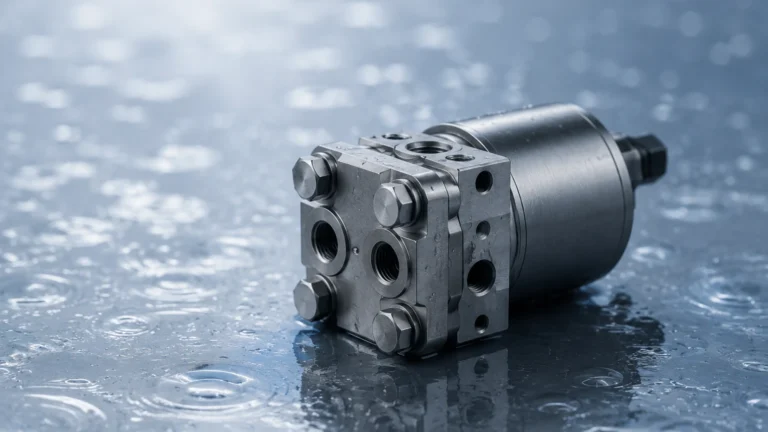
Hydrogen Compressor
Hydrogen Compressor
In the rapidly evolving landscape of the global energy transition, the hydrogen compressor serves as a critical link in the value chain, enabling the storage, transport, and utilization of hydrogen gas. Because hydrogen has an extremely low volumetric energy density at ambient pressure, it must be compressed to high pressures—often ranging from 350 bar to over 700 bar—for applications such as fuel cell vehicle refueling, industrial feedstock, and grid-scale storage.
For engineers and plant operators, managing a hydrogen compressor system involves more than just the mechanical compression of gas. It requires a sophisticated array of auxiliary systems, including lubrication circuits, liquid separation units, and cooling loops. Each of these sub-systems relies on precise level measurement to ensure operational safety, prevent equipment damage, and maintain process efficiency. As a professional manufacturer of industrial level measurement instruments, Welk provides the necessary instrumentation to monitor these critical parameters.
The Role of Level Measurement in Hydrogen Compressor Systems
While the primary function of a hydrogen compressor is to increase gas pressure, the surrounding infrastructure requires constant monitoring of liquid levels. There are three primary areas where level measurement is indispensable:
1. Lubrication Oil Management: In reciprocating and centrifugal compressors, maintaining the correct level of lubrication oil in the sump or reservoir is vital. Low levels can lead to mechanical failure and overheating, while excessively high levels may indicate contamination or cause foaming.
2. Liquid-Gas Separators: Hydrogen gas often contains traces of moisture or compressor oil that must be removed. Separators collect these liquids at the bottom of a vessel. Level sensors are required to trigger automated drainage valves, ensuring that liquid does not carry over into the next compression stage, which could lead to catastrophic "slugging."
3. Cooling Systems: High-pressure compression generates significant heat. Level transmitters monitor the coolant reservoirs to ensure the heat exchangers remain submerged and functional.
To explore the full range of instrumentation suitable for these applications, engineers can refer to the Main Page for detailed product specifications and technical support.
Measurement Principles for Hydrogen Applications
Selecting the right measurement principle is the first step in ensuring the reliability of a hydrogen compressor skid. Given the high pressures and the hazardous nature of hydrogen (Group IIC), certain technologies are preferred over others.
Radar Level Measurement (Non-contact and Guided)
Radar level meters operate by emitting electromagnetic pulses that reflect off the surface of the liquid.
* Guided Wave Radar (GWR): This technology uses a probe to guide the signal. It is highly effective for low-dielectric liquids like lubrication oils and is largely unaffected by the high-pressure gas atmosphere inside the vessel.
* Non-contact Radar: This is ideal for corrosive or high-purity environments where the sensor should not touch the medium. However, in high-pressure hydrogen environments, the mechanical seal of the radar antenna must be specifically designed to prevent gas migration.
Magnetic Level Gauges
Magnetic level gauges are a staple in hydrogen compressor applications due to their inherent safety. They consist of a bypass chamber connected to the vessel. Inside the chamber, a float containing a magnet moves with the liquid level. This magnet actuates a visual indicator or a reed-chain transmitter on the outside of the chamber. Because the liquid is completely contained within a pressure-rated metal pipe, there is no risk of glass breakage or seal leakage common with traditional sight glasses.
Ultrasonic Level Sensors
Ultrasonic sensors measure the time-of-flight of sound waves. While cost-effective for atmospheric water tanks, they are generally avoided in high-pressure hydrogen compressor stages. The speed of sound changes significantly with gas density and temperature, leading to inaccuracies in pressurized hydrogen environments.
Hydrostatic Level Transmitters
These sensors measure the pressure exerted by the liquid column. In a pressurized hydrogen tank, a differential pressure (DP) approach is required to subtract the top-side gas pressure from the total pressure at the bottom. This method is reliable but requires careful installation of impulse lines or capillary seals.
Technical Selection Table for Compressor Level Instrumentation
When specifying instrumentation for a hydrogen compressor project, the following table provides a comparison of common technologies based on typical process conditions.
| Technology | Pressure Rating | Accuracy | Media Compatibility | Best Use Case |
| :— | :— | :— | :— | :— |
| Guided Wave Radar | Up to 400 bar+ | ±2 mm | Excellent (Oils, Condensate) | High-pressure separators |
| Magnetic Level Gauge | Up to 600 bar | ±5 mm | Excellent (Hazardous fluids) | Visual bypass monitoring |
| Hydrostatic (DP) | Variable | ±0.1% FS | Good (Requires DP setup) | Large storage buffers |
| Ultrasonic | Low/Ambient | ±0.25% FS | Limited (Water/Coolant) | Atmospheric coolant tanks |
| Level Switches | Up to 300 bar | N/A | High (Point level) | High/Low alarm safety |
Installation and Safety Considerations
The unique properties of hydrogen necessitate strict adherence to installation protocols. Hydrogen is the smallest molecule, making it prone to leakage through even the most microscopic paths.
Explosion Protection
Hydrogen is classified under Gas Group IIC, the most volatile category. All level instruments installed near a hydrogen compressor must carry ATEX or IECEx certifications for Zone 0 or Zone 1. This typically involves "Ex d" (flameproof) or "Ex i" (intrinsically safe) protection methods. For more information on certified solutions, visit the Main Page.
Material Compatibility and Hydrogen Embrittlement
High-pressure hydrogen can penetrate the crystalline structure of certain metals, leading to a phenomenon known as hydrogen embrittlement. This causes materials to become brittle and crack under stress. For level sensors, especially those with wetted parts like radar probes or magnetic floats, the use of high-quality 316L stainless steel or specialized alloys like Hastelloy C276 is mandatory to ensure long-term structural integrity.
Sealing and Connections
Flanged connections are generally preferred over threaded connections in hydrogen systems to minimize leak points. When using radar or hydrostatic transmitters, the use of double-block-and-bleed valves allows for the safe removal of the instrument for maintenance without depressurizing the entire compressor system.
Limitations and Challenges
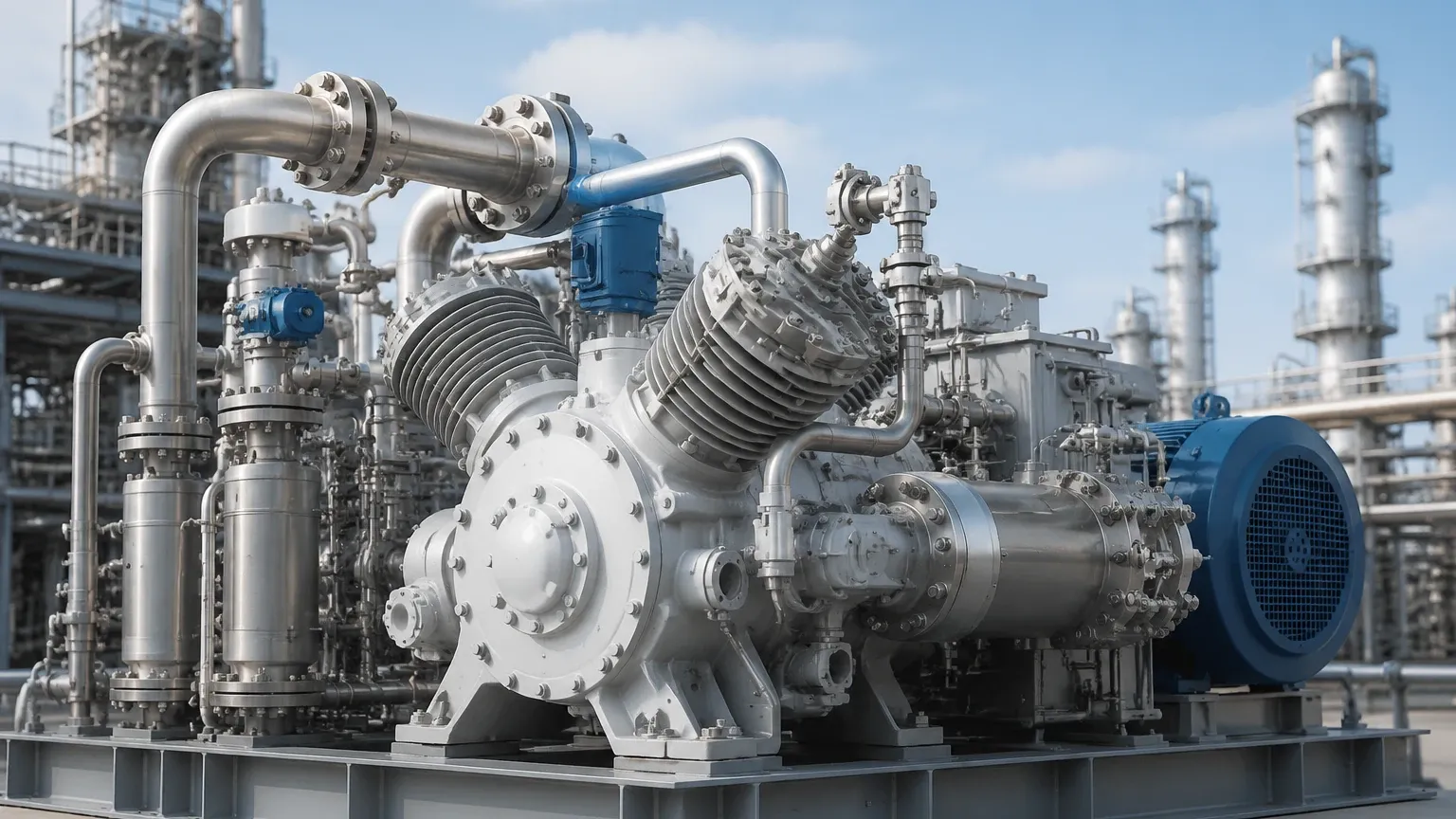
While modern instrumentation is highly advanced, there are inherent limitations to consider when monitoring a hydrogen compressor:
* Dielectric Constant: Hydrogen itself has a very low dielectric constant, which does not affect radar measurement of the liquid, but the liquid being measured (like lubrication oil) must have a high enough dielectric constant to reflect the signal.
* Gas Stratification: In large vessels, temperature gradients can cause gas density changes that might slightly interfere with non-contact radar signals, though guided wave radar (GWR) mitigates this effectively.
* High Vibration: Hydrogen compressors, particularly reciprocating types, generate significant vibration. Level instruments must be mounted securely, and electronic components should be vibration-resistant to prevent premature failure of the circuit boards.
Frequently Asked Questions (FAQ)
Q: Can I use a standard level switch for a hydrogen compressor oil sump?
A: Only if the switch is rated for the specific pressure and is certified for Gas Group IIC (Hydrogen). Standard industrial switches may leak or fail to contain an internal explosion if hydrogen migrates into the housing.
Q: Why is Guided Wave Radar preferred over Ultrasonic for high-pressure hydrogen?
A: Ultrasonic sensors rely on the speed of sound, which changes drastically as hydrogen is compressed. Radar uses electromagnetic waves, which are independent of gas density, providing a much more stable and accurate reading in pressurized environments.
Q: How often should level instruments on a hydrogen compressor be calibrated?
A: Annual calibration is recommended for safety-critical loops (such as separator high-level alarms). However, many modern digital transmitters feature self-diagnostics that can alert operators to drift or sensor health issues in real-time.
Q: Are magnetic level gauges safe for 700 bar hydrogen applications?
A: While magnetic gauges can be engineered for very high pressures, most standard models max out around 400-600 bar. For 700 bar refueling applications, specialized high-pressure radar or hydrostatic solutions are more common.
Conclusion
The efficiency and safety of a hydrogen compressor depend heavily on the precision of its auxiliary systems. By understanding the measurement principles of radar, magnetic, and hydrostatic technologies, engineers can select the most appropriate level instrumentation to handle the rigors of high-pressure hydrogen service. Ensuring material compatibility and adhering to strict explosion-proof standards are the final steps in building a resilient hydrogen infrastructure. For comprehensive technical data and to review product options for your next project, please visit the Main Page.