Dielectric Constant of 2-cyanoethyl Acrylate
Dielectric Constant of 2-cyanoethyl Acrylate
In the field of industrial process control, the accurate measurement of liquid levels is fundamental to operational safety and efficiency. For specialized chemicals such as 2-cyanoethyl acrylate, the selection of measurement instrumentation depends heavily on the physical and electrical properties of the medium. Among these properties, the dielectric constant (relative permittivity) is perhaps the most critical variable for electromagnetic-based sensors. This article provides a technical overview of the dielectric constant of 2-cyanoethyl acrylate and how it influences the selection and installation of level measurement technologies.
Understanding 2-cyanoethyl Acrylate in Industrial Processes
2-cyanoethyl acrylate (CAS No. 106-71-8) is a polar organic monomer used extensively in the production of specialty polymers, adhesives, and coatings. Its chemical structure, characterized by the presence of both an acrylate group and a nitrile (cyano) group, imparts specific performance characteristics to the resulting polymers, such as improved oil resistance and adhesion.
From a process engineering perspective, handling this substance requires careful consideration of its reactivity and physical state. Because it is a monomer, it is often stored in tanks where level monitoring is essential for inventory management and preventing overfills. To choose the correct instrument from a Main Page of industrial solutions, engineers must first quantify how the liquid interacts with various sensing fields.
The Role of Dielectric Constant in Level Measurement
The dielectric constant ($ε_r$) is a dimensionless number that represents the ratio of the permittivity of a substance to the permittivity of free space. In level measurement, this value determines how much energy from an electromagnetic pulse (such as a radar wave) is reflected at the surface of the liquid.
Reflection Physics
When a radar signal travels through air ($ε_r ≈ 1$) and hits a liquid surface, a portion of the signal is reflected back to the sensor. The strength of this reflection is governed by the difference in dielectric constants between the two media. The reflection coefficient ($R$) can be simplified as:
$$R = \frac{\sqrt{ε_r} – 1}{\sqrt{ε_r} + 1}$$
For the dielectric constant of 2-cyanoethyl acrylate, which is typically estimated to be in the range of 15 to 20 at room temperature (20°C), the reflection is quite strong. This high polarity, caused by the cyano (-CN) group, makes the liquid an excellent candidate for radar-based measurement, as it provides a clear, high-amplitude return signal compared to non-polar hydrocarbons like hexane ($ε_r ≈ 1.9$).
Measurement Principles for Polar Monomers
Before recommending specific hardware, it is essential to understand how different measurement principles interact with the dielectric properties of 2-cyanoethyl acrylate.
1. Radar Level Measurement (Time of Flight)
Radar sensors emit high-frequency microwave pulses. The time it takes for the pulse to travel to the surface and back is used to calculate the distance. Because 2-cyanoethyl acrylate has a relatively high dielectric constant, the surface reflection is robust. This allows for reliable measurement even in the presence of surface turbulence or slight foam.
2. Guided Wave Radar (GWR)
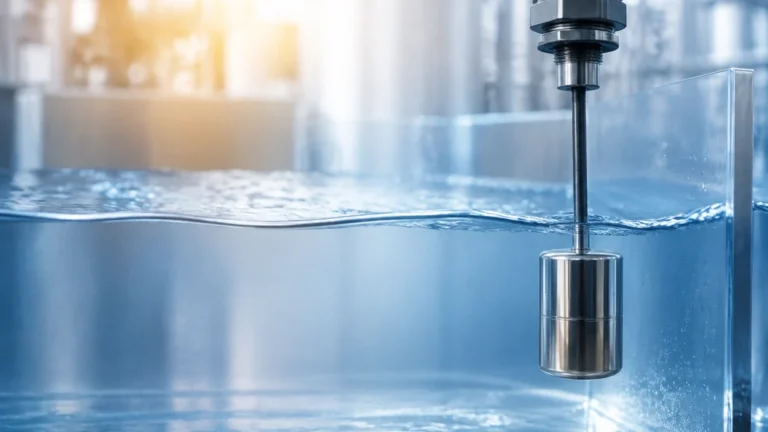
Guided Wave Radar uses a probe (rod or cable) to guide the microwave pulse directly to the liquid surface. This technology is particularly effective for 2-cyanoethyl acrylate because the probe concentrates the energy, ensuring that the signal-to-noise ratio remains high. GWR is less affected by tank geometry or internal obstructions than non-contact radar.
3. Capacitance Level Sensing
Capacitance sensors treat the tank and the probe as two plates of a capacitor, with the liquid acting as the dielectric medium. As the level of 2-cyanoethyl acrylate rises, the total capacitance increases because the liquid has a much higher dielectric constant than the air/vapor space it replaces. For this technology to be accurate, the dielectric constant must remain relatively stable.
Selecting the Right Level Meter for 2-cyanoethyl Acrylate
When selecting a level meter for 2-cyanoethyl acrylate, engineers must balance the dielectric properties with the chemical compatibility of the wetted parts. Since acrylates can be corrosive to certain elastomers and plastics, PTFE or PFA-lined components are often required.
Comparison of Suitability
| Technology | Suitability | Dielectric Dependency | Advantages for 2-cyanoethyl Acrylate |
| :— | :— | :— | :— |
| 80GHz Radar | Excellent | High | Non-contact; unaffected by vapors; strong signal reflection. |
| Guided Wave Radar | Excellent | High | Highly accurate; immune to turbulence; works well in narrow tanks. |
| Ultrasonic | Moderate | None | Lower cost; however, chemical vapors can affect sound speed. |
| Hydrostatic | Good | None | Measures mass/pressure; requires constant density for level accuracy. |
| Capacitance | Good | Critical | Reliable if temperature and dielectric constant are stable. |
Why 80GHz Radar is Preferred
For 2-cyanoethyl acrylate, 80GHz high-frequency radar is often the top recommendation. The high dielectric constant of 2-cyanoethyl acrylate ensures a strong signal, while the narrow beam angle of 80GHz technology allows the sensor to avoid reflecting off internal tank structures like agitators or heating coils. Furthermore, the non-contact nature of the device prevents polymer buildup on the sensor face, which is a common issue with monomers that may undergo localized polymerization.

Technical Comparison of Level Measurement Technologies
To provide a clearer engineering reference, the following table outlines the practical limits and requirements for measuring 2-cyanoethyl acrylate using Welk's standard industrial configurations.
| Feature | Radar (Non-Contact) | Guided Wave Radar (GWR) | Capacitance Probe |
| :— | :— | :— | :— |
| Min. Dielectric Constant | ε_r > 1.4 | ε_r > 1.2 | ε_r > 1.5 |
| Accuracy | ±2 mm | ±3 mm | ±1% of span |
| Max Range | Up to 30m | Up to 6m (rod) / 30m (cable) | Up to 3m |
| Wetted Materials | PTFE / 316L | 316L / PFA Coating | 316L / PTFE |
| Vapor Sensitivity | Low | Low | Moderate |
| Maintenance | Very Low | Low (check for buildup) | Moderate (cleaning required) |
Installation and Engineering Considerations
Successful deployment of level instrumentation for 2-cyanoethyl acrylate requires more than just knowing the dielectric constant. Engineers should follow these practical guidelines:
1. Nozzle Geometry: For non-contact radar, the nozzle height should be kept as short as possible. If the nozzle is long and narrow, internal reflections can interfere with the signal, though the high dielectric constant of the acrylate helps overcome this.
2. Vapor Management: 2-cyanoethyl acrylate can produce vapors that may condense on the sensor face. Using a radar unit with a PTFE drop antenna or a flushing connection can prevent measurement errors caused by condensation.
3. Agitation: In many chemical reactors, the liquid surface is turbulent. Guided Wave Radar or radar with advanced signal processing (echo tracking) is necessary to filter out noise caused by waves.
4. Temperature Effects: The dielectric constant of 2-cyanoethyl acrylate is temperature-dependent. As temperature increases, the dielectric constant typically decreases. While radar is generally immune to these changes, capacitance-based systems may require temperature compensation to maintain accuracy.
5. Dead Zones: Every sensor has a "blocking distance" or "dead zone" at the top of the probe or antenna. Ensure the tank's maximum fill level does not enter this zone to avoid signal loss.
Limitations and Risks
While the dielectric constant of 2-cyanoethyl acrylate makes it easy to detect, there are specific risks to consider:
* Polymerization: If the monomer begins to polymerize on a GWR probe or a capacitance rod, the thickness of the coating will change the perceived capacitance or the travel time of the radar pulse. Periodic inspection is recommended.
* Chemical Compatibility: Acrylates can swell certain O-ring materials like Viton. FFKM (Kalrez) or PTFE seals are preferred for long-term reliability.
* Conductivity: If the acrylate becomes contaminated with water or other conductive impurities, its effective dielectric constant will change, potentially affecting capacitance-based measurements more than radar.
Frequently Asked Questions (FAQs)
Q: Can I use an ultrasonic level sensor for 2-cyanoethyl acrylate?
A: Yes, but with caution. Ultrasonic sensors rely on the speed of sound, which can be affected by the concentration of chemical vapors in the tank's headspace. Radar is generally more reliable for chemical monomers.
Q: How does the dielectric constant change if the 2-cyanoethyl acrylate is mixed with a solvent?
A: The resulting dielectric constant will be a weighted average of the components. If mixed with a non-polar solvent like toluene ($ε_r ≈ 2.4$), the overall dielectric constant will drop, requiring a more sensitive radar setting.
Q: Is 2-cyanoethyl acrylate considered a "low dielectric" liquid?
A: No. With a value likely between 15 and 20, it is considered a medium-to-high dielectric liquid in the context of industrial level measurement. This makes it much easier to measure than fuels or oils.
Q: Does the frequency of the radar (e.g., 26GHz vs 80GHz) matter for this chemical?
A: While both will work due to the favorable dielectric constant, 80GHz is preferred for its smaller antenna size and better ability to handle condensation and narrow tank geometries.
For further technical specifications on level measurement hardware or to request a customized solution for chemical processing, please visit our Main Page for comprehensive product data and engineering support.
Download Dielectric Constant of 2-cyanoethyl Acrylate as a PDF