Jeeves Careers
Jeeves Careers
The landscape of industrial automation is undergoing a significant transformation, driven by the integration of smart technologies and the increasing demand for precision in process control. In this context, "Jeeves careers"—a term often associated with the next generation of automated support and sophisticated process management—reflects the growing need for professionals who can bridge the gap between traditional mechanical engineering and advanced digital instrumentation. For those specializing in level measurement, this evolution means moving beyond simple monitoring to managing complex ecosystems of radar, ultrasonic, and hydrostatic sensors.
As industries such as water treatment, chemical processing, and oil and gas adopt more autonomous systems, the role of the instrumentation professional becomes more critical. These careers require a deep understanding of how level measurement data feeds into higher-level automation platforms, ensuring that the "digital butler" of a modern plant has the accurate, real-time data necessary to maintain safety and efficiency.
The Evolution of Careers in Level Measurement
Historically, level measurement was a manual or semi-automated task. Technicians would rely on sight glasses or manual dipsticks. Today, the professional path involves the deployment and maintenance of sophisticated electronic sensors. A career in this field now demands proficiency in signal processing, data communication protocols (such as HART, Modbus, or Profibus), and a fundamental understanding of physics as applied to different measurement technologies.
For engineers and technicians, the transition to automated process management means that their expertise is no longer confined to the sensor itself. They must understand the entire data chain, from the physical interaction of a radar wave with a liquid surface to the final visualization on a control room dashboard. This shift is at the heart of modern industrial careers, where the ability to troubleshoot complex electronic systems is as valued as mechanical aptitude.
Core Measurement Principles
To succeed in a career focused on industrial instrumentation, one must master the underlying principles of various level measurement technologies. Each method has distinct physical foundations that dictate its suitability for specific applications.
Radar Level Measurement (ToF)
Radar level meters operate on the Time-of-Flight (ToF) principle. The device emits high-frequency electromagnetic waves (typically in the 26 GHz or 80 GHz range) toward the material surface. These waves are reflected back to the sensor. By measuring the time interval between emission and reception, the instrument calculates the distance to the product surface.
* Non-contact Radar: Ideal for corrosive or high-temperature environments where the sensor should not touch the medium.
* Guided Wave Radar (GWR): Uses a probe to guide the electromagnetic pulse, making it highly effective for low-dielectric liquids or applications with heavy foam and turbulence.
Ultrasonic Level Sensing
Ultrasonic sensors function similarly to radar but use sound waves instead of electromagnetic waves. The sensor emits an ultrasonic pulse that travels through the air, hits the surface, and returns. The speed of sound is the determining factor here, which means temperature compensation is critical since the speed of sound varies with air temperature.
Hydrostatic Level Measurement
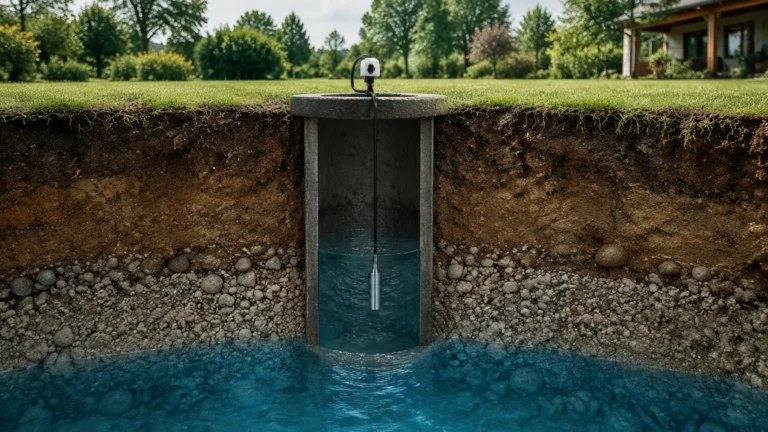
This principle relies on the relationship between the height of a liquid and the pressure it exerts at the bottom of a vessel. The formula $P = \rho \cdot g \cdot h$ (where $P$ is pressure, $\rho$ is density, $g$ is gravity, and $h$ is height) is the foundation. Hydrostatic transmitters are widely used in open tanks and reservoirs due to their reliability and ease of installation.
Technical Selection Criteria
Choosing the right technology is a core competency for any professional in this field. The following table provides a practical reference for selecting level measurement instruments based on common process conditions.
| Technology | Best Suited For | Limitations | Typical Accuracy |
| :— | :— | :— | :— |
| 80 GHz Radar | Small tanks, agitated surfaces, solids | High cost compared to ultrasonic | ±1 mm (0.04 in) |
| Ultrasonic | Water treatment, open channels | Affected by foam, dust, and vacuum | ±0.25% of range |
| Hydrostatic | Deep wells, vented tanks | Dependent on constant liquid density | ±0.1% to 0.5% |
| Magnetic Gauge | High-pressure boilers, toxic liquids | Mechanical moving parts; requires bypass | ±5 mm (0.2 in) |
| Level Switches | Overfill protection, point level | No continuous measurement | N/A (Point detection) |
For professionals evaluating these options, further technical specifications and application supports can be found on the Main Page of industrial equipment providers.
Installation and Engineering Considerations
Successful implementation of level measurement systems requires more than just selecting the right sensor; it requires precise installation engineering. Professionals in this sector must account for several environmental factors:
1. Blocking Distance (Dead Zone): Every non-contact sensor has a minimum distance near the face of the transducer where it cannot measure. For ultrasonic sensors, this is typically 0.2 m to 0.5 m (0.66 ft to 1.64 ft).
2. Beam Angle and Obstructions: Radar and ultrasonic beams spread as they travel. Installers must ensure that internal tank structures like ladders, agitators, or heating coils do not interfere with the signal path.
3. Mounting Position: Sensors should generally not be mounted in the center of a tank (to avoid multiple reflections) or too close to the wall (to avoid signal attenuation). A common rule is to mount the sensor at 1/6th of the tank diameter from the wall.
4. Pressure and Temperature Ratings: In chemical and oil/gas careers, ensuring the flange and housing materials are compatible with process pressures (up to 40 bar or 580 psi) and temperatures (up to 250°C or 482°F) is a primary safety requirement.

Limitations and Risk Management
In the pursuit of a career in industrial automation, understanding the limitations of technology is as important as understanding its capabilities. Failure to recognize these can lead to process inefficiencies or safety hazards.
* Dielectric Constant ($ε_r$): Radar signals require a minimum dielectric constant to reflect effectively. If a liquid has a very low $ε_r$ (like certain oils), a standard radar might "see through" the liquid to the bottom of the tank. In such cases, Guided Wave Radar is usually required.
* Vapor and Dust: High concentrations of dust (in silos) or heavy steam (in boiling liquids) can attenuate ultrasonic signals. Radar is generally immune to these factors, making it the preferred choice for dusty solids or steaming liquids.
* Density Fluctuations: Hydrostatic sensors assume a constant density. If the temperature of the liquid changes significantly, or if the composition of the fluid varies, the level reading will drift even if the physical height remains the same.
The Role of Data in Modern Instrumentation Careers
Modern "Jeeves careers" in the industrial sector are increasingly focused on the "Industrial Internet of Things" (IIoT). Level meters are no longer isolated devices; they are data nodes. Professionals are now expected to manage the integration of these nodes into cloud-based monitoring systems. This allows for predictive maintenance—identifying that a sensor is likely to fail before it actually does by analyzing signal-to-noise ratios or temperature trends over time.
Effective data management ensures that the automation system can perform complex tasks, such as inventory management across multiple global sites or optimizing the inflow of chemicals in a water treatment plant based on real-time demand. This level of oversight is what defines the modern career path in process engineering.
Frequently Asked Questions (FAQ)
Q: What is the primary advantage of 80 GHz radar over 26 GHz radar?
A: 80 GHz radar has a much narrower beam angle and a shorter wavelength. This allows it to ignore internal tank obstructions more effectively and provides better resolution for measuring solids or liquids in narrow vessels.
Q: Can ultrasonic sensors be used in a vacuum?
A: No. Ultrasonic waves require a medium (air or gas) to travel. In a vacuum, there is no medium to carry the sound, so the sensor will not function. Radar is the appropriate choice for vacuum applications.
Q: How do I handle foam on the surface of a liquid?
A: Foam can absorb ultrasonic and radar signals. For light foam, high-frequency radar may work. For thick, dense foam, Guided Wave Radar or hydrostatic transmitters are typically more reliable as they are less affected by surface conditions.
Q: What maintenance is required for hydrostatic level transmitters?
A: The primary maintenance involves checking the breather tube (for vented sensors) to ensure it isn't blocked by moisture or debris, and periodic calibration to account for any sensor drift or changes in fluid density.
Conclusion
The trajectory of careers in industrial level measurement is clear: a move toward higher precision, smarter integration, and a broader understanding of process dynamics. Whether you are managing a fleet of ultrasonic sensors in a municipal water facility or high-precision radar in a chemical plant, the core of the profession remains the same—providing the accurate data that keeps modern industry running smoothly. As the concept of automated assistance grows, those who master these measurement technologies will find themselves at the forefront of the next industrial revolution.