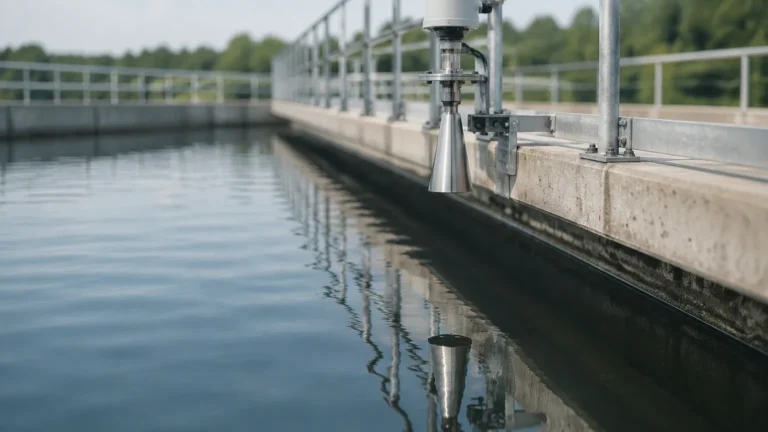
Sludge Blanket Level Detector
Sludge Blanket Level Detector
In industrial wastewater treatment, mining, and chemical processing, managing the separation of solids from liquids is a critical operational requirement. The sludge blanket level detector is the primary instrument used to monitor the interface between clarified liquid and settled solids in sedimentation tanks, clarifiers, and thickeners. Accurate measurement of this interface allows for the optimization of sludge pumping, reduction of polymer consumption, and prevention of sludge carryover, which can compromise effluent quality.
For process engineers and plant operators, selecting the right detection technology requires an understanding of how different sensors interact with varying sludge densities and process conditions. This guide provides a technical overview of sludge blanket measurement principles, selection criteria, and installation best practices to ensure reliable long-term performance.
Measurement Principles of Sludge Blanket Detectors
Unlike standard liquid level measurement, which identifies the surface of a fluid, a sludge blanket level detector must distinguish between two phases of different densities within the same vessel. Several physical principles are employed to achieve this.
Ultrasonic Time-of-Flight
Ultrasonic sensors are the most common solution for continuous sludge blanket monitoring. A transducer is submerged just below the liquid surface and emits high-frequency sound waves downward. These waves travel through the clarified liquid and reflect off the denser sludge blanket. By measuring the time it takes for the echo to return, the instrument calculates the distance to the blanket.
The effectiveness of ultrasonic measurement depends on the frequency used. Lower frequencies (around 40-50 kHz) have better penetration through suspended solids and "fluff" layers but lower resolution. Higher frequencies (above 200 kHz) provide better resolution for distinct interfaces but may be scattered by high concentrations of suspended solids in the upper liquid layer.
Optical Attenuation and Scattering
Optical detectors use infrared or visible light sources and sensors to measure the turbidity or suspended solids concentration at a specific point. There are two main configurations:
1. Absorption (Transmission): Measures the amount of light that passes through the medium. As the sludge density increases, the light intensity reaching the receiver decreases.
2. Backscatter: Measures the light reflected back from particles. This is highly effective for detecting the very beginning of a sludge interface.
Optical sensors are often used in "dip-and-hold" portable units or motorized reels that lower a sensor into the tank until a specific concentration threshold is reached.
Microwave and Radar Considerations
While traditional through-air radar is used for surface level, specialized guided wave radar or microwave phase-shift sensors can sometimes be adapted for interface measurement. However, in most clarifier applications, the density difference between the water and the sludge is insufficient for standard radar to provide a clean reflection compared to ultrasonic or optical methods.
Selection Criteria for Industrial Applications
Choosing a sludge blanket level detector requires a detailed analysis of the physical characteristics of the sludge and the tank environment. Engineers should evaluate the following factors:
Sludge Characteristics
The nature of the "interface" is rarely a sharp line. In many biological processes, there is a "fluff layer" or transition zone where the concentration of solids gradually increases.
- Distinct Interfaces: Ultrasonic sensors excel here as they provide a clear echo from the settled bed.
- Gradual Transitions: Optical sensors are better suited for identifying a specific concentration (e.g., 1000 mg/L) that defines the "blanket" for that specific process.
Tank Geometry and Internals
The presence of rake arms, skimmers, and agitators presents physical obstacles for submerged sensors. If a rake arm passes through the sensor's path, the instrument must have sophisticated software to "mask" or ignore the periodic signal interference caused by the arm.
Maintenance Requirements
Sludge is inherently fouling. Sensors submerged in wastewater will eventually accumulate biological growth or grease. Systems equipped with automatic cleaning mechanisms—such as motorized wipers, air-purge systems, or high-pressure water jets—are essential for reducing manual intervention and ensuring data accuracy.
Technical Comparison of Detection Technologies
The following table compares the primary technologies used for sludge blanket monitoring in industrial environments.
| Feature | Ultrasonic (Continuous) | Optical (Motorized/Portable) | Hydrostatic (Differential) |
| :— | :— | :— | :— |
| Measurement Type | Continuous, non-mechanical | Point or Profile measurement | Calculated average density |
| Accuracy | Typical ±10–50 mm | High (based on concentration) | Low for blanket height |
| Maintenance | Low (if self-cleaning) | Moderate (moving parts) | Low |
| Best Use Case | Primary/Secondary Clarifiers | Thickeners, SBRs | High-density sludge tanks |
| Limitations | Sensitive to air bubbles | Mechanical wear on reels | Requires stable liquid level |
For a broader look at how these instruments integrate into total plant automation, you can Review product options and application support to see how different sensor profiles match specific industrial standards.
Installation and Positioning Guidelines
Proper installation is as important as the technology itself. A poorly placed sludge blanket level detector will provide erratic readings regardless of its quality.
1. Avoid Turbulence: Do not install the sensor near the influent (inlet) zone where high velocity and turbulence prevent the sludge from settling. This area usually has high entrained air, which interferes with ultrasonic signals.
2. Submergence Depth: The sensor should be submerged deep enough (typically 200 mm to 500 mm) to avoid the surface scum layer and to ensure it remains underwater even during minor level fluctuations.
3. Rake Arm Clearance: If the tank has a rotating rake, the sensor must be positioned to avoid physical impact. Furthermore, the signal processing unit should be configured with a "gate" or delay to ignore the rake arm as it passes directly under the sensor.
4. Cable Management: In deep tanks (over 5 meters), ensure the sensor cable is secured or weighted to prevent it from drifting into the path of mechanical equipment due to currents.

Common Risks and Mitigation Strategies
Operating a sludge blanket level detector involves managing environmental variables that can degrade signal quality.
Gas Bubbles and Denitrification
In wastewater treatment, biological activity can produce nitrogen or methane bubbles that rise through the sludge blanket. These bubbles can reflect ultrasonic waves, causing "phantom" blanket readings. Selecting a sensor with advanced signal processing that can distinguish between small rising bubbles and a solid mass is critical.
Temperature Stratification
Large outdoor tanks can experience temperature gradients. Since the speed of sound in water changes with temperature, ultrasonic sensors must include an integrated temperature sensor to compensate the time-of-flight calculation. Without compensation, a 10°C change can result in a significant measurement error.
Scaling and Fouling
In chemical processes, mineral scaling can occur on the sensor face. While wipers work for soft biological fouling, they may not be effective against hard scale. In these instances, ultrasonic sensors with high-vibration "self-cleaning" faces or chemical cleaning ports are preferred.
Project Confirmation Checklist
Before finalizing the specification for a sludge blanket level detector, project teams should confirm the following data points:
* Process Media: What is the expected range of Suspended Solids (SS) in the clarified zone vs. the blanket? (e.g., 50 mg/L vs. 3000 mg/L).
* Tank Depth: What is the maximum and minimum distance from the sensor to the tank floor?
* Cleaning Access: Is there a compressed air supply or clean water line available at the tank bridge for automatic cleaning systems?
* Output Requirements: Does the control system require 4-20mA, Modbus RS485, or Profibus communication?
* Obstructions: Have the dimensions and rotation speed of the rake arm been verified against the sensor's response time?
Frequently Asked Questions (FAQs)
Q: Can an ultrasonic sludge blanket level detector measure through a layer of floating scum?
A: No. Ultrasonic sensors must be submerged below the scum layer. If the sensor is mounted above the water, the scum will reflect the signal before it reaches the sludge interface.
Q: How often does a sludge blanket sensor need calibration?
A: Most modern digital sensors are factory-calibrated. However, "field zeroing" or offset adjustment is usually required during commissioning to account for the specific density of the sludge in that process. Verification should be performed every 3 to 6 months using a manual "sludge judge" or core sampler.
Q: What is the difference between a sludge level switch and a sludge level detector?
A: A switch provides a simple on/off (high/low) signal when sludge reaches a specific point. A detector (or transmitter) provides a continuous measurement of the blanket's height throughout the process cycle.
Q: Does the color of the sludge affect the measurement?
A: Color affects optical sensors significantly but has no impact on ultrasonic sensors. If your process involves color-changing chemical precipitates, ultrasonic technology is generally more reliable.
By following these engineering guidelines and selecting a robust instrument tailored to the specific density and environmental challenges of the site, operators can achieve precise control over their solids-separation processes. For detailed technical specifications and model selections, refer to the Main Page for comprehensive industrial measurement solutions.