Vacuum Pans
Vacuum Pans
Vacuum pans are critical components in industrial evaporation and crystallization processes, most notably within the sugar industry and specialized chemical manufacturing. These vessels operate under sub-atmospheric pressure to lower the boiling point of the processed liquid, which protects heat-sensitive materials from thermal degradation and improves energy efficiency. In the context of sugar production, vacuum pans are used to boil "syrup" or "molasses" until it reaches a state of supersaturation, allowing sugar crystals to grow into what is known as massecuite.
Effective operation of vacuum pans depends heavily on the precise monitoring of various parameters, with liquid level being one of the most vital. Because the internal environment involves high vacuum, high temperatures, and often highly viscous or abrasive media, selecting the correct level measurement technology is a complex engineering task. This guide explores the principles, selection criteria, and installation requirements for level instrumentation in vacuum pan applications.
The Role of Vacuum Pans in Industrial Crystallization
In a typical sugar refinery or mill, the crystallization process occurs in large, cylindrical vessels—the vacuum pans. The process, often referred to as a "strike," involves feeding a concentrated sugar solution into the pan, where it is heated by a steam-filled heating element known as a calandria. As water evaporates under vacuum, the concentration increases. Once the desired supersaturation is reached, the solution is "seeded" with fine sugar dust to initiate crystal growth.
Throughout this cycle, the level of the massecuite rises as more feed is added to grow the crystals. Monitoring this level is essential for:
1. Volume Control: Ensuring the calandria remains fully submerged to maintain heat transfer efficiency.
2. Process Automation: Triggering the feed valves and determining the end-point of the strike.
3. Safety: Preventing overfilling, which could lead to product carryover into the vacuum system, potentially damaging condensers and vacuum pumps.
For engineers looking to optimize these processes, reviewing high-quality instrumentation options on a professional Main Page is a necessary step in system design.
Principles of Level Measurement in Vacuum Environments
Measuring level inside vacuum pans presents unique challenges that render many standard instruments ineffective. Before selecting a device, it is important to understand how different measurement principles interact with vacuum conditions.
Radar Level Measurement (ToF)
Radar sensors, particularly non-contacting frequency modulated continuous wave (FMCW) radar, are often the preferred choice for vacuum pans. Radar operates on the Time-of-Flight (ToF) principle, emitting microwave pulses that reflect off the surface of the product.
* Vacuum Compatibility: Unlike ultrasonic waves, which require a gas medium to travel, microwave signals propagate through a vacuum without any loss of signal strength or speed.
* Surface Turbulence: Vacuum pans often involve boiling and agitation. High-frequency radar (e.g., 80 GHz) provides a narrow beam angle that can navigate around internal agitators and ignore surface foam more effectively than lower-frequency alternatives.
Hydrostatic Pressure Measurement
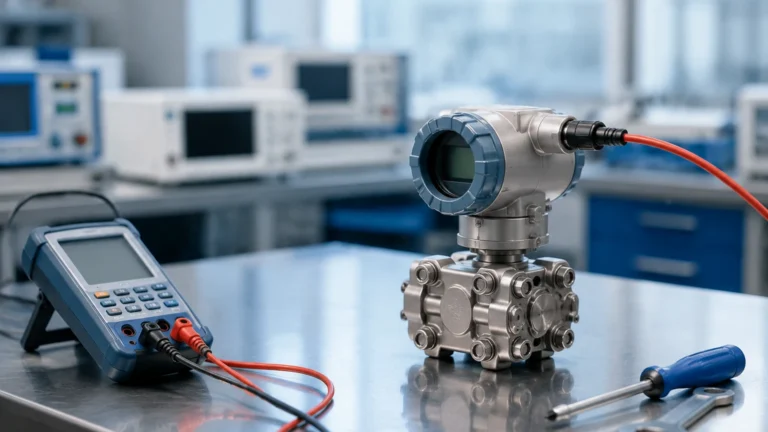
Hydrostatic transmitters measure the pressure exerted by the liquid column. In a vacuum pan, this requires a differential pressure (DP) approach. One sensor measures the pressure at the bottom of the vessel, while a second sensor (or a reference capillary) measures the pressure in the vapor space (the vacuum head).
* Calculation: The level is calculated as: $Level = (P_{bottom} – P_{top}) / (Density \times Gravity)$.
* Constraint: The density of massecuite changes as crystals grow, which can introduce errors in hydrostatic measurements unless density compensation is integrated into the control logic.
Magnetic Level Gauges
Magnetic level gauges consist of a bypass chamber mounted to the side of the vacuum pan. A float containing a magnet moves with the liquid level, flipping external flags or interacting with a reed-chain transmitter.
* Benefit: They provide a clear visual indication for operators on the floor and are highly robust against the internal vacuum.
* Limitation: In sugar applications, the massecuite can be extremely viscous and prone to scaling. If the product enters the bypass chamber and cools, it may crystallize and stick the float.
Selecting the Right Instrumentation for Vacuum Pans
When specifying level sensors for vacuum pans, engineers must evaluate the media characteristics and the physical constraints of the vessel. The following table provides a comparison of common technologies used in these environments.
| Technology | Accuracy | Vacuum Performance | Viscosity Handling | Maintenance Needs |
| :— | :— | :— | :— | :— |
| 80 GHz Radar | High (±1mm) | Excellent | Excellent (Non-contact) | Low |
| Guided Wave Radar | High (±2mm) | Excellent | Moderate (Subject to coating) | Moderate |
| Hydrostatic (DP) | Moderate | Good | Good | High (Diaphragm cleaning) |
| Magnetic Gauge | Moderate | Excellent | Poor (Risk of sticking) | Moderate |
| Ultrasonic | Low | Not Recommended | N/A | N/A |
Why Ultrasonic Fails in Vacuum
It is a common mistake to attempt using ultrasonic sensors in vacuum pans. Ultrasonic measurement relies on sound waves, which are mechanical longitudinal waves. These waves require a medium (like air or nitrogen) to propagate. In a vacuum, there are no molecules to transmit the vibration, resulting in a total loss of signal. Therefore, ultrasonic sensors should only be used in atmospheric tanks.
Installation and Engineering Considerations
Proper installation is as important as technology selection. For vacuum pans, the following engineering guidelines should be followed:
1. Nozzle Geometry and Placement
For radar installations, the sensor should be mounted on a nozzle that is as short as possible to minimize signal interference. If the vacuum pan has an internal agitator, the sensor must be positioned so that the radar beam does not intersect the path of the agitator blades. Using an 80 GHz radar with a narrow beam (typically 3° to 8°) allows for installation closer to the vessel wall or near internal structures without interference.
2. Dealing with Steam and Condensation
Vacuum pans are filled with water vapor. As this vapor rises, it can condense on the sensor face. While radar can penetrate some condensation, heavy droplets can attenuate the signal. Selecting a sensor with a PTFE or PEEK "drip-off" antenna design helps moisture shed quickly. In some cases, a small air or nitrogen purge (if the process allows) can be used to keep the antenna clean, though this must be balanced against the vacuum pump's capacity.
3. Diaphragm Seal Protection
If using hydrostatic transmitters, the diaphragms should be made of vacuum-rated materials. Standard diaphragms can "balloon" or deform under high vacuum if the fill fluid is not properly degassed during manufacturing. Furthermore, because massecuite can harden, flush-mounted diaphragms or those with specialized coatings are necessary to prevent the product from caking onto the sensor face.

Overcoming Common Operational Challenges
High Viscosity and Coating
As the strike progresses in a vacuum pan, the massecuite becomes increasingly thick. This can lead to "bridging" or coating on contact-based probes like Guided Wave Radar (GWR). While GWR can compensate for some coating, non-contact radar is generally superior as it never touches the viscous media. If GWR must be used, a single-pole probe is preferred over coaxial or twin-pole designs to reduce the surface area where product can accumulate.
Foaming
Rapid boiling under vacuum can create a layer of foam on top of the liquid. This foam can scatter radar signals, leading to a "lost signal" error. To combat this, engineers should select radar units with high dynamic range and advanced signal processing algorithms that can distinguish between the true liquid level and the top of the foam layer.
Temperature Fluctuations
While the vacuum lowers the boiling point, temperatures can still reach 80°C (176°F) or higher. The electronics of the level transmitter must be thermally isolated from the process. Using a specialized heat-dissipating mounting or a remote-mounted transmitter housing ensures the longevity of the sensor's internal components.
Maintenance and Calibration Protocols
To ensure the continued accuracy of level measurement in vacuum pans, a proactive maintenance schedule is required:
* Cleaning Cycles: During the "boil-out" or cleaning phase of the vacuum pan (where the vessel is cleaned with water or dilute acid), level sensors should be checked for any residual scaling. Radar lenses should be wiped down if any splash-back has occurred.
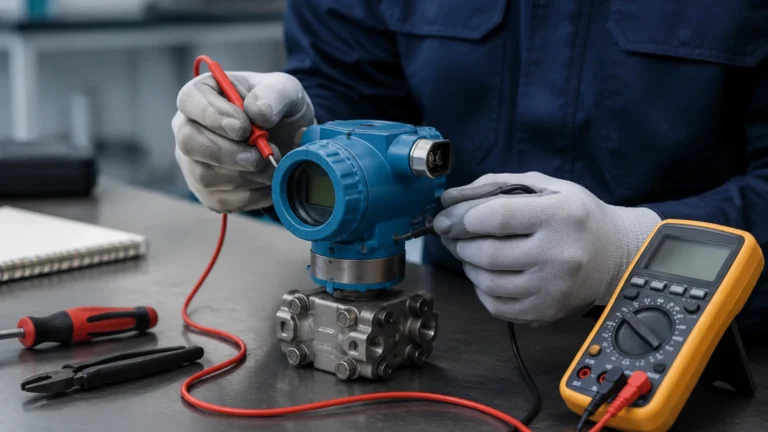
* Zero-Point Verification: For hydrostatic sensors, the zero point should be verified when the pan is empty and at atmospheric pressure. Any drift caused by diaphragm fatigue should be corrected.
* Vacuum Seal Inspection: Ensure that the mounting flanges and cable glands are airtight. Even a small leak can introduce oxygen into the process or disrupt the vacuum, affecting the boiling efficiency and the accuracy of DP-based level measurements.
Frequently Asked Questions (FAQs)
Q: Can I use a standard pressure transmitter for vacuum pan level?
A: No. A standard gauge pressure transmitter will measure the pressure relative to the atmosphere. Since the pan is under vacuum, the reading will be incorrect. You must use a differential pressure transmitter or a specialized absolute pressure sensor to account for the vacuum head pressure.
Q: How does the agitator affect radar measurement?
A: Agitators can cause "false echoes." Modern radar transmitters allow for "false echo suppression," where the software learns the position of the stationary and moving blades and ignores them, focusing only on the signal from the liquid surface.
Q: What is the best way to measure level in a very small vacuum pan?
A: For small vessels, space is limited. A high-frequency (80 GHz) radar with a small process connection (e.g., 1-inch or 1.5-inch thread) is typically the best solution, as it provides high accuracy even in confined spaces.
Q: Is density compensation necessary for all vacuum pans?
A: It is necessary if you are using hydrostatic pressure sensors and the density of your product changes significantly during the process (like sugar crystallization). It is not necessary for radar or magnetic gauges, as these technologies are independent of liquid density.
Conclusion
Successful level control in vacuum pans requires a deep understanding of both the physical properties of the media and the limitations of measurement technologies in sub-atmospheric conditions. While hydrostatic and magnetic solutions have their place in certain configurations, non-contacting radar has emerged as the industry standard due to its immunity to vacuum, high accuracy, and low maintenance requirements.
By carefully considering installation geometry and the specific challenges of foaming and viscosity, engineers can ensure reliable operation throughout the crystallization cycle. For detailed technical specifications and to explore a range of industrial level measurement solutions suitable for these demanding applications, please visit the Main Page for further product information and expert support.