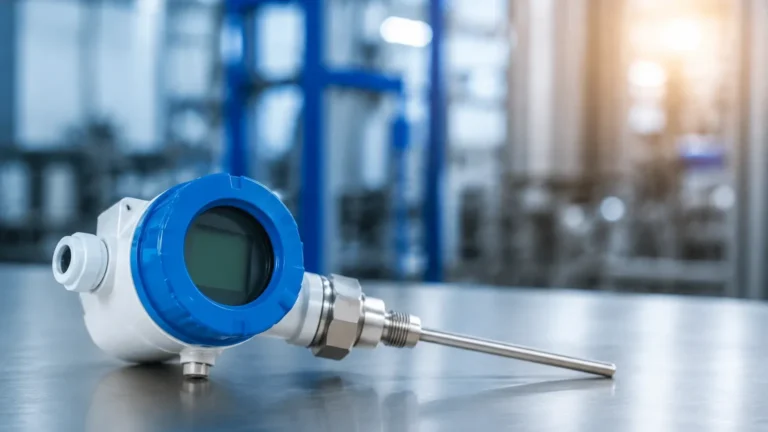
Cps Sch275ktl Do Us 800
Cps Sch275ktl Do Us 800
In the landscape of modern industrial automation and utility-scale energy production, the integration of power management and process monitoring is essential for operational efficiency. While high-capacity power conversion components, such as the cps sch275ktl do us 800 string inverter, manage the electrical throughput of large-scale solar installations, the precision of process variables—specifically level measurement—ensures the stability of the supporting infrastructure. Whether monitoring cooling water reservoirs for high-power electronics or managing chemical storage in industrial facilities, selecting the appropriate level measurement technology is a critical engineering decision.
Industrial environments require robust instrumentation that can withstand electrical noise, varying temperatures, and corrosive media. To assist engineers in navigating these choices, this guide explores the core principles of level measurement, practical selection criteria, and the nuances of installing these systems within complex electrical environments.
Understanding Level Measurement Principles
Before selecting a specific instrument from the Main Page, it is necessary to understand the physics governing different measurement technologies. Each method offers distinct advantages depending on the physical properties of the media and the container's geometry.
Radar Level Measurement
Radar level meters operate on the Time-of-Flight (ToF) principle. The device emits high-frequency microwave pulses (typically in the 26 GHz or 80 GHz range) toward the product surface. These pulses are reflected back to the sensor. The distance is calculated based on the time interval between transmission and reception.
Radar is a non-contact technology, making it ideal for aggressive chemicals or high-temperature applications. It is largely unaffected by changes in pressure, vacuum, or vapor space composition. High-frequency 80 GHz radar is particularly effective in narrow tanks or vessels with internal obstructions because it offers a focused beam angle.
Ultrasonic Level Sensors
Similar to radar, ultrasonic sensors use the ToF principle but employ sound waves instead of electromagnetic waves. The sensor emits an ultrasonic pulse that reflects off the liquid surface. Because the speed of sound is influenced by air temperature, these sensors typically include integrated temperature compensation to maintain accuracy.
Ultrasonic sensors are cost-effective solutions for water treatment and simple liquid storage. However, they are sensitive to surface foam, heavy dust, and vacuum conditions, which can attenuate or scatter the sound waves.
Hydrostatic Level Transmitters
Hydrostatic measurement determines the level by sensing the pressure exerted by a liquid column at a fixed point. The relationship is defined by the formula: $P = \rho \cdot g \cdot h$, where $P$ is pressure, $\rho$ is the density of the liquid, $g$ is the gravitational constant, and $h$ is the height of the liquid.
These transmitters are often submersible or flange-mounted at the bottom of a tank. They are highly reliable for vented tanks where the liquid density remains constant. They are widely used in deep wells and large water reservoirs common in utility-scale power projects.
Magnetic Level Gauges
Magnetic level gauges are used for continuous measurement and visual indication. They consist of a bypass chamber attached to the side of a vessel. A float containing a permanent magnet moves with the liquid level, actuating a series of magnetic flags or a transmitter outside the chamber. This provides a clear visual reference and a signal output without the electronics coming into direct contact with the process media.
Selecting the Right Instrument for Industrial Applications
Choosing the correct technology requires a detailed analysis of the application environment. In facilities where high-power equipment like the cps sch275ktl do us 800 is deployed, the instrumentation must be compatible with the broader plant infrastructure.
Selection Criteria Table
| Technology | Media Type | Best For | Limitations |
| :— | :— | :— | :— |
| Radar | Liquids/Solids | Corrosive media, high pressure | High initial cost |
| Ultrasonic | Liquids | Water treatment, open channels | Affected by foam and wind |
| Hydrostatic | Liquids | Deep wells, vented tanks | Requires constant density |
| Magnetic | Liquids | Visual monitoring, high pressure | Not suitable for viscous media |
| Level Switches | Liquids/Solids | Point level detection, overflow | No continuous data |
Media Characteristics
The dielectric constant of a liquid is a primary factor for radar sensors. Low-dielectric materials (like certain oils) reflect less energy than high-dielectric materials (like water). For hydrostatic sensors, the density must be known and stable. If the media is corrosive, materials such as PTFE or PVDF should be specified for the wetted parts.
Process Conditions
Engineers must confirm the operating temperature and pressure. Standard ultrasonic sensors may fail at temperatures exceeding 80°C (176°F), whereas specialized radar sensors can operate in environments exceeding 250°C (482°F). In pressurized vessels, non-contact radar or magnetic gauges are preferred over hydrostatic sensors unless the sensor is a differential pressure type.
Environmental and Electrical Considerations: The Role of CPS SCH275KTL DO US 800 Environments
In large-scale industrial projects, such as utility-scale PV (photovoltaic) plants where the cps sch275ktl do us 800 string inverter is used, the electrical environment is a significant factor in instrumentation design. This specific inverter model operates at 800V AC and manages high power outputs (up to 275kW), creating a context where electromagnetic interference (EMI) and power stability must be managed.
Electromagnetic Compatibility (EMC)
Level measurement instruments installed near high-power inverters or large motors must have high EMI immunity. Level sensors should utilize shielded cabling and be grounded according to the manufacturer’s specifications to prevent signal noise from affecting the 4-20mA or digital output. Radar sensors, operating at high frequencies, are generally robust against low-frequency electrical noise, but the integrity of the signal loop is paramount.
Integration with Plant Control Systems
Modern level transmitters often support protocols beyond simple analog signals. In plants utilizing advanced power management, level data is frequently integrated via Modbus RS485 or HART protocols. This allows for remote diagnostic monitoring, which is essential in the distributed architectures typical of solar farms or automated chemical plants where the cps sch275ktl do us 800 might be part of the power distribution network.
Installation Best Practices for Reliable Data
Proper installation is as important as selecting the right technology. Even the most advanced radar level meter will provide inaccurate data if mounted incorrectly.
1. Nozzle Positioning: For radar and ultrasonic sensors, the device should be mounted away from the tank wall to avoid false reflections. A general rule is to keep the sensor at least 200 mm (approx. 8 inches) from the wall for every meter of tank height.
2. Avoiding Obstructions: Ensure the signal beam does not intersect with internal structures like agitators, heating coils, or ladders. If obstructions are unavoidable, many modern radar units offer "false echo suppression" software to map out and ignore these reflections.
3. Dead Zones (Blanking Distance): Every non-contact sensor has a minimum distance it cannot measure, known as the dead zone. Ensure the maximum liquid level does not enter this zone, or the sensor will lose the signal or report an error.
4. Stillwells and Bypass Chambers: In applications with heavy turbulence or foam, installing the sensor inside a stillwell or using a magnetic level gauge bypass chamber can stabilize the surface and provide a more accurate reading.
5. Submersible Cable Protection: For hydrostatic sensors in deep wells, ensure the vent tube in the cable is not kinked or blocked. This tube allows the sensor to compensate for changes in atmospheric pressure.
Limitations and Maintenance
While industrial level meters are designed for longevity, they are not immune to environmental challenges.
* Build-up: In sticky or viscous applications, material can build up on the sensor face. While some radar units can "see through" thin layers of build-up, ultrasonic sensors will eventually fail if the transducer face is covered.
* Condensation: Heavy condensation can cause signal attenuation. In these cases, using a radar sensor with a PTFE drip shield or a parabolic antenna can help shed moisture.
* Calibration: Periodic verification is required. For hydrostatic sensors, this may involve checking the zero-point at atmospheric pressure. For radar, a reference measurement with a manual tape can verify the accuracy of the ToF calculation.
Frequently Asked Questions (FAQ)
Q: How does the dielectric constant affect radar measurement?
A: The dielectric constant (Er) determines how much of the radar pulse is reflected. Water has a high Er (~80) and reflects a strong signal. Oils have a low Er (~2), reflecting less energy, which may require a more sensitive antenna or a guided wave radar configuration.
Q: Can level sensors be used in hazardous areas?
A: Yes, most industrial level meters are available with ATEX, IECEx, or UL certifications for use in explosive atmospheres. It is vital to match the device's protection rating (e.g., Intrinsic Safety or Flameproof) to the zone classification of the site.
Q: What is the benefit of an 80 GHz radar over a 26 GHz radar?
A: The 80 GHz radar has a much narrower beam angle, allowing it to avoid internal obstructions and be installed in smaller nozzles. It also provides better resolution for measuring thin liquid layers or solids.
Q: How do I handle level measurement in a vacuum tank?
A: Ultrasonic sensors will not work in a vacuum because sound waves require a medium (air) to travel. Radar or hydrostatic sensors are the preferred choices for vacuum applications.
Q: Why is grounding important in plants with high-power inverters like the cps sch275ktl do us 800?
A: High-power electronics can create significant ground potential differences and EMI. Proper grounding of the level instrument ensures that the sensitive electronics are protected from surges and that the communication signal remains clear of interference.
For more detailed technical specifications and product comparisons, please refer to the Main Page for a comprehensive overview of available measurement solutions.