Gruve Careers
Gruve Careers
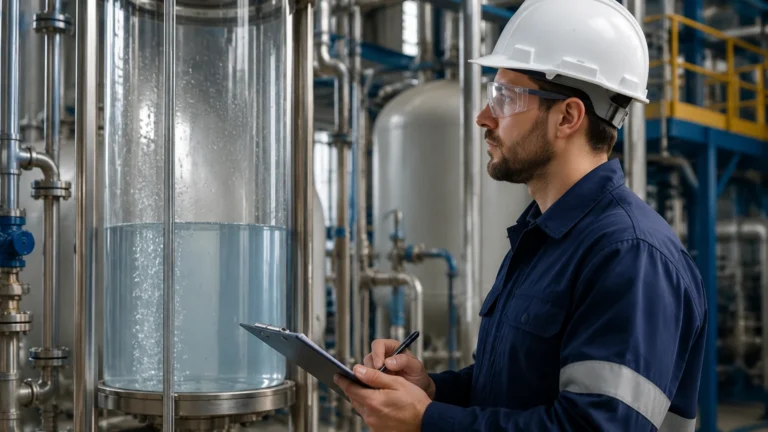
In the evolving landscape of industrial automation, the demand for specialized expertise in level measurement has never been higher. For professionals exploring gruve careers—a term often associated with the mining, extraction, and heavy processing sectors—understanding the technical nuances of instrumentation is essential. As industries transition toward Industry 4.0, the role of an instrumentation specialist involves more than just equipment installation; it requires a deep understanding of physics, fluid dynamics, and digital integration.
Welk, as a professional manufacturer of industrial level measurement instruments, provides the critical hardware that powers these career paths. From radar level meters to hydrostatic transmitters, the technology used in modern industrial environments dictates the skill sets required by engineers and technicians. This guide explores the technical foundations and professional considerations for those working within the level measurement field.
Understanding the Landscape of Industrial Level Measurement Careers
Careers in the industrial sector, particularly those focused on "gruve" or mining environments, are increasingly centered on precision and safety. Instrumentation professionals are responsible for ensuring that tanks, silos, and sumps are monitored with 99.9% accuracy to prevent overflows, dry runs, and environmental hazards.
Professionals in this field typically fall into three categories:
1. Design and Application Engineers: Responsible for selecting the correct technology based on chemical compatibility, pressure, and temperature.
2. Maintenance and Reliability Technicians: Focused on the calibration, troubleshooting, and longevity of sensors in harsh environments.
3. Automation Specialists: Tasked with integrating level data into PLC (Programmable Logic Controller) or SCADA systems for real-time process control.
For those entering this field, the Main Page of technical manufacturers like Welk serves as a vital reference for understanding the hardware that facilitates these industrial processes.
Fundamental Measurement Principles for Professionals
Before recommending or installing a device, a professional must master the underlying measurement principles. Level measurement is generally divided into two categories: contact and non-contact.
Time-of-Flight (ToF) Principle
Both radar and ultrasonic sensors operate on the Time-of-Flight principle. The sensor emits a signal (electromagnetic for radar, acoustic for ultrasonic) that travels to the surface of the medium and reflects back to the receiver. The distance is calculated using the formula:
$$D = \frac{v \cdot t}{2}$$
Where:
* D is the distance to the material.
* v is the speed of the pulse (speed of light for radar, speed of sound for ultrasonic).
* t is the measured time for the round trip.
Hydrostatic Pressure Principle
Hydrostatic level measurement relies on the relationship between the height of a liquid column and the pressure it exerts at the base. This is governed by the formula:
$$P = \rho \cdot g \cdot h$$
Where:
* P is the pressure.
* ρ (rho) is the density of the liquid.
* g is the gravitational constant (approx. 9.81 m/s²).
* h is the height of the liquid.
Magnetic Buoyancy
Magnetic level gauges use a float containing a permanent magnet. As the liquid level rises and falls, the float moves accordingly, acting upon a series of magnetic flags or a transmitter outside the chamber. This provides a clear visual indication without the need for an external power source in many applications.
Key Instrumentation Technologies in Modern Industry
Professionals pursuing gruve careers must be proficient in several core technologies, each suited to specific environmental challenges.
Radar Level Meters
Radar technology is the gold standard for challenging environments. 80GHz high-frequency radar offers a narrow beam angle (often as low as 3°), which allows it to avoid internal tank obstructions like agitators or ladders. This makes it ideal for the complex geometries found in mining processing plants.
Ultrasonic Level Sensors
Ultrasonic sensors are cost-effective solutions for water treatment and open-channel flow. However, they are sensitive to air temperature, steam, and heavy foam. Professionals must understand how to implement temperature compensation to maintain accuracy across varying environmental conditions.
Hydrostatic Level Transmitters
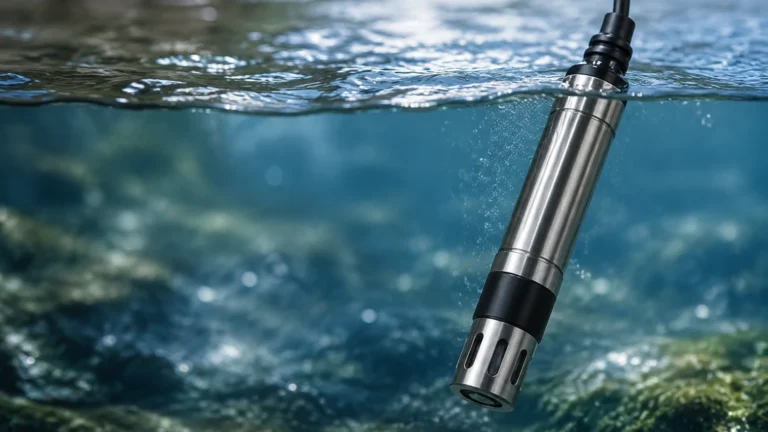
These are often used in deep wells or sumps common in extraction sites. Submersible versions are designed with robust diaphragms (often 316L stainless steel or Tantalum) to withstand corrosive liquids. The primary career challenge here is ensuring the vent tube remains clear to allow for atmospheric pressure compensation.
Selection Criteria for Level Measurement Systems
Choosing the right instrument is a critical competency for any instrumentation engineer. The following table provides a comparison of common technologies used in heavy industrial applications.
| Technology | Medium Type | Maximum Range | Key Advantage | Primary Limitation |
| :— | :— | :— | :— | :— |
| 80GHz Radar | Solids/Liquids | Up to 120m | Non-contact, high precision | Higher initial investment |
| Ultrasonic | Liquids/Slurries | Up to 30m | Cost-effective, no moving parts | Affected by dust and foam |
| Hydrostatic | Liquids | Up to 200m | Simple installation in deep wells | Dependent on liquid density |
| Magnetic Gauge | Liquids | Custom | Visual local indication | Requires bypass chamber |
| Level Switches | Point Level | N/A | High/Low alarm reliability | No continuous measurement |
Installation and Maintenance Best Practices
In the context of gruve careers, installation quality directly impacts the reliability of the entire automation loop. Engineering professionals should adhere to the following guidelines:
1. Blocking Distance (Dead Zone): Every ToF sensor has a minimum distance it cannot measure near the sensor face. For ultrasonic sensors, this is typically 0.25m to 0.5m. Professionals must ensure the maximum fill level never enters this zone.
2. Nozzle Geometry: For radar installations, the nozzle height and diameter must be calculated to prevent signal interference. Ideally, the sensor horn should extend slightly past the nozzle into the tank.
3. Mounting Position: Sensors should never be mounted in the center of a tank (due to multiple reflections) or directly above the filling inlet (due to turbulence and false echoes).
4. Environmental Protection: In mining (gruve) environments, dust ingress and vibration are constant threats. Using IP67 or IP68 rated enclosures and vibration-dampening mounts is standard practice.

Professional Development and Technical Competency
Advancing in gruve careers requires a commitment to continuous learning. As manufacturers like Welk innovate with IIoT (Industrial Internet of Things) enabled sensors, professionals must bridge the gap between traditional mechanical engineering and modern data science.
* Digital Protocols: Mastery of HART, Modbus, and PROFIBUS is essential for integrating sensors into modern control systems.
* Safety Standards: Understanding SIL (Safety Integrity Level) ratings is mandatory for professionals working in hazardous environments where level measurement is part of a Safety Instrumented System (SIS).
* Diagnostic Interpretation: Modern radar sensors provide echo curves. The ability to interpret these curves to distinguish between the true material level and false echoes from internal structures is a high-value skill.
For those looking to deepen their technical knowledge or Review product options and application support, accessing manufacturer documentation is the first step toward professional mastery.
Limitations and Practical Challenges
No single technology is a universal solution. Professionals must recognize the limitations of their equipment:
* Radar: While highly versatile, extremely low dielectric constant (εr < 1.4) materials can be difficult for non-contact radar to detect without specialized probes.
* Ultrasonic: Performance degrades significantly in vacuum conditions because sound waves require a medium to travel.
* Magnetic Gauges: High-viscosity liquids can cause the float to stick, requiring regular cleaning and maintenance schedules.
Frequently Asked Questions in Instrumentation Careers
Q: What is the most common cause of failure in level sensors?
A: In most industrial environments, moisture ingress into the housing or improper wiring are the leading causes of failure. In mining specifically, material buildup on the sensor face is a frequent challenge.
Q: How does 80GHz radar differ from 26GHz radar in a career context?
A: 80GHz radar provides a much narrower beam and better signal-to-noise ratio. For an engineer, this means easier commissioning because there are fewer false echoes to mask during setup.
Q: Are hydrostatic sensors suitable for tanks under pressure?
A: Standard hydrostatic sensors measure relative to atmospheric pressure. For pressurized tanks, a differential pressure (DP) transmitter is required to subtract the top-side gas pressure from the total bottom pressure.
Q: What certifications are most valuable for gruve careers?
A: Certifications in Functional Safety (CFSP/CFSE), CompEx (for explosive atmospheres), and specific manufacturer training on PLC integration are highly regarded in the industry.
Conclusion
Careers in industrial level measurement offer a unique blend of field work and high-level engineering. By mastering the principles of radar, ultrasonic, and hydrostatic measurement, and by staying informed through resources like the Welk Main Page, professionals can ensure they remain at the forefront of industrial automation. Whether you are managing sumps in a mining facility or overseeing chemical storage, the accuracy of your instruments is the foundation of operational success.