Ivegas
Ivegas
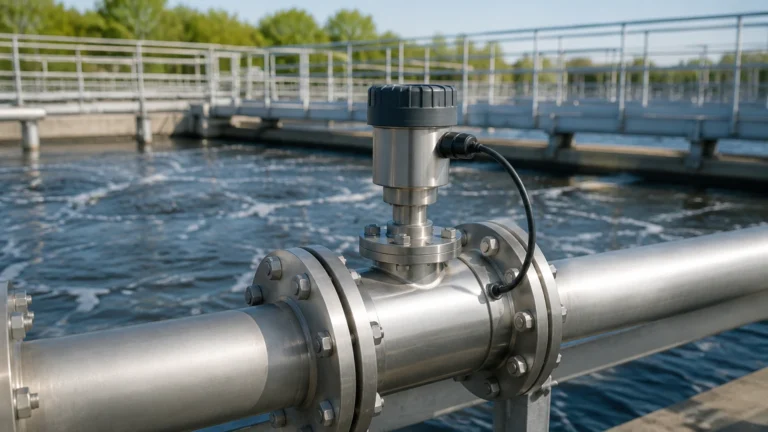
In the landscape of modern industrial automation, the term "ivegas" represents a critical intersection between advanced level measurement and the complex dynamics of gas and vapor management within storage and process vessels. For engineers and facility managers, accurately determining the liquid level in an environment saturated with volatile vapors, pressurized gas blankets, or fluctuating atmospheric conditions is a fundamental challenge. This guide explores the technical principles, selection criteria, and practical implementation of level measurement technologies suitable for these demanding "ivegas" applications.
Measurement Principles in Gas-Intensive Environments
Before selecting a specific instrument, it is essential to understand the physics of how different technologies interact with the gas phase (the vapor space) above the liquid. In many industrial processes, this space is not merely empty air; it may contain nitrogen for blanketing, pressurized carbon dioxide, or high concentrations of evaporated product.
Radar Level Measurement (ToF)
Radar technology, specifically non-contacting and guided wave radar (GWR), operates on the Time-of-Flight (ToF) principle. The sensor emits electromagnetic pulses that travel through the gas space, reflect off the liquid surface, and return to the sensor.
In an ivegas context, radar is often the preferred choice because electromagnetic waves are largely unaffected by changes in gas composition, pressure, or temperature. The speed of light remains constant regardless of whether the tank is filled with air or a heavy hydrocarbon vapor. However, the dielectric constant (εr) of the gas can slightly influence the propagation speed at extremely high pressures, a factor that high-precision radar units can compensate for through advanced algorithms.
Ultrasonic Level Sensing
Ultrasonic sensors use sound waves to measure distance. Unlike radar, sound requires a medium to travel through. The speed of sound is highly dependent on the density, temperature, and molecular weight of the gas in the tank.
In applications involving varying gas mixtures (such as those found in chemical processing), ultrasonic sensors can face significant accuracy issues unless they are equipped with integrated temperature compensation and calibrated for the specific gas constant of the environment. If the ivegas composition changes—for example, shifting from a pure air environment to one rich in methane—the sensor may report an incorrect level unless the system is updated with the new sound velocity parameters.
Hydrostatic Pressure Measurement
Hydrostatic transmitters measure the pressure exerted by the liquid column. The formula $P = \rho \cdot g \cdot h$ (where $P$ is pressure, $\rho$ is density, $g$ is gravity, and $h$ is height) governs this measurement.
In pressurized ivegas systems, a single-ended pressure transmitter cannot distinguish between the pressure of the liquid and the pressure of the gas blanket. Therefore, differential pressure (DP) transmitters are used. One side measures the total pressure at the bottom, while the other measures the gas pressure at the top. The difference represents the true liquid level, effectively "canceling out" the influence of the gas phase.
The Role of Ivegas Integration in Process Automation
The integration of "ivegas" concepts into a broader industrial framework involves more than just selecting a sensor; it requires a holistic approach to data acquisition. Modern systems utilize digital protocols such as HART, Modbus, or Profibus to transmit not only the primary level variable but also secondary diagnostics such as signal strength and vapor space temperature.
This level of integration allows for predictive maintenance. For instance, if a radar sensor detects a weakening signal return, it may indicate heavy condensation or foam buildup on the antenna—common occurrences in volatile gas environments. By monitoring these parameters, operators can intervene before a total signal loss occurs, ensuring continuous production and safety.
Selection Criteria for Level Sensors in Gas Applications
Choosing the right instrument requires a detailed analysis of the process conditions. The following table provides a comparison of common technologies used in environments where gas and vapor management is a priority.
| Technology | Accuracy | Influence of Gas Composition | Pressure Range | Temperature Range | Ideal Use Case |
| :— | :— | :— | :— | :— | :— |
| Non-Contact Radar | High (±2mm) | Negligible | Up to 160 bar | -40°C to +450°C | Corrosive liquids, high-temp vapors |
| Guided Wave Radar | Very High | Negligible | Up to 400 bar | -200°C to +450°C | Low dielectric liquids, bypass chambers |
| Ultrasonic | Moderate | High | Up to 3 bar | -40°C to +80°C | Water treatment, open sumps |
| Hydrostatic (DP) | High | None (if compensated) | Dependent on flange | -40°C to +120°C | Sealed tanks with stable density |
| Magnetic Gauge | Visual | None | Up to 320 bar | -196°C to +400°C | High-pressure boiler drums |
When evaluating these options, engineers must confirm the chemical compatibility of the wetted materials (such as 316L stainless steel, PTFE, or Hastelloy) with the specific gases present in the ivegas environment. For a comprehensive overview of available technologies and customized configurations, professionals can refer to the Main Page for detailed product specifications and application support.

Installation Considerations and Best Practices
Correct installation is paramount when dealing with gas-liquid interfaces. Even the most advanced sensor will fail if placed incorrectly.
1. Nozzle Geometry: For radar and ultrasonic sensors, the mounting nozzle should be as short and wide as possible. Internal welds or burrs can cause "false echoes" in the gas space, which the sensor might mistake for the liquid level.
2. Obstruction Clearance: Ensure the signal path is clear of ladders, heating coils, or agitators. In ivegas applications, turbulent gas flow can sometimes cause signal scattering, so positioning the sensor in a quiet zone of the tank is advisable.
3. Vapor Compensation: If using ultrasonic sensors in a tank with a nitrogen blanket, the sensor must be calibrated for the speed of sound in nitrogen ($349\text{ m/s}$ at $20^\circ\text{C}$) rather than air ($343\text{ m/s}$).
4. Condensation Management: In high-humidity gas environments, condensation can form on the sensor face. Using a radar antenna with a pointed or drip-off design (such as a PTFE drop antenna) helps shed droplets and maintain signal integrity.
5. Venting and Equalization: For hydrostatic systems, ensure the impulse lines or capillary tubes are properly vented to the gas space to avoid "gas locking," which can lead to erratic level readings.
Technical Limitations and Challenges
While modern instrumentation is highly capable, certain "ivegas" scenarios present persistent challenges:
* Heavy Foam: Thick foam can absorb radar and ultrasonic signals. In these cases, guided wave radar or hydrostatic sensors are typically more reliable as they do not rely on a clean surface reflection.
* Extreme Vacuum: In near-vacuum conditions, ultrasonic waves cannot propagate. Radar remains functional, but the mechanical seals of the instrument must be rated for vacuum service to prevent air ingress.
* Gas Stratification: In very tall silos or tanks, gases can stratify into layers of different densities. This can cause refraction of ultrasonic waves, leading to "ghosting" or measurement errors. Radar is generally immune to this effect.
* High-Pressure Steam: Saturated steam has a high dielectric constant compared to dry air. At pressures above $50\text{ bar}$, this can slow down radar signals enough to require a "gas phase compensation" reference rod or software correction.
Frequently Asked Questions (FAQ)
Q: Can I use an ultrasonic sensor if my tank has a pressurized CO2 blanket?
A: Yes, but you must account for the fact that sound travels much slower in CO2 ($259\text{ m/s}$) than in air. Without recalibration, the sensor will significantly over-read the distance to the liquid.
Q: Why is radar preferred over ultrasonic for volatile organic compounds (VOCs)?
A: VOCs evaporate into the gas space, changing the vapor density and the speed of sound. Since radar uses electromagnetic waves, it is unaffected by these vapor concentration changes, providing a more stable and accurate reading.
Q: How does temperature affect ivegas level measurement?
A: Temperature affects the density of the liquid (impacting hydrostatic sensors) and the speed of sound (impacting ultrasonic sensors). Radar is the least affected by temperature fluctuations in the gas space.
Q: What maintenance is required for sensors in corrosive gas environments?
A: Regular inspection of the seals and the sensor face is required. If the gas is highly corrosive, using non-contact sensors with a protective flange shield (e.g., PTFE) prevents damage to the sensitive electronics and transducers.
By understanding these technical nuances, industrial operators can ensure that their level measurement systems provide the accuracy and reliability required for safe and efficient process management. Whether dealing with simple water storage or complex chemical reactors involving intricate gas phases, selecting the right technology is the first step toward operational excellence.